 Bellingham
 Why South Hill Windows Wear Differently
South Hill sits up above downtown Bellingham with open exposure to weather coming off Bellingham Bay and the Salish Sea. That elevation and exposure is part of what makes the neighborhood desirable — the views, the light — but it's also why windows up here take a different kind of beating than windows in a sheltered valley lot elsewhere in Whatcom County. Salt-tinged air off the water, driving rain that comes in sideways during a fall or winter blow, and a moss season that can stretch from October through April all work on window frames, sills, and seals year after year.
South Hill's housing stock skews older — a mix of early-1900s and mid-century homes alongside newer infill — which means a lot of original wood windows, several generations of aluminum replacements, and everything in between. Each of those has its own failure pattern, and we've seen most of them on this hill specifically. That history matters when you're deciding what to replace and with what.
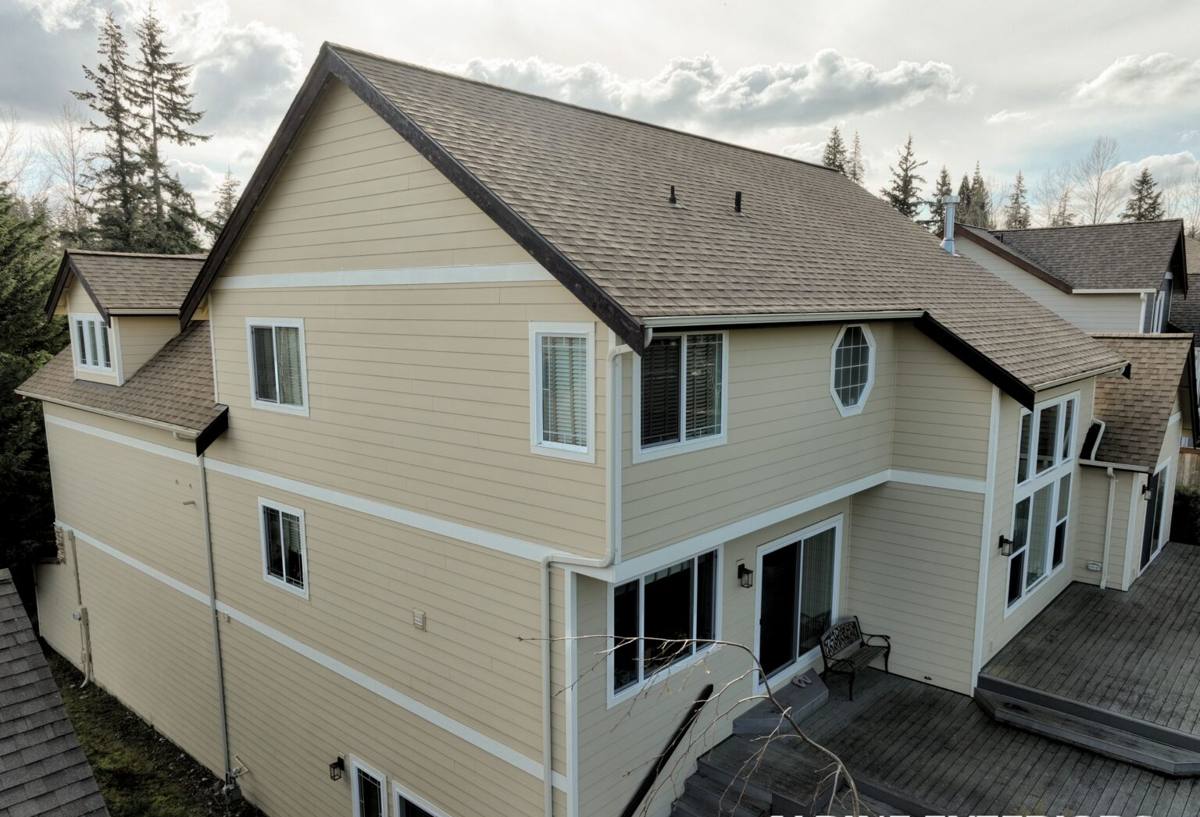
Signs Your Windows Are Due for Replacement
Not every drafty window needs full replacement, but on South Hill homes we consistently see a handful of warning signs that mean it's time:
- Fogging or a permanent haze between double-pane glass — the seal has failed and the gas fill is gone
- Soft, spongy, or visibly rotted wood at the sill or lower frame corners
- Paint that keeps failing on the interior sill within a year or two of repainting
- Visible daylight or a draft you can feel with your hand along the frame edge on a windy day
- Windows that are painted shut, won't stay open, or require force to latch
- Condensation forming on the interior glass regularly, especially in bedrooms and bathrooms
- Aluminum frames that feel cold to the touch and sweat during cold, damp stretches
Any one of these on its own might just need a repair or a re-caulk. Several at once, especially combined with visible moss or algae staining on the exterior trim around the window, usually means water has been getting past the frame for a while and replacement is the more honest answer.
What a Correct Window Replacement Actually Involves
The window itself is maybe half the job. The other half — the part that determines whether the window still performs in five or fifteen years — is how it's integrated into the wall. This is where a lot of quick "just swap the window" jobs go wrong, and it's the difference that shows up as a moisture problem years later.
Removal and Inspection
We pull the old unit carefully and inspect the framing, sill, and sheathing underneath before anything new goes in. On South Hill homes, this is often where we find the real story — moss and algae staining on the outside can be cosmetic, but rot at the sill or soft sheathing behind the old flashing tells us there's been a water path for some time. We'd rather find that now than have the new window installed over a hidden problem.
Flashing and Water Management
Given how much driving rain this area gets, correct flashing isn't optional. That means a sloped sill pan to shed any water that gets past the glazing, properly lapped window flashing tape integrated with the building's weather-resistive barrier, and head flashing detailed so water can't track behind the trim. This is the step that's invisible once the trim goes back on, and it's the step that matters most over the life of the window.
Insulation and Air Sealing
The gap between the new window frame and the rough opening gets filled with low-expansion foam or backer rod and sealant — never packed tight with fiberglass insulation alone, which does little for air sealing and nothing for drainage. A properly sealed gap is a big part of why a new window feels warmer than the one it replaced, even before you account for the glass itself.
Interior and Exterior Finish
Trim, casing, and caulking get finished to match the home, and every exterior joint gets sealed with a product rated for our wet climate — not a generic caulk that will crack and let water back in after one winter.
Frame Material Comparison
Material choice matters more here than in a drier climate, because whatever you choose has to hold up to sustained damp, salt-tinged air, and moss growth on top of normal UV and temperature cycling. Here's how the common options compare for a South Hill setting:
| Material | Moisture Behavior | Maintenance | Typical Fit for South Hill |
|---|---|---|---|
| Vinyl | Won't rot; seams need good welds to stay watertight | Low — occasional cleaning | Solid all-around choice for most homes, good value |
| Fiberglass | Very stable in wet/cold swings, minimal expansion | Low | Strong option for exposed or higher-end homes wanting durability |
| Wood-clad | Exterior clad protects wood, but any breach lets moisture into the core | Moderate to high — watch cladding seams | Best for homes prioritizing a historic wood look, needs attentive upkeep |
| Aluminum | Conducts cold, prone to condensation and sweating in damp weather | Low, but condensation issues persist regardless | We steer clients away from it here — the condensation trade-off is a poor fit for our humidity |
We're not tied to one brand or material — the right call depends on your home's age, your budget, and how exposed the specific elevation of the house is. What we won't do is install a product we know will fight the climate from day one, and on South Hill that mainly means being upfront about aluminum's condensation tendency and about wood-clad seams needing real attention over time.
Our Process, Start to Finish
- On-site assessment — we walk the exterior and interior of every window being considered, checking sills, corners, and trim for existing rot or water paths, not just measuring glass
- Honest scope and estimate — you get a clear breakdown of what's being replaced, what material is recommended and why, and what it costs, with no pressure to upsell windows that don't need it
- Ordering and lead time — we confirm exact sizes and options before ordering, since a bad measurement means delays
- Removal and structural check — old units come out, framing gets inspected, any rot gets addressed before the new window goes in
- Install with proper flashing — sill pan, flashing tape, and air sealing done to hold up against driving rain, not just to pass a glance
- Finish work — trim, caulk, and touch-up matched to the home
- Walkthrough — we open, close, and lock every window with you before we call the job done
What Drives the Cost
Every South Hill home is a little different, so we don't quote sight-unseen, but the main factors that move the price are consistent:
| Factor | Why It Matters |
|---|---|
| Number and size of openings | Larger and more windows mean more material and labor |
| Frame material | Vinyl, fiberglass, and wood-clad sit at different price points |
| Condition of existing framing | Rot or water damage found during removal adds repair scope |
| Window style | Double-hung, casement, and picture windows have different hardware and labor needs |
| Access and elevation | Upper-story or hard-to-reach windows on hillside lots can add setup time |
| Trim and finish work | Matching existing trim profiles or historic detailing takes more time than standard trim |
Broadly, homeowners in this area are usually looking at a per-window cost that ranges from a modest few hundred dollars for a straightforward vinyl swap up into the low thousands for larger openings, premium materials, or extensive trim work. We'll give you real numbers once we've seen the windows in question.
Why a Crew That Already Works South Hill Matters
A window replacement crew that's worked other homes in this specific neighborhood already knows the patterns: which eras of South Hill homes tend to have original wood sash that's still salvageable versus not, where moss and moisture tend to concentrate given the tree cover and hillside drainage, and how the wind off the bay tends to hit certain elevations harder than others just a few blocks away. That's not something you get from a general contracting background — it comes from doing the work here, repeatedly, and seeing what actually holds up over a Whatcom County winter versus what looks fine on install day and fails two years later.
It also means faster, more accurate estimates. We're not guessing at how your home's construction era handles a window swap — we've likely already seen a similar house a few streets over.
Seasonal Care Checklist for New Windows
Once your new windows are in, a little seasonal attention keeps them performing for the long haul:
- Clear moss and debris from window sills and nearby trim before it holds moisture against the frame
- Check exterior caulk lines each fall before the wet season sets in and touch up any cracking
- Wipe down interior sills if condensation appears during cold spells, and check that room ventilation is adequate
- Lubricate hardware and tracks once or twice a year so locks and operators don't seize up
- Look for gutter or downspout water landing near window heads after a heavy rain and redirect it if needed
If you're weighing whether your South Hill home needs a full window replacement or just targeted repairs, we're happy to take a look and give you a straight answer either way. Reach out for a free, no-pressure estimate using the form below.