 Bellingham
 Why Board & Batten Fits Barkley Homes
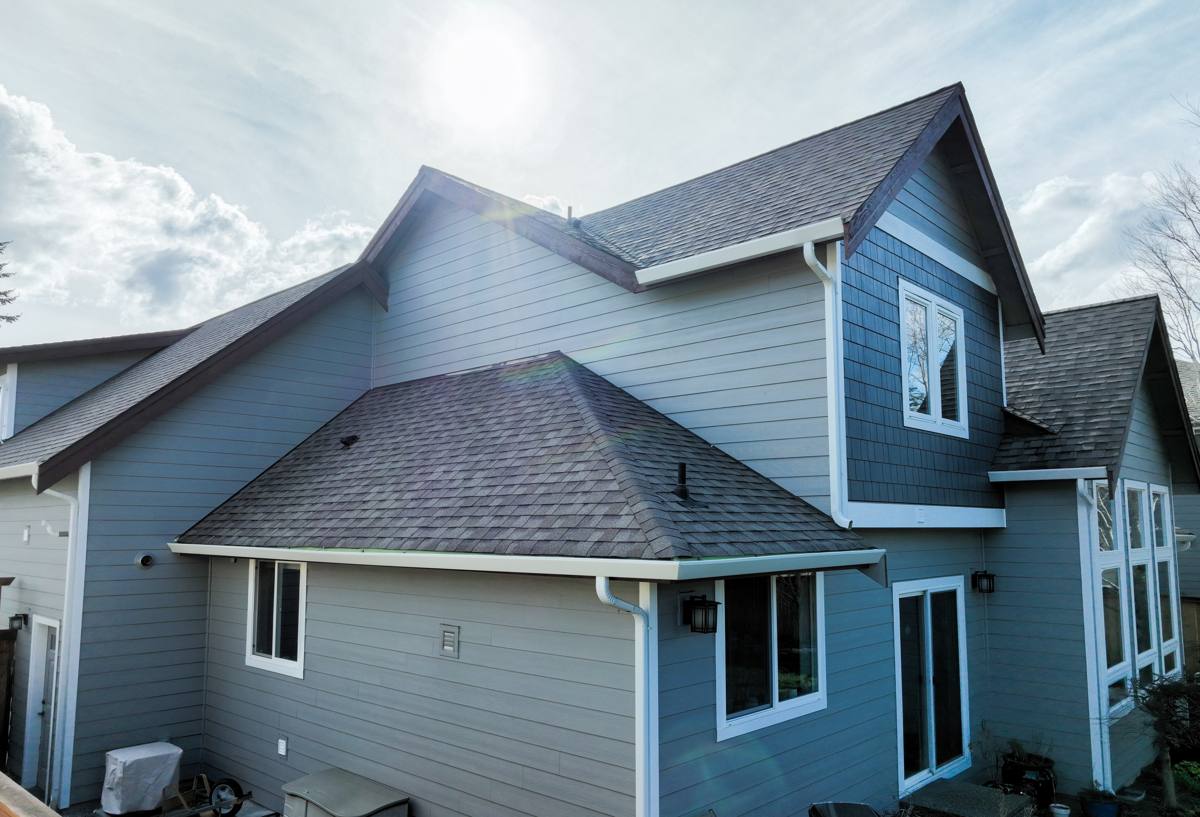
Board and batten has become one of the most requested siding styles in Bellingham, and Barkley is no exception. The look — wide vertical boards with narrower battens covering the seams — reads as modern farmhouse on some homes and craftsman-accented on others. In Barkley specifically, we see it most often used two ways: as the primary siding on newer construction, and as an accent treatment on gables, dormers, or a front entry feature wall paired with horizontal lap siding elsewhere on the home.
That mixed use matters. A gable-end accent panel and a full-elevation board and batten installation face different exposure to weather, and the detailing has to account for that. A page about board and batten in general terms can't tell you which situation you're in. This one is about doing it right specifically for homes in the Barkley area.
What Bellingham's Climate Asks of This Siding Style
Whatcom County's marine climate is generally mild, but "mild" hides a few specific stresses that board and batten siding has to handle year after year.
Salt Air and Corrosion
Proximity to Bellingham Bay and the greater Puget Sound means airborne salt is a real factor for exterior materials in this part of the county, even a few miles inland. Salt-laden moisture accelerates corrosion on exposed fasteners and metal trim, and it can degrade paint film faster than it would in a dry inland climate. Board and batten has more vertical joints and more exposed batten faces than plain lap siding, which means more surface area where fastener corrosion or coating failure can show up first.
Driving Rain
Storms coming off the water frequently bring wind-driven rain, not just straight-down rain. Wind-driven moisture gets pushed sideways and upward against vertical siding boards, working its way behind battens and into joints that aren't detailed correctly. Board and batten is more vulnerable to this than lap siding because the vertical battens create a natural channel for water to run down and pool at the bottom if there's no drainage path.
A Long Moss Season
Shaded, damp conditions persist for much of the year here, and moss doesn't need much encouragement to take hold on north-facing walls, under tree cover, or anywhere airflow is limited. Moss holds moisture directly against the siding surface for extended periods. On battens and board faces with tight, unventilated installation, that constant moisture contact is exactly what shortens the life of paint, caulking, and eventually the substrate underneath.
None of these conditions are unique to Barkley, but they're constant across Bellingham and Whatcom County, and they're the reason board and batten needs to be installed differently here than it would be in a drier region.
What a Correct Board & Batten Job Actually Involves
Board and batten looks simple — it's just boards and strips, after all — but the parts you don't see are what determine whether it lasts fifteen years or fifty.
Weather-Resistant Barrier and Rainscreen Gap
Every board and batten installation starts with a continuous weather-resistant barrier behind the siding. In our climate, we also build in a rainscreen gap — a small air space, usually created with vertical furring strips — behind the boards. That gap lets any moisture that does get past the surface drain and dry out instead of sitting against the sheathing. Skipping the rainscreen is one of the most common corners cut on board and batten jobs, and it's the one that causes the most long-term damage in a wet climate.
Fastening and Joint Treatment
Fastener placement, spacing, and type all follow the manufacturer's engineering — not guesswork. Battens need to be fastened so they cover the board seam fully without trapping water against an unsealed joint. Every fastener that penetrates the water-resistive barrier needs to be placed correctly the first time, since board and batten doesn't offer easy access to fix a bad fastener later without pulling boards.
Flashing and Trim Details
Window heads, corner boards, and the bottom termination where siding meets foundation are the highest-risk points on any board and batten wall. Flashing has to shed water outward at every horizontal transition, and the bottom edge needs a clear drainage path so water doesn't wick upward into the lowest boards. These details take longer to do correctly, and they're invisible once the job is finished — which is exactly why it matters who's doing the work.
Comparing Board & Batten Materials
Board and batten can be built in several materials. Here's how they compare for a climate like ours:
| Material | Moisture Behavior | Maintenance | Longevity Here |
|---|---|---|---|
| James Hardie fiber cement | Engineered for wet climates; doesn't absorb and swell like wood | Factory ColorPlus finish; occasional wash, no regular repainting needed | Decades when installed to spec |
| Solid wood | Absorbs moisture, prone to swelling, cupping, and rot in constant damp exposure | Repainting and caulk touch-up every few years; more with moss/shade | Shorter without diligent upkeep |
| Vinyl board & batten profile | Doesn't rot, but panels can warp or gap; seams rely heavily on lap-lock fit | Low, but limited repair options if panels crack or fade | Variable; UV and impact sensitive over time |
We install James Hardie fiber cement exclusively. It's non-combustible, it's engineered specifically for climates like the Pacific Northwest's, and it holds a factory-applied ColorPlus finish that's built to resist the fading and film breakdown that field-applied paint struggles with in a place with this much moisture and shade.
Our Board & Batten Process
The process doesn't change much from house to house, but the sequence matters:
- On-site assessment of the wall or elevation, including existing moisture conditions and any current siding to remove
- Removal of old siding and inspection of the sheathing underneath for hidden rot or damage before anything new goes up
- Installation of a continuous weather-resistive barrier
- Furring strips installed to create the rainscreen drainage gap
- Hardie board and batten panels or plank-and-batten assembly installed per manufacturer fastening schedules
- Flashing at every window, door, and horizontal transition
- Caulking and joint sealing with products compatible with the ColorPlus finish
- Final walk-through covering care and what to watch for going forward
Signs Existing Board & Batten Siding Needs Attention
- Moss or persistent green staining building up on battens or board faces
- Caulking that's cracked, shrunk, or pulled away from joints
- Soft spots or slight give when you press on boards near the bottom edge
- Peeling or bubbling paint concentrated on one wall or exposure
- Visible gaps at the base where boards meet the foundation
- Rust streaking below fastener heads or trim
Any one of these on its own might be minor. Several together, especially on a shaded or bay-facing wall, usually means moisture has been getting behind the siding for a while.
Why a Barkley-Familiar Crew Makes a Difference
Board and batten installation isn't exotic work, but doing it correctly in this specific climate takes judgment that only comes from working the area regularly. A crew that already works in and around Barkley has a working sense of which exposures in the neighborhood hold moss longest, which walls take the brunt of driving rain off the water, and how local humidity and shade patterns affect drying time between install steps.
If your property is part of a planned community with exterior design standards, it also helps to work with a contractor who's used to coordinating material and color choices within those kinds of guidelines, rather than learning that process for the first time on your project. That familiarity translates into fewer surprises, tighter scheduling, and installation decisions that are made with this climate in mind rather than a generic install sheet.
Maintenance After Installation
One of the practical advantages of James Hardie board and batten is how little ongoing maintenance it asks for compared to wood. There's no repainting cycle to plan around. Occasional rinsing to keep moss and organic growth from building up on shaded walls is worth doing, along with a periodic look at caulked joints and the base of the wall where it meets the ground. Catching a failed caulk joint early is a five-minute fix; leaving it through a wet Bellingham winter can turn into a much bigger repair.
Get a Straightforward Look at Your Project
If you're considering board and batten siding for a home in Barkley — whether it's a full replacement or an accent feature on part of the house — we're glad to come take a look and walk you through what correct installation would involve for your specific walls and exposures. The estimate is free, there's no pressure, and you'll get a straight answer about what your project actually needs.