 Bellingham
 Why Siding Repair in Barkley Isn't a One-Size-Fits-All Job
Barkley sits close enough to Bellingham Bay and the Whatcom County waterways that homes here deal with a specific combination of stress most inland properties never see: salt-laden air, long stretches of driving rain off the Sound, and a moss season that can run from October well into spring. Individually, none of these is unusual for Western Washington. Together, over years, they find every weak point in a home's exterior — a gap in caulking, a nail that backed out, a corner where water was never quite draining the way it should.
That's the context every siding repair in this area has to be evaluated against. A patch that would hold up fine in a dry climate can fail here in a season or two if it doesn't account for how water actually moves across a wall in a marine climate. Good repair work in Barkley isn't just about matching the old material — it's about understanding why the damage happened in the first place and making sure the fix doesn't just cover the symptom.
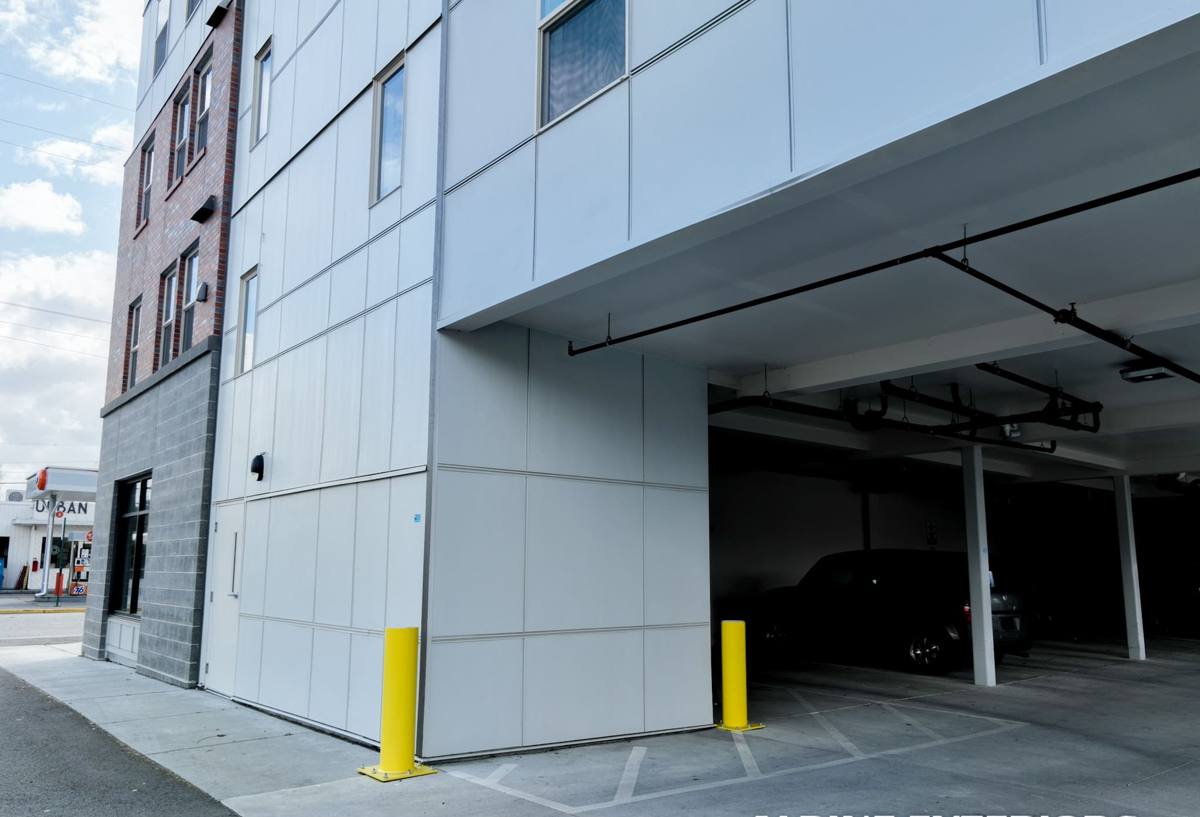
What Correct Siding Repair Actually Involves
A lot of siding repair gets sold as a cosmetic fix: replace the cracked or stained board, caulk the seams, repaint, done. That approach handles what you can see and ignores what you can't. On most homes we're called out to in Barkley, the visible damage is a symptom of something happening behind the siding — a compromised water-resistive barrier, flashing that was never properly lapped, or trim that's been wicking moisture into the wall assembly for longer than the homeowner realized.
Common Repair Scenarios We See
- Cracked, buckled, or delaminating boards near ground level, where splashback and standing moisture do the most damage
- Damage around window and door trim where caulking has failed and water has tracked behind the siding
- Corner boards and butt joints that have opened up, letting wind-driven rain in during storms off the Sound
- Soft or discolored siding near roof-to-wall intersections, usually tied to flashing issues rather than the siding itself
- Moss and algae staining that's been left untreated long enough to start holding moisture against the surface
What a Rushed Repair Misses
If a crew swaps a board without checking the barrier and flashing underneath it, the same failure shows up again in a year or two — usually worse, because the water has had more time to work. Real repair work means pulling back enough of the surrounding material to actually see the condition of what's behind it, not just guessing based on the outside.
Signs Your Barkley Home Needs Siding Repair Now
Some damage can wait for a scheduled visit. Some can't. Knowing the difference saves homeowners money and prevents small problems from becoming structural ones.
- Soft spots when you press on the siding, especially near the bottom of walls or below windows
- Visible gaps, cracks, or separation at seams and corners
- Paint that's bubbling, peeling, or failing in a localized area rather than across the whole wall
- Persistent dark streaking or moss growth that returns quickly after cleaning
- Any sign of water intrusion inside the home on an exterior wall — stained drywall, musty smell, or peeling interior paint
- Siding that feels swollen or has a different texture than the surrounding material
If you're seeing any of the last two, that's not a "get to it eventually" repair — that's active moisture intrusion, and it should be looked at promptly before it spreads to framing.
Why We Only Repair and Rebuild With James Hardie Fiber Cement
We install and repair exclusively with James Hardie fiber cement siding. We don't work in vinyl, LP SmartSide, primed spruce, cedar, or other fiber cement brands — not because those products can't be repaired, but because we've made a professional decision about what holds up best under exactly the conditions Barkley homes face, and we'd rather stand fully behind one system than spread ourselves across several with very different long-term behavior.
| Material | Behavior in Salt Air & Driving Rain | Repair Considerations |
|---|---|---|
| James Hardie fiber cement | Non-combustible, dimensionally stable, engineered moisture resistance in its HZ product lines | Repairs integrate cleanly; ColorPlus finish holds color match well over time |
| Vinyl siding | Can warp or become brittle with UV and temperature swings; seams are a common water entry point | Exact color/profile matches get harder to find as products age off the market |
| LP SmartSide | Engineered wood product; performs well when the finish is intact but is vulnerable if water gets past a breach | Repairs need immediate, complete sealing — any gap invites swelling |
| Cedar / primed spruce | Natural wood movement plus high moisture exposure means ongoing maintenance demand | Repeated repainting and caulk maintenance required to prevent rot cycles |
This isn't a claim that other products are unusable — plenty perform fine when properly maintained. It's that in a climate defined by salt exposure, sustained rain, and moss growth, we've seen fiber cement hold its line, its finish, and its warranty better than the alternatives, and that's what we're willing to put our name behind.
What This Means for a Repair, Specifically
If your existing siding is already James Hardie, a repair is usually straightforward — we can match the plank profile and, in most cases, the ColorPlus finish closely enough that the repair isn't a visual patchwork. If your home currently has a different siding material and the damage is extensive or recurring, we'll be honest with you about that: sometimes the more durable long-term fix is a full or partial re-side in fiber cement rather than chasing repeat repairs on a product that's reaching the end of its useful life anyway.
Our Siding Repair Process
- On-site assessment. We look at the visible damage and check the areas most likely to be affected upstream — flashing, trim, and the wall behind the siding — before quoting anything.
- Diagnosis, not guesswork. We identify whether this is isolated damage or a symptom of a broader moisture or installation issue.
- Honest scope. We tell you plainly whether a targeted repair will hold, or whether a larger section needs attention to actually solve the problem.
- Repair with matching materials. Where existing siding is James Hardie, we match plank size, profile, and finish as closely as the product line allows.
- Proper water management. Any flashing, house wrap, or trim issue we find gets corrected as part of the repair — not left for next time.
- Final check. We walk the repair with you before we consider the job done.
Repair or Replace? How We Help You Decide
Not every damaged section needs a full re-side, and not every repair is worth doing in isolation. The right call depends on a few factors.
| Factor | Favors Repair | Favors Replacement |
|---|---|---|
| Extent of damage | Isolated to one or two areas | Recurring across multiple walls or elevations |
| Age of existing siding | Relatively new, otherwise in good condition | Near or past its expected service life |
| Underlying material | Existing James Hardie siding | Vinyl, LP, or wood siding showing widespread wear |
| Water intrusion history | First occurrence, source clearly identified | Repeat moisture issues in the same general area |
| Homeowner's timeline | Want the specific issue resolved now | Planning a broader exterior update anyway |
We'll always quote the repair that solves the actual problem — not the biggest job we can sell you. If a targeted fix is the right answer, that's what we'll recommend.
Why It Matters That We Already Work in Barkley
Siding repair done right depends on knowing how water and weather actually move through a specific neighborhood, not just a general region. A crew that's already worked on homes in Barkley has a feel for which elevations take the worst of the wind-driven rain, how moss tends to establish itself on shaded north- and west-facing walls in this part of Bellingham, and what kind of moisture patterns are typical for the age and construction style of homes in the area. That local pattern recognition shortens the diagnosis and reduces the chance of missing a related issue nearby. It also means we're a known, reachable crew if a question comes up after the work is done — not a name from an out-of-area lead-gen site that won't answer the phone in six months.
Maintaining Your Siding After the Repair
A good repair buys you years, but Bellingham's climate doesn't stop working on your siding just because the crew left. A little seasonal attention keeps small issues from becoming repeat calls.
- Rinse siding periodically to keep salt residue and grime from building up, especially on walls facing prevailing weather
- Address moss and algae growth early in the season rather than waiting for it to spread
- Keep gutters and downspouts clear so water isn't sheeting down walls or pooling near the foundation
- Inspect caulking around windows, doors, and trim annually — it's usually the first thing to fail
- Trim back vegetation that keeps siding shaded and damp longer than it should be
If you'd like a straightforward look at what's going on with your siding — whether it's one damaged section or something you're not sure how to describe — we're glad to take a look. The estimate is free, there's no pressure, and you'll get a clear answer about what actually needs to happen.