 Bellingham
 Why Sehome Roofs Wear Differently Than Roofs Inland
Sehome sits close enough to Bellingham Bay that salt-laden air is a constant, low-grade stressor on exposed metal — flashing, fasteners, vent boots, and gutter hardware corrode faster here than they would forty miles inland. Add Whatcom County's driving rain, which comes in sideways off the water often enough that a roof's edge details matter as much as its field material, and a long moss season that runs from fall through spring under the neighborhood's mature tree canopy, and you get a roof that's working harder than most homeowners realize. None of this means Sehome homes need exotic solutions. It means the ordinary parts of a roof — underlayment, flashing, ventilation, fastener choice — have to be done correctly, because this climate finds every shortcut eventually.
We've replaced roofs across Bellingham and Whatcom County long enough to know which failure patterns are local and which are just generic wear. Sehome's mix of older homes, mature landscaping, and proximity to the bay puts it firmly in the category of neighborhoods where moss, moisture, and salt exposure combine to shorten a roof's life if the original installation cut corners.
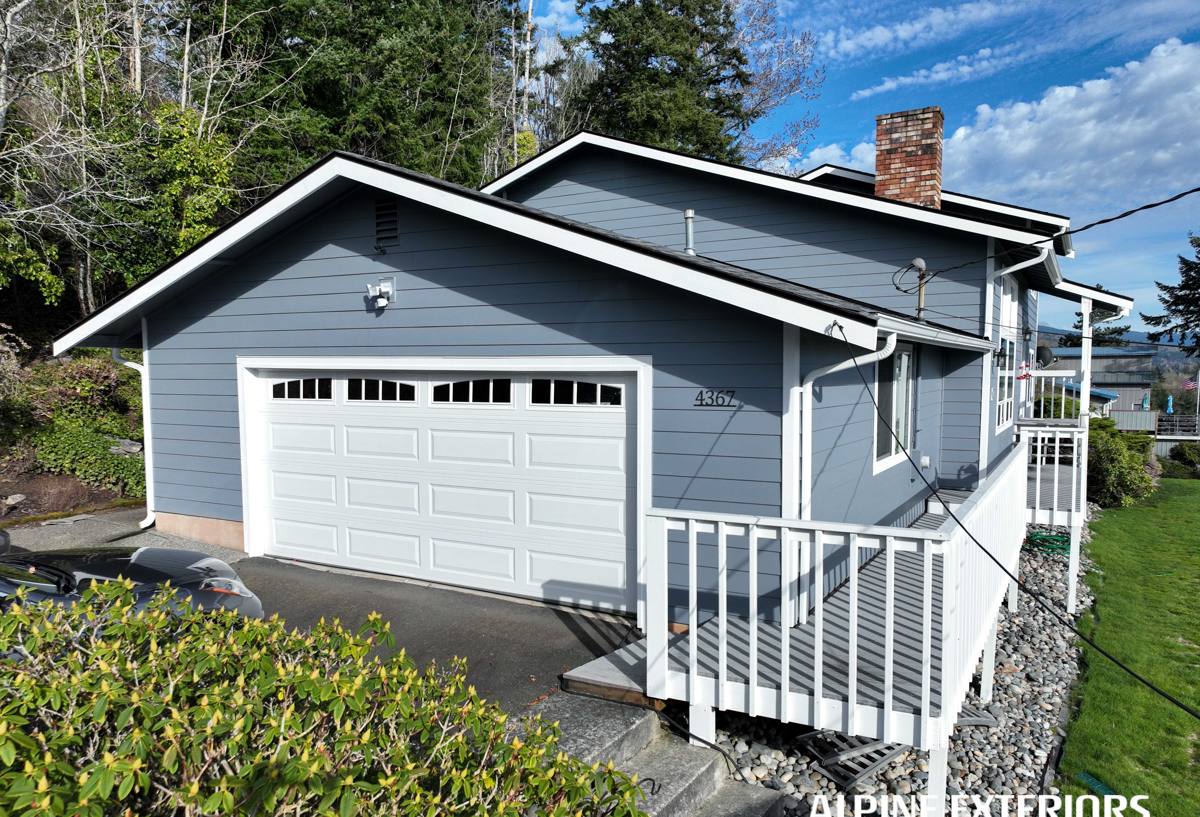
Signs a Sehome Roof Is Due for Replacement, Not Another Repair
Repairs make sense when a roof has isolated damage and years of life left. Replacement makes sense when the problems are systemic — when what looks like one leak is actually the whole roof telling you it's near the end. Here's what we look for during an assessment:
- Granule loss heavy enough that you can see bare asphalt mat on multiple slopes, not just one storm-damaged spot
- Moss colonies that keep returning within a season or two of cleaning, especially on north-facing or shaded slopes
- Soft or spongy decking underfoot, usually found near valleys, chimneys, or old skylight cutouts
- Daylight visible through the attic roof deck, or water staining on rafters that isn't tied to one obvious source
- Curling, cupping, or cracked shingles across large sections rather than isolated tabs
- Rusted or failing flashing at chimneys, sidewalls, and roof-to-wall transitions — common where salt air accelerates corrosion
- A roof that's already had two or more repair visits in the last few years for different issues
If your roof is showing two or more of these, a full assessment is worth more than another patch. We'll tell you honestly if repair is still the right call — replacement isn't always the answer, and we'd rather earn the job than push one you don't need.
What a Correct Roof Replacement Actually Involves
A roof replacement is more than swapping old shingles for new ones. In a climate like Bellingham's, the parts you don't see determine whether the roof performs for its full lifespan or starts failing early.
Tear-Off and Deck Inspection
Every roof replacement starts with full tear-off to bare decking, not a layover. That's the only way to find rot, soft spots, or old damage hiding under the existing shingles — common on older Sehome homes where a previous roof may have been installed over questionable decking. Any damaged sheathing gets replaced before anything new goes down.
Underlayment and Ice-and-Water Protection
Given how much driving rain this area sees, underlayment isn't a formality. We use synthetic underlayment across the full roof and self-adhering ice-and-water barrier at eaves, valleys, and roof penetrations — the spots where wind-driven rain is most likely to force its way under the shingle layer.
Flashing Done Right
Flashing failure is the single most common cause of "mystery leaks" we find on older roofs. Chimneys, skylights, sidewalls, and roof-to-wall intersections all need new, properly lapped flashing — never re-used flashing tucked under new shingles. In salt-air conditions, we favor corrosion-resistant materials and fastener types that hold up better than standard galvanized options over the long run.
Ventilation
A roof that can't breathe traps moisture, which speeds up rot and feeds moss growth from underneath as well as above. Balanced intake and exhaust ventilation is part of a correct replacement, not an upsell — it protects the decking and extends shingle life.
Fastening and Wind Exposure
Sehome's elevation and exposure mean roofs take real wind loading during winter storms off the Sound. Proper nailing pattern, count, and placement — per manufacturer specification, not a shortcut pattern — is what keeps shingles attached through the weather this area actually sees.
Material Options for Sehome Homes
Most Sehome roofs are asphalt composition shingle, and for good reason — it performs well, it's cost-effective, and modern architectural shingles handle this climate better than older three-tab products ever did. Metal roofing is a solid option for homeowners planning to stay long-term and wanting maximum longevity. We don't install cedar shake as a standard offering; open, moisture-holding wood grain is a difficult match for a climate this wet and mossy, and the maintenance burden it creates doesn't fit our standard of a low-maintenance, long-performing roof.
| Material | Typical Lifespan | Moss/Moisture Behavior | Best Fit |
|---|---|---|---|
| Architectural asphalt shingle | 25–30 years | Good with algae-resistant granules; needs periodic moss removal | Most Sehome homes — balance of cost and performance |
| Standing seam metal | 40–50+ years | Sheds moisture fast; minimal moss growth on smooth panels | Long-term owners wanting minimal future maintenance |
| 3-tab asphalt shingle | 15–20 years | Lower wind and moisture resistance than architectural | Budget-driven projects; not our default recommendation |
What Cost Actually Depends On
We won't quote a number without seeing the roof, but here's what actually drives the price up or down on a Sehome roof replacement:
| Factor | Why It Matters |
|---|---|
| Roof size and number of planes | More squares and more complex geometry mean more material and labor |
| Pitch and access | Steep or hard-to-access roofs (common on hillside Sehome lots) require more safety setup and time |
| Decking condition | Rotted sheathing found during tear-off adds material and labor to replace it |
| Layers to remove | Tearing off two layers of old roofing costs more than one |
| Material choice | Architectural shingle vs. metal vs. entry-level shingle changes material cost significantly |
| Flashing and ventilation scope | Chimneys, skylights, and multiple valleys all add detail work |
Broadly, homeowners in this area should expect a wide range depending on these factors — anywhere from a straightforward mid-size asphalt replacement to a larger job with steep pitch, extensive flashing work, or a metal upgrade. We'll walk the roof, explain what we find, and give you a written estimate that breaks down exactly what you're paying for.
Our Roof Replacement Process
- Free assessment: We inspect the roof from the ground and, where safe, up close — checking shingle condition, flashing, ventilation, and any interior signs of moisture.
- Honest recommendation: We tell you whether you're looking at repair or replacement, and why, in plain terms.
- Written estimate: A detailed quote covering material, tear-off, flashing, ventilation, and disposal — no vague line items.
- Scheduling around weather: We plan installation windows with Whatcom County's rain patterns in mind, and we don't leave a roof exposed overnight without protection.
- Tear-off, deck repair, and install: Full removal to bare decking, any needed sheathing replacement, then underlayment, flashing, ventilation, and shingles installed to spec.
- Cleanup and walkthrough: Magnetic sweep for nails, full debris removal, and a final walkthrough so you know exactly what was done.
Why a Crew That Already Works in Sehome Matters
Roofing crews unfamiliar with this region sometimes treat Bellingham like anywhere else in Washington — same shingle, same nailing pattern, same ventilation as a drier climate. That's how you end up with a roof that looks fine for a year or two and then starts showing the moss and moisture problems that are entirely predictable here. A crew that already works Sehome and the surrounding Bellingham neighborhoods knows which slopes hold moss longest, which flashing details fail first in salt air, and how to sequence a job around Whatcom County's rain rather than fighting it. That local knowledge shows up in fewer callbacks and a roof that actually performs the way it's supposed to for its full expected life.
Protecting Your New Roof After Installation
A correctly installed roof still benefits from basic upkeep in this climate. A few habits go a long way toward getting full value out of the investment:
- Have moss and debris cleared from the roof and gutters at least once a year, more often under heavy tree cover
- Keep gutters and downspouts flowing freely so water doesn't back up under the shingle edge
- Trim back overhanging branches to reduce shade, debris, and moisture retention on the roof surface
- Schedule a quick visual inspection after major windstorms to catch lifted shingles or flashing early
- Address small leaks or missing shingles promptly — they're far cheaper to fix than the damage they cause if ignored
If your Sehome home's roof is showing its age, or you just want an honest opinion on where it stands, we're happy to take a look. Fill out the form below for a free, no-pressure estimate — we'll tell you what we actually see, not what's easiest to sell.