 Bellingham
 Board & Batten in Columbia: A Style That Has to Earn Its Keep
Board and batten has real staying power in Columbia. It's a look that suits the mix of older, established homes and newer infill you'll find in this part of Bellingham — clean vertical lines, strong shadow lines from the battens, and a farmhouse or craftsman character that works whether a house is fifty years old or five. But in Whatcom County, board and batten siding isn't just a design choice. It's a system that has to shed water, resist moss and algae, and hold its shape through decades of Pacific Northwest weather. Get the material or the installation wrong, and the same vertical seams that make board and batten attractive become the exact places where water finds its way in.
We install board and batten siding throughout Bellingham, including here in Columbia, and we only do it in James Hardie fiber cement. That's not a marketing line — it's a decision built around what actually survives this climate long-term, which we'll walk through below.
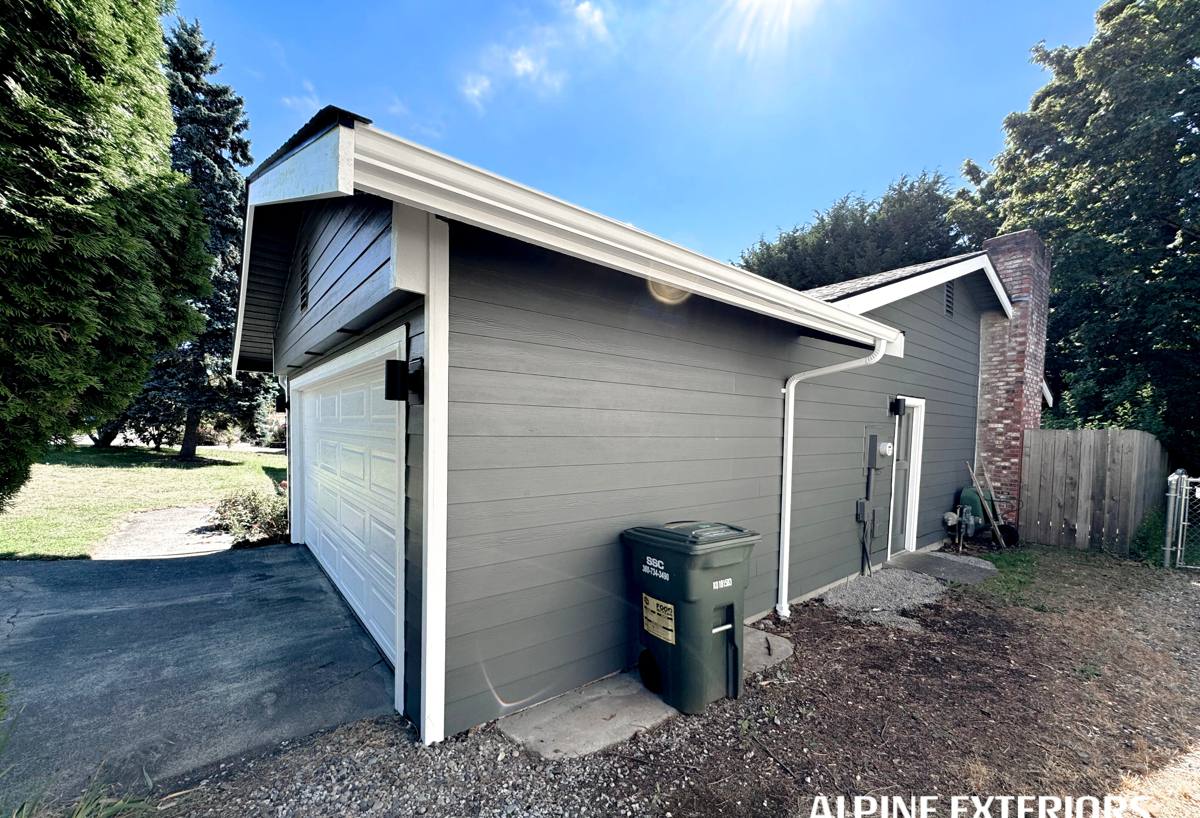
What Bellingham's Climate Does to Board & Batten Siding
Every siding style has a weak point, and for board and batten it's the vertical battens themselves — dozens of extra seams and fastener lines running the full height of the wall. In a dry climate that's a minor detail. In Bellingham, it's the whole ballgame.
- Salt air: Homes closer to Bellingham Bay deal with airborne salt that accelerates corrosion on fasteners and metal trim, and speeds up the breakdown of lower-grade wood and composite products.
- Driving rain: Wind-driven rain off the water doesn't just fall straight down — it pushes sideways into vertical joints and batten edges, which is exactly where poorly installed board and batten fails first.
- Moss season: Whatcom County's long wet season, shaded lots, and constant moisture mean moss and algae have months to establish themselves on any siding surface that stays damp, especially north-facing walls and areas under tree cover.
None of this makes board and batten a bad choice for Columbia. It just means the material and the installation details matter more here than they would somewhere drier.
What a Correct Board & Batten Job Actually Involves
The Rainscreen Gap
Board and batten should never be nailed flat against the weather-resistive barrier with no space behind it. A furred-out rainscreen gap lets any moisture that gets past the outer layer drain and dry instead of sitting against the wall sheathing. On a wall that faces years of driving rain, this gap is often the difference between siding that lasts and siding that traps water behind it.
Fastening and Batten Layout
Batten spacing needs to land on framing, not just be eyeballed for symmetry. Fasteners need to be corrosion-resistant given the salt air near the bay, and they need to be placed and set to the manufacturer's specification — over-driven or under-driven nails are a common cause of early siding failure, especially on vertical panel and batten systems where every fastener is exposed to weather.
Flashing and Trim Details
Every horizontal transition — window and door heads, roof-to-wall intersections, the bottom termination near grade — needs proper flashing. Board and batten's vertical lines can actually make flashing errors more visible over time, since staining and rot at a badly flashed joint tends to run straight down the face of the wall.
Caulking and Joint Treatment
Joints where battens meet trim, corners, and penetrations need the right sealant, applied correctly — not as a substitute for good flashing, but as a second line of defense. Over-caulking to compensate for a lazy flashing job is a shortcut we don't take.
Why We Only Install James Hardie Board & Batten
Board and batten can be built from several materials, and we've thought hard about each one before settling on James Hardie fiber cement as the only system we put on a house.
Cedar gives you a genuinely beautiful, authentic board and batten look, and we understand why homeowners are drawn to it. But real wood in this climate needs consistent refinishing, is a direct food source for moss and mildew, and is vulnerable to rot at the very seams and fastener points that define the board and batten style. In a moss-heavy, high-rainfall market like Bellingham, that maintenance burden is significant and ongoing.
LP SmartSide is an engineered wood product, and engineered wood is still wood at its core — it's treated to resist moisture, but it remains more sensitive to sustained wet exposure at cut edges and joints than fiber cement is. On a system with as many vertical seams as board and batten, that sensitivity matters more than it would on a lap siding wall.
Vinyl board and batten is the lowest-maintenance of the wood alternatives, but it's also the least authentic-looking up close, it can fade unevenly in UV exposure, and it moves with temperature swings in ways that can telegraph through the batten lines over time. It also doesn't offer the fire-resistance profile of fiber cement, which matters more each year in this region.
James Hardie fiber cement is non-combustible, engineered specifically for climates like ours through its HZ5 product line, and finished with the ColorPlus factory finish system, which resists fading and chipping far better than field-applied paint. It doesn't feed moss the way wood does, it holds its shape through wet-dry cycles, and it comes with a strong, transferable manufacturer warranty. For a siding style that lives or dies on how well its seams handle water, that combination is why we standardized on it.
Comparing Board & Batten Materials for a Bellingham Home
| Material | Moss & Moisture Resistance | Maintenance | Typical Longevity |
|---|---|---|---|
| Cedar | Low — organic material, needs regular treatment | High — refinishing, sealing, moss removal | Varies widely with upkeep |
| LP SmartSide | Moderate — treated, but sensitive at cut edges | Moderate — periodic caulk and paint checks | Solid if detailed and maintained correctly |
| Vinyl | Good — doesn't absorb moisture, but traps it behind panels if not vented | Low — occasional washing | Long, but can fade and deform over time |
| James Hardie Fiber Cement | High — inorganic, engineered for wet climates | Low — factory finish, periodic washing | Long, backed by strong manufacturer warranty |
Our Process for Board & Batten Projects in Columbia
Every board and batten job starts with an honest look at the specific walls in question, not a one-size-fits-all bid.
- On-site assessment: We look at existing siding condition, moss and moisture staining patterns, sun and shade exposure on each elevation, and where water currently collects or lingers on the home.
- Tear-off and substrate check: Old siding comes off cleanly so we can inspect the sheathing underneath for hidden rot or moisture damage before anything new goes up — a step that's easy to skip and expensive to regret.
- Weather-resistive barrier and rainscreen: A proper drainage plane and furring strategy go in before a single board is fastened.
- Panel and batten installation: Hardie panels and battens go up to manufacturer spec, with corrosion-resistant fasteners set to the correct depth and spacing.
- Flashing, trim, and joint treatment: Every window, door, corner, and horizontal transition gets flashed and sealed correctly, not just caulked over.
- Final walkthrough and cleanup: We review the finished work with the homeowner and leave the site clean.
What Affects the Cost of a Board & Batten Project
- Whether it's a tear-off over existing siding or new construction/full re-side
- Home size and number of stories, including gable ends and dormers, which add cutting and trim work
- Amount of trim, corner detail, and window/door count
- Access and site conditions — tight lots, tree cover, or difficult staging can add time
- Hidden sheathing repair discovered once old siding comes off
- ColorPlus factory finish versus field painting after installation
Because so much of the final cost depends on what's actually happening behind the existing siding, we prefer to give real numbers after an in-person look rather than guess over the phone.
Why Hire a Crew That Already Works in Columbia
Board and batten installed to a generic national spec often underperforms in Whatcom County. A crew that regularly works Bellingham neighborhoods like Columbia has already seen how salt air affects fastener choice, how driving rain finds weak flashing details on this coastline, and where moss tends to establish first on local homes. That local pattern recognition shows up in the small decisions — batten fastening, drainage planning, flashing sequencing — that determine whether board and batten siding looks good for two years or holds up for decades.
If you're considering board and batten siding for a home in Columbia, we're glad to come take a look and talk through what your specific walls need. There's no pressure and no cost to get our honest read on the project — just fill out the form below to request a free estimate.