 Bellingham
 Why Siding Wears Differently in Barkley
Barkley sits close enough to Bellingham Bay that salt-laden air is a constant, low-grade stress on anything mounted to the outside of a house. Add Whatcom County's long stretch of wet months, wind-driven rain that gets pushed sideways into wall assemblies, and a moss and algae season that can run most of the year in shaded spots, and you have a climate that is genuinely tougher on exterior cladding than a lot of homeowners realize. It's not dramatic damage in any single storm — it's the slow accumulation of moisture cycling, UV exposure between rain events, and organic growth that gradually breaks down whatever is holding your siding together.
Homes in Barkley tend to be newer builds and planned residential construction compared to some of Bellingham's older neighborhoods, which means a lot of the original siding out there is now reaching the age where its warranty coverage, caulking, and factory finish are starting to show their limits. That makes this a neighborhood where proactive siding replacement — done before hidden moisture problems set in — pays off more than reactive patch repairs.
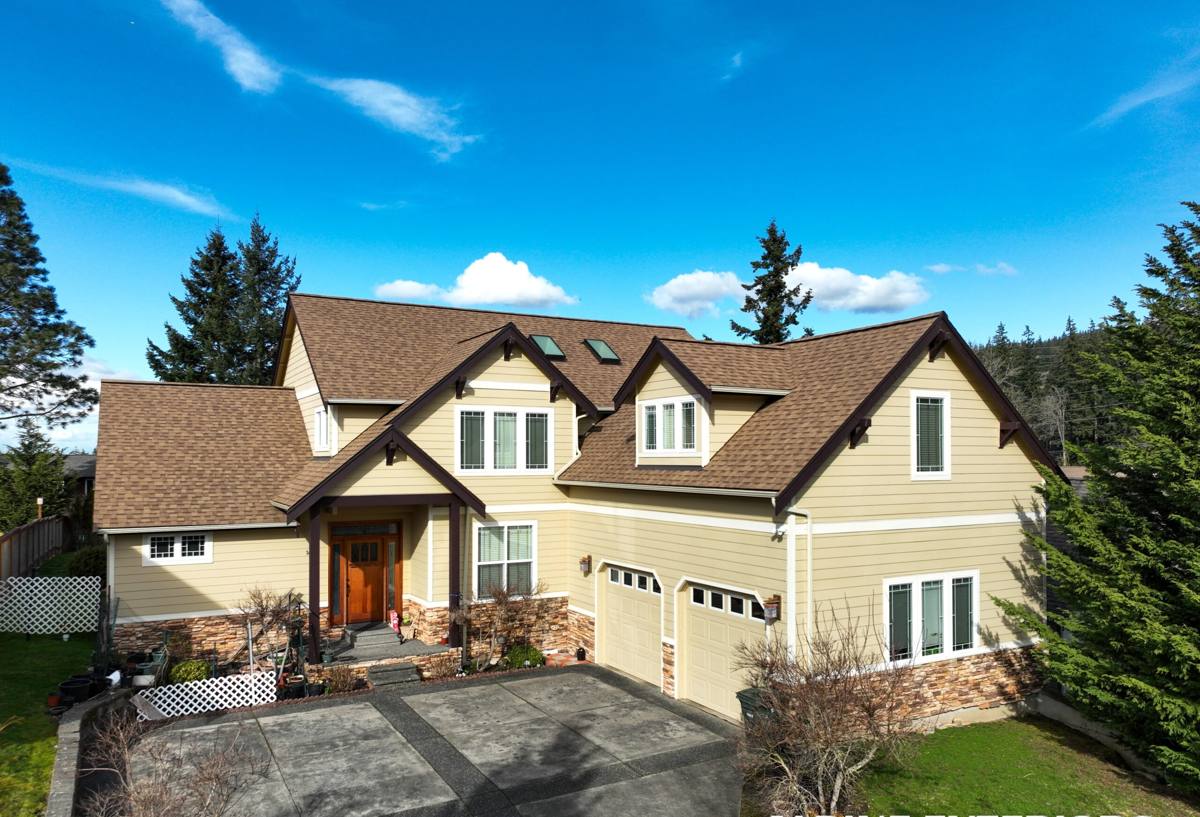
How Salt Air, Rain, and Moss Actually Damage Siding
Salt Air
Airborne salt is corrosive to fasteners, trim flashing, and any metal components in a siding system. It also accelerates the breakdown of lower-grade paint finishes, which is one reason a factory-applied finish that's engineered to resist fading and chalking matters more here than it would somewhere inland.
Driving Rain
Bellingham doesn't just get a lot of rain — a good share of it arrives horizontally, pushed by wind off the water. That kind of weather finds every gap in flawed flashing, every under-caulked seam, and every spot where siding wasn't held off the wall assembly correctly. Water that gets behind siding and can't drain or dry out is the single biggest cause of rot in this region.
Moss and Algae
Shaded, north-facing, and tree-adjacent walls in Barkley can stay damp for days after a storm. That's exactly the environment moss and algae need to take hold. Beyond the cosmetic issue, moss holds moisture directly against the siding surface, which shortens the life of the material underneath it — especially materials that weren't designed to handle sustained dampness.
Signs Your Barkley Home May Need Siding Replacement
Some warning signs are obvious. Others hide in plain sight until they've caused real damage. Here's what we tell Barkley homeowners to walk their exterior and check for:
- Soft or spongy spots when you press on siding, especially near the bottom courses and around windows
- Visible warping, buckling, or panels that no longer sit flat against the wall
- Paint that's peeling, bubbling, or chalking heavily — a sign the finish has failed and moisture is getting underneath
- Persistent moss or algae staining that comes back within weeks of cleaning
- Cracked or missing caulk at seams, corners, and trim joints
- Any musty smell or visible staining on interior walls that share an exterior wall
- Siding that's more than 20-25 years old, particularly if it's never been replaced or fully re-caulked
Any one of these on its own might be a repair. Several at once, or anything involving soft sheathing, usually means it's time to talk about full replacement rather than another round of patching.
What a Correct Siding Replacement Actually Involves
Siding replacement is more than swapping old panels for new ones. The siding itself is the visible layer, but the work that determines whether a house stays dry for the next 30-50 years happens underneath it.
Full Tear-Off and Sheathing Inspection
We remove the existing siding entirely rather than covering over it, because that's the only way to actually see what's happening at the wall. In a climate like ours, hidden rot at window sills, corners, and lower wall sections is common enough that skipping this step is a real risk.
Water-Resistive Barrier
A correctly installed weather-resistive barrier (WRB) behind the siding is what keeps any water that does get past the cladding from reaching the framing. Given how much driving rain Barkley sees, this layer isn't optional — it's the actual line of defense.
Flashing at Every Penetration
Windows, doors, hose bibs, vents, and outlets all need proper flashing detail. This is the step that gets rushed on lower-quality installs and is almost always where leaks start.
Manufacturer-Spec Installation
Fastener spacing, panel gaps, clearance from grade and roofing, and caulking at the right joints (and not at the wrong ones) all affect both performance and warranty coverage. Installed off-spec, even a good product will underperform.
Why We Install Only James Hardie Fiber Cement
We don't install vinyl, LP SmartSide, primed wood, or other fiber cement brands. That's a deliberate standard, not a sales pitch. In a climate defined by sustained moisture and salt exposure, we want a cladding that's non-combustible, dimensionally stable, and backed by a factory finish engineered to hold color and resist the kind of moss, mildew, and UV breakdown this region produces. James Hardie's ColorPlus finish is baked on and warrantied against fading and chipping, and their HZ5 product line is specifically engineered for the Pacific Northwest's wet-weather exposure category. We'd rather stand behind one system we trust completely than offer several and hope each one holds up.
Our Siding Replacement Process for Barkley Homes
- On-site assessment — we inspect existing siding, sheathing condition, and problem areas specific to your home's orientation and exposure
- Scope and product selection — choosing the right Hardie plank, shingle, or panel profile and ColorPlus finish for your home
- Tear-off — full removal of old siding and trim
- Sheathing repair — replacing any rotted or compromised sheathing found underneath
- WRB and flashing installation — the moisture-management layer done to manufacturer detail
- Siding installation — installed to James Hardie's fastening and clearance specifications
- Trim, caulking, and touch-up — finishing details that determine long-term water-tightness
- Final walkthrough — reviewing the completed work with you before we consider the job done
What Affects the Cost of a Siding Replacement
Every home is different, so we don't quote broad projects sight unseen — but these are the factors that most commonly move the price up or down on a Barkley job:
| Cost Factor | Typical Impact |
|---|---|
| Extent of hidden sheathing damage found during tear-off | High |
| Home size and number of stories | High |
| Number of windows, corners, and architectural details | Moderate |
| Siding profile chosen (lap, shingle, panel) and trim style | Moderate |
| Accessibility of the site (grade, landscaping, setbacks) | Moderate |
| Paint or finish color selection | Low to Moderate |
| Removal and disposal of existing siding material | Low |
The single biggest cost swing usually isn't the siding itself — it's what a crew finds once the old siding comes off. This is another reason we do full tear-offs rather than covering over existing material: it lets us give you an honest number instead of surprises mid-project.
Why Hiring a Crew That Already Works in Barkley Matters
A contractor who regularly works this part of Whatcom County already knows which wall orientations in Barkley tend to hold moisture longest, how local moss growth behaves through the wet season, and what flashing details actually hold up against wind-driven rain off the bay. That's not something you can fully substitute with a generic install crew that's never worked this specific mix of exposure and climate before.
It also means faster, more accurate estimates, fewer surprises once tear-off begins, and a crew that understands local permitting and inspection expectations. When you're comparing bids, it's worth asking directly how much work a contractor has actually done in your immediate area.
Protecting Your New Siding After Installation
Correctly installed Hardie siding is low-maintenance, but "low-maintenance" isn't "no-maintenance" — especially in this climate. A short annual routine keeps it performing the way it's designed to:
- Rinse siding once or twice a year to keep salt residue and grime from building up
- Trim back vegetation and tree limbs that keep shaded wall sections damp
- Check and refresh exterior caulking at seams and trim joints every few years
- Address any moss regrowth early rather than letting it establish
- Keep gutters clear so overflow isn't running down the wall face
If you're weighing whether your current siding needs replacement or just needs a repair, or you're ready to talk through what a correct James Hardie installation would look like on your home, we're happy to take a look. Fill out the form below for a free, no-pressure estimate.