 Bellingham
 Why Birchwood Homes Need Decking Built for This Climate
Birchwood sits close enough to Bellingham Bay and the surrounding wetlands that homes here deal with a specific combination of weather stress that a lot of decking material simply isn't built for: salt-tinged air, long stretches of driving rain off the water, and a moss season that can run from October clear into April. A deck that looks fine on the showroom floor can start showing problems within a couple of years if it wasn't chosen and installed with that combination in mind.
Salt Air and Moisture
You don't need to be waterfront to feel the effects of salt air in this part of Whatcom County — it travels. Salt-laden moisture accelerates corrosion on exposed fasteners, hinges, and railing hardware, and it speeds up the breakdown of lower-grade wood fibers in composite boards that aren't fully capped. Over time, uncapped or poorly sealed composite decking can absorb moisture at the core, leading to swelling, soft spots, and eventually structural weakness at board ends and cut edges.
Moss, Algae, and Shade Coverage
Bellingham's tree canopy and frequent overcast skies mean a lot of Birchwood decks sit in partial shade for much of the year. That shade keeps boards damp longer after rain, which is exactly what moss and algae need to take hold. A textured composite board with a poor cell structure can trap moisture in surface grooves, giving organic growth a foothold that's hard to fully remove without damaging the board's finish.
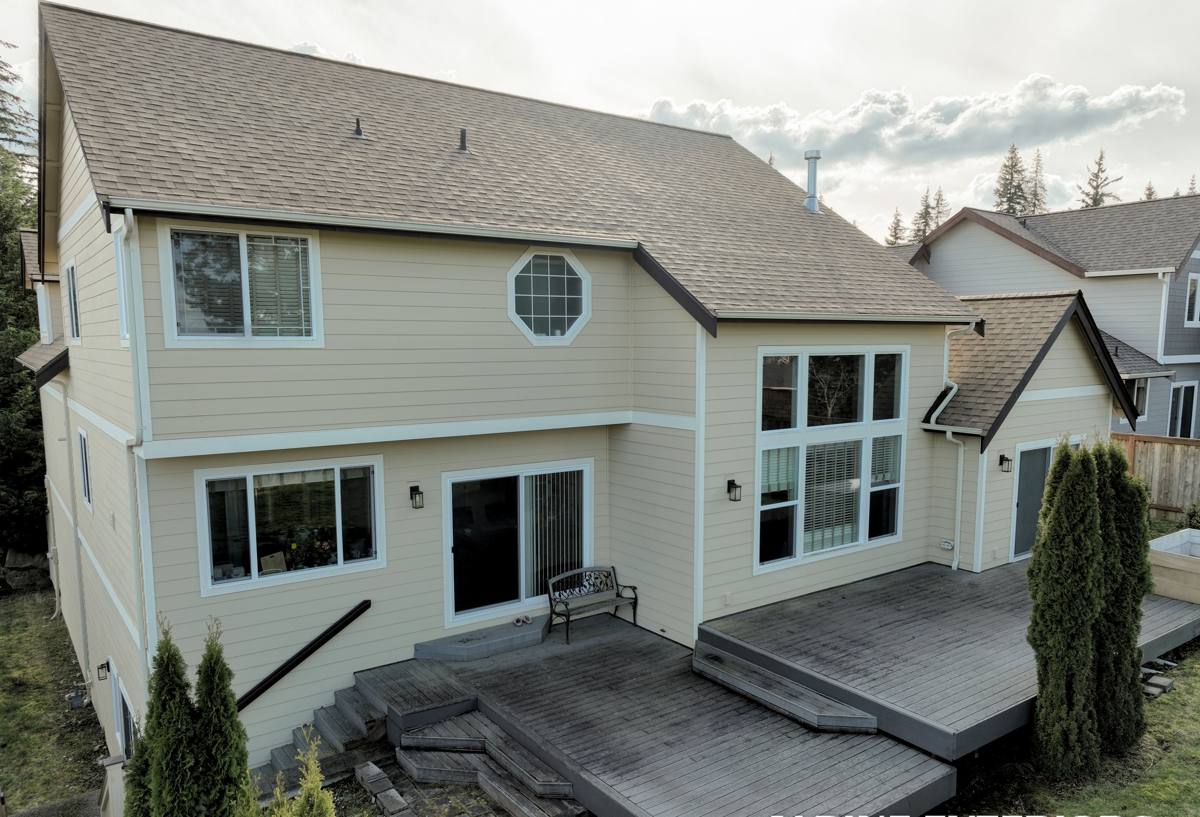
What a Correctly Installed Composite Deck Actually Involves
Composite decking is only as good as what's underneath it and how it's fastened. Most of the complaints we hear about composite decks — squeaking, sagging, boards popping loose, water pooling — trace back to substructure and installation shortcuts, not the decking material itself.
Substructure and Joist Spacing
Composite boards are heavier and behave differently under load than solid wood, so manufacturers specify tighter joist spacing than you'd use for a cedar or pressure-treated deck — often 12" or 16" on center depending on the board and whether the run is straight or angled. Framing built to old wood-deck spacing standards is one of the most common causes of bounce and long-term sagging in composite installations we're asked to fix or replace.
Fasteners, Flashing, and Ledger Attachment
Where the deck ties into the house, the ledger board and flashing detail matter more in a wet climate like ours than almost anywhere else in the build. Proper flashing directs water away from the band joist and wall sheathing instead of letting it collect and wick moisture into the structure. We use corrosion-resistant, manufacturer-approved fasteners and hidden clip systems rated for coastal or high-moisture exposure — not general-purpose hardware that can rust and stain the board surface within a season or two.
Drainage and Airflow Underneath
Low-clearance decks and decks built close to grade need attention to drainage and ventilation underneath, or moisture and debris will collect and stay wet through our long rainy stretches. That means proper grading away from the foundation, gap spacing between boards for water to shed, and enough clearance for air to move and dry things out between storms.
Composite vs. Wood vs. PVC: What Fits a Birchwood Property
There's no single "best" decking material for every home — it depends on your budget, how much upkeep you want to do, and how exposed the deck is to sun, shade, and moisture. Here's how the main options compare for a home in this climate.
| Material | Upkeep in Our Climate | Moisture Behavior | Typical Lifespan |
|---|---|---|---|
| Pressure-treated wood | Annual cleaning, periodic staining/sealing | Prone to swelling, splitting, and rot if sealing lapses | 10–15 years before major repair |
| Cedar | Regular sealing to hold color and resist moisture | Naturally rot-resistant but still needs maintenance in wet shade | 15–20 years with upkeep |
| Capped composite | Occasional washing, no staining or sealing | Moisture-resistant shell resists swelling and staining | 25–30+ years, manufacturer-warrantied |
| PVC | Low, occasional washing | Fully moisture-resistant, but can feel and flex differently underfoot | 25–30+ years |
For most Birchwood homeowners dealing with shade, moss exposure, and salt-tinged rain, a fully capped composite board strikes the right balance — it resists the moisture and organic growth issues that plague wood, without the higher price and different underfoot feel of full PVC systems. We won't push a specific brand as "the only option" — we'll walk you through what's actually rated for coastal PNW exposure and let you decide based on your budget and how the deck will be used.
Our Process for Birchwood Deck Projects
We approach every composite deck the same methodical way, whether it's a full rebuild or new construction.
- Site visit and assessment — we look at drainage, sun/shade exposure, existing structure condition (if replacing a deck), and how the space is actually used.
- Design and material selection — board style, color, railing system, and layout, sized to fit the home and how water will shed off the structure.
- Permitting — we handle the paperwork with the City of Bellingham or Whatcom County, depending on jurisdiction, so the project is inspected and legal from the start.
- Demolition and substructure work — old decking and any compromised framing, ledger, or footings are addressed before a single composite board goes down.
- Framing to spec — joist spacing and ledger flashing built to the composite manufacturer's requirements, not generic wood-deck standards.
- Decking and railing installation — hidden fastener systems where specified, correct gapping for drainage and seasonal expansion.
- Final walkthrough and inspection — we confirm the work with you and with the local building inspector where required.
Permits and Local Considerations in Whatcom County
Depending on the deck's height, size, and attachment to the home, a building permit is typically required, and that holds whether the property falls inside Bellingham city limits or unincorporated Whatcom County. Guardrail height, stair geometry, and footing depth all have code requirements that get checked at inspection — cutting corners here isn't just a compliance risk, it's a safety issue for whoever's standing on the deck. We pull permits as part of the job rather than leaving it to the homeowner, and we build to pass inspection the first time.
Setback requirements can also come into play depending on lot size and how close the deck sits to a property line, especially on some of the smaller, older lots common in established Bellingham neighborhoods. We check this during the site visit so there are no surprises once the project is underway.
Maintenance: What Composite Decking Still Needs Here
"Low-maintenance" doesn't mean "no maintenance," especially in a climate that stays damp for much of the year. Composite decking still needs some seasonal attention to stay looking and performing its best.
- Sweep off leaves, needles, and debris regularly — trapped organic matter holds moisture against the board and feeds moss growth.
- Wash the deck surface with a soft-bristle brush and mild soap a couple of times a year; avoid pressure washers on close settings, which can damage the board's cap layer.
- Check railing hardware and fasteners annually for corrosion or loosening, particularly if the deck gets direct exposure to storm winds off the water.
- Keep gutters and downspouts near the deck clear so runoff isn't dumping directly onto the decking surface.
- Trim back overhanging branches where possible to reduce shade and speed up drying time after rain.
- Address any standing water or slow-draining spots early — it's usually a sign of a grading or gap-spacing issue, not something a cleaning will fix.
Cost Factors for a Composite Deck Project
Every deck is different, but the same handful of factors drive most of the cost difference between projects. We give firm, itemized quotes after the site visit — no guessing over the phone.
| Factor | Why It Matters |
|---|---|
| Deck size and shape | Square footage and complexity (angles, multiple levels) affect both material and labor |
| Board tier | Entry-level capped composite vs. premium composite or PVC changes material cost significantly |
| Existing structure condition | Reusable framing keeps costs down; rot or undersized joists mean a rebuild from the substructure up |
| Railing system | Composite, aluminum, cable, and glass railing all carry different material and install costs |
| Stairs and height | Multi-level decks and stairs add framing, railing, and code complexity |
| Site access | Tight lots or difficult material staging can add labor time |
Why Hiring a Crew That Already Works in Birchwood Matters
A crew that only builds decks occasionally, or that's used to a drier climate, tends to under-frame for our moisture load and under-flash the ledger connection — problems that don't show up until a year or two in, once the damage is already underway. We build decks throughout the Bellingham area regularly, so joist spacing for composite, ledger flashing detail, and drainage planning for our shade-and-rain pattern aren't guesswork on our jobs — they're standard practice. We also know the local permitting process, which keeps projects from stalling on paperwork.
If you're planning a new deck or need to replace one that's showing its age, we're happy to come take a look and give you a straightforward, no-pressure estimate for your Birchwood property. Fill out the form below and we'll get in touch to schedule a time.