 Bellingham
 Blaine's Coastal Climate Asks More of a Roof
Blaine sits right on Semiahmoo Bay at the northern edge of Whatcom County, and that location shapes what a roof has to survive here. Salt-laden air blows in off the water, rain arrives sideways more often than straight down, and the shoulder seasons stay damp long enough that moss and algae get a real foothold on anything that doesn't shed water and dry out quickly. A roofing material that performs fine forty miles inland in drier air can wear out faster on a home a few blocks from the water in Blaine.
Metal roofing holds up well against most of what this stretch of coastline throws at a house, but only when the material, fasteners, and detailing are chosen with salt exposure and moss pressure in mind. A metal roof installed the same way you'd install one in a dry inland climate is not the same job as one installed correctly for Blaine.
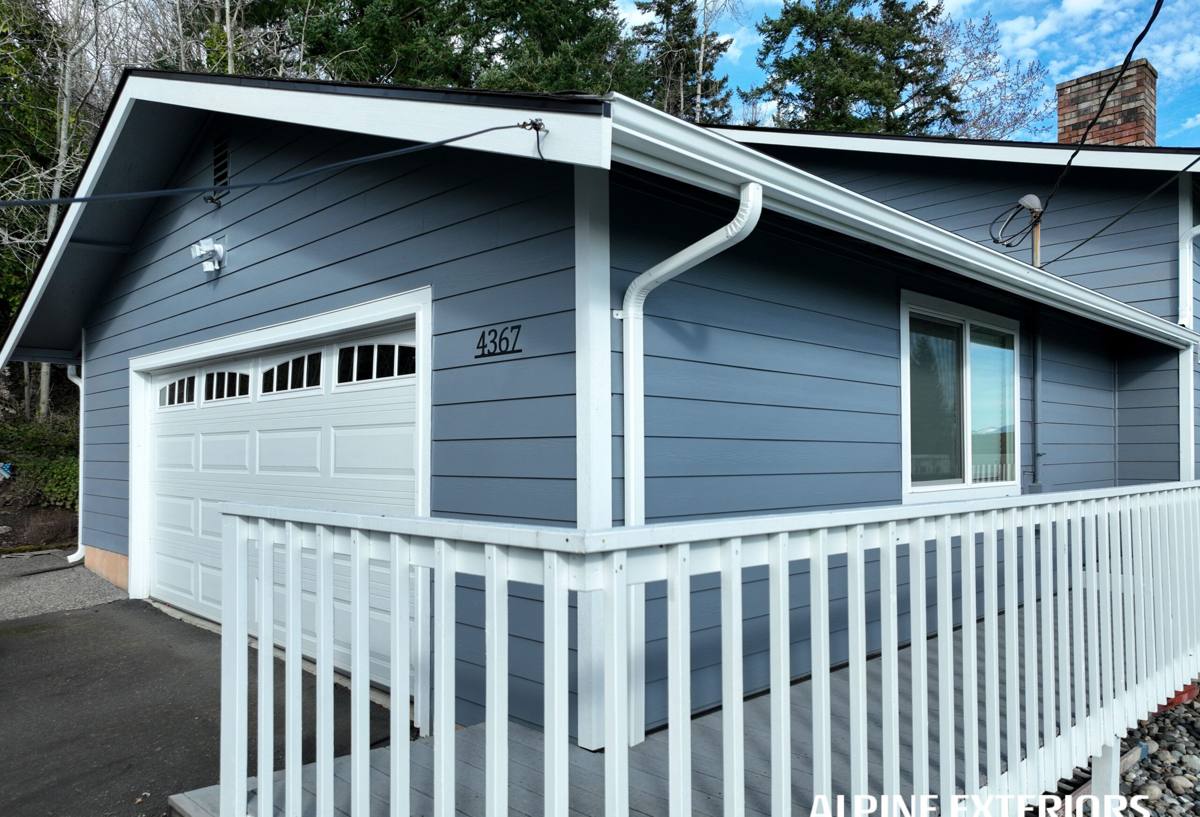
Why Metal Roofing Makes Sense for Blaine Homes
Metal roofing isn't the right fit for every home or every budget, but for Blaine's climate specifically, it solves several problems at once:
- Steep water shedding. Metal panels move driving rain off the roof fast, which matters when wind-driven rain off the bay hits the roof at an angle instead of straight down.
- Poor surface for moss. Moss needs a rough, porous surface and standing moisture to establish itself. A smooth metal panel gives it far less to grab onto than shingles, and the surface dries faster after our long wet stretches.
- Long service life. A correctly installed metal roof can outlast two or three cycles of asphalt shingle replacement, which matters on a coastal property where re-roofing is more disruptive and salt-air wear accelerates aging on lesser materials.
- Wind performance. Blaine gets its share of exposed, open-water wind. Properly fastened metal panels resist uplift better than most shingle systems.
None of that means metal is maintenance-free near salt water — it means it's a better starting point, provided the installation accounts for corrosion risk from day one.
Choosing the Right Metal Roofing System
"Metal roofing" covers a range of products, and the right one depends on the home, the budget, and how close the property sits to the water. We walk homeowners through the real trade-offs rather than pushing one system for every job.
| System | Best For | Coastal Consideration |
|---|---|---|
| Standing seam | Homes wanting the longest service life and cleanest look | Concealed fasteners mean fewer penetration points for salt-laden moisture to work into over time |
| Exposed fastener panel | Budget-conscious projects, outbuildings, shops | Exposed screws and washers need higher-grade fasteners and more frequent gasket checks near the water |
| Metal shingles/shakes | Homeowners wanting a traditional look with metal's durability | More seams and overlaps than standing seam, so flashing detail work matters more |
For homes closer to the water in Blaine, we generally steer people toward standing seam or upgraded fastener packages, simply because fewer exposed metal-to-metal contact points means fewer places for corrosion to start.
Steel vs. Aluminum in a Salt-Air Environment
This is one of the most important decisions on a coastal metal roof, and it's where a lot of installation mistakes happen. Galvanized and galvalume steel are excellent, cost-effective options, but they rely on their protective coating staying intact — any scratch, cut edge, or fastener puncture that isn't properly sealed can become a corrosion starting point faster near salt air than it would forty miles inland. Aluminum doesn't rust the way steel does and handles direct salt exposure with less risk, which is why we recommend it more often for homes with direct or near-direct water exposure around Blaine, even though it typically costs more up front. We'll give you the honest trade-off for your specific property rather than defaulting to whichever material is cheaper to install.
What a Correct Metal Roof Installation Actually Involves
A metal roof is only as good as what's underneath it and how the details are handled. The panels themselves get most of the attention, but the underlying assembly is what determines whether the roof performs for decades or develops problems in five years.
- Deck inspection and repair. We check the roof deck for soft spots, rot, or prior water damage before anything goes down — covering a bad deck with new metal just hides the problem.
- Underlayment. A high-quality synthetic or self-adhered underlayment matters more here than in drier climates, since it's the backup layer if wind-driven rain ever gets past a seam.
- Ventilation. Metal roofs need proper intake and exhaust airflow to avoid condensation building up on the underside of the panels — a common issue when ventilation is an afterthought.
- Flashing at every penetration. Chimneys, vents, skylights, and valleys are where most roof leaks actually originate, metal or otherwise. Flashing gets custom-fit and properly lapped, not just caulked and hoped for.
- Fastener selection. Coastal jobs call for corrosion-resistant fasteners matched to the panel material — mixing incompatible metals accelerates corrosion through galvanic reaction, which is a mistake we see on some prior installations we've been called to repair.
- Panel layout and seaming. Panels are run and seamed to shed water in the direction it actually travels on that specific roof, accounting for valleys, dormers, and the home's exposure to prevailing wind and rain direction.
Moss, Algae, and Long-Term Roof Maintenance in Whatcom County
Even a moss-resistant metal roof benefits from basic seasonal upkeep in a climate like Blaine's. The goal isn't heavy maintenance — it's a few simple habits that keep the roof performing the way it's designed to:
- Keep gutters and valleys clear of needles and leaf debris, which trap moisture against the panel edges even on metal.
- Trim back overhanging branches to reduce shade and debris buildup, both of which extend how long the roof stays damp after rain.
- Do a visual check after major windstorms for lifted panels, loose fasteners, or damaged flashing rather than waiting for a visible leak.
- Rinse off heavy moss or algae buildup on shaded north-facing slopes periodically — a soft wash, never pressure washing, which can damage panel coatings and seams.
Homes tucked under tree cover or on shaded lots inland from the water still deal with Whatcom County's long moss season regardless of roofing material, so these habits matter on a metal roof too, just less urgently than on shingles.
Our Process, Start to Finish
1. On-Site Assessment
We look at the existing roof, deck condition, ventilation setup, and the home's specific exposure — how close to the water it sits, how much tree cover it has, and which slopes take the brunt of the weather.
2. Material and System Recommendation
Based on that assessment, we recommend a panel type and material — steel or aluminum, standing seam or another profile — with the reasoning explained, not just a quote with a product name on it.
3. Written Estimate
You get a clear, itemized estimate covering materials, tear-off if needed, deck repair contingencies, and labor, with no vague allowances buried in the fine print.
4. Installation
Deck repair, underlayment, ventilation work, panel installation, and flashing detail all happen in sequence, with the crew checking work at each stage rather than rushing to get panels on and calling it done.
5. Final Walkthrough
We walk the finished roof with you, cover basic maintenance expectations for the system installed, and go over warranty coverage in plain terms.
What Affects the Cost of a Metal Roof in Blaine
| Factor | Why It Matters |
|---|---|
| Panel material (steel vs. aluminum) | Aluminum costs more but resists salt corrosion better on water-exposed homes |
| Roof complexity | Valleys, dormers, and multiple roof planes require more flashing and labor time |
| Deck condition | Rot or soft decking found during tear-off adds repair cost before panels go on |
| Panel profile | Standing seam typically costs more than exposed-fastener panel systems |
| Tear-off vs. overlay | Removing old roofing adds labor but allows full deck and ventilation inspection |
| Ventilation upgrades | Older homes often need intake or exhaust vent improvements added during the job |
We don't publish flat per-square pricing because these variables swing the total meaningfully from one house to the next — an accurate number comes from actually looking at the roof.
Signs a Blaine Home May Need a New Roof
- Visible rust streaking or corrosion spots on an existing metal roof, especially near fasteners or seams
- Heavy, persistent moss growth that returns quickly after cleaning
- Leaks or water stains appearing on interior ceilings after wind-driven storms
- Loose, lifted, or missing panels or shingles after high-wind events off the bay
- Visible sagging or soft spots when walking the roofline (viewed from the ground or during inspection)
- An aging asphalt roof nearing the end of its expected service life in a high-moisture, salt-air location
Why a Local Crew Matters for This Job
A metal roof installed by a crew that regularly works Blaine and the surrounding Whatcom County coastline understands the specific failure points this climate creates — where salt spray hits hardest, which roof orientations hold moisture longest, and how driving rain off the water behaves differently than a straight-down storm. That local knowledge shows up in material choices, fastener selection, and flashing detail that a one-size-fits-all installation might miss. It also means a crew that's still local and reachable years later if a question comes up about maintenance or warranty coverage.
If you're weighing a metal roof for a home in Blaine, we're happy to take a look and walk you through what your specific property needs — no pressure, no obligation. Reach out through the form below to schedule a free estimate.