 Bellingham
 Metal Roofing Built for Sudden Valley's Conditions
Sudden Valley sits in a heavily wooded, lake-adjacent setting east of Bellingham, and that setting is exactly why a roof there ages differently than one on an open lot in town. Tall conifer canopy keeps large sections of roof in shade most of the day, needle and leaf litter builds up in valleys and against chimneys, and the same moisture-laden marine air that moves off Bellingham Bay across Whatcom County keeps everything damp longer than homeowners expect. Add driving rain that comes in sideways during winter storms and a moss season that can run eight months or more, and you have a roofing environment that punishes anything that isn't installed correctly the first time.
Metal roofing holds up well here, but only when the panel system, flashing details, and ventilation are matched to this specific setting. This page covers what that actually looks like for a Sudden Valley home — not generic metal roofing talk, but what we account for on this kind of property.
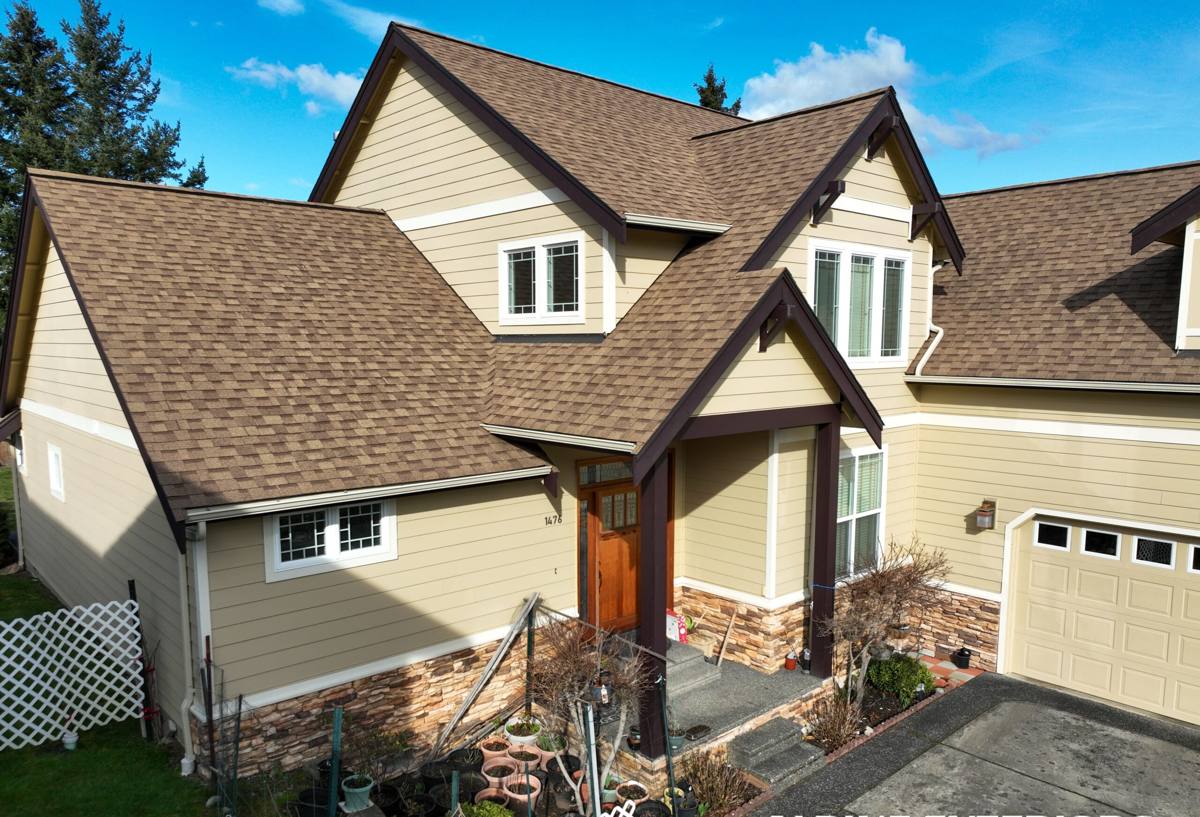
What Bellingham's Climate Does to a Roof Over Time
Every roofing material in Whatcom County deals with the same basic conditions: long wet seasons, short dry windows for work, wind-driven rain, and organic growth. On a shaded, tree-lined lot like most of Sudden Valley, three things matter more than they would on an exposed site:
Moss and Organic Buildup
Moss doesn't just sit on top of roofing material — it holds moisture against the surface, works into laps and fastener penetrations, and on organic-based materials it can lift edges over time. Shaded, north-facing slopes and anywhere debris collects (valleys, behind chimneys, along low-slope transitions) are the areas that show problems first.
Sustained Moisture
Homes tucked under tree cover dry out slower after a storm than homes in open sun. That extended damp period is what accelerates rot in sheathing and fascia when a roof's underlayment or flashing isn't doing its job, regardless of what the top layer of material is.
Wind-Driven Rain
Storms off the Sound don't always come straight down. Rain pushed sideways by wind finds any gap in flashing, any short lap in underlayment, or any fastener that wasn't sealed correctly. This is where installation quality matters more than material choice.
Why Metal Is a Strong Fit for This Setting
Metal roofing doesn't solve every problem tree cover creates, but it addresses the ones that matter most for a long-term roof:
- A hard, smooth surface gives moss and algae far less to grip onto compared to porous roofing materials, so growth is easier to keep in check with normal maintenance.
- Steep-slope metal panels shed water and debris quickly rather than absorbing moisture the way organic materials can.
- Properly installed metal systems have a long service life, which matters on a property where roof access means dealing with tree limbs, slope, and sometimes a longer driveway approach.
- Metal performs well under sustained rain and wind when the panel system, fasteners, and flashing are matched correctly — which is the installation standard we hold every job to.
None of that means metal is maintenance-free. It still needs debris cleared, gutters kept open, and periodic inspection — especially on a lot with heavy tree cover. It just gives you a material that doesn't hold moisture against itself while you stay on top of that maintenance.
Panel Systems: What Actually Fits a Sudden Valley Roof
Not all metal roofing is the same product wearing different colors. The panel system changes how the roof handles moss, debris, and long-term maintenance.
| Panel Type | How It's Attached | Best Fit For |
|---|---|---|
| Standing seam | Concealed fasteners under raised, interlocking seams | Steep, visible roof planes and homes where long-term, low-maintenance performance matters most |
| Exposed-fastener panel | Screws driven through the panel face into decking | Secondary structures, outbuildings, or budget-driven projects where periodic fastener maintenance is acceptable |
| Stone-coated steel | Interlocking panels with a granular coated surface | Homeowners who want the profile of shake or tile with a metal substrate underneath |
For primary living-space roofs under heavy tree cover, we lean toward standing seam. The concealed fastener system means there are no exposed screw heads for moss, needle debris, or standing water to work against over the years — which matters a great deal on a shaded, slow-drying roof plane.
Coating and Gauge
Panel gauge (thickness) and the paint coating both affect longevity. Heavier gauge steel resists denting from falling branches and hail better than thin panels, and a quality PVDF (Kynar-type) finish holds color and chalk resistance far longer than a basic polyester coating — a real consideration under UV exposure even in a mostly overcast climate. We'll walk through the specific gauge and coating options available for your project during the estimate rather than pushing a single default.
What a Correct Installation Actually Involves
Metal roofing fails when installers treat it like a shingle swap. It isn't. A correct install accounts for the whole roof assembly, not just the visible panels.
Underlayment and Ice/Water Protection
A synthetic, high-temp-rated underlayment goes down over the deck first, with self-adhering ice-and-water membrane at eaves, valleys, and any low-slope transition — the exact spots where wind-driven rain and moss-related backup are most likely to find a weak point.
Flashing at Every Penetration
Chimneys, skylights, vents, and wall transitions are where roofs actually leak, far more often than the field of the roof itself. Metal-compatible flashing has to be formed and sealed for the specific panel profile being used, not generic trim bent to fit.
Ventilation
Metal roofing needs a ventilated assembly — either a vented underlayment system or a proper ridge/soffit vent path — so moisture from the living space doesn't condense against the underside of cold metal panels. Skipping this is a common shortcut that causes problems years down the road, well after the crew that cut the corner is gone.
Fastening and Panel Layout
Panels need to be laid out to minimize seams in high-flow water paths, fastened per the manufacturer's spacing and torque specs, and finished with the correct closures and trim at ridges, eaves, and rakes. This is where the difference between a crew that installs metal regularly and one that doesn't shows up fastest.
Our Process for a Sudden Valley Project
- On-site assessment. We look at the existing roof, decking condition, ventilation, tree exposure, and access — driveway grade and slope both affect how we stage material and equipment on a lot like this.
- Tear-off or overlay decision. Metal can sometimes be installed over an existing roof in the right conditions, but on a shaded, moisture-prone lot we generally recommend a full tear-off so we can inspect and repair the deck underneath rather than roofing over a problem.
- Deck repair. Any soft, rotted, or moisture-damaged sheathing gets replaced before a single panel goes down. This step is non-negotiable — it's the difference between a roof that lasts and one that fails from underneath.
- Underlayment, flashing, and panel installation. Installed to the standards above, with attention to every valley, penetration, and transition specific to your roof's layout.
- Cleanup and walkthrough. We clear debris, check gutters and downspouts are clean and flowing, and walk the finished roof with you before we consider the job done.
Cost Factors on a Sudden Valley Property
Metal roofing costs more upfront than asphalt shingles, and the final number depends on more than just square footage. These are the variables that move the price most on this type of property:
| Factor | Why It Matters |
|---|---|
| Panel system and gauge | Standing seam with heavier gauge steel costs more than exposed-fastener panels but requires far less long-term maintenance |
| Tear-off and deck repair | Roofs with rot or moisture damage from prior moss buildup need more sheathing repair before install |
| Roof complexity | Steep pitches, multiple valleys, dormers, and chimneys all add flashing and labor time |
| Site access | Driveway grade, tree clearance, and staging space on wooded lots affect crew and material logistics |
| Coating and warranty tier | Premium PVDF finishes and longer manufacturer warranties cost more but hold up better under UV and coastal-influenced humidity |
We'd rather walk your specific roof and give you real numbers than quote a broad range that doesn't mean much for your property.
Signs Your Roof Needs Attention
Because so much of Sudden Valley sits under tree cover, roof problems can develop out of sight for a while. Watch for these:
- Moss or dark streaking concentrated on shaded, north-facing slopes or anywhere debris collects
- Granule buildup in gutters or at downspout outlets (a sign of shingle wear, but also a clue about what's collecting on the roof itself)
- Soft or spongy spots when walked, especially near valleys or chimney flashing
- Water stains on interior ceilings, particularly after a windy rainstorm rather than a calm one
- Sagging or uneven roof planes when viewed from the driveway or yard
- Gutters that overflow during moderate rain, which often points to debris or an underlying roof issue rather than just clogged gutters
Any one of these is worth a look before it turns into a deck repair or interior damage issue.
Why It Matters That We Already Work in Sudden Valley
A crew that's worked this community before understands things that don't show up in a generic estimate: how tree canopy affects staging and cleanup, how driveway grades and turnaround space limit equipment, and that many lake-community neighborhoods have design guidelines or association expectations around exterior materials, colors, and profiles that are worth checking before you finalize a panel choice. We factor that into the plan up front instead of discovering it mid-project.
Working locally also means we're not guessing at how a roof in this setting performs a few years out — we're the ones who get called back for maintenance, inspections, and the occasional storm-damage check, so we have a real stake in getting the install right the first time.
A Straightforward Estimate, No Pressure
If you're weighing metal roofing for a Sudden Valley home — whether you're dealing with an aging roof, ongoing moss problems, or you're just done maintaining asphalt shingles under heavy tree cover — we're happy to take a look and give you a straightforward assessment. Use the form below to request a free, no-pressure estimate, and we'll walk your roof, answer your questions, and give you real numbers for your property.