 Bellingham
 Board & Batten in a Neighborhood Built on Character
Fairhaven's mix of historic storefronts, hillside cottages, and newer infill homes gives the neighborhood a distinct visual identity, and board & batten siding fits right into it. The vertical lines and crisp shadow lines read as craftsman, farmhouse, or coastal cottage depending on the trim and color choices, which is part of why it's one of the most requested exterior styles we get calls about from homeowners near the Fairhaven waterfront and up the hill toward the historic district. It's a look that works whether you're restoring an older home's street presence or giving a newer build some texture instead of a flat wall of siding.
But board & batten is also a style that will expose bad workmanship faster than lap siding does. The vertical battens create dozens of extra seams and fastener lines compared to a horizontal profile, and every one of those seams is a potential water entry point if it isn't detailed correctly. In a neighborhood that sits close to Bellingham Bay and takes weather straight off the water, that detail work isn't optional — it's the whole job.
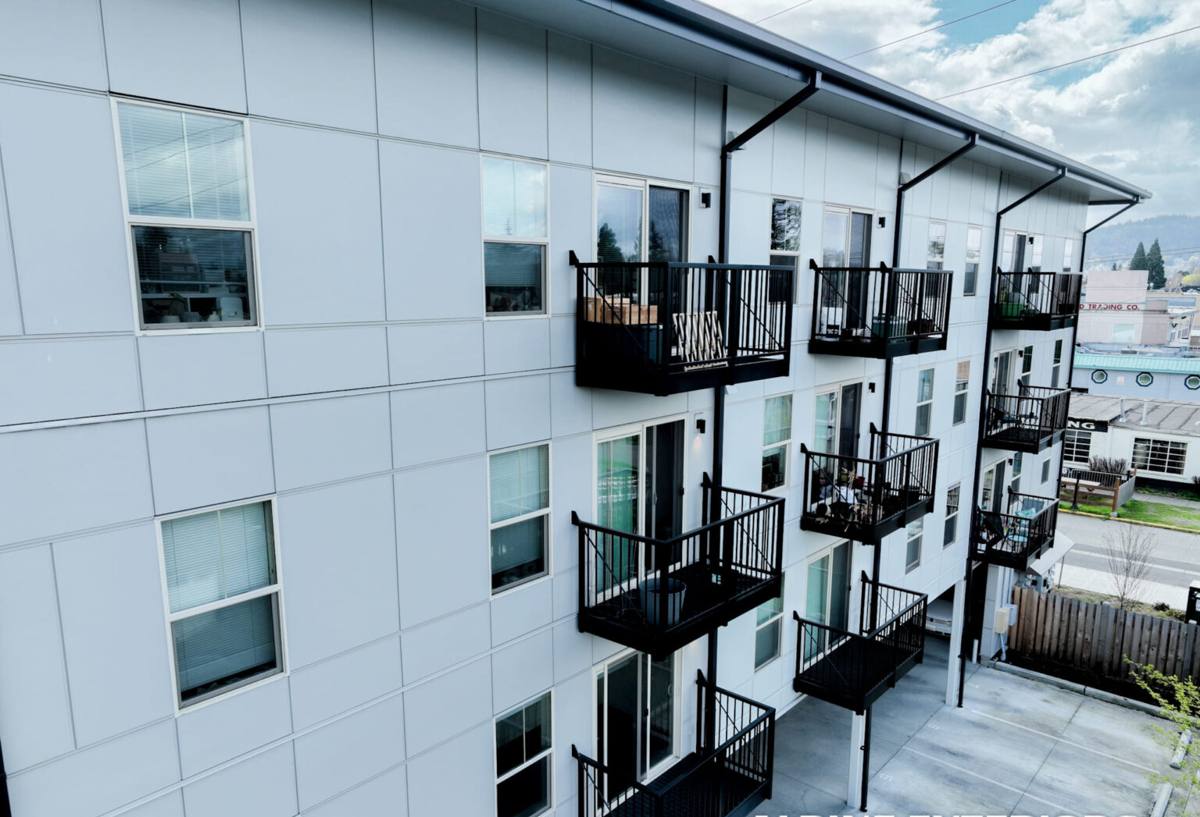
What Bellingham's Climate Actually Does to a Wall Like This
Whatcom County's marine climate is mild, which is a big part of why people love living here, but "mild" doesn't mean easy on a house. Fairhaven sits close enough to the water that homes take on salt-laden air, and combined with our long wet season, that's a slow, steady corrosion and moisture load most siding materials weren't designed to handle indefinitely.
- Salt air: accelerates corrosion of exposed fasteners, flashing, and any metal trim that isn't properly rated or protected.
- Driving rain: wind off the bay pushes water sideways into vertical seams and butt joints, not just straight down the wall.
- Long moss season: shaded, north-facing, and tree-covered walls in and around Fairhaven stay damp for extended stretches, which is exactly the environment moss, algae, and mildew need to take hold.
- Temperature swings: even modest daily swings cause siding materials to expand and contract, which over years can loosen poorly fastened boards and open up caulked joints.
None of this means board & batten is a bad choice here. It means the material and the installation both have to be matched to what this specific climate throws at a wall, year after year, not just what looks good on installation day.
Why We Install Board & Batten Only in James Hardie Fiber Cement
We get asked regularly about cedar board & batten, primed wood, and LP SmartSide as lower-cost alternatives, and we understand the appeal — they can look great going up. Our answer is the same every time: we don't install them, because we've made fiber cement our standard for every siding job we do, board & batten included.
Wood and engineered wood products depend heavily on paint and caulk maintenance to keep moisture out of the substrate, and in a climate with this much sustained dampness and salt exposure, that maintenance burden shows up faster and more often than most homeowners expect. Vinyl board & batten profiles exist too, but vinyl expands and contracts more than fiber cement, which telegraphs through vertical battens as visible waviness over time, and it doesn't hold up as well against direct UV and temperature cycling.
James Hardie fiber cement is non-combustible, dimensionally stable, and manufactured with regional climate zones in mind — the HZ10 formulation is engineered specifically for wetter, moderate climates like ours. It takes a factory-applied ColorPlus finish that doesn't rely on job-site paint to do the moisture-blocking work, and it comes with a strong, transferable manufacturer warranty. That combination is why it's the only board & batten material we put on a Fairhaven home.
Anatomy of a Correct Board & Batten Installation
A board & batten wall is really two layers of protection: the water-resistive barrier behind the siding, and the siding itself. Both have to be right, and the connection between them matters more than either one alone.
What has to happen underneath
Before any panel or batten goes up, the wall needs a properly lapped weather-resistive barrier, correctly integrated window and door flashing, and — in most cases we recommend for this climate — a rainscreen gap created with vertical furring strips. That gap lets any moisture that does get behind the siding drain and dry out instead of sitting against the sheathing.
What has to happen at the surface
- Panels and battens fastened per Hardie's engineering specs, not "close enough" spacing
- Butt joints flashed or backed, never just caulked and left
- Corrosion-resistant fasteners and flashing suited to a salt-air environment
- Proper clearance at grade, decks, and roof lines so siding never sits in standing water or gets buried in soil or mulch
- Factory-cut and factory-primed edges kept intact wherever possible, with field cuts sealed per manufacturer instructions
Skip any one of these steps and the wall might look identical for a year or two. The failures that show up later — moisture staining, soft trim, moss creeping in at seams — almost always trace back to something that was cut corners on during install, not a flaw in the material itself.
Hardie Product Options for a Board & Batten Look
There's more than one way to get the board & batten aesthetic in the Hardie lineup, and the right choice depends on the home's style and your maintenance preferences.
| Option | How it's built | Best fit |
|---|---|---|
| HardiePanel vertical siding with battens | Large-format vertical panel with separate batten strips over the seams | Clean, modern farmhouse or craftsman look; fewer horizontal joints |
| Board & batten via individual planks | Narrower vertical boards installed with spaced battens | More traditional, cottage-style appearance; often mixed with other Hardie profiles as an accent |
| Accent application | Board & batten used on gables, dormers, or a porch/entry feature only | Homes that want texture and contrast without re-siding the whole exterior |
All of these are available in Hardie's ColorPlus finishes, which means the color is baked on at the factory under conditions no job-site paint job can match, backed by a dedicated finish warranty separate from the product warranty.
Our Process, Start to Finish
- On-site assessment: we look at your current siding, sheathing condition, moisture exposure, and sun/shade pattern specific to your lot in Fairhaven.
- Design and product selection: panel vs. plank board & batten, batten spacing, color, and where it makes sense to use it as an accent versus full coverage.
- Written estimate: a clear scope covering tear-off (if needed), barrier and flashing work, rainscreen furring where called for, and the Hardie materials specified.
- Installation to spec: our crews follow James Hardie's published fastening, clearance, and flashing requirements — not a shortcut version of them.
- Final walkthrough: we go over the finished wall with you before we consider the job done.
What Drives the Cost of a Board & Batten Project
| Factor | Why it matters |
|---|---|
| Tear-off vs. new construction | Removing and disposing of old siding, and repairing any hidden sheathing damage, adds labor beyond the siding install itself |
| Full wall vs. accent use | Board & batten on gables or an entry feature costs less than covering an entire home |
| Rainscreen furring | Adding a drainage gap behind the siding is extra labor and material, but it's the right call for exposed, weather-facing walls |
| Trim and corner detailing | More window and door openings mean more flashing and trim work per square foot |
| Access and site conditions | Hillside lots, tight setbacks, and multi-story walls common around Fairhaven can add scaffolding or staging time |
We won't quote a number without seeing the house, but we'll walk you through exactly what's driving your specific estimate so there are no surprises in the scope.
Living With Board & Batten Through a Bellingham Moss Season
James Hardie siding, correctly installed, is low-maintenance compared to wood alternatives, but "low-maintenance" isn't "zero-maintenance" in this climate. A little seasonal attention keeps a board & batten wall looking sharp for the long haul.
- Rinse siding a couple times a year, especially shaded or north-facing walls prone to moss and algae buildup
- Keep gutters clear so overflow doesn't run down the face of the siding at seams
- Trim back vegetation and maintain clearance at grade so battens don't stay damp against soil, mulch, or plantings
- Check caulking at trim and penetrations every year or two and have any gaps addressed before wet season
- Have any impact damage or fastener issues repaired promptly rather than left through a wet winter
Why a Crew That Already Works Fairhaven Matters
Fairhaven's building stock spans historic homes, hillside lots with tricky access, and newer construction with its own set of details, and the water and wind exposure changes block by block depending on elevation and orientation. A crew that's worked this specific neighborhood knows where the wind-driven rain hits hardest, which walls need extra flashing attention, and how to keep a project moving without disrupting a walkable, historic area. That local familiarity, paired with installing James Hardie fiber cement to spec every time, is what keeps a board & batten wall performing the way it's supposed to for decades, not just for the first few dry summers.
If you're considering board & batten siding for a home in Fairhaven or elsewhere in Bellingham, we're happy to take a look and put together a free, no-pressure estimate — just fill out the form below.