 Bellingham
 Composite Decking for Columbia, Bellingham
The Columbia neighborhood sits close enough to Bellingham Bay that its homes take a different kind of weathering than decks built further inland in Whatcom County. Salt-laden air moves in off the water, rain arrives sideways more often than straight down, and shaded lots hold moisture long after a storm has passed. A deck built here needs to be chosen and installed with that specific combination in mind, not just picked from a catalog because the color looks good.
We install composite decking for homeowners throughout the Columbia area and know which details matter for a deck that's going to sit exposed to marine air and a long wet season. This page covers what that actually means in practice — the material choices, the build details, and the maintenance realities — so you can make a decision you won't second-guess in five years.
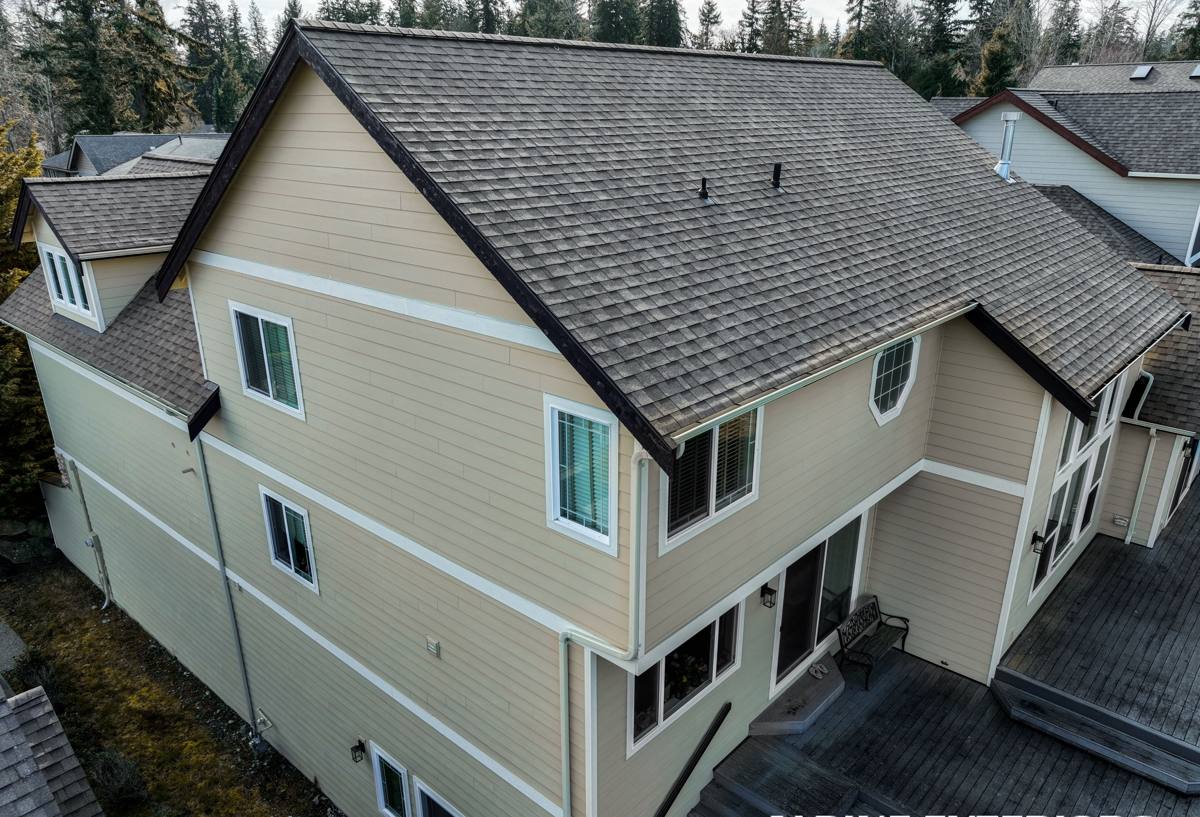
What Salt Air, Driving Rain, and Moss Season Do to a Deck
Three things wear on a Bellingham-area deck faster than they would somewhere drier and further from saltwater:
- Salt air: corrodes exposed metal fasteners, hinges, and hardware over time, and can dull or chalk certain finishes faster than inland exposure.
- Driving rain: wind-blown rain gets under railings, into end grain, and behind fascia boards in ways vertical rain never would, which is where rot and moisture damage usually start.
- Moss and algae: our wet, mild winters and shaded yards give moss and algae months to establish on any surface that stays damp, and a deck surface with poor drainage or heavy tree cover is exactly that kind of surface.
None of this makes composite decking a bad choice for Columbia — the opposite, in most cases. But it does mean the board type, the substructure, and the installation details need to account for these conditions specifically, rather than following a generic install checklist written for a drier climate.
Why Composite Decking Fits This Climate
Composite decking is made from a blend of wood fiber and plastic, which means it doesn't absorb moisture the way solid wood does, doesn't need annual staining or sealing, and won't splinter, cup, or rot the way an aging wood deck eventually will. For a Columbia home dealing with salt air and a long wet season, that translates into a few practical advantages:
- No annual sanding, staining, or sealing schedule to keep up with through our wet months
- Better resistance to the freeze-thaw and swell-shrink cycles that come with Whatcom County's damp winters
- Color and texture that don't gray or weather the way exposed wood does near the water
- Surface texturing on most composite boards that holds up better underfoot when wet, compared to smooth or aged wood
Composite isn't maintenance-free — nothing installed outdoors in this climate is — but it shifts the maintenance burden from sanding and refinishing to simple cleaning, which is a much smaller ask over a 20-30 year deck life.
Where Wood Still Makes Sense
We're not going to tell you wood decking is a bad option — for the right budget and the right homeowner who's willing to keep up with annual staining, cedar and other wood species still perform fine here. Composite is our recommendation for most Columbia homeowners because it removes the maintenance variable in a climate that punishes neglect quickly, not because wood is inherently flawed.
Comparing Composite Decking Options
Composite decking isn't one product — the category spans a real range in price, performance, and how well a board handles our specific weather. Here's how the main categories compare for a marine, high-moisture climate like Bellingham's:
| Board Type | Moisture Resistance | Maintenance | Typical Cost Position |
|---|---|---|---|
| Capped composite (full wrap) | Best — sealed on all sides against moisture and staining | Occasional wash-down | Higher |
| Capped composite (top/sides only) | Good — exposed board ends need attention at cuts | Occasional wash-down, seal cut ends | Mid-to-high |
| Uncapped composite | Fair — more prone to moisture absorption and staining over time | Periodic cleaning, more attention in shaded areas | Lower |
| PVC decking (no wood fiber) | Excellent — no organic material to hold moisture | Occasional wash-down | Higher |
For shaded Columbia lots with heavy tree cover or lots close to the water, we generally steer homeowners toward fully capped composite or PVC boards. The extra upfront cost buys real protection against the moss and staining issues that show up faster on uncapped material in a damp, low-sun environment.
What a Correct Installation Involves
The board you choose only matters as much as the installation underneath it. Most composite deck problems we get called out to fix in Whatcom County aren't the boards failing — they're substructure or drainage mistakes that would have caused trouble with any decking material. A correct install in this climate covers:
Substructure and Framing
Joist spacing that matches the manufacturer's spec for the specific board (composite often needs tighter spacing than lumber decking), and joist protection — either a joist tape or coating — so the framing underneath isn't absorbing the rain that runs off or through the deck surface.
Drainage and Ledger Details
Proper flashing where the deck ties into the house, and a slight pitch away from the structure so water doesn't pool against the ledger board. This is the single most common failure point we see on older decks — water working its way behind a poorly flashed ledger and rotting the rim joist or sheathing behind it, hidden until it's a real problem.
Fasteners and Hardware
Stainless steel or coated fasteners rated for coastal/marine exposure, not standard hardware that will streak or corrode faster in our salt air. Hidden fastener systems where appropriate, installed to the tolerances the board manufacturer specifies — composite expands and contracts with temperature more than lumber, and fasteners set too tight will cause buckling.
Railings and Fascia
End grain and cut edges sealed or capped rather than left exposed, since these are the spots where wind-driven rain finds its way in first.
Our Process, Start to Finish
- On-site assessment: we look at your existing deck or the build site, note sun/shade exposure, drainage, and any substructure issues before quoting anything.
- Material walkthrough: we go over board options and where each one makes sense for your specific lot and budget, honestly — including where a lower-cost option is genuinely fine and where it isn't.
- Written estimate: a clear scope and price, no vague allowances.
- Substructure work: repair or build the framing correctly before a single composite board goes down — this is the part that determines whether the deck lasts.
- Installation: boards, railings, and fascia installed to manufacturer spec, with attention to the drainage and fastening details above.
- Final walkthrough: we go over the finished deck with you and answer questions about care before we consider the job done.
What Affects the Cost of a Composite Deck
| Factor | Why It Matters |
|---|---|
| Deck size and shape | Square footage and the number of angles/cuts drive material and labor |
| Substructure condition | Existing framing that needs repair or replacement adds cost before any decking goes down |
| Board type | Uncapped, capped, and PVC composite span a real price range, as shown above |
| Railing style | Composite, aluminum, cable, and glass railings all price differently |
| Height and access | Second-story decks or difficult site access add labor time |
| Site prep | Grading, drainage work, or removing an old deck adds to the scope |
We won't quote a number without seeing the site — anyone who does is guessing. What we can tell you is that the biggest swing in price usually comes from substructure condition and board tier, not the labor to physically fasten boards down.
Living With a Composite Deck Here
Composite decking cuts the maintenance workload compared to wood, but "low maintenance" isn't "no maintenance," especially with Bellingham's moss season factored in. A simple seasonal routine keeps a composite deck looking and performing the way it should:
- Sweep or blow off leaves and debris regularly, especially in fall — trapped organic matter is what feeds moss and algae growth
- Wash the surface with a soft-bristle brush, mild soap, and water a couple of times a year, more often in heavily shaded areas
- Avoid pressure washing at close range or high PSI, which can damage the board's cap layer or texture over time
- Check railings, stairs, and fastener points once a year for any early signs of corrosion or movement
- Trim back overhanging branches where possible to cut down on shade and debris buildup on the deck surface
- Address any standing water or drainage issues near the deck footing promptly — don't wait for a wet winter to make it worse
Why a Crew That Already Works Columbia Matters
A contractor who only occasionally works this close to Bellingham Bay may not think twice about standard fastener hardware or a generic joist layout — and on a deck ten miles inland that might never cause a problem. On a Columbia lot with salt air and heavy seasonal moisture, those shortcuts show up as corrosion, staining, or moss within a few years instead of decades. We work in this specific microclimate regularly, which means the substructure choices, fastener grade, and drainage details on your estimate reflect what actually holds up here — not a generic spec sheet.
We're also familiar with the older housing stock and mixed lot conditions common in this part of Bellingham, so we're not guessing at what we'll find once we open up an existing deck or ledger connection.
Get a Local Estimate
If you're weighing a new composite deck or replacing a wood deck that's finally worn out, we're happy to take a look and walk you through honest options for your specific lot. There's no pressure and no obligation — just a straight assessment and a written estimate you can think over. Use the form below to request your free estimate.