 Bellingham
 Siding Built for Columbia's Climate, Not Just Its Curb Appeal
Columbia is one of Bellingham's older, more established neighborhoods, with a mix of home ages and siding conditions that reflect decades of Pacific Northwest weather. If you've walked or driven through the area, you've probably noticed the pattern: north-facing walls with a green tint by midsummer, trim boards gone soft at the corners, and paint that never quite holds its finish past a few years. That's not bad luck. It's what happens when ordinary siding materials meet Whatcom County's combination of salt-laden air off Bellingham Bay, near-constant driving rain through fall and winter, and a moss season that can run eight months or longer in shaded yards.
This page covers what fiber cement siding installation actually looks like for a home in Columbia specifically — what the local climate demands, what a correct installation involves, and why we only install James Hardie products rather than the cheaper or softer alternatives still common on older homes in this part of Bellingham.
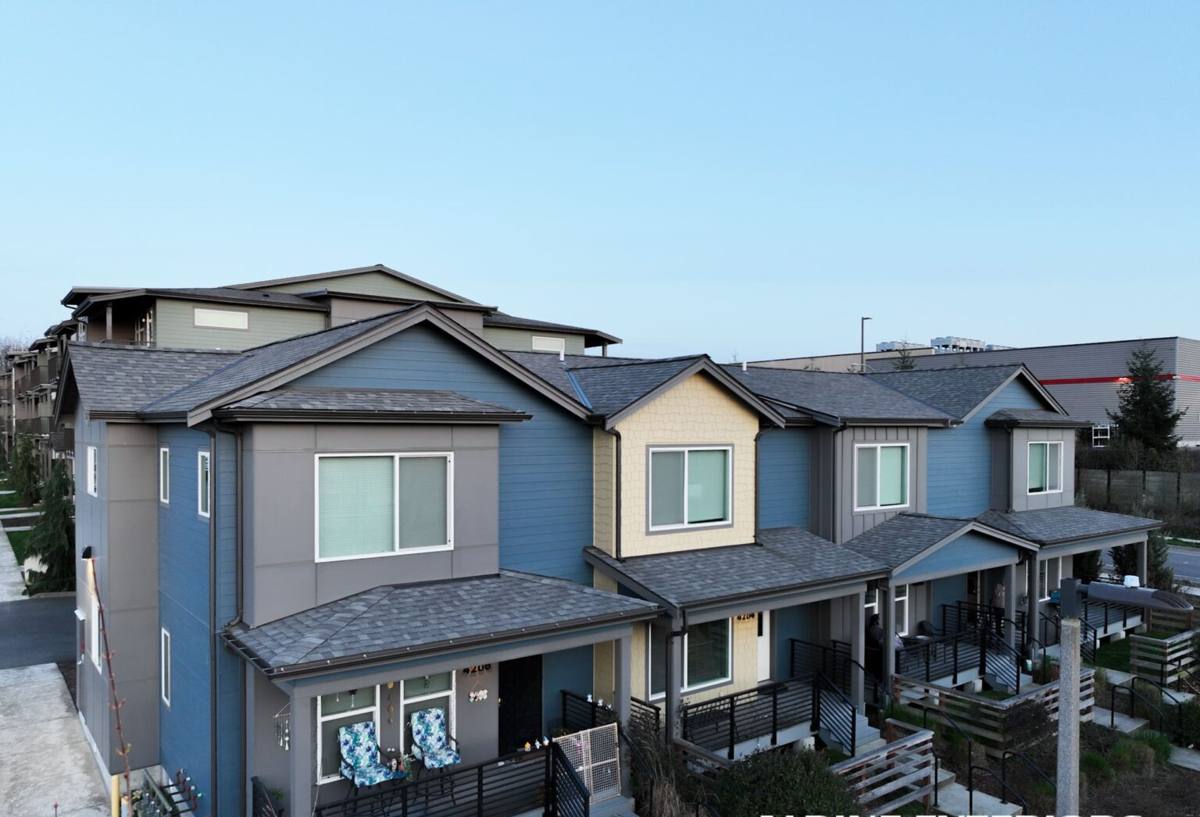
What Salt Air, Rain, and Moss Actually Do to Siding
Each of the three conditions named in Columbia's climate profile attacks siding in a different way, and most siding failures here are the result of all three working together over time.
Salt Air
Bellingham Bay sits close enough that airborne salt reaches inland neighborhoods, including Columbia, especially on windy days. Salt is corrosive to exposed metal fasteners and flashing, and it accelerates the breakdown of lower-grade paint finishes, leaving wood and composite sidings chalky and faded years before they should be.
Driving Rain
Whatcom County doesn't just get a lot of rain — it gets a lot of wind-driven rain, which pushes water sideways into seams, laps, and butt joints instead of letting it run straight down. Siding that isn't installed with the right overlaps, flashing, and gapping will eventually let that water behind the panel, where it causes rot and hidden sheathing damage long before anything looks wrong from the street.
Moss Season
Columbia's mature tree canopy and shaded lots keep siding damp for extended stretches, which is exactly what moss and algae need to take hold. On porous or absorbent materials, moss doesn't just look bad — it holds moisture against the surface and speeds up decay underneath.
Why We Only Install James Hardie Fiber Cement
We get asked regularly why we don't offer vinyl, LP SmartSide, primed spruce, cedar, or other fiber cement brands like Allura or Cemplank. It's a fair question, and the honest answer is that we've made a professional standard out of installing one product system because it performs consistently in exactly the conditions Columbia homes face.
Vinyl siding is inexpensive and low-maintenance in mild climates, but it expands and contracts with temperature swings, can warp or crack in wind-driven weather, and offers no real fire resistance. Engineered wood products like LP SmartSide use treated wood strand technology that resists moisture better than raw wood, but any wood-based product remains more vulnerable to the kind of prolonged dampness Columbia's shaded lots produce, and it typically carries a shorter practical lifespan here than fiber cement. Primed spruce and cedar are beautiful materials, but they require an ongoing maintenance commitment — refinishing, caulking, and moisture monitoring — that most homeowners underestimate until the first signs of rot appear.
James Hardie fiber cement is non-combustible, dimensionally stable in wet-dry cycles, and finished at the factory with ColorPlus technology, a baked-on finish that holds color far longer than field-applied paint. Hardie also engineers specific product lines — its HZ5 and HZ10 climate zones — for different exposure levels, which matters in a county where a coastal-facing wall and a sheltered interior wall on the same house can weather completely differently.
What a Correct Fiber Cement Installation Involves
Fiber cement siding is only as good as its installation. The material itself resists moisture, insects, and fire, but a sloppy install can undo those advantages. On every Columbia project, our installation addresses the same fundamentals:
- Proper weather-resistive barrier and rainscreen or drainage plane behind the siding, so any moisture that does get past the surface can drain and dry
- Correct flashing at every window, door, roofline, and penetration — the single most common failure point on poorly installed siding
- Manufacturer-specified nailing patterns and fastener spacing, using corrosion-resistant fasteners appropriate for a salt-air environment
- Proper clearance gaps at the bottom of the siding, around trim, and at butt joints to allow for drainage and prevent wicking
- Factory-cut and factory-primed edges wherever possible, with any field cuts sealed per Hardie's installation guidelines
- Caulking only where Hardie's specifications call for it — over-caulking traps moisture just as often as it keeps it out
Every one of these steps is dictated by James Hardie's published installation guidelines, and skipping any of them can void the manufacturer's warranty — which is part of why we train our crews to the spec rather than to whatever's fastest.
Our Process for Columbia Homeowners
The process is the same whether your home is a century-old bungalow or a newer build, but the details we look for shift based on the house.
1. On-Site Assessment
We walk the exterior and look specifically at north- and west-facing walls, areas under tree canopy, and anywhere paint or existing siding shows early wear. We check for hidden moisture damage at trim, corners, and below windows — common trouble spots on older Columbia homes.
2. Product and Line Selection
We help you choose the right Hardie plank profile, texture, and ColorPlus finish, and we factor in which HZ climate zone product makes sense for your home's specific exposure.
3. Tear-Off and Sheathing Check
We remove the existing siding and inspect the sheathing underneath. If there's rot or moisture damage from years of water intrusion, we address it before anything new goes up — covering a damaged wall with new siding just hides the problem.
4. Installation to Manufacturer Spec
Weather barrier, flashing, fastening, and gapping are all installed to James Hardie's published requirements, not shortcuts.
5. Final Walkthrough
We review the finished work with you, including care and cleaning guidance suited to a moss-prone, high-rainfall area like Columbia.
What It Costs: Factors That Actually Move the Number
Every home is different, so we don't quote firm numbers without seeing the house, but these are the main variables that affect the cost of a fiber cement siding project in a neighborhood like Columbia:
| Factor | Why It Matters |
|---|---|
| Home age and existing siding condition | Older Columbia homes more often need sheathing repair or rot remediation discovered during tear-off |
| Wall exposure and orientation | Salt- and rain-exposed walls may call for a higher HZ-rated product than sheltered walls |
| Siding profile and texture | Lap width, shingle-style panels, and specialty trim all affect material and labor cost |
| Trim and detail work | Corner boards, window casing, and fascia detail add labor time, especially on older architectural styles |
| Access and lot conditions | Mature trees, tight lot lines, and sloped yards common in Columbia can affect staging and scaffolding needs |
| Color and finish selection | Standard ColorPlus colors versus custom finishes carry different lead times and pricing |
Signs a Columbia Home Needs New Siding
Because moisture damage often starts behind the siding, it's worth checking for these signs before a small problem becomes a structural one:
- Green or black staining that returns quickly after cleaning, especially on shaded or north-facing walls
- Paint that's peeling, bubbling, or chalking well before its expected repaint interval
- Soft or spongy spots when you press on siding or trim, particularly near the ground or below windows
- Visible warping, cupping, or gaps opening up between boards
- Rising energy bills that suggest the wall assembly is no longer keeping moisture and air where they belong
- Siding that's original to a home built decades ago and has never been replaced
Why Hiring a Crew That Already Works in Columbia Matters
Siding installation isn't one-size-fits-all across Whatcom County. A crew that mostly works drier, less exposed areas may not think twice about a shortcut that would cause real problems on a Columbia lot shaded by mature trees and exposed to bay wind. Knowing which walls in this neighborhood tend to hold moisture, which older home styles need extra trim attention, and how long moss season really runs here changes how a job should be planned and installed — not just how it looks when it's finished.
We're a Bellingham-based crew that installs exclusively James Hardie fiber cement, and we bring that Columbia-specific climate knowledge to every estimate, not just a generic install plan.
Caring for Your Siding After Installation
James Hardie siding is low-maintenance, not no-maintenance. In a neighborhood like Columbia, a simple annual rinse-down of shaded and north-facing walls goes a long way toward preventing moss and algae from taking hold, and keeping gutters clear reduces the amount of water running down and pooling near the siding's bottom edge. Beyond that, periodic visual checks at caulk lines and trim joints catch small issues while they're still small.
If your Columbia home's siding is showing its age, or you're planning a replacement and want it done right the first time, we're happy to walk your property and give you a straightforward, no-pressure estimate. There's a form below — reach out and we'll take it from there.