 Bellingham
 Board & Batten Siding in Cordata: A Style That Has to Earn Its Keep
Board and batten has become one of the most requested siding profiles among Cordata homeowners, and it's easy to see why. The bold vertical lines read as clean and modern on newer builds, but the same profile also complements the more traditional Pacific Northwest homes scattered throughout the neighborhood. It's a style that photographs well and holds up well when it's designed and installed correctly.
That last part matters more than most homeowners realize. Board and batten isn't just lap siding turned sideways — it's a different water-management system with its own set of failure points if it's done wrong. In a neighborhood like Cordata, where Whatcom County's marine climate puts real, sustained pressure on exterior walls, the margin for error is smaller than it looks.
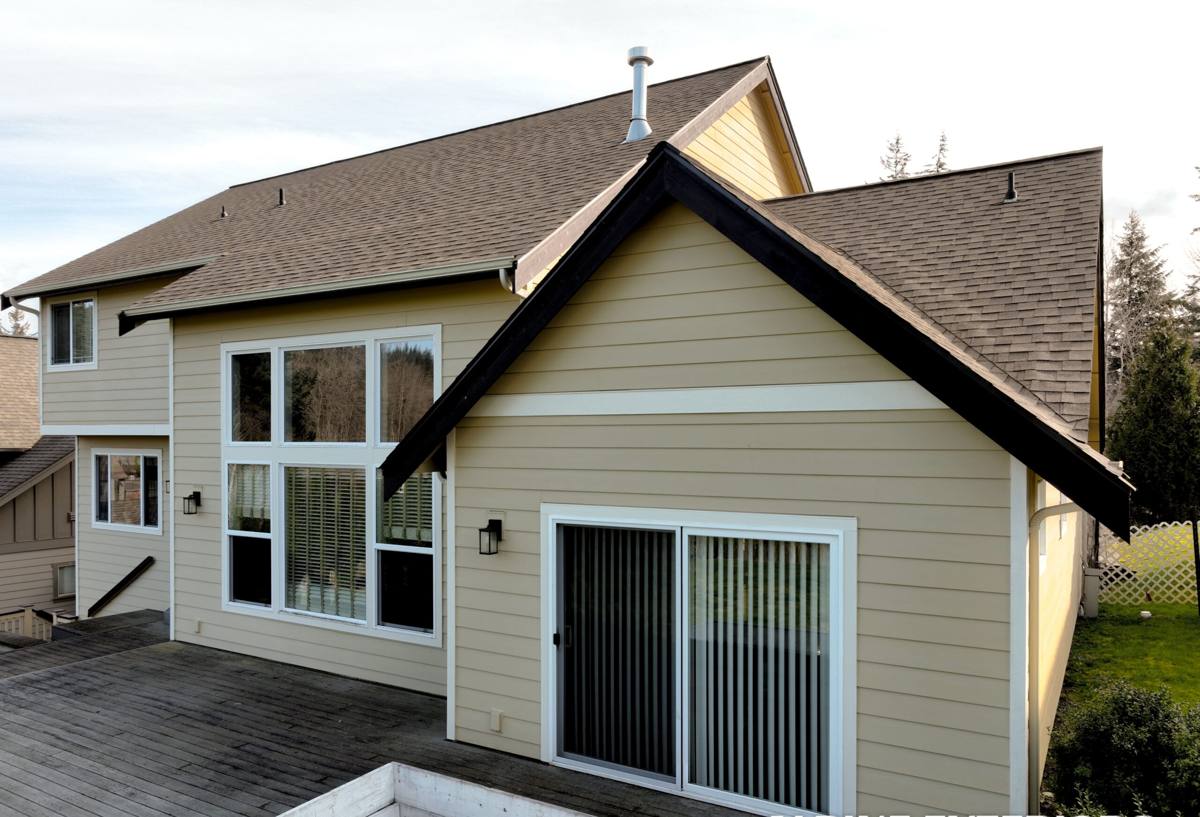
What Bellingham's Climate Does to Vertical Siding
Cordata sits close enough to Bellingham Bay that salt-laden air is a constant, low-grade factor in how exterior materials age. Combine that with the driving, wind-pushed rain that comes through Whatcom County for a good chunk of the year, and you have two forces working against any siding that isn't built and installed to handle them.
Then there's moss. Bellingham's long, damp, shaded stretches of the year create ideal conditions for moss and algae growth on north- and west-facing walls, on trim, and especially in any spot where board and batten siding traps moisture instead of shedding it. A siding system that looks great in July can start showing streaking, soft spots, or moss colonization by the following spring if it wasn't detailed for this climate from the start.
Board and batten siding, because of its vertical seams and the battens themselves, has more places for water to catch, more fastener penetrations, and more opportunities for moisture to work its way behind the cladding if the underlying materials or installation aren't right. None of that is a reason to avoid the style — it's a reason to be precise about how it's built.
Salt Air and Fastener Corrosion
Standard fasteners and trim hardware corrode faster this close to salt water. Over years, corroding fasteners loosen, streak the siding face, and eventually compromise the seal at every penetration point.
Driving Rain and Vertical Seams
Vertical battens create more linear feet of seam than a horizontal lap profile covers in the same wall area. Every one of those seams needs to be backed by proper flashing and a drainage plane, or wind-driven rain will find its way behind the board.
Moss and Shaded Exposures
Walls that stay shaded and damp for long stretches need siding and finishes that resist moss colonization and can be cleaned without damaging the surface — not every material handles regular washing the same way over time.
What Correct Board & Batten Installation Actually Involves
A lot of the difference between board and batten siding that lasts and board and batten siding that causes problems in five years comes down to what's happening behind the boards, not what's visible from the street.
- A continuous, properly lapped water-resistive barrier behind the siding, not just wrapped and stapled
- A drainage gap (rain screen) that lets any moisture that does get behind the cladding drain and dry out instead of sitting against the wall sheathing
- Correct batten spacing and fastening pattern so the panels can expand and contract with temperature and moisture changes without splitting or popping fasteners
- Properly flashed and caulked penetrations at every window, door, hose bib, and light fixture
- Manufacturer-specified fastener type and length, matched to the substrate and resistant to corrosion in a coastal climate
- Correct clearance at grade, decks, and roof lines so the siding never sits in standing water or constant splash-back
Skip any one of these and the siding might still look fine on installation day. The problems that show up later — moisture staining, soft trim, moss establishing behind battens — almost always trace back to one of these details being rushed or skipped.
Why We Install James Hardie and Nothing Else
We install James Hardie fiber cement exclusively. We don't install LP SmartSide, vinyl, Cemplank, Allura, primed spruce, or cedar board and batten, and we're upfront about why: after years of doing exterior work in this climate, Hardie is the product we trust to hold up to salt air, sustained rain, and moss pressure without the maintenance headaches other materials tend to bring.
For board and batten specifically, we use James Hardie's vertical panel siding paired with Hardie trim battens, finished in the factory-applied ColorPlus finish. That factory finish matters in this climate — it's baked on under controlled conditions and backed by its own finish warranty, which means the color coat resists the fading, chalking, and moss-friendly surface texture that field-applied paint can develop faster in a wet climate.
James Hardie also engineers its products by climate zone. The HZ5 formulation used in the Pacific Northwest is built specifically to perform in wet, temperate conditions like ours, rather than being a one-size-fits-all product. That's a meaningful difference from materials that aren't climate-engineered at all.
None of this means other siding products are without merit — wood has real appeal, vinyl is inexpensive, engineered wood has fans. But we've made a professional decision to standardize on one product system we can install to spec every time and stand behind, rather than juggling multiple materials with different moisture behaviors, warranty terms, and maintenance demands.
Board & Batten Material Comparison
| Factor | James Hardie Fiber Cement | Wood / Engineered Wood | Vinyl |
|---|---|---|---|
| Moisture behavior | Non-combustible, dimensionally stable, engineered for wet climates (HZ5) | Can swell, warp, or rot without diligent maintenance | Won't rot, but can warp or crack in temperature swings |
| Moss / algae resistance | Factory ColorPlus finish resists staining and can be cleaned | Porous surface is more hospitable to moss and mildew | Resists moss but shows dirt and staining on the surface |
| Finish longevity | Factory-baked finish with its own warranty | Field-applied paint/stain needs recoating on a regular cycle | Color is through-body but can fade and chalk over time |
| Salt air / coastal exposure | Engineered to hold up to coastal, marine climates | Fasteners and finish are more vulnerable to salt exposure | Generally stable, but seams and fasteners still need attention |
| Fire performance | Non-combustible material | Combustible | Combustible, can deform under heat |
Our Process for Cordata Board & Batten Projects
- On-site assessment: We walk the exterior, check for existing moisture damage, evaluate current siding and trim condition, and note grade, roofline, and drainage issues specific to the lot.
- Design and product selection: We help you choose panel width, batten spacing, and ColorPlus color, and confirm trim details around windows, corners, and rooflines.
- Prep and water management: We address any sheathing issues found during tear-off, install a continuous water-resistive barrier, and build in a proper drainage gap behind the siding.
- Installation to manufacturer spec: Panels, battens, fasteners, and flashing are installed per James Hardie's published fastening schedules and climate-zone requirements — not shortcuts learned on a different product.
- Final detailing and walkthrough: We finish trim, caulking, and touch-up, then walk the completed job with you before calling it done.
What to Look for When Hiring a Board & Batten Contractor in Cordata
- Direct, verifiable experience installing board and batten specifically, not just lap siding
- Familiarity with James Hardie's climate-zone product requirements for the Pacific Northwest
- A clear explanation of how they'll handle the water-resistive barrier and drainage gap, not just the visible panel work
- Willingness to walk you through fastening and flashing details before work begins, not just after
- Local references and a track record of jobs that have weathered a few Whatcom County winters
- A written warranty that covers both labor and the manufacturer's product warranty
Why Local Experience in Cordata Matters
Every neighborhood in Bellingham has its own combination of sun exposure, wind patterns, and moisture load depending on lot orientation, tree cover, and proximity to the water. A crew that regularly works in and around Cordata has already seen how board and batten siding performs on similar lots through multiple wet seasons — which north-facing walls need extra attention, how grading and drainage tend to trend in the area, and where moss pressure typically shows up first. That's the kind of pattern recognition that only comes from doing the work here repeatedly, not from a general install checklist.
If you're considering board and batten siding for your Cordata home, we're happy to take a look at your property, talk through what correct installation looks like for your specific exposure, and give you a straightforward, no-pressure estimate. Use the form below to get started.