 Bellingham
 Building Decks for Barkley's Pacific Northwest Conditions
Barkley sits in one of Bellingham's more established residential pockets, with a mix of newer construction and homes that have been through several decades of Whatcom County weather. Whatever the age of the house, the deck attached to it faces the same basic challenge: long stretches of wet, mild weather broken up by short bursts of intense use in summer. A deck built without that pattern in mind tends to look fine for a year or two, then start showing problems in exactly the places you can't see until they're expensive.
Bellingham's proximity to the water means salt-laden air reaches inland further than most homeowners assume, and it doesn't take a waterfront lot to feel the effects on fasteners and metal connectors. Combine that with driving rain that comes in sideways during fall and winter storms, and a moss season that can stretch from October well into April, and you have a climate that's genuinely tougher on outdoor structures than it looks on a sunny July afternoon.
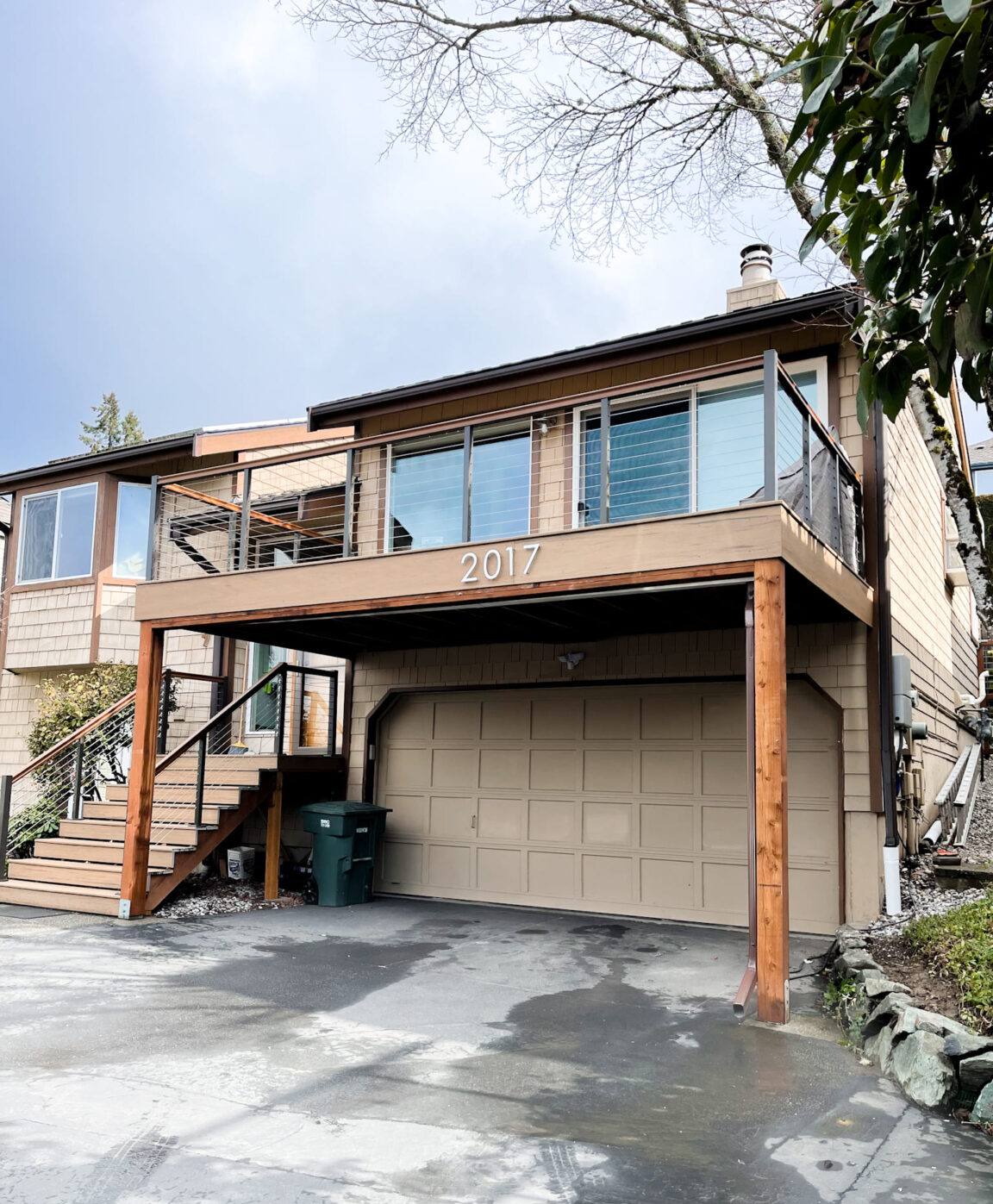
What Barkley Homes Actually Need From a Deck
A correctly built deck in this part of Whatcom County isn't just about picking a nice-looking board. It's a system — framing, fasteners, drainage, and surface material all working together to shed water fast and resist the organic growth that thrives in our shoulder seasons.
Drainage Comes First
Standing water is the single biggest cause of premature deck failure here. Boards that are flat or pitched the wrong way trap moisture at fastener points and between boards, which is exactly where rot and mildew take hold first. We build in a slight pitch away from the house and space boards to let water pass through rather than pool on top.
Moss and Algae Resistance
Shaded decks, or ones under tree cover — common on lots with mature landscaping — will grow moss and algae almost year-round if the surface material and airflow underneath aren't accounted for. Composite decking with a mold-resistant cap, proper board spacing, and adequate ventilation under the frame all reduce how often you're out there with a pressure washer.
Corrosion-Resistant Hardware
Salt air moving in off Bellingham Bay accelerates corrosion on standard fasteners faster than most people expect, even a few miles inland. We use stainless steel or coated fasteners rated for coastal exposure, along with hidden fastener systems where the decking allows it, so you're not looking at rust streaks on a five-year-old deck.
Decking Material Options for This Climate
There's no single "best" decking material — the right choice depends on your budget, how much upkeep you want to do, and how the deck sits relative to sun, shade, and moisture.
| Material | Moisture & Moss Behavior | Maintenance | Typical Lifespan |
|---|---|---|---|
| Pressure-treated wood | Absorbs moisture; needs sealing to resist rot and moss buildup | Annual cleaning and re-staining/sealing | 15-20 years with upkeep |
| Cedar | Naturally rot-resistant but still needs sealing in our wet climate | Periodic sealing, moss cleaning | 15-25 years with upkeep |
| Composite decking | Capped boards resist moisture absorption and are harder for moss to grip | Occasional washing, no staining/sealing | 25-30+ years, manufacturer-backed |
| PVC decking | Fully synthetic, essentially impervious to moisture | Lowest — occasional cleaning | 25-30+ years, manufacturer-backed |
We install both quality wood and composite/PVC systems and will tell you honestly which one fits your situation rather than steering everyone toward the highest-margin product. Wood costs less up front and has a natural look many homeowners still prefer; composite and PVC cost more initially but save real time and money on maintenance over a wet Bellingham decade.
Framing and Structure: The Part You Don't See
A beautiful deck surface on a compromised frame is a short-term fix. We pay particular attention to a few structural details that matter more here than in drier climates:
- Ledger board flashing that properly directs water away from the house rim joist — a common failure point that leads to hidden rot against the structure
- Joist tape or flashing on top of every joist to keep fasteners from sitting in standing moisture
- Post bases set above grade and off concrete contact where possible, since ground-level moisture in Whatcom County soil rarely lets up for long
- Proper footing depth for our frost line and soil conditions, so the structure doesn't shift with seasonal ground moisture changes
- Adequate clearance and airflow underneath low decks to discourage moss and mildew from taking hold in the crawlspace below
None of this is visible once the deck is finished, which is exactly why it's worth asking a contractor how they handle it before work starts, not after.
Design Considerations Specific to Barkley Properties
Barkley's residential lots tend to have a mix of mature trees, sloped or terraced yards, and homes set with varying degrees of sun exposure depending on the block. That variation matters for deck design:
Shade and Tree Cover
Decks under or near mature trees deal with more debris, more shade-driven moss growth, and slower drying after rain. We factor board spacing and material choice around that rather than treating every project the same.
Multi-Level and Sloped-Lot Decks
Where yards step down from the house, a multi-level deck can solve both a design and a drainage problem at once — giving you usable outdoor space while directing water off the structure in stages instead of pooling against a single low point.
Covered vs. Open Decks
A partial roof or pergola over at least part of the deck extends how many months a year you'll actually use it, given how much of the calendar around here is wet. It also protects the decking surface directly beneath it from the worst of the rain exposure, which can meaningfully extend its service life.
Our Process for a Barkley Deck Project
- On-site assessment — we look at your existing structure (if replacing a deck), sun/shade exposure, drainage patterns, and how the space connects to your home
- Design and material walkthrough — honest comparison of wood vs. composite/PVC options based on your budget and maintenance preferences, not a one-size pitch
- Permitting — we handle the permit process with the City of Bellingham or Whatcom County depending on your property's jurisdiction
- Demolition and framing — removal of the old structure if applicable, followed by framing built to the moisture-management standards above
- Decking, railing, and finish work — surface installation, railing system, stairs, and any lighting or accessories
- Final walkthrough — we go over the finished deck with you, including basic maintenance guidance specific to the material you chose
Maintenance Checklist for Whatcom County Decks
Whatever material you choose, a few habits go a long way toward getting the full service life out of it in our climate:
- Sweep debris off the deck regularly in fall — wet leaves left sitting are one of the fastest ways to stain boards and feed moss growth
- Rinse or wash the surface at least once or twice a year to remove algae and moss before it gets established
- Check railing posts and stair connections annually for looseness, which can signal moisture getting into a fastener point
- Re-seal or re-stain wood decking on the schedule recommended for your specific product — skipping a cycle in a wet year accelerates wear
- Keep gutters and downspouts near the deck clear so runoff isn't dumping extra water directly onto or under the structure
- Trim back overhanging branches to improve airflow and sun exposure, especially on shaded lots
Why Local Experience Matters for This Job
Deck-building advice that works in a dry climate can actively hurt a deck in Bellingham. Flashing details, fastener grade, board spacing, and even footing depth all need to account for how much moisture this area sees and how long it sticks around. A crew that already works in and around Barkley has seen firsthand which details cause callbacks a few years down the road versus which ones hold up — that's not something you get from a generic install guide.
We also know the practical side: which permitting process applies to your Barkley address, what inspectors here are looking for on ledger attachment and footings, and how to sequence a build around our wetter months so lumber and job sites aren't sitting exposed longer than necessary.
Get a Free, No-Pressure Estimate
If you're planning a new deck or replacing one that's showing its age, we're happy to come take a look, talk through material options honestly, and put together a straightforward estimate — no pressure, no pushy sales pitch. Use the form below to get started.