 Bellingham
 Building a Deck That Actually Holds Up in York
York is one of Bellingham's older, established residential neighborhoods, with a mix of home ages and lot sizes and enough mature tree cover to keep things shaded, cool, and damp for a big chunk of the year. That's a nice quality of life feature and a real challenge for outdoor structures. A deck in York doesn't fail because someone used the wrong color stain. It fails because the framing, fasteners, or drainage weren't specified for a marine climate with salt-tinged air, long stretches of driving rain, and a moss season that can run from October through May.
We build and replace decks throughout Bellingham, and the ones that last 20-plus years without turning into a maintenance headache all share the same traits: the wood or composite is rated for the exposure, the fasteners won't corrode, the ledger board is flashed correctly, and there's somewhere for water to go once it hits the surface. This page walks through what that looks like for a deck built specifically for York's conditions.
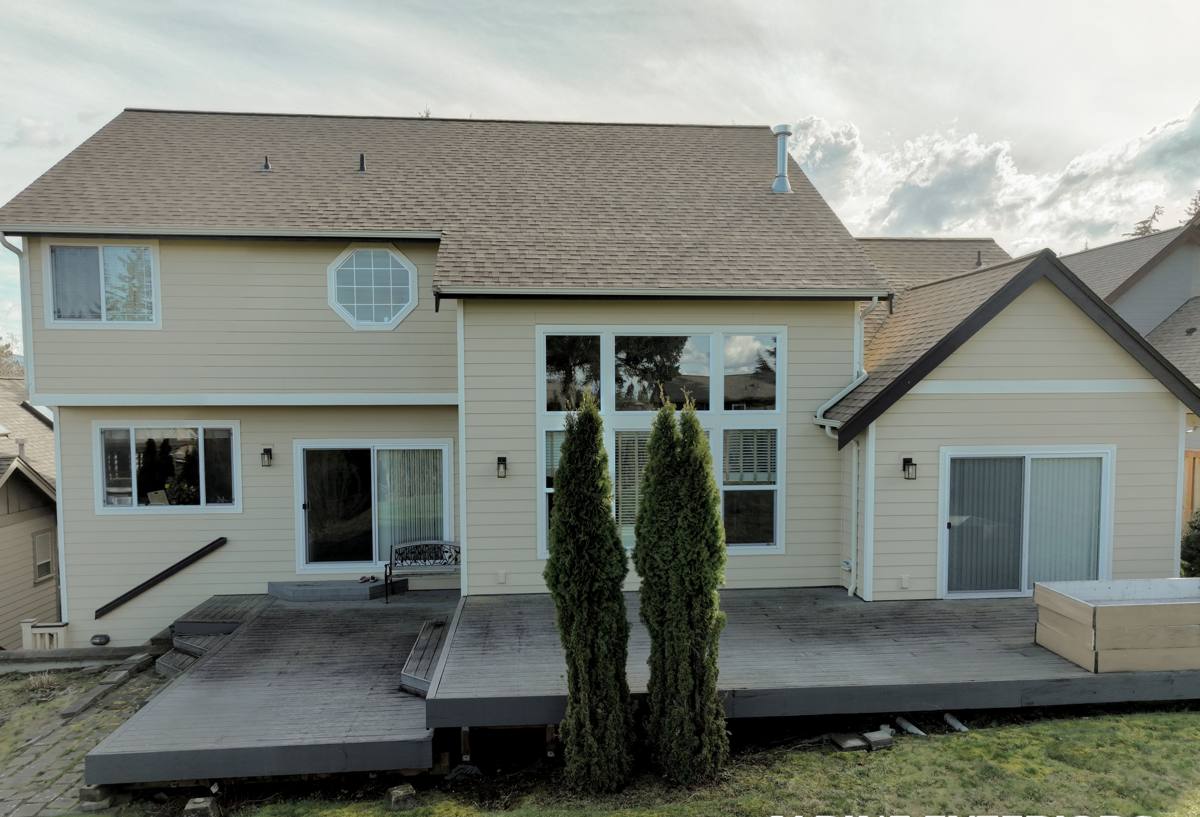
What Whatcom County Weather Does to an Ordinary Deck
Bellingham sits close enough to Bellingham Bay and the Salish Sea that salt-laden air is a real factor, even a few miles inland. Combine that with our rain totals — heavy, sustained, and spread across most months of the year — and you get an environment that's tougher on exterior structures than most manufacturers' warranty language assumes.
Salt Air and Corrosion
Standard hot-dip galvanized fasteners and hardware can start showing rust streaks and pitting well before a deck's structural lifespan is up when they're exposed to salt-influenced coastal air year-round. Once a fastener starts corroding, it loses holding strength long before it looks obviously bad, which is part of why we don't treat hardware selection as an afterthought.
Driving Rain and Trapped Moisture
Wind-driven rain doesn't just fall on a deck, it gets pushed sideways into ledger connections, under poorly flashed boards, and into any gap where end grain is exposed. Wood that stays wet for days at a time is exactly where rot organisms and moss spores get a foothold.
Moss and Shade
Mature tree canopy, common throughout York, means more shade, more falling organic debris, and slower drying times after every rain event. Moss doesn't just look bad on a deck surface — it holds moisture against the boards and makes them slick and unsafe underfoot.
What Correct Construction Looks Like Here
A deck built to a generic national spec sheet isn't necessarily a deck built for this climate. Here's what we treat as non-negotiable on every custom deck we build in Bellingham.
Ledger Board Flashing
The ledger board — where the deck attaches to the house — is the single most common point of hidden rot on older decks we've replaced. It needs proper flashing that directs water away from the house sheathing, not just caulk and good intentions. This detail is invisible once the deck is finished, which is exactly why it's worth getting right the first time rather than discovering the damage a decade later during a remodel.
Framing and Fasteners
We frame with lumber rated for exterior ground contact where it's touching or near the soil, and we use fasteners and structural connectors rated for the exposure — stainless steel or a high-corrosion-resistant coating, not whatever's cheapest at the yard. Mixing metals (for example, standard steel screws with treated lumber that reacts with certain coatings) accelerates corrosion, so hardware selection has to match the lumber treatment, not just the climate.
Footings for Local Soil
Footing depth and sizing depend on soil conditions and frost depth, and they need to be set below the point where seasonal ground movement will shift them. This is one of the parts of a deck build that's entirely invisible once the project is done, but it's the part that determines whether the deck stays level and quiet underfoot for decades or starts developing a bounce in year six.
Choosing a Decking Material for a Wet, Shaded Lot
There's no single "best" decking material — there's a best material for your specific lot, budget, and how much maintenance you actually want to do. Here's how the common options stack up for a York-style lot with shade and moisture to contend with.
| Material | Moisture & Moss Resistance | Maintenance | Typical Lifespan |
|---|---|---|---|
| Pressure-treated wood | Good if sealed regularly; end grain and fastener holes are vulnerable points | Annual cleaning, periodic sealing/staining | 15-25 years with upkeep |
| Cedar | Naturally decay-resistant but still needs sealing in shaded, damp spots | Regular cleaning and refinishing to hold color and resist moss | 15-20 years with upkeep |
| Standard composite | Won't rot, but uncapped types can absorb moisture at cut edges and grow mildew | Periodic washing; less than wood, more than capped composite | 20-25 years |
| Capped composite / PVC | Best resistance to moisture, mold, and moss staining in shaded conditions | Occasional rinse and light cleaning | 25-30+ years |
In heavily shaded yards, we lean toward capped composite or PVC decking for homeowners who want to spend their weekends doing something other than scrubbing moss off boards every spring. That said, plenty of York homeowners want the look and feel of real wood, and a well-built, properly sealed cedar or treated wood deck is a completely legitimate choice — it just comes with a maintenance commitment we'll be upfront about before you commit to it.
Drainage and Airflow: The Part Nobody Sees
The biggest difference between a deck that stays moss-free and one that turns green every winter usually isn't the board material — it's what happens underneath and between the boards.
Board Spacing
Gapping between boards needs to account for the material's expansion and contraction as well as drainage. Too tight, and water sits on the surface longer than it should; debris also packs into the gaps and holds moisture against the edges.
Under-Deck Airflow
Low decks built tight to grade with poor ventilation underneath trap humidity in the framing, which is a slow-motion setup for rot even if the surface boards look fine. We grade and build in airflow underneath wherever the design allows, and we'll talk through options like under-deck drainage systems for homes where a covered, usable space below the deck is part of the plan.
Gutter and Downspout Coordination
A deck built directly under a roofline without matching gutter coverage takes on far more water than the same deck a few feet away. We look at how roof runoff interacts with the deck footprint before finalizing the layout, not after.
Railings, Hardware, and Fasteners That Resist Salt Air
Railings take direct weather exposure on every side and usually get less attention than the decking surface itself, which is a mistake in a coastal-influenced climate. Wood railings need the same sealing discipline as the deck boards. Metal railings and cable systems need genuinely corrosion-resistant hardware — not just hardware that looks fine in the box — because salt-air corrosion on a railing post connection is a safety issue, not just a cosmetic one. We spec railing hardware the same way we spec structural fasteners: rated for the exposure, not the minimum code requirement.
Our Process, Start to Finish
Every custom deck we build in York goes through the same process, whether it's a straightforward rectangular deck or a multi-level design working around a sloped lot.
- On-site assessment of the lot, grade, drainage, and how the deck will attach to the house
- Honest conversation about material options and what each one actually costs to maintain over time, not just to install
- Design and layout, including railing style, stairs, and any covered or under-deck space
- Permit drawings and submission where required
- Demolition and disposal of any existing deck
- Footings, framing, ledger flashing, and structural inspection before decking goes down
- Decking, railing, and finish work
- Final walkthrough so you know what maintenance, if any, the material you chose actually needs
We give straight timelines up front, and we tell you when weather is going to affect the schedule instead of letting a rain delay come as a surprise. Whatcom County's wet season means outdoor construction has real weather windows, and we plan around them rather than rushing footings or framing in conditions that compromise the work.
Permits and Local Requirements
Most decks attached to a house, or built above a certain height off grade, require a building permit through the City of Bellingham. Requirements can vary based on deck size, height, and whether it's attached or freestanding, and they're revised from time to time, so we don't rely on memory — we confirm current requirements for your specific project and handle the permit submission as part of the build rather than leaving it on your plate.
Why Hire a Crew That Already Works in York
A contractor who mainly builds in drier inland climates, or who treats every job with the same generic spec regardless of exposure, is going to under-build for what York's shade, rain, and salt air actually do to a structure over time. We work throughout Bellingham and Whatcom County, which means we've seen how decks in this specific kind of setting age — what fails first, what holds up, and which shortcuts show up as callbacks two or three winters later. That's not something you can get from a national franchise pricing sheet. It comes from building and repairing decks in this exact climate, on lots with this exact tree cover and moisture pattern, season after season.
If you're planning a new deck or replacing one that's showing its age, we'd like to take a look and give you a straight assessment — what your lot needs, what materials make sense for your budget and maintenance tolerance, and what a correctly built deck actually costs here. Reach out for a free, no-pressure estimate using the form below.