 Bellingham
 Building a Deck That Can Actually Handle Happy Valley's Weather
Happy Valley sits close enough to Bellingham Bay that salt-laden air is a real factor in how outdoor structures age here, not just a talking point. Combine that with the driving rain that comes off the water during fall and winter storms, and the long stretch of damp, overcast months that let moss and mildew get a foothold on anything horizontal, and you have a climate that is genuinely hard on decks. A deck built here needs to survive being wet for the better part of eight or nine months a year, not just look good on a dry August afternoon.
Most deck problems we get called out for in this neighborhood aren't because the homeowner picked the wrong stain color or the wrong railing style. They're structural issues that trace back to water getting somewhere it shouldn't, over years, because a detail was skipped during the original build. Getting those details right the first time is the difference between a deck that needs a light cleaning each spring and one that needs a rebuild in ten years.
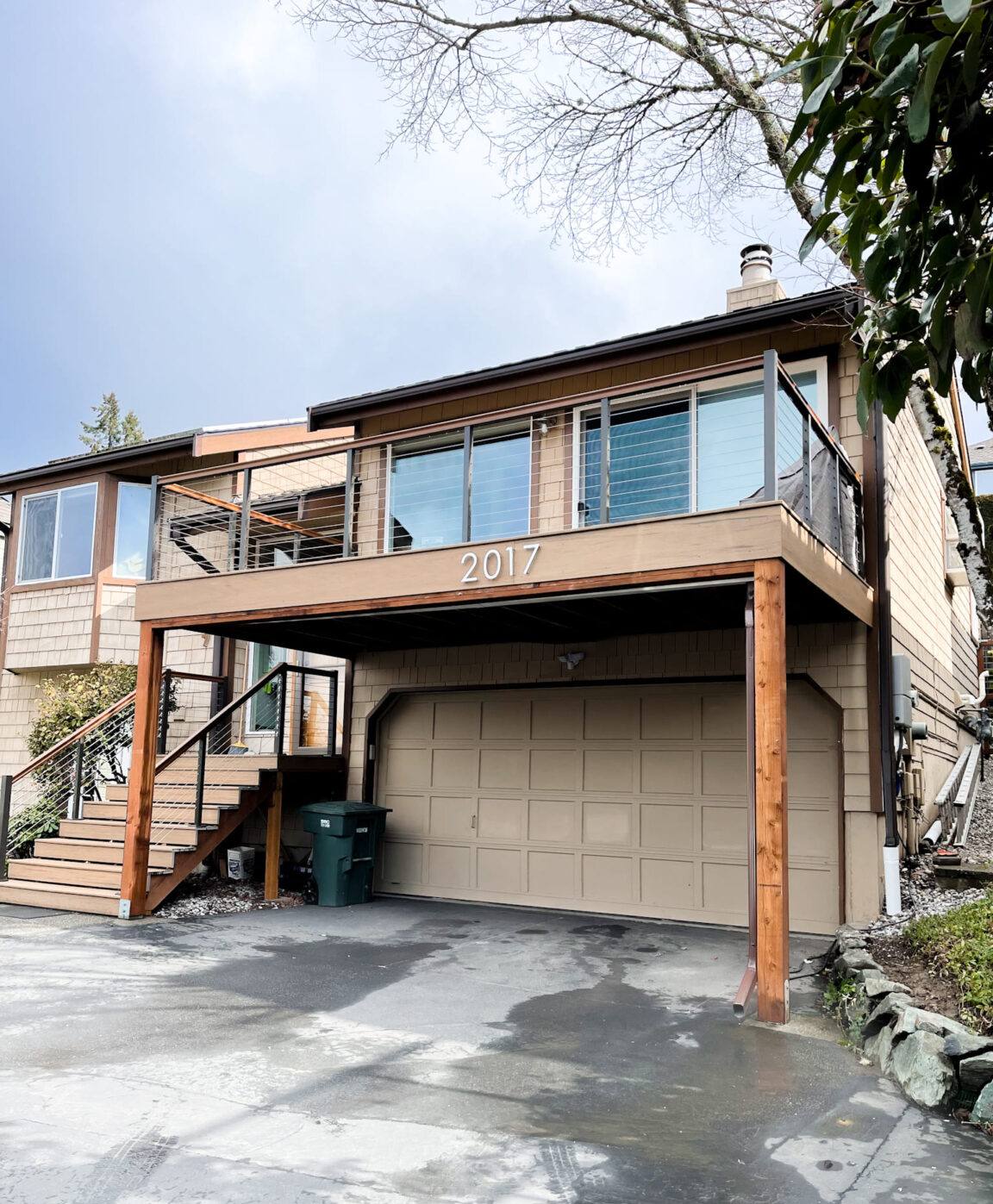
What Correct Deck Construction Looks Like in This Climate
Ledger Attachment and Flashing
The ledger board — the piece bolted to your house that the rest of the deck frame hangs from — is the single most common failure point on decks in Whatcom County. If it isn't properly flashed to shed water away from the house rim joist, driving rain works its way behind the board over time and rots both the ledger and the framing it's attached to, often invisibly, until the deck starts to feel spongy or pulls away from the house. Correct flashing, proper structural screws or bolts (not nails), and a small air gap or drainage path behind the ledger are non-negotiable in this climate, not upgrades.
Footings Below the Frost and Saturation Line
Footings need to be poured to the depth your local building code requires and set on well-drained gravel, not directly in native soil that stays saturated most of the winter. Undersized or shallow footings are one of the most common issues we find when we're asked to look at an older deck that's started to feel unstable.
Framing Grade and Fasteners
Framing lumber should be rated for ground contact where it's close to grade, and every fastener — joist hangers, structural screws, bolts — should be stainless steel or hot-dip galvanized rated for exterior and coastal use. Standard zinc-coated hardware corrodes faster than most homeowners expect this close to the bay, and a rusted-out joist hanger is a safety issue, not just a cosmetic one.
Choosing a Decking Material for Happy Valley
There's no single right answer here — it depends on your budget, how much upkeep you want to do, and how the deck will be used. Here's how the common options actually perform in a wet, moss-prone, salt-air environment:
| Material | Upfront Cost | Moisture / Moss Resistance | Maintenance | Typical Lifespan |
|---|---|---|---|---|
| Pressure-treated fir/pine | Lowest | Good if sealed regularly; grain holds moss spores if neglected | Re-seal or stain every 1-2 years | 15-20 years with upkeep |
| Cedar | Moderate | Naturally rot- and insect-resistant; still needs sealing against gray, moss | Clean and re-seal every 1-2 years | 20-25 years with upkeep |
| Composite decking | Higher | Very good; won't rot, but surface can still grow moss/mildew if shaded and damp | Periodic washing, no sealing/staining | 25-30+ years |
| PVC / capstock boards | Highest | Best moisture resistance of the group; fully sealed surface | Occasional washing | 25-30+ years |
Composite and PVC decking cost more upfront but remove the annual sealing and staining cycle, which matters a lot in a climate where the maintenance window (dry, mild weather) is short. Wood costs less to install but only performs as well as the maintenance schedule behind it — a cedar deck that gets sealed every other year can easily outlast a composite deck that's shaded, damp, and never cleaned.
Our Deck Building Process
Design and Site Visit
We start by walking the property, looking at drainage, sun/shade exposure, and how the deck ties into the house, and talk through layout, materials, and budget based on what actually holds up here.
Permitting
Most new decks and many deck replacements in Bellingham require a building permit, particularly once you're above a certain height off grade or attaching structurally to the house. We handle the permit paperwork and inspections as part of the job so you're not left chasing down requirements yourself.
Foundation and Framing
Footings are dug to code depth, framing goes up with corrosion-rated hardware, and the ledger connection is flashed and sealed before any decking goes down — this is the stage that determines how the deck ages, and it's the stage that's easiest to shortcut if you're not paying attention.
Decking, Railing, and Finish Work
Boards are installed with proper spacing for drainage and seasonal movement, railings are set to current code height and baluster spacing, and any wood surfaces are sealed or stained before the job is called done.
Final Walkthrough
We walk the finished deck with you, cover basic care for whatever material you chose, and make sure everything meets code before we consider the job complete.
Permits and Local Requirements
Decks attached to a house, elevated above a certain height, or built over a certain size generally require a permit through the City of Bellingham or Whatcom County, depending on where the property sits. Guardrail height, baluster spacing, and stair requirements are set by code and inspected — this isn't optional, and skipping it can create problems later when you sell the house or file an insurance claim. We handle this as a normal part of the build rather than something you have to manage on your own.
Keeping Moss and Mildew From Taking Over
Even a well-built deck needs some seasonal attention in this climate. The goal is to keep moisture from sitting on the surface long enough for moss and mildew to establish, since once they're established they hold even more moisture against the boards.
- Sweep leaves and debris off the deck regularly in fall — wet leaves left in place are one of the fastest ways to start a moss patch
- Keep gutters and downspouts clear so runoff isn't draining directly onto or under the deck
- Trim back overhanging branches and nearby vegetation to let sun and air reach shaded corners
- Wash the deck surface at least once a year with a deck-safe cleaner, not just a pressure washer on high, which can damage wood fibers and composite surfaces alike
- Check and clear gaps between boards where debris and moisture tend to collect
- Re-seal or re-stain wood decking on the schedule appropriate to the product — don't wait until it's visibly gray and worn
- Inspect fasteners and hardware yearly for rust or corrosion, especially on decks close to the bay
Mistakes We Find When Replacing Older Decks in the Area
Missing or Failed Ledger Flashing
By far the most common issue. Older decks, especially ones built before flashing standards tightened up, often have little or no flashing behind the ledger board, which lets water work into the house framing over years.
Undersized or Shallow Footings
Footings poured too shallow, or without adequate drainage gravel, shift and settle over time in ground that stays saturated most of the winter, leading to a deck that feels unstable or uneven.
Standard Hardware Instead of Corrosion-Rated Fasteners
Regular zinc-coated screws and joist hangers corrode faster than expected this close to the bay. We regularly find rusted hardware on decks that are otherwise structurally sound simply because the original fasteners weren't rated for a coastal, wet environment.
Why Hire a Crew That Already Works in Happy Valley
A contractor who builds decks across a wide range of climates can still get the fundamentals right, but a crew that already works this specific area knows which corners of a lot stay wet longest, which slopes need extra drainage attention, and how much moss pressure a shaded north-facing deck is going to face compared to one with more sun exposure. That local knowledge shows up in small decisions — footing placement, board spacing, which side of the house needs extra flashing attention — that add up to a deck that holds up rather than one that needs early repairs.
If you're planning a new deck or looking at replacing one that's showing its age, we're happy to come take a look and give you a straightforward, no-pressure estimate. Use the form below to get started.