 Bellingham
 Edgemoor's Position on Bellingham Bay Puts Extra Load on Your Siding
Edgemoor sits along the bluffs above Bellingham Bay, which gives homes here some of the best views in Whatcom County — and some of the toughest exterior conditions. Siding on a bluff-front or near-shore home works harder than siding a few miles inland. Salt-laden air, wind-driven rain off the water, and a moss season that runs a good chunk of the year all chip away at whatever material is on the wall. If that material isn't built for the job, the effects show up early: fading, staining, soft spots, or paint that won't hold.
Salt Air and Bay Exposure
Homes closer to the water pick up airborne salt that settles on exterior surfaces and accelerates corrosion of fasteners, staples, and any exposed metal trim. It also breaks down cheap coatings and finishes faster than inland exposure would. Siding material and hardware both need to be chosen with that in mind, not treated as an afterthought.
Driving Rain Off the Water
Wind coming off Bellingham Bay doesn't just drop rain straight down — it drives it sideways into walls, especially on the water-facing sides of a home. That kind of exposure finds every gap in a siding system: a poorly lapped joint, a missing piece of flashing, a caulked seam that was never supposed to be caulked. Water that gets behind the cladding and can't get back out is what causes real damage, not the rain itself.
A Moss Season That Runs Most of the Year
Whatcom County's mild, wet climate keeps moss and algae active for most of the year, and shaded, north-facing, or tree-lined walls in Edgemoor stay damp longer than open, sun-exposed ones. Organic material like wood siding gives moss something to root into. Material that doesn't provide that food source, combined with siding that's installed with proper clearance and airflow, goes a long way toward keeping walls cleaner longer.
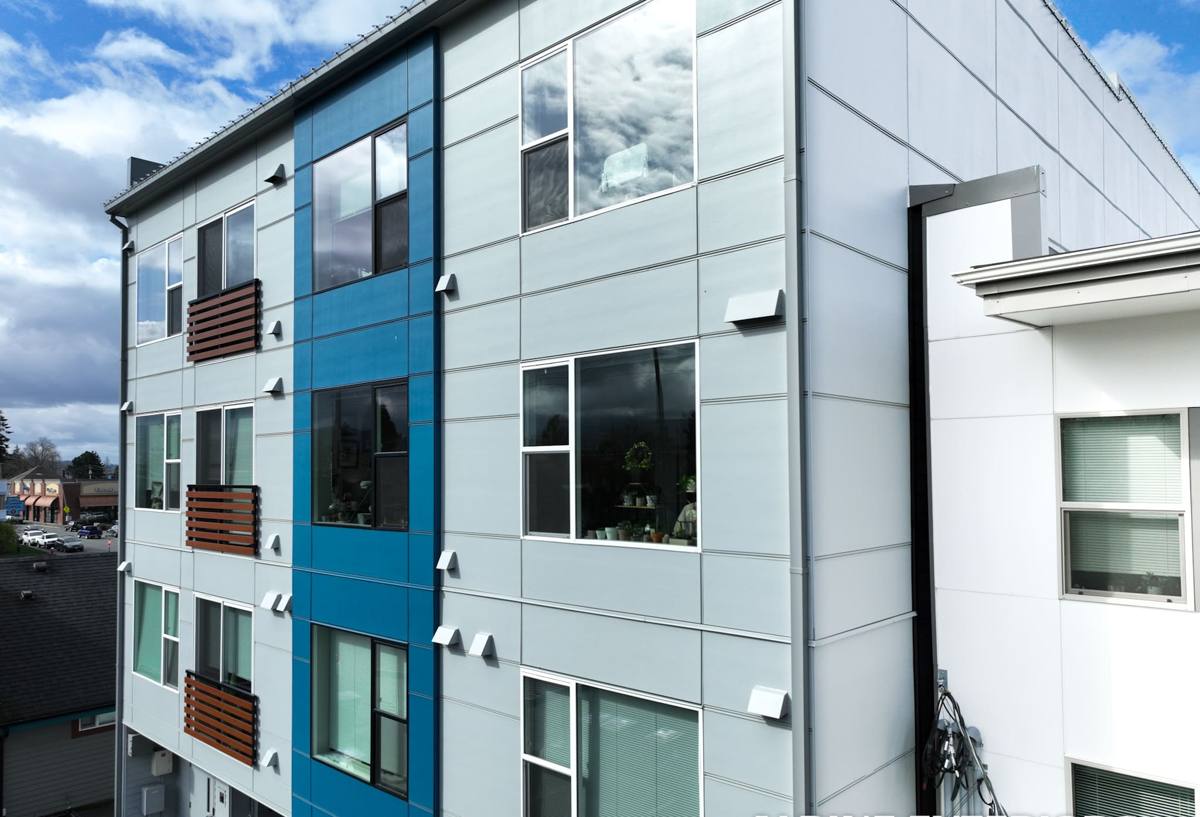
Why Fiber Cement Holds Up Where Other Materials Struggle
Fiber cement siding is made from a mix of Portland cement, sand, and cellulose fiber, pressed and cured into a dense, stable board. That composition is what makes it a good fit for a bay-exposed neighborhood like Edgemoor:
- It doesn't rot, delaminate, or feed fungal growth the way wood-based products can when they stay damp.
- It holds its shape in temperature swings — it doesn't expand, contract, or go brittle in cold snaps the way vinyl can.
- It's non-combustible, which matters during the dry stretches of late summer when regional wildfire smoke and ember risk become a real concern even west of the Cascades.
- It takes and holds a factory finish far better than field-applied paint on raw wood, which matters when a wall is facing years of salt air and rain.
None of that means every fiber cement product performs the same. The formulation, the factory finish, and — just as much — the installation determine whether a job holds up for twenty-plus years or starts showing problems in five.
Why We Install Only James Hardie Fiber Cement
We standardized on James Hardie products years ago and don't install LP SmartSide, vinyl, Cemplank, Allura, primed spruce, or bare cedar. That's not a marketing position — it's a decision about what we're willing to put our name behind on a wall that's going to face Whatcom County weather for decades.
HZ5 Engineered Formulation
James Hardie engineers its siding in climate-specific formulations, and the Pacific Northwest falls under the HZ5 designation — built for regions that see freeze-thaw cycles layered on top of sustained damp weather, rather than the year-round humid heat that other parts of the country deal with. That's a meaningfully different set of stresses than what a generic, one-formula fiber cement product is engineered around.
ColorPlus Factory Finish
ColorPlus is a baked-on, factory-applied finish rather than field-applied paint. It's formulated to resist fading and hold adhesion through repeated wet-dry cycles, and it comes with a manufacturer finish warranty that's tied to the product, not to how carefully a painter primed and coated a board on-site. For a home taking direct salt air and rain off the bay, that's a meaningful advantage over anything painted after the fact.
What a Correct Installation Looks Like in Edgemoor
Fiber cement is only as good as the installation behind it. Most of the problems we get called out to fix on other contractors' work trace back to shortcuts in the parts you can't see once the siding is up.
Moisture Management Behind the Panels
A correctly built wall assembly starts with a weather-resistive barrier and, on exposed elevations especially, a drainage gap that lets any moisture that does get behind the siding find its way back out instead of sitting against the sheathing. On a bluff-facing or water-facing wall in Edgemoor, that drainage detail isn't optional — it's the difference between siding that sheds an occasional wind-driven soaking and siding that traps it.
Fastening, Clearances, and Joints
James Hardie specifies exact nail patterns, fastener types, and clearances from grade, roofing, and other surfaces, and those specs exist for a reason — get them wrong and you create entry points for water or stress points that crack the board over time. Certain joint systems are also designed to go together without caulk at all; caulking a joint that was engineered to move and drain freely can trap water instead of shedding it.
Trim, Flashing, and Water Diversion
Every window, door, and roof-to-wall transition needs flashing that directs water out and away from the wall assembly, not siding that's simply butted up against the trim and caulked over. On a home taking driving rain off the bay, this is where a rushed installation fails first — usually years later, once rot or staining has already set in behind the wall.
Siding Options Compared for Edgemoor's Climate
| Factor | James Hardie Fiber Cement | Vinyl | Wood / Cedar |
|---|---|---|---|
| Salt air & bay exposure | Dense composition and factory finish hold up well | Can become brittle and discolored over time | Absorbs moisture, finish breaks down faster |
| Moss & algae resistance | No organic material for growth to root into | Resists rot but algae can film on the surface | Organic surface feeds moss and mildew directly |
| Driving rain performance | Stable board holds its shape and seals when installed to spec | Can warp or gap at seams over time | Prone to swelling, cupping, and rot at joints |
| Fire resistance | Non-combustible | Combustible, can melt or warp near heat | Combustible |
| Typical repaint/refinish need | Factory finish rated for years before refinishing | Doesn't repaint well; usually replaced when faded | Needs repainting or restaining every few years |
This isn't a knock on every alternative in every situation — it's why, for a bay-exposed neighborhood like Edgemoor, fiber cement is the material we recommend and the only one we install.
Our Process, From Estimate to Cleanup
We keep the process straightforward and try to minimize surprises once work starts:
- Walk-through and assessment — we look at existing siding condition, wall exposure, drainage, and any trim or flashing issues before quoting anything.
- Detailed proposal — product lines, colors, and scope of work spelled out, including what's being removed and what the wall assembly looks like underneath.
- Prep and moisture barrier work — removal of old siding, inspection of sheathing, and installation of weather-resistive barrier and drainage components as needed.
- Installation to manufacturer spec — correct fastening, clearances, joint treatment, and flashing at every penetration and transition.
- Final walk-through and cleanup — a check against the proposal and full site cleanup before we consider the job done.
Keeping Edgemoor Siding Looking Right Between Services
Correct installation does most of the work, but a little seasonal attention keeps things looking their best in this climate:
- Rinse siding annually with a garden hose and soft brush — skip the pressure washer, which can force water behind panels and joints.
- Keep gutters clear so overflow doesn't run down the face of the siding and feed moss growth.
- Trim back shrubs, hedges, and low tree branches to keep airflow moving across shaded or north-facing walls.
- Check caulked joints (only the ones designed to be caulked) once a year and have any cracked or missing sections redone.
- Have flashing and trim points inspected periodically, especially on water-facing elevations that take the most direct weather.
Why Hiring a Crew That Already Works Edgemoor Matters
Edgemoor's mix of bluff-front exposure, mature landscaping, and older housing stock means every job has its own set of conditions to work around — wall orientation to the bay, existing drainage patterns, and in some cases, older wall assemblies that need extra attention during removal and prep. A crew that already works this part of Bellingham has seen those conditions before and knows what to check for before the first piece of old siding comes off, rather than learning it mid-job. That familiarity, paired with sticking to one manufacturer's installation spec instead of switching between products, is what keeps a siding job performing the way it's supposed to for the long run.
If your Edgemoor home's siding is showing its age, or you're planning ahead for a replacement, we're happy to take a look and walk you through what correct fiber cement installation looks like for your specific walls. Use the form below to request a free, no-pressure estimate.