 Bellingham
 Roof Replacement Built for Fairhaven's Climate
Fairhaven sits close enough to the water that its homes deal with a slightly different mix of weather than the rest of Bellingham. Salt-laden air off Bellingham Bay, wind-driven rain that comes in sideways off the water, and long stretches of shaded, damp fall and winter months all put extra demands on a roof. A roof replacement done right in this neighborhood isn't just about swapping old shingles for new ones — it's about choosing materials and installation details that hold up to the specific punishment this part of Whatcom County dishes out year after year.
We've worked on homes throughout Fairhaven and the surrounding Bellingham area long enough to know what fails first, what lasts, and where corners get cut on jobs that don't account for the local conditions. This page walks through what that actually looks like.
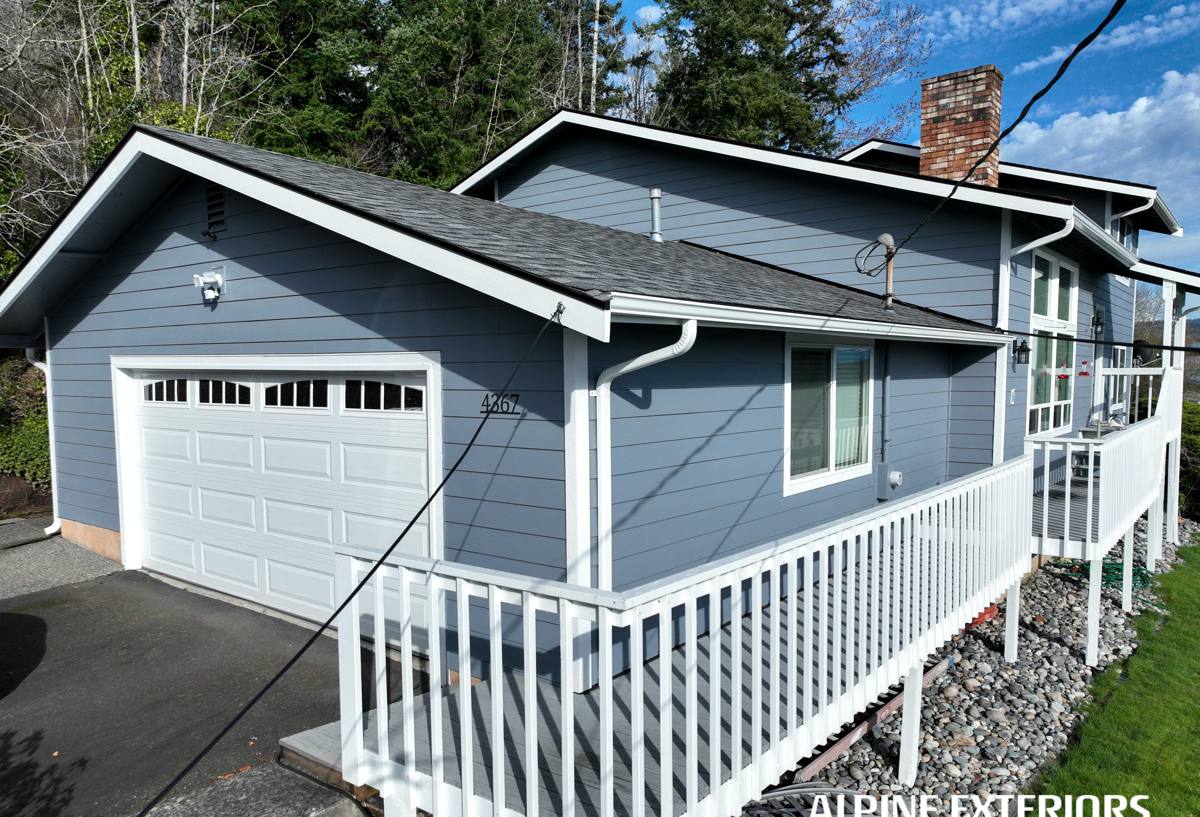
What Fairhaven's Climate Does to a Roof
Salt Air and Metal Fatigue
Homes closer to Bellingham Bay see more airborne salt than homes further inland. Salt accelerates corrosion on exposed metal — flashing, fasteners, gutters, vent caps, and any hardware that isn't rated for coastal exposure. On a lot of older roofs we inspect in this area, the shingles themselves are still serviceable but the metal components around them are rusted through, staining the roof and letting water find its way underneath. Any roof replacement here needs corrosion-resistant metal specified from the start, not just whatever the supplier has on the shelf.
Driving Rain and Wind-Driven Water
Bellingham gets a lot of rain, but the way it arrives in Fairhaven — often pushed by wind off the water — matters more than the total volume. Wind-driven rain doesn't just fall straight down onto shingles; it gets forced sideways and upward under laps, around valleys, and against walls where the roof meets siding. A roof that's fine in a calm rain can still leak in a Fairhaven wind event if the underlayment, valley flashing, and wall flashing weren't detailed for that kind of exposure.
The Long Moss Season
Between the shade from mature trees common in this neighborhood and the extended damp season that runs from fall through spring, moss and moisture-loving growth get a long runway to establish themselves. Moss holds moisture against the roofing material, works its way under shingle edges, and can lift tabs enough to let wind and water in. North-facing slopes and roof sections under tree cover are the areas we watch closest during any inspection.
Signs a Fairhaven Roof Needs Replacing, Not Just Repair
- Granule loss showing up in gutters or at downspout outlets, especially on a roof over 15-20 years old
- Shingles that are cupping, curling, or cracking rather than lying flat
- Moss or dark streaking covering large sections rather than isolated spots
- Soft spots in the roof deck when walked, or visible sagging along the ridge or rafter lines
- Rusted or deteriorating flashing at chimneys, valleys, and sidewalls
- Daylight visible through the attic roof deck, or damp insulation below
- Repeated repairs to the same area over the past few years without resolving the underlying leak
Any one of these on its own might point to a targeted repair. Several at once, or a roof already past its expected service life, usually means replacement is the more honest recommendation — repairing a roof that's structurally near the end just delays the same conversation while spending money on it.
What a Correct Roof Replacement Includes
A roof replacement is more than removing old material and installing new. In a climate like Fairhaven's, the details underneath the visible surface are what determine whether the roof performs for its full expected lifespan or starts giving trouble in five years.
Tear-Off and Deck Inspection
We remove the existing roofing down to the deck rather than layering over it. This lets us actually see the condition of the sheathing, catch any rot or soft spots from past leaks, and replace damaged decking before it's covered up again. Covering over a compromised deck is one of the most common shortcuts that leads to premature failure.
Underlayment Suited to Wind-Driven Rain
Given how much of Fairhaven's weather comes in sideways rather than straight down, we pay particular attention to underlayment coverage and lap direction, plus synthetic or ice-and-water shield membrane in valleys, eaves, and other vulnerable transitions — areas where wind-driven water is most likely to find a way in.
Flashing and Metal Components
Because of the salt exposure near the bay, we spec flashing, fasteners, and vent components rated for coastal or marine-grade conditions rather than standard-grade hardware. It costs a little more upfront and saves the homeowner from replacing corroded metal in a decade.
Ventilation
Proper intake and exhaust ventilation keeps the attic space dry and temperature-regulated, which matters for two reasons in this climate: it reduces the condensation that contributes to deck rot, and it helps prevent the kind of trapped moisture that encourages moss and algae growth on the underside of the roofing material as well as the top.
Final Roofing Material Installation
Shingles, metal panels, or other roofing material go on last, installed to manufacturer specification with attention to nailing pattern, exposure, and sealing at penetrations — all details that matter more in high-wind, high-moisture conditions than they would in a milder climate.
Comparing Common Roofing Options for a Fairhaven Home
| Material | How It Handles Salt Air | Moss Resistance | Typical Lifespan |
|---|---|---|---|
| Architectural asphalt shingles | Good with properly rated flashing and fasteners | Moderate — benefits from algae-resistant granules | 25-30 years |
| Standing seam metal | Very good if coastal-grade coatings and fasteners are used | High — sheds moisture quickly, little surface for growth to take hold | 40-50+ years |
| Basic 3-tab shingles | Fair — more vulnerable at exposed metal components | Lower — flatter profile holds moisture longer | 15-20 years |
We don't push one material on every home. The right choice depends on the roof's slope, the budget, how much shade and moss exposure the specific roof sees, and the look the homeowner wants. What we won't do is install a lower-grade product with standard hardware on a home that's clearly getting coastal exposure — that's a decision that costs the homeowner more in the long run, and we'll say so plainly during the estimate.
Our Process for a Fairhaven Roof Replacement
1. Inspection and Honest Assessment
We walk the roof (or use appropriate access for steep or fragile roofs), check the attic from below when possible, and document what we find — deck condition, flashing condition, ventilation, and any moss or moisture patterns specific to the home's orientation and tree cover.
2. Straightforward Estimate
The estimate lays out material options, what's included in tear-off and disposal, and any deck repair contingencies, so there are no surprise change orders mid-project. We explain the reasoning behind material and hardware recommendations rather than just listing a price.
3. Scheduling Around Bellingham Weather
Roofing work depends on dry conditions. We plan around the forecast and communicate realistic windows rather than promising dates we can't hold to once a system rolls in off the water.
4. Tear-Off, Deck Repair, and Installation
Old material comes off, the deck gets inspected and repaired as needed, and the new roofing system goes on in the sequence described above — underlayment, flashing, ventilation, then final material.
5. Cleanup and Walkthrough
We clear debris, run a magnetic sweep for stray fasteners, and walk the finished roof with the homeowner to review the work and answer questions before calling the job done.
Why Local Experience in Fairhaven Matters
A roofing crew that mostly works inland, drier climates can do competent work in general and still miss the details that matter specifically here — under-specifying flashing metal for salt exposure, skipping ice-and-water membrane in valleys because it "isn't usually necessary" where they normally work, or not accounting for how much longer moss has to establish itself under Fairhaven's tree cover and shade patterns. None of that shows up as an obvious problem on day one. It shows up as a leak or premature failure a few years down the road.
Working regularly in Bellingham and Whatcom County means we see the same failure patterns repeat across different homes in this neighborhood, and we build the response into how we spec and install every roof — not as an upsell, but as the baseline we consider correct for this climate.
Maintaining a New Roof in Fairhaven
- Have gutters cleared at least twice a year — clogged gutters back water up under the roof edge, especially during heavy driving rain
- Keep overhanging branches trimmed back where reasonable to reduce shade, debris, and moss pressure on the roof surface
- Have moss treated or gently removed before it establishes heavily rather than after it's already lifting shingle edges
- Schedule a periodic inspection of flashing and metal components, given the accelerated corrosion risk from salt air
- Check attic ventilation isn't blocked by insulation or debris, since airflow is part of what keeps moisture and moss growth in check
A roof replacement done correctly for this climate should need very little beyond this kind of basic upkeep for its full service life.
Get a Straightforward Estimate
If you're weighing repair versus replacement, or just want an honest read on where your roof actually stands, we're glad to take a look. The estimate is free, there's no pressure attached to it, and we'll tell you plainly what we find — including if a repair is genuinely the better call for now. Use the form below to get started.