 Bellingham
 Fairhaven's Siding Takes a Different Kind of Beating
Fairhaven sits close to Bellingham Bay, and that waterfront position means homes here deal with a combination of stressors that inland Whatcom County neighborhoods see less of. Salt-laden air works on fasteners, trim, and paint film year-round. Driving rain off the water finds its way into laps and joints that would stay dry a few miles inland. And the long, wet moss season here — stretching from fall through spring most years — gives algae and moss a real foothold on anything north-facing or shaded by mature trees, which describes a lot of Fairhaven's older, tree-lined streets.
None of this means Fairhaven homes are somehow more fragile. It means the siding on them has to do more work, and repairs done without accounting for that reality tend to fail again within a few years. A patch that would hold up fine in a dry inland subdivision can fail fast here if it doesn't address moisture path, not just the visible damage.
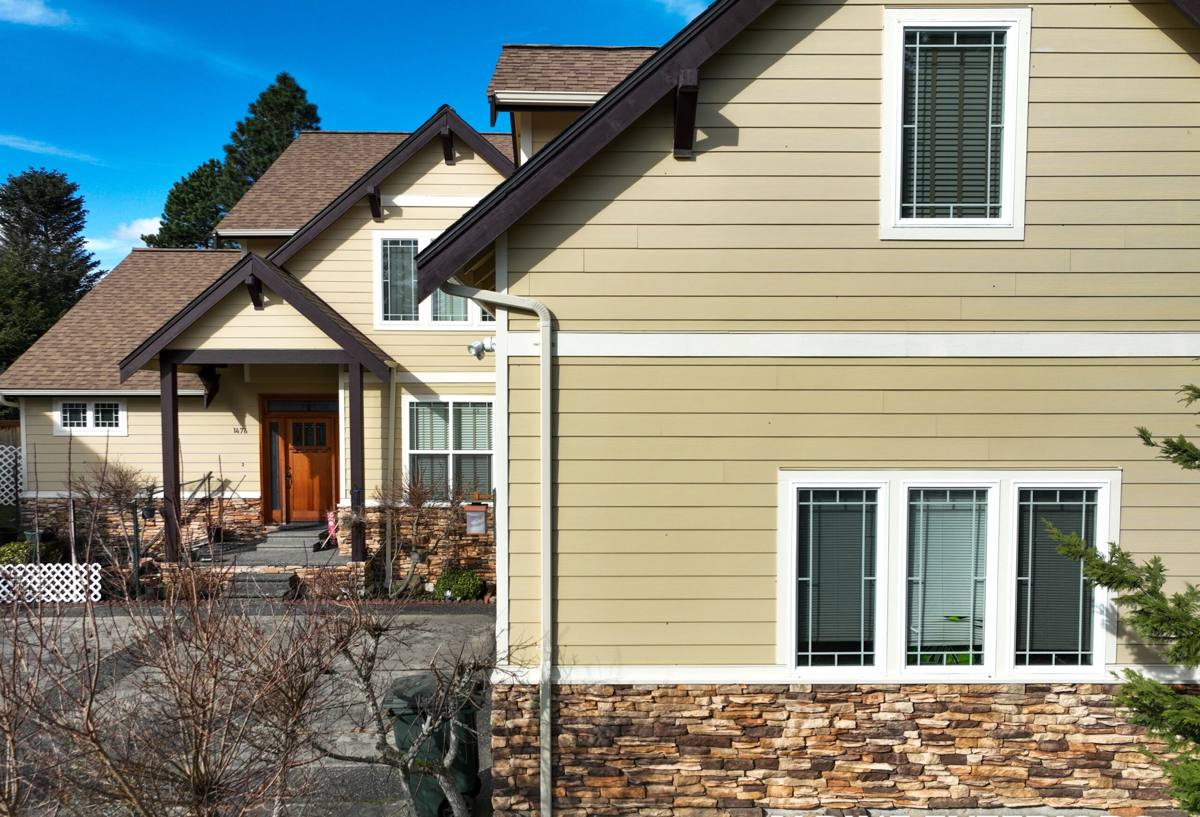
What Actually Goes Wrong With Siding in This Neighborhood
We see a fairly consistent pattern of issues on Fairhaven homes, and most of them trace back to the same handful of causes.
- Moisture intrusion at butt joints and corners — caulk breaks down faster in salt air and constant damp, and once it opens up, water gets behind the siding instead of running off it.
- Moss and algae staining — shaded, north-facing walls and anything under tree cover stay damp long enough for growth to take hold, which traps even more moisture against the surface.
- Paint and finish failure — older painted siding (wood, hardboard, or field-painted fiber cement) chalks, peels, or blisters faster near the water than it would inland.
- Fastener corrosion — nails and screws that aren't corrosion-resistant can rust, stain the siding, and lose their grip over time in a salt-air environment.
- Impact and settling damage — cracked or dented boards from storms, falling branches, or age, especially on older homes that have gone through multiple wet seasons without maintenance.
Any one of these can look like a small cosmetic problem on the surface while the real damage is happening in the wall assembly behind it.
Why "Just Patch It" Often Isn't the Right Answer
A proper siding repair starts with figuring out why the damage happened, not just covering it up. If a section of siding is cracked or stained, we want to know whether that's an isolated impact, a flashing problem, a caulking failure, or ongoing moisture intrusion from behind. Repairing the visible board without fixing the underlying cause just buys a little time before the same spot fails again — and in a wet climate like Bellingham's, that can mean hidden rot progressing behind the new patch.
A repair done right involves:
- Identifying the actual failure point, not just the visible symptom.
- Checking for moisture damage to sheathing or framing behind the siding, especially around window and door openings.
- Confirming flashing, house wrap, and drainage details are doing their job at the repair area.
- Replacing damaged material with the correct product and matching profile, not a mismatched substitute.
- Sealing and fastening to the manufacturer's specifications, not just "close enough."
Repair vs. Replace: How We Think About It
Not every damaged section needs a full re-side, and not every problem can be solved with a spot repair. The right call depends on how widespread the damage is and what's causing it.
| Situation | Usually a Repair | Usually Points to Replacement |
|---|---|---|
| Isolated impact damage (one or two boards) | Yes | No |
| Localized water damage at one trim detail | Yes, plus flashing fix | Only if rot has spread widely |
| Widespread moss, staining, or paint failure across most walls | Rarely lasting | Yes — patching won't stop the pattern |
| Original material is aging hardboard, untreated wood, or failing composite | Short-term only | Yes — the material itself is the problem |
| Multiple past repairs already failing | No | Yes — underlying issue was never solved |
We'll tell you honestly which category your home falls into. There's no reason to sell a full re-side when a targeted repair will genuinely hold up — but there's also no point in patching a wall that's going to keep failing every wet season.
How Our Fairhaven Repair Process Works
1. On-Site Inspection
We walk the home and look at more than the spot you called about — siding problems in this climate are rarely isolated to one visible area, so we check similarly exposed walls, corners, and trim while we're there.
2. Moisture and Damage Assessment
Where damage looks like it could be more than surface-deep, we check for softness, staining, or rot in the sheathing behind the siding before we ever cut into it for a repair estimate.
3. Straightforward Estimate
You get a clear explanation of what's actually wrong, what it takes to fix it correctly, and what it costs — no pressure toward a bigger job than the situation calls for.
4. Correct Repair Work
We match materials and profiles, address the moisture source (not just the symptom), and use fasteners and sealants suited to a coastal, high-moisture environment.
5. Clean Finish
Repaired sections are finished so they blend with the surrounding siding as closely as the existing material allows, and we leave the site clean.
Why Material Matters When You're Repairing, Not Just Building New
A repair is only as good as the material going into it. This is part of why we standardized on James Hardie fiber cement siding for every installation and repair we do — it's non-combustible, engineered for wet Pacific Northwest climates through Hardie's HZ product line, and finished with a factory-applied ColorPlus finish that holds color far longer than field-applied paint, which matters a lot in salt air where painted finishes chalk and fade faster.
We don't install LP SmartSide, vinyl, Cemplank, Allura, primed spruce, or cedar, and we're upfront about why. Engineered wood products can perform well when detailed and maintained carefully, but their wood-fiber core is more sensitive to sustained moisture exposure than fiber cement — a real concern in a neighborhood with Fairhaven's rain and humidity pattern. Vinyl is affordable and low-maintenance in mild conditions, but it can become brittle in cold snaps and distort near heat sources, and it doesn't hold up to wind-driven debris as well as fiber cement. Untreated or primed wood and cedar look great initially but demand a repainting and caulking cycle that's hard to keep up with in a climate this wet, especially on shaded, moss-prone walls. Every product involves trade-offs — we simply chose to build our business around the one whose trade-offs work best for this specific climate.
When we repair a home that already has Hardie siding, we can match the existing product line and finish closely because we work with it exclusively. When a home has a different material, we'll still give you an honest repair assessment — but if the underlying material is what's driving repeat failures, we'll tell you that plainly rather than keep patching it.
Signs a Fairhaven Home Needs a Siding Inspection
- Visible moss or dark green-black staining that keeps returning after cleaning
- Paint that's peeling, bubbling, or chalking heavily on one or two walls
- Soft or spongy spots when you press on the siding near the bottom edge or around windows
- Gaps or cracking in caulk lines at corners, trim, and butt joints
- Rust streaks running down from fastener heads
- Warping, buckling, or boards that no longer sit flat against the wall
- Musty smells or visible staining on interior walls near exterior siding
If any of these sound familiar, it's worth having someone look before the wet season does more damage behind the scenes.
Why It Helps to Hire a Crew That Already Knows Fairhaven
Fairhaven isn't a generic subdivision — it's a mix of older homes, some in the neighborhood's historic district, tree-covered lots, and properties close enough to the water to feel the salt air difference. A crew that regularly works this part of Bellingham already knows which walls tend to take the worst of the weather, how moss establishes itself on shaded siding here, and what moisture patterns to expect behind older wall assemblies. That familiarity means a faster, more accurate diagnosis and fewer surprises once repair work is underway — instead of a generalized approach that doesn't account for what actually drives siding failure in this specific stretch of Whatcom County.
If you're dealing with damaged, stained, or aging siding on a Fairhaven home, we're happy to take a look and give you a straight answer about what it needs. Request a free, no-pressure estimate using the form below.