 Bellingham
 Why Sehome Homes Need Siding Built for This Climate
Sehome sits close enough to Bellingham Bay that salt-laden air is a constant factor on exterior surfaces, and the neighborhood's mix of older bungalows and updated family homes means a wide range of existing siding conditions. Add in Whatcom County's long wet season — months of driving rain followed by the shaded, damp stretches where moss and algae take hold — and you have a climate that is genuinely hard on exterior materials. Wood siding swells, cracks, and rots. Vinyl chalks, warps in temperature swings, and never really sheds the green tinge of moss growth. Cheaper fiber cement products can perform reasonably well, but the difference between an adequate installation and a correct one shows up fast in a climate like this.
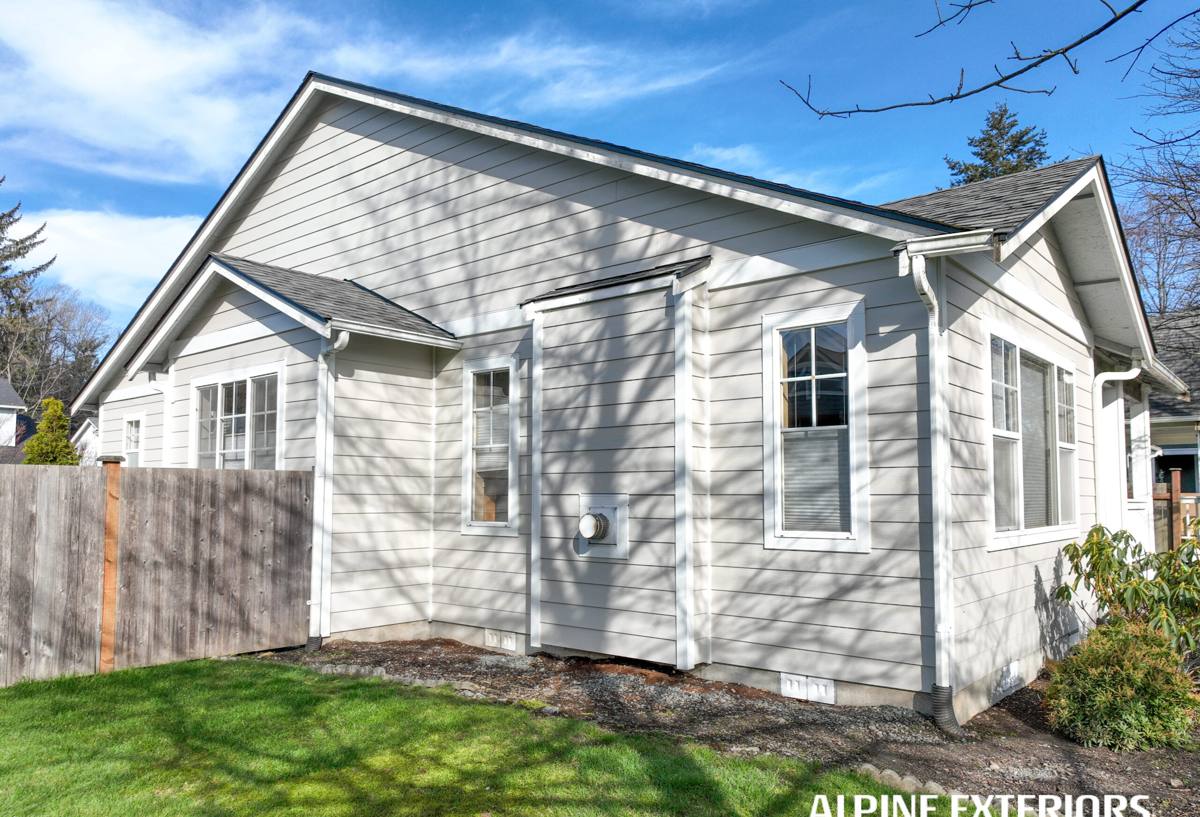
We install James Hardie fiber cement exclusively, and Sehome is a neighborhood where that decision matters. Homes here need siding that resists moisture intrusion at the seams, holds its paint or factory finish without streaking, and doesn't give moss and algae an easy foothold on rough or porous surfaces.
What Bellingham's Weather Actually Does to Siding
Salt Air and Coastal Exposure
Proximity to the bay means airborne salt settles on exterior surfaces year-round. Over time this accelerates corrosion on fasteners and trim, and it can degrade lower-quality finishes faster than manufacturers' lab testing might suggest. Fiber cement itself is not vulnerable to salt corrosion the way metal siding or untreated fasteners are, but the installation details — flashing, fastener choice, caulking — need to account for it.
Driving Rain
Whatcom County storms often come in sideways, not straight down. That means water gets pushed up under laps, into butt joints, and around penetrations like hose bibs and light fixtures far more aggressively than in a calmer climate. Every seam and penetration on a Sehome home is a potential entry point if it isn't detailed correctly.
The Long Moss Season
Shaded north- and east-facing walls, common on lots with mature trees, stay damp for extended stretches from fall through spring. That dampness is exactly what moss and algae need to establish themselves on siding, especially anything with a rough or absorbent surface. Once established, moss holds moisture against the wall surface, which compounds the problem over time.
Why We Install Only James Hardie
We made a deliberate choice years ago to stop installing LP SmartSide, vinyl, Cemplank, Allura, and primed wood products like spruce or cedar, and to standardize on James Hardie fiber cement. That's not a marketing position — it's a practical one built around what we see happening on homes in this exact climate.
- Hardie's fiber cement is non-combustible, which matters for insurance considerations and general home safety, not just wildfire zones.
- The ColorPlus factory finish is baked on under controlled conditions, which holds color and resists fading and chipping far better than field-applied paint on wood or primed products.
- Hardie engineers specific product lines (HZ5, HZ10) for different climate zones, which means the product itself is matched to conditions like ours rather than a one-size-fits-all approach.
- The warranty is transferable and backed by a large, established manufacturer, which matters when a Sehome homeowner eventually sells.
- Correctly installed, Hardie siding has a long track record of holding up to exactly the kind of moisture cycling this region produces.
Other products aren't necessarily bad products in isolation. LP SmartSide is an engineered wood product with real advantages in some markets; vinyl is inexpensive and low-maintenance in mild climates; primed cedar has genuine visual appeal. But wood-based products carry ongoing moisture and rot risk in a climate this wet, vinyl doesn't hold up well to the temperature swings and can look tired within a decade, and the touch-up and maintenance burden on lower-tier fiber cement brands is higher than we're willing to put our name behind. We'd rather install one product correctly than offer five options and hope the cheaper ones hold up.
What a Correct Fiber Cement Installation Involves
Fiber cement siding is only as good as the installation behind it. The board itself resists moisture, insects, and fire, but a poorly flashed installation can still let water behind the siding, where it will do damage regardless of what the surface material is.
Moisture Management Comes First
Before a single board goes up, the wall needs a correctly lapped weather-resistant barrier, properly integrated flashing at every window, door, and penetration, and rainscreen or drainage detailing appropriate to the wall assembly. This is the part of the job that's invisible once the siding is on, and it's also the part that determines whether the house stays dry for the next 30 years.
Fastening and Joint Detail
James Hardie publishes specific fastening patterns, nail types, and clearances, and following them isn't optional if you want the warranty to remain valid. Butt joints need to be flashed or sealed per spec, not just caulked and hoped for. In a driving-rain climate like Bellingham's, sloppy joint work is where leaks start.
Clearances and Ventilation
Siding needs proper clearance from grade, roofing, decks, and patios — typically several inches minimum — so moisture and debris don't wick up into the bottom edge of the boards. This is a common corner-cutting point on lower-bid jobs and one of the more common failure points we see on homes we're asked to re-side.
Product Comparison: Why Hardie Fits Sehome's Conditions
| Factor | James Hardie Fiber Cement | Vinyl | Primed Wood / Cedar |
|---|---|---|---|
| Moisture resistance | Engineered for wet climates (HZ5/HZ10 lines) | Doesn't rot, but seams can trap water | Prone to swelling and rot if finish fails |
| Moss/algae resistance | Smooth ColorPlus finish sheds growth better than rough surfaces | Can develop green tinge in shaded, damp areas | Rough, absorbent surface favors moss |
| Finish longevity | Factory-baked ColorPlus, long fade resistance | Can chalk and fade, especially darker colors | Field paint typically needs recoating every 5-8 years |
| Fire resistance | Non-combustible | Combustible, can melt or deform | Combustible |
| Warranty | Long-term, transferable | Varies widely by manufacturer | Limited or none on the material itself |
Our Process for a Sehome Project
- Walkthrough and assessment — we look at existing siding condition, moisture damage, trim, and any problem areas like shaded walls or low-clearance sections.
- Detailed estimate — scope, product line (HZ5 or HZ10 depending on exposure), color, and trim details, with a clear written breakdown.
- Tear-off and inspection — once old siding is off, we inspect sheathing and framing for hidden moisture damage before anything new goes up.
- Weather barrier and flashing — correctly lapped house wrap, window and door flashing, and drainage detailing appropriate to the wall.
- Installation to manufacturer spec — proper fastener pattern, clearances, and joint treatment per James Hardie's published requirements.
- Final walkthrough — we go over the finished job with you before calling it complete.
What to Check Before Hiring Anyone for This Job
- Ask whether the crew is James Hardie factory-trained or certified, not just "familiar" with the product.
- Ask what weather-resistive barrier and flashing details they use — a vague answer is a red flag.
- Confirm they carry current liability insurance and workers' compensation coverage in Washington.
- Ask for the specific fastener type and pattern they'll use, and whether it matches Hardie's published specs.
- Get the estimate in writing with product line, color, and scope clearly specified — not just a lump-sum number.
Cost Factors for Sehome Fiber Cement Projects
Every home is different, but a few factors consistently drive cost on Sehome projects: how much of the existing siding and sheathing needs to come off versus stays in place, how much trim and detail work is involved around windows and rooflines, whether hidden moisture damage turns up once tear-off starts, and which Hardie product line and color/texture combination is chosen. We'll walk your specific home and give you a real, written number rather than a rough guess — broad ranges quoted without seeing the house rarely hold up once work begins.
Why Local Experience in Sehome Matters
A crew that already works in this neighborhood understands which walls tend to stay damp longest, how Bellingham's rain behaves against different home orientations, and what permitting and inspection expectations look like locally. That familiarity shows up in the small decisions — where to add extra flashing, which clearances to be strict about, how to handle a shaded north wall differently than a sun-exposed south wall — that separate a siding job that lasts two decades from one that starts showing problems in five years.
If you're considering fiber cement siding for a Sehome home, we're happy to walk the property, look at your specific exposure and moisture conditions, and put together a straightforward, no-pressure estimate using the form below.