 Bellingham
 Decking Built for What Happy Valley Actually Deals With
Happy Valley sits close enough to the water and low enough in the Bellingham weather pattern that decks here take a specific kind of abuse: salt-tinged air off the bay, long stretches of driving rain in fall and winter, and a moss season that can run from October well into spring. None of that is unusual for Whatcom County, but it adds up differently on a deck than it does on siding or a roof. A deck is horizontal, walked on, and exposed to standing water and organic debris in a way vertical surfaces aren't. That combination is exactly where cheap decking, poor drainage planning, or a rushed install shows its weaknesses first.
We've built and repaired decks throughout this neighborhood long enough to know which details matter here and which ones are just marketing. This page covers what a composite deck actually needs to hold up in Happy Valley's climate, what a correct installation looks like, and how our process works from first look to final walkthrough.
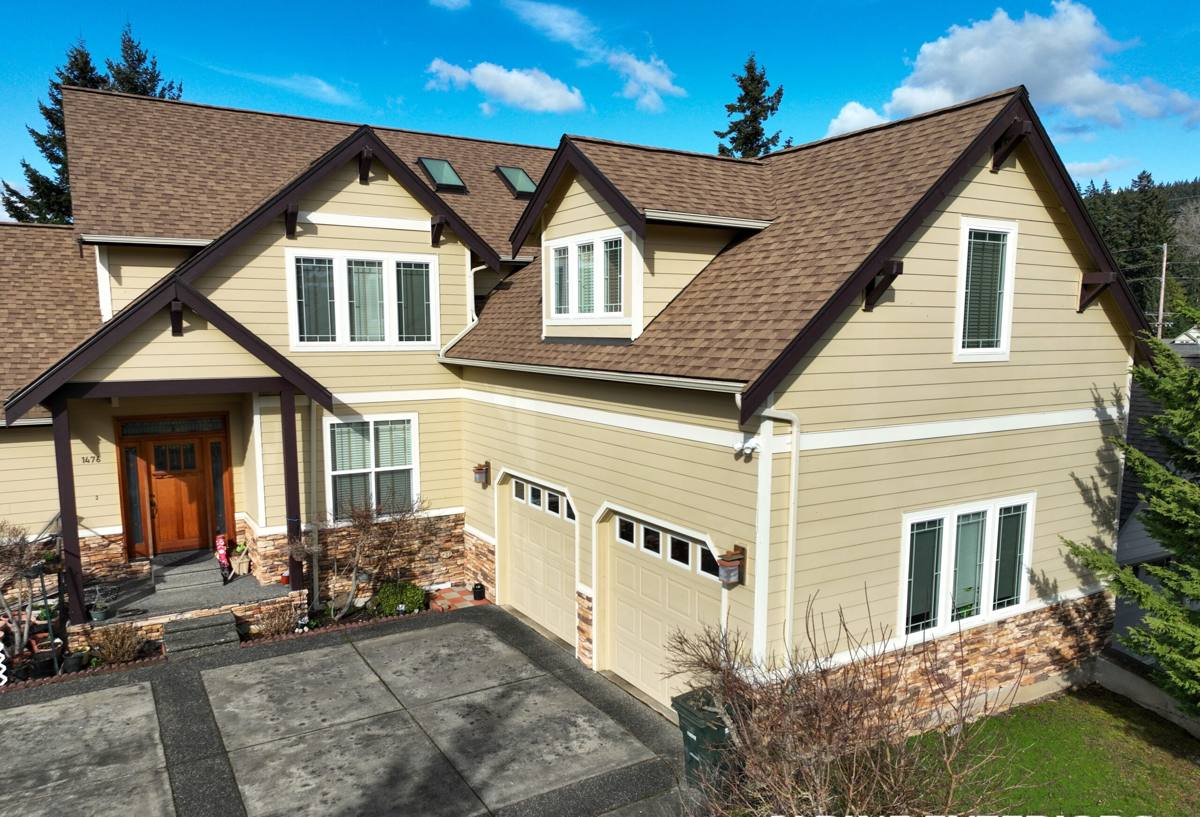
Why Moss and Moisture Are the Real Enemy, Not the Rain Itself
Rain alone doesn't ruin a deck. What ruins a deck is rain that has nowhere to go — water that sits in board grooves, pools against a house ledger, or gets trapped under a surface that can't breathe. Bellingham's damp, mild winters are close to ideal moss-growing conditions, and moss holds moisture against whatever it's growing on. On a wood deck that means rot. On a poorly installed composite deck it means slick, discolored boards, mildew in the grooves, and in some cases moisture working its way into fastener holes or end cuts that weren't properly sealed.
Salt air compounds this. It doesn't rot composite decking the way it can corrode metal fasteners or accelerate wear on unprotected wood, but it does mean hardware selection matters more here than it would twenty miles inland. Stainless or coated fasteners rated for coastal exposure aren't optional upgrades in this neighborhood — they're part of doing the job correctly.
What This Means for Board Selection
Modern capped composite boards (a composite core with a polymer shell wrapped around it) handle this climate significantly better than older uncapped composite or basic wood-plastic blends, because the cap sheds water and resists moisture absorption at the surface. That doesn't mean every capped board is equal, or that composite eliminates maintenance entirely — it means the material gives you a much better starting point than wood does in a climate like this one.
What a Correct Composite Deck Installation Actually Involves
Composite decking gets marketed as low-maintenance, and it is — but "low-maintenance material" and "correctly installed deck" are two different things. A composite deck installed with wood-deck habits will still fail early in this climate, just more slowly and less visibly than a wood deck would. The material forgives some mistakes; it doesn't forgive all of them.
- Substructure and joist spacing: Composite boards flex differently than wood under load and moisture cycling. Manufacturers specify tighter joist spacing for composite than is standard for wood decking, and that spec changes depending on whether boards run straight or at an angle. Following the actual span tables — not just what "looks right" — is what keeps boards from bouncing, cupping, or developing soft spots over time.
- Ledger board and house connection: This is the single most water-exposed connection on the whole structure, and it's the one spot where a mistake stays hidden until it's expensive. Proper flashing, correct fastener type, and a gap for drainage where the ledger meets the house are non-negotiable in a climate that gets sustained rain for months at a time.
- Board spacing for drainage and expansion: Composite expands and contracts with temperature more than people expect. Gaps that are too tight trap water and debris; gaps that are too wide look sloppy and catch heels. Manufacturer-specified spacing, adjusted slightly for our local humidity swings, gets this right.
- Hidden fastener systems: Most composite decking today uses hidden clips rather than face screws, which means fewer penetration points for water and a cleaner surface for moss and debris to run off instead of collecting in screw heads.
- Ventilation underneath: A deck built low to the ground or over poorly graded soil traps moist air underneath the boards, which speeds up moss and mildew growth on the underside and around footings. Proper clearance and grading matter as much as what's on top.
- Railing and stair posts: These take structural load and weather exposure at the same time. Post attachment methods that pass inspection on paper don't always hold up to years of wind-driven rain against an exterior wall.
Composite vs. Other Decking Materials for This Climate
Homeowners in Happy Valley usually compare composite against pressure-treated wood, cedar, or occasionally PVC. Here's how they stack up for a wet, moss-prone coastal climate specifically — not as a general national comparison, but for what actually holds up here.
| Material | Moisture Behavior Here | Maintenance Needed | Typical Lifespan (Local Conditions) |
|---|---|---|---|
| Capped Composite | Sheds water at the surface; resists swelling and splintering | Periodic cleaning to prevent moss/algae buildup | 25–30+ years with proper install |
| Pressure-Treated Wood | Absorbs moisture readily; prone to cupping and checking | Annual cleaning, periodic sealing/staining | 10–15 years before major repair or replacement |
| Cedar | Naturally moisture-resistant but still absorbs water over time | Regular sealing to maintain resistance | 15–20 years with diligent upkeep |
| PVC/Vinyl Decking | Fully water-resistant, doesn't absorb moisture | Low; surface cleaning only | 25–30+ years, though can look and feel more synthetic underfoot |
We install composite most often in this neighborhood because it lands in the sweet spot between wood's maintenance burden and PVC's higher price and different feel underfoot. We're happy to talk through the trade-offs honestly, including situations where wood or PVC might actually be the better fit for a specific home or budget.
Our Process for a Happy Valley Composite Deck
- On-site assessment: We look at grade, drainage patterns, sun and shade exposure, and how close the deck sits to the house and any existing moisture issues. Happy Valley lots vary enough in slope and tree cover that this step changes the plan more often than you'd think.
- Structural plan and permitting: Joist layout, footing placement, and ledger connection are planned to span tables and local code before anything gets cut. We handle the permitting process rather than leaving it to the homeowner.
- Demo and substructure build: If we're replacing an existing deck, we inspect what's underneath — old footings and framing don't automatically get reused just because they're there. Framing goes in with coastal-rated fasteners and proper flashing at every house connection.
- Composite board installation: Boards go down with correct spacing, hidden fastener systems where applicable, and attention to how water will actually move once the deck is finished — not just how it looks the day it's installed.
- Railings, stairs, and finish details: Structural connections here get the same care as the deck framing itself, since these take direct weather exposure.
- Final walkthrough: We go over drainage, care recommendations specific to your site's sun/shade exposure, and what to expect from the material through its first wet season.
What Affects Cost on a Composite Deck Project
| Factor | Why It Matters |
|---|---|
| Deck size and shape | Square footage plus complexity — angled boards, curves, or multiple levels add labor and material |
| Substructure condition | Whether existing footings/framing can be reused or need full replacement |
| Board tier and brand | Composite lines vary in cap technology, color-fastness, and warranty terms |
| Railing system | Composite, cable, glass, or metal railings all price and install differently |
| Site access and grade | Sloped lots or limited equipment access common in this area can add labor time |
| Permitting requirements | Height above grade and attachment to the home can trigger different inspection requirements |
We give straightforward, itemized estimates rather than a single lump number, so you can see where the cost is actually going and where there's room to adjust the scope if needed.
Keeping a Composite Deck Ahead of Moss Season
Composite decking cuts down maintenance significantly compared to wood, but "low-maintenance" in a Bellingham winter still means doing a few things on a schedule. Skipping this for a couple of seasons is the most common reason we get called out to look at a deck that "shouldn't" have problems yet.
- Sweep leaves and debris off the deck regularly through fall — trapped organic matter is what feeds moss and algae growth
- Rinse the surface periodically through the wet months, especially in shaded areas that don't dry out between rain events
- Keep gutters and downspouts near the deck clear so runoff isn't dumping directly onto the surface or substructure
- Check that board gaps and drainage channels aren't clogging with debris or moss
- Trim back overhanging branches or shrubs that keep sections of the deck shaded and damp longer than the rest
- Inspect railing posts and stair connections annually for movement, which can signal a moisture issue at the connection point
Why It Matters That We Already Work in Happy Valley
A lot of decking problems in this area aren't about the material — they're about a design or install approach that would work fine in a drier climate but doesn't account for how much rain this neighborhood gets, how long moss season runs, or how salt-tinged air affects hardware choices over time. A crew that builds decks in a dozen different climates isn't necessarily thinking about any of that by default.
Working regularly in Happy Valley and the surrounding Bellingham area means we've seen how decks here actually age — which framing details hold up, which fastener choices cause problems five years in, and which drainage mistakes only show up after a full wet season. That's the kind of knowledge that doesn't come from a manufacturer's install guide alone.
Get a Straightforward Estimate
If you're planning a new composite deck or replacing one that's showing its age, we're happy to come take a look, walk the site with you, and give you an honest read on what the job actually involves — no pressure, no upsell. Reach out through the form below to schedule a free estimate for your Happy Valley property.