 Bellingham
 Siding Replacement in Bellingham's Happy Valley Neighborhood
Happy Valley is one of Bellingham's older, established residential neighborhoods, and that means a lot of the homes here are still wearing their original siding — or a second generation of siding that's now reaching the end of its life. Whatcom County's climate is not gentle on exterior building materials. Homes in this part of Bellingham deal with a steady combination of moisture-laden air, wind-driven rain, and a long stretch of the year where shade and dampness combine to grow moss on anything that holds water. Siding replacement here isn't just a cosmetic project — it's a chance to correct water management problems that have been building for years, sometimes decades.
This page covers what siding replacement actually involves for a Happy Valley home, what the regional climate demands from the materials and installation, and why we've built our business around installing one product system rather than offering a menu of options.
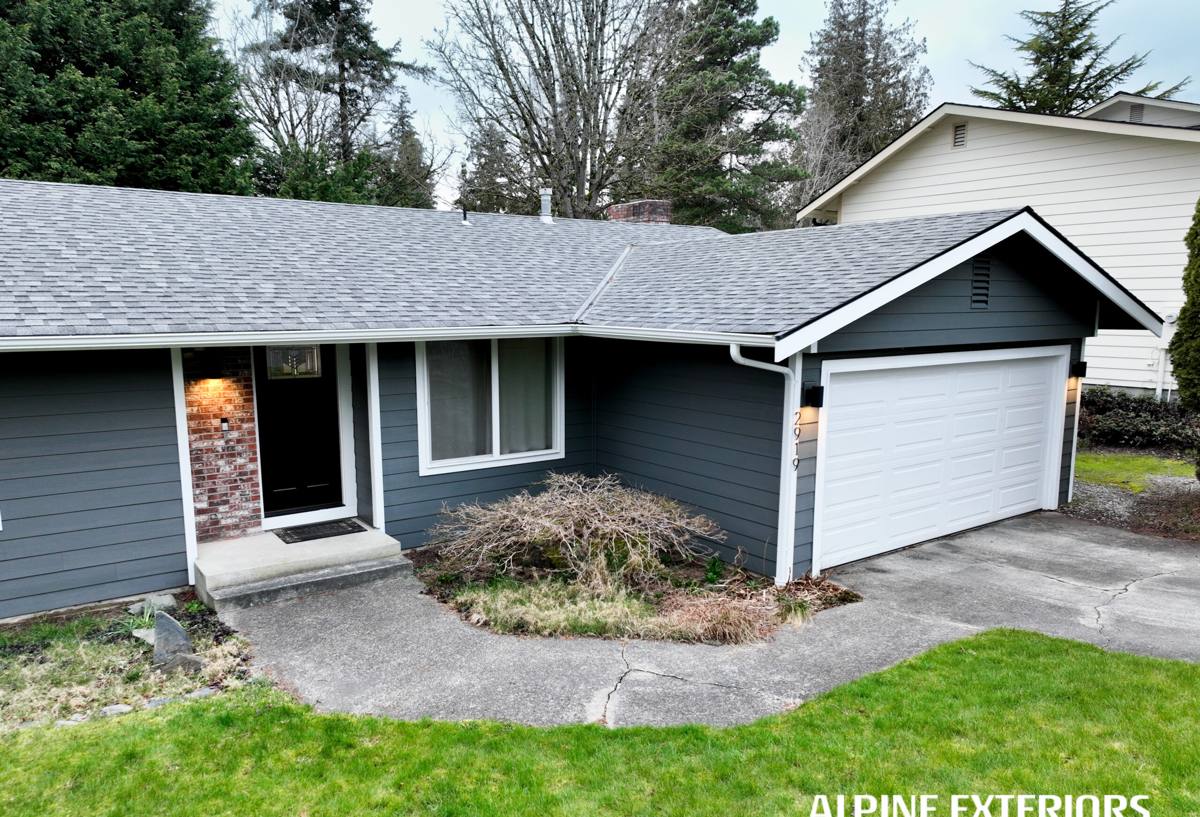
What Bellingham's Climate Does to Siding Over Time
Three climate factors matter most for siding performance in this part of Whatcom County:
Salt Air
Proximity to Bellingham Bay and the Salish Sea means airborne salt is a constant, low-level presence across the city, including inland neighborhoods like Happy Valley. Salt-laden moisture accelerates corrosion of exposed metal fasteners, flashing, and hardware, and it can degrade certain paint and coating systems faster than manufacturers' published timelines suggest for drier climates.
Driving Rain
Bellingham doesn't just get a lot of rain — a good portion of it arrives sideways, pushed by wind off the water. Wind-driven rain finds every gap in a siding system: unsealed laps, poorly flashed windows, and butt joints that weren't caulked or backed correctly. A siding job that would hold up fine in a calm-rain climate can fail here within a few years if the water-resistive barrier and flashing details weren't done properly.
Long Moss Season
Cool, damp, and shaded conditions persist for much of the year in this region, and moss doesn't need much encouragement to take hold on north-facing walls, under eaves, and anywhere siding stays wet longer than it should. Moss holds moisture against the surface of the siding, which is a problem for wood-based products in particular, and it's a maintenance headache on almost anything.
None of this means siding is a losing battle in Bellingham — it means the material and the installation both have to be matched to these conditions, not to a national average climate.
Signs a Happy Valley Home Needs Siding Replacement
Not every siding problem requires full replacement — sometimes a section repair or recaulking will do. But certain signs point to a system that has failed at a fundamental level and needs to come off:
- Soft or spongy spots when you press on the siding, especially near the bottom courses or below windows
- Visible warping, buckling, or delamination of the siding boards themselves
- Paint that won't hold — repeated peeling or blistering within a couple of years of repainting
- Moss or algae growth that returns quickly after cleaning, particularly on shaded walls
- Staining or discoloration around seams, corners, or window trim that suggests water is getting behind the siding
- Visible rot at the bottom edge of walls, around penetrations, or at deck and porch ledger connections
- Rising energy bills alongside noticeably drafty walls, which can indicate a failed weather barrier
- Siding installed more than 25–30 years ago with no major service history
If you're seeing more than one or two of these, it's worth having someone look at the wall assembly itself, not just the surface.
What a Correct Siding Replacement Job Involves
Siding replacement done right is as much about what's underneath the new material as the material itself. The visible siding is the last layer installed, not the first decision made.
Tear-Off and Inspection
Full removal of the old siding lets us actually see the sheathing, framing, and any existing water damage. This is the point where hidden problems — rot at window openings, damaged sheathing, prior flashing mistakes — get found and fixed instead of covered up again.
Water-Resistive Barrier
A correctly lapped and sealed weather-resistive barrier is the layer that actually keeps bulk water out of the wall assembly in a driving-rain climate. This step gets rushed on cut-rate jobs and it's the single biggest factor in whether a siding job survives Bellingham winters.
Flashing Details
Windows, doors, deck ledgers, and any wall penetration need flashing that directs water back out, not into the wall. This is where a lot of siding failures actually originate, even when the siding material itself is fine.
Fastening and Clearances
Fiber cement siding has a manufacturer-specified fastening pattern, minimum ground clearance, and gap requirements at trim and corners. Skipping these to save time is one of the most common ways an otherwise good product underperforms.
Finish and Sealant
Factory-applied finishes hold up better than field-applied paint, and sealants need to be matched to the product and joint type — not just whatever caulk is on the truck.
Why We Install Only James Hardie Fiber Cement
We don't offer vinyl, LP SmartSide, or cedar as options, and that's a deliberate standard, not a limitation of what we're capable of installing. In a climate with salt air, driving rain, and heavy moss pressure, the material matters as much as the workmanship:
- Fiber cement doesn't feed mold or rot the way wood-based products can when moisture gets trapped against them
- It's non-combustible, which matters for insurance conversations and wildfire-adjacent risk in parts of Whatcom County
- James Hardie's ColorPlus factory finish is baked on under controlled conditions, which holds up more consistently than field-applied paint exposed to our damp shoulder seasons
- Hardie engineers specific product lines (its HZ system) for different climate zones, which lets us match the product to a genuinely wet, marine climate instead of a generic national spec
- The warranty structure is transferable and backed by a large, established manufacturer, which matters over a 30+ year ownership timeline
We're not saying every other product is unusable everywhere — we're saying that for the specific conditions Happy Valley homes face, we'd rather stand behind one system we know performs than offer a menu that includes products we'd have reservations recommending here.
How Siding Materials Compare in This Climate
| Material | Moisture Behavior | Maintenance | Typical Lifespan Here |
|---|---|---|---|
| James Hardie Fiber Cement | Doesn't absorb and swell like wood; dimensionally stable when wet | Occasional wash; factory finish reduces repainting | 30+ years with proper install |
| Vinyl | Sheds water on the surface but can trap moisture behind it if installed tight; can warp in heat/cold cycling | Low, but color fades and can't be repainted easily | 15–25 years typical |
| Cedar / Primed Spruce | Absorbs moisture; prone to swelling, cupping, and rot without diligent upkeep | Regular repainting/staining and moss treatment needed | Highly variable, often 10–20 years before major repair |
| LP SmartSide (engineered wood) | Treated to resist moisture better than raw wood, but edges and cut ends remain vulnerable | Field-painted finish needs monitoring over time | Manufacturer-rated but installation-sensitive |
What Drives Siding Replacement Cost
Every home is different, but the main cost drivers for a Happy Valley siding replacement are fairly consistent:
| Factor | Why It Matters |
|---|---|
| Wall square footage and complexity | More corners, gables, and dormers mean more cutting and trim work |
| Condition of the sheathing underneath | Rot or damage found during tear-off adds repair scope before new siding goes on |
| Siding profile and trim selection | Lap width, trim boards, and accent details affect material and labor |
| Access and site conditions | Tight lots, slopes, and mature landscaping around the home affect staging and time |
| Number of window and door openings | Each opening needs flashing work, which adds labor regardless of material cost |
We give homeowners a real number after actually looking at the house — not a rough phone estimate — because so much of the cost depends on what's found once the old siding comes off.
Our Process, Start to Finish
- On-site evaluation of the current siding, trim, and any visible signs of moisture damage
- Written estimate based on actual measurements and observed conditions, not a generic square-footage guess
- Tear-off and inspection of sheathing and framing, with any needed repairs discussed before covering them back up
- Installation of water-resistive barrier, flashing, and James Hardie siding to manufacturer specifications
- Final walkthrough so you can see the completed work and ask questions before we consider the job done
Why a Crew That Already Works in Happy Valley Matters
Local experience isn't just a talking point — it changes real decisions on the job. A crew that's worked this neighborhood and the wider Bellingham area already understands how prevailing wind and rain direction affect which walls take the worst weathering, how shaded lots hold onto moisture longer, and which drainage and grading patterns are common on older Whatcom County lots. That translates into better flashing decisions, smarter product-line selection (some Hardie products are engineered for wetter climates than others), and fewer surprises once the old siding comes off. It also means straightforward permitting, since local crews already know what Bellingham's building department expects for exterior work.
After Your New Siding Is Installed
Fiber cement siding is low-maintenance, not no-maintenance. A periodic rinse-down helps prevent moss and mildew buildup, especially on north-facing and shaded walls where moss season hits hardest. Keep an eye on caulking at trim joints over the years, and make sure gutters and downspouts are directing water away from the walls rather than dumping it against them. Beyond that, a correctly installed Hardie system is built to handle what this climate throws at it without demanding constant attention.
If your Happy Valley home is showing signs of aging siding, or you just want an honest look at what's underneath before it becomes a bigger problem, we're happy to come take a look. The estimate is free, there's no pressure, and you'll get a straight answer about what your home actually needs.