 Bellingham
 Window Replacement Built for Happy Valley's Weather
Happy Valley is one of Bellingham's older, well-established neighborhoods, with homes ranging from early-1900s bungalows to mid-century builds and newer infill construction sitting close together on tree-lined streets. That mix of ages means a mix of window problems — original single-pane wood sash still hanging on in some homes, tired aluminum-frame replacements from the 1980s and 90s in others, and everything in between. What almost all of them have in common is exposure to the same thing: Bellingham Bay weather. Salt-laden air off the bay, long stretches of driving rain, and a moss season that seems to start earlier every year all work on window frames, sills, and the wall assembly around them, whether the home is a hundred yards from the water or a mile inland.
This page is specifically about window replacement for Happy Valley homes — not a general product overview. We'll walk through what the local climate actually does to windows, what a correct installation involves, how we approach the job, and why it matters to hire a crew that already knows this neighborhood's housing stock.
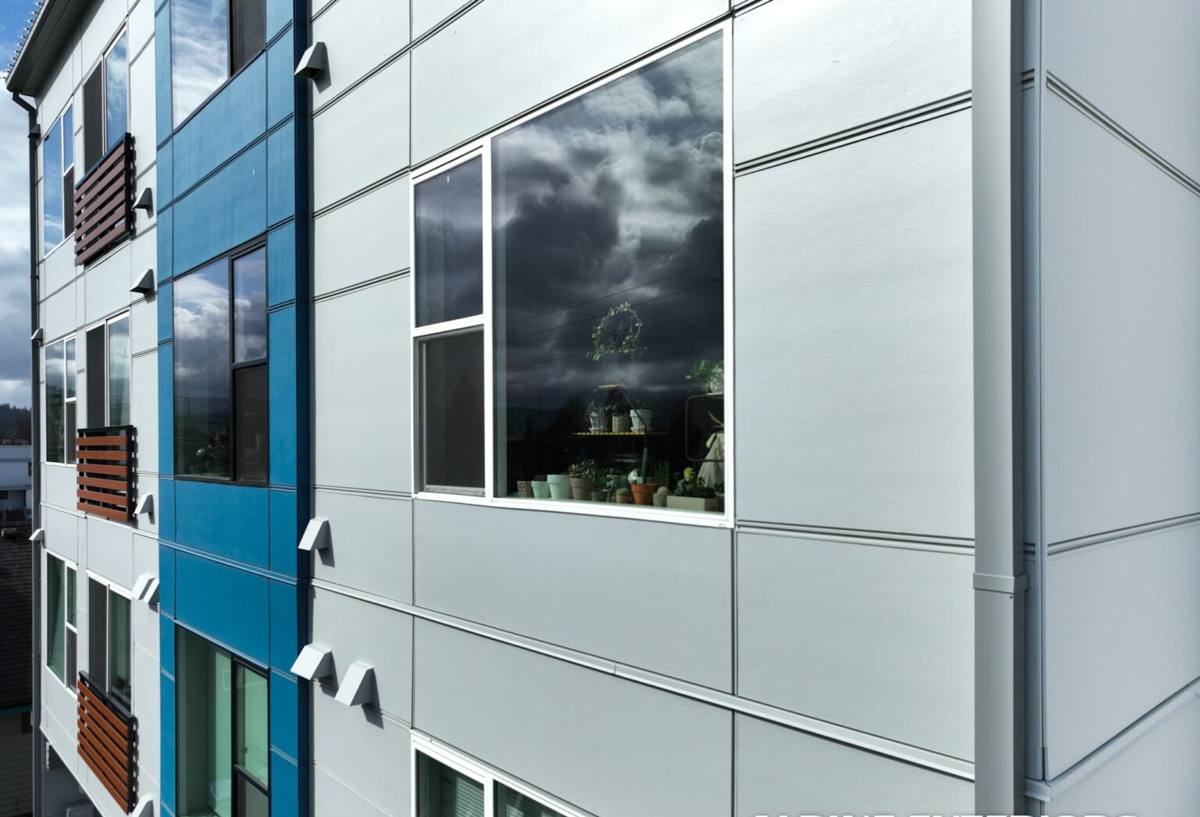
What Bellingham's Climate Does to Windows Over Time
Windows fail from the outside in, and in Whatcom County the outside is relentless. A few specific mechanisms show up again and again on homes we look at in Happy Valley:
Salt Air and Metal Fatigue
Proximity to Bellingham Bay means airborne salt settles on window hardware, aluminum frames, and fasteners. Over years, that accelerates corrosion on cranks, hinges, and locking mechanisms, and it pits older aluminum frames until they no longer seal tightly against the sash. Windows that still look presentable from the curb can be leaking air and moisture at the hardware level.
Driving Rain and Wind-Driven Moisture
Bellingham doesn't just get rain, it gets sideways rain, pushed by wind off the water. That kind of weather finds every gap in old flashing, every dried-out bead of caulk, and every warped sash. Water doesn't need a big opening to get in — a hairline gap is enough over the course of a wet fall and winter.
Moss, Algae, and Prolonged Dampness
Our moss season runs long here, and it's not just a roof problem. Moss and algae take hold on north-facing sills, wood trim, and anywhere water sits without drying out between rain events. On wood-frame windows, that sustained dampness is what actually causes rot — the moss holds moisture against the wood far longer than the rain event itself.
The Compounding Effect
None of these three things acts alone. Salt air degrades the seals and hardware that are supposed to keep rain out, driving rain finds the resulting gaps, and constant dampness feeds rot and mold in the wall cavity around the window. By the time a homeowner notices a soft spot on an interior sill or a draft near the frame, the damage has often been building for a few seasons.
Signs Your Happy Valley Home May Need New Windows
Not every drafty window needs full replacement — sometimes a repair or better weatherstripping solves it. But certain signs point to a window (and possibly the surrounding wall assembly) that's past the point of patching:
- Visible fog or moisture trapped between panes of double-glazed windows — a sign the seal has failed
- Wood trim or sills that feel soft, spongy, or show dark staining, especially on north- or west-facing walls
- Windows that are difficult to open, close, or lock, particularly older aluminum-frame units
- A noticeable draft near the frame even when the window is fully latched
- Visible gaps between the window frame and siding, or caulk that has cracked and pulled away
- Rising heating bills without any other explanation, especially in a home with original single-pane windows
- Condensation forming on the inside of the glass regularly during cold, wet weeks
- Persistent moss or algae growth directly on or below the window sill
If you're seeing two or three of these on the same window, it's worth having someone look at both the window and the wall around it before deciding what's actually needed.
What a Correct Window Replacement Job Actually Involves
The window unit itself gets most of the attention, but in a climate like ours, the installation details matter as much as the product. A window that's the right product but poorly installed will leak here — it's just a matter of time. A correct job includes:
Assessing the Opening, Not Just the Window
Before anything comes out, we check the condition of the rough opening — the framing, sheathing, and any existing flashing behind the old window. This is where hidden rot from years of moisture intrusion shows up, and it has to be addressed before a new window goes in, not covered over.
Proper Flashing and Water Management
Given how much wind-driven rain this area sees, flashing details are not optional extras. That means correctly lapped flashing tape, a sloped sill pan to direct any water that does get past the exterior seal back outside, and integration with the home's existing weather-resistive barrier so water has a clear path out rather than into the wall.
Air Sealing and Insulation Around the Frame
The gap between the new window frame and the rough opening needs to be sealed and insulated correctly — not overpacked with expanding foam, which can bow the frame, and not left with gaps that let air and moisture through. This is a detail that's easy to rush and hard to fix later.
Interior and Exterior Finish Work
Once the window is set, sealed, and insulated, trim and caulking get finished on both sides. On the exterior, the caulk joint is the first line of defense against the next round of driving rain, so it has to be done cleanly and with a product rated for our climate.
Choosing the Right Window for a Bellingham Climate
There's no single "best" window brand for every home — the right choice depends on the home's age, exposure, and your maintenance preferences. Here's how the common frame materials generally compare for a coastal Whatcom County setting:
| Frame Material | How It Handles Our Climate | Maintenance |
|---|---|---|
| Vinyl | Good moisture and salt resistance, won't rot or corrode; performance varies by manufacturer quality | Low — occasional cleaning, no painting or sealing |
| Fiberglass | Very stable in temperature swings and moisture, strong long-term performance in wet coastal climates | Low — durable finish, minimal upkeep |
| Wood | Excellent insulator and classic look, but vulnerable to the rot and moss issues common here without diligent upkeep | High — regular painting/sealing, more sensitive to installation quality |
| Wood-Clad | Wood interior with a protective exterior cladding; better moisture resistance than bare wood, still relies on sound cladding seams | Moderate — exterior is low-maintenance, interior wood still needs occasional attention |
| Aluminum (older stock) | Prone to corrosion from salt air and is a poor insulator; common in older Happy Valley replacements from decades past | Moderate to high — hardware and seals degrade faster near the bay |
Given the salt air and rain exposure across most of Happy Valley, we lean toward recommending vinyl or fiberglass frames for most homeowners here, and we'll walk through the honest trade-offs for your specific home rather than pushing one product line.
Glass Packages Worth Considering
Beyond the frame, the glass package matters for comfort and condensation control. Double-pane with a low-E coating is the standard baseline for this climate. Adding argon gas fill and a warmer-edge spacer improves insulation and reduces the chance of condensation forming on cold, wet days — a real consideration given how much of the year is spent below 55 degrees and damp here. Triple-pane is available but usually only makes sense on homes with significant noise or extreme exposure concerns, since the added cost doesn't always pencil out for a moderate coastal climate like ours.
Our Process, Start to Finish
- Free in-home assessment — we look at the windows you're concerned about and the surrounding wall condition, not just measure for a quote.
- Honest recommendation — we'll tell you if a window needs replacing, if a repair will hold, or if there's rot that needs addressing first.
- Clear, written estimate — line-item pricing so you know what you're paying for, with no pressure to decide on the spot.
- Scheduled installation — we work around Bellingham's wet season where possible and take precautions to protect the opening if weather turns during the job.
- Proper flashing, sealing, and finish work — done to hold up against driving rain, not just pass a quick visual check.
- Walkthrough and cleanup — we confirm every window operates correctly and leave the site clean.
What Affects the Cost of Window Replacement
Pricing varies home to home, but the main cost drivers are consistent across most Happy Valley projects:
| Factor | Why It Affects Cost |
|---|---|
| Frame material chosen | Vinyl is generally the most budget-friendly; fiberglass and wood-clad cost more upfront |
| Number of windows and sizes | Larger openings and custom sizes (common in older homes) cost more than standard sizes |
| Condition of the rough opening | Hidden rot or damaged framing found during removal adds repair work before installation |
| Full-frame vs. insert replacement | Full-frame replacement addresses flashing and structure but costs more than an insert into a sound existing frame |
| Glass package | Argon fill, upgraded low-E coatings, and triple-pane options add cost over standard double-pane |
| Access and site conditions | Second-story windows, tight side yards, or landscaping obstacles can affect labor time |
As a broad range, most single-family window replacement projects in this area fall somewhere between a few thousand dollars for a handful of standard windows up to well into five figures for a whole-house replacement with upgraded glass — but the only way to get an accurate number is a site visit, since so much depends on what's found once the old window comes out.
Why It Matters to Hire a Crew That Already Works Happy Valley
A contractor who's worked on multiple homes in this specific neighborhood has already seen how its housing stock tends to age — where the rot typically shows up on a 1920s bungalow versus a 1970s build, which orientations take the worst of the wind-driven rain, and how the older aluminum windows common in this area typically fail. That local pattern recognition saves time during the assessment and reduces surprises once the old window comes out. It also means a crew that understands Bellingham's permitting and inspection expectations and won't be caught off guard by a wet week in the middle of a project — because around here, that's not a rare event, it's the plan you build around.
We're a Bellingham-based crew that works throughout Whatcom County, including Happy Valley, and we approach every window project the same way: assess honestly, install correctly, and stand behind the work. If your windows are drafty, fogged, hard to operate, or just old enough that you're wondering, we're happy to take a look. Reach out for a free, no-pressure estimate using the form below.