 Bellingham
 Siding That Has to Work in Happy Valley's Climate
Happy Valley is a well-established residential neighborhood on Bellingham's south side, close enough to the water and to Whatcom County's marine weather patterns that its homes take a specific kind of beating year-round. Salt-laden air off the Salish Sea works its way into any material that isn't built to shrug it off. Driving rain — the kind that comes in sideways during a fall or winter system — finds every gap in a wall assembly that wasn't sealed correctly. And the deep, damp shade many Happy Valley lots enjoy from mature trees is exactly the environment moss and algae need to take hold and spread across a north-facing wall for months at a time.
None of that is unique to one street or one lot in the neighborhood — it's the baseline condition for exterior materials anywhere in this part of Whatcom County. But it means the siding decision on a Happy Valley home isn't cosmetic. It's a decision about what's going to hold up against salt, rain, and moss season after season without rotting, warping, or feeding mold behind the wall.
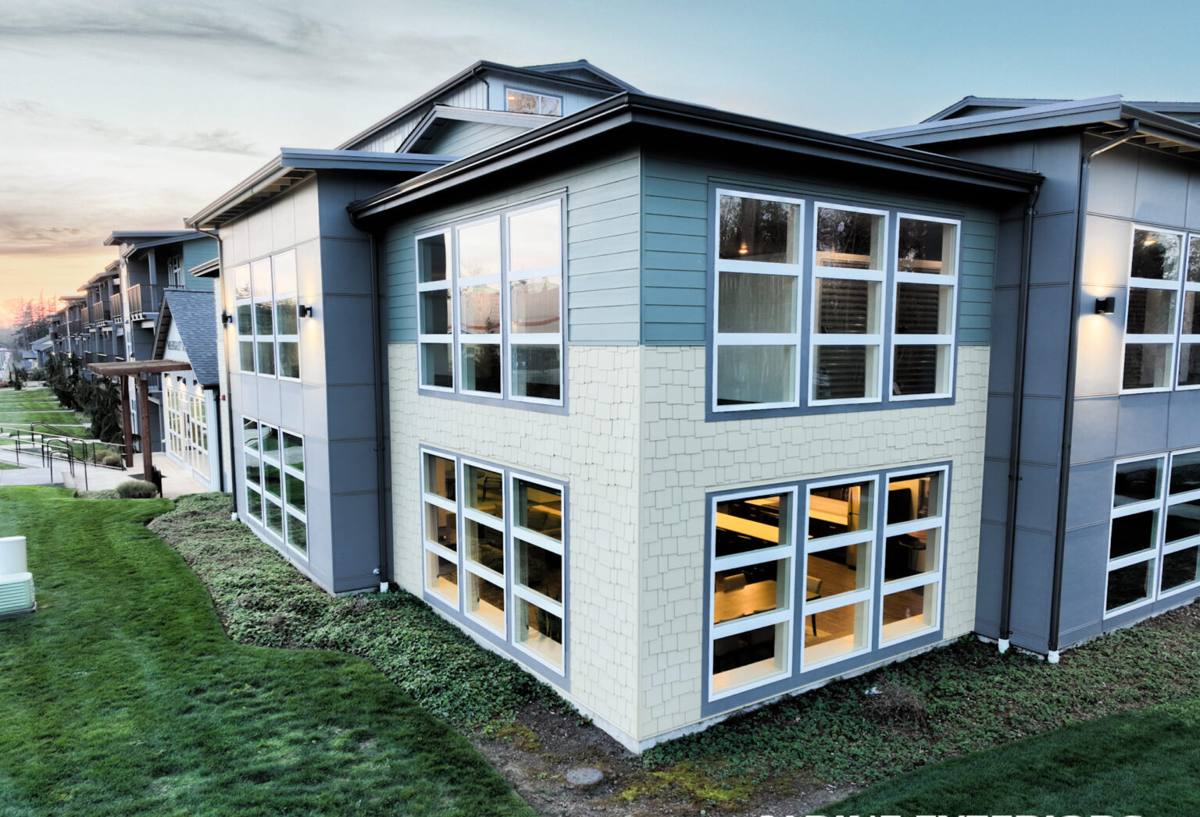
Why We Only Install James Hardie Here
We install James Hardie fiber cement siding exclusively. We don't install vinyl, LP SmartSide, Cemplank, Allura, primed spruce, or cedar, and we say that plainly to every homeowner who asks — because the reasoning matters more than the brand name.
What the alternatives get right
Vinyl is inexpensive and low-maintenance in mild weather. Engineered wood products like LP SmartSide are lighter to handle and can look good freshly installed. Cedar has genuine natural appeal and a long tradition in this region. None of these are bad products in the abstract.
Why they fall short in this specific climate
The trade-offs show up over time, not on install day. Vinyl can warp, fade, and crack under UV and temperature swings, and it doesn't hold paint if a homeowner ever wants to change the color. Engineered wood siding is an organic wood-fiber product at its core — if moisture gets past the coating, especially at cut edges or fastener points, it can swell and deteriorate, and that's a real risk in a climate that delivers driving rain for months at a stretch. Cedar looks beautiful but demands ongoing maintenance — staining, sealing, and vigilance against rot and moss — that most homeowners underestimate until they're years behind on it.
James Hardie fiber cement is non-combustible, dimensionally stable, and engineered specifically for wet, coastal-influenced climates through its HZ5 product line. It doesn't feed mold the way wood-based products can, it holds its factory-applied ColorPlus finish far longer than field-applied paint, and it's backed by a strong transferable warranty. That combination is why it's the only product we put on homes, in Happy Valley or anywhere else we work.
What Happy Valley Homes Specifically Need From Their Siding
- Salt tolerance: materials and fasteners that won't corrode or degrade from airborne salt exposure over years, not just months.
- Real weather resistance: a wall assembly that sheds driving, wind-blown rain rather than just tolerating vertical rainfall.
- Moss and algae resistance: a surface and finish that doesn't give organic growth an easy foothold on shaded, north-facing walls.
- Dimensional stability: siding that doesn't swell, cup, or crack as it cycles through wet winters and drier summers.
- Low ongoing maintenance: a finish that holds its color and seal without a repainting cycle every few years.
James Hardie's HZ5 formulation is engineered for exactly this profile — it's built to perform in areas with sustained moisture exposure and freeze-thaw cycling, which describes a normal Whatcom County winter.
What a Correct Installation Actually Involves
The material is only half the equation. A James Hardie installation performs the way it's supposed to only when the wall assembly behind it is built correctly — and this is where a lot of siding jobs quietly fail, regardless of what product is on the outside.
The details that matter most
- A properly installed weather-resistant barrier (house wrap) with all seams and penetrations correctly taped and sealed.
- A drainage plane or rainscreen gap that lets any incidental moisture behind the siding drain and dry out instead of sitting against the sheathing.
- Correct flashing at every window, door, deck ledger, and roof-to-wall intersection — the points where driving rain finds its way in if flashing is missing or installed wrong.
- Manufacturer-specified fastening: the right nail type, spacing, and penetration depth, since under- or over-driven fasteners are one of the most common causes of premature siding failure.
- Correct joint and butt-seam treatment, with factory-primed cut edges sealed to prevent moisture wicking into the cut face of the board.
- Proper clearance at grade, decks, and patios so siding never sits in standing water or constant splash-back.
Skip any one of these steps and even the best siding material on the market will underperform. This is the part of the job that separates a crew that's simply "hung boards" from one that's actually built a wall system engineered to handle this region's weather.
Our Process for a Happy Valley Siding Project
1. On-site assessment
We walk the home, check the condition of the existing siding and sheathing, look for signs of past moisture intrusion, and note site-specific factors — shade patterns, drainage, wind exposure — that affect the job.
2. Tear-off and sheathing check
Old siding comes off and we inspect the sheathing underneath. Any rot or water damage gets addressed before anything new goes on — covering up a compromised wall is how small problems become expensive ones.
3. Weather barrier and drainage plane
We install a new weather-resistant barrier and drainage gap system, sealing every seam and penetration so the wall can manage the moisture this climate throws at it.
4. Flashing and trim
Every window, door, and roof intersection gets properly flashed before siding installation begins — this step gets rushed on low-quality jobs, and it's the one that causes callbacks years later.
5. James Hardie installation
Boards, panels, and trim go on to manufacturer specification — correct fastening, correct gaps, correct sealant at joints — using the HZ5 product line suited to this climate.
6. Final inspection and walkthrough
We walk the finished job with the homeowner, confirm every detail meets spec, and make sure questions about care and warranty coverage are answered before we consider the job done.
Comparing Siding Options for a Climate Like This
| Factor | James Hardie Fiber Cement | Vinyl | Engineered Wood / Cedar |
|---|---|---|---|
| Moisture & moss resistance | Strong — non-organic, HZ5 climate-engineered | Moderate — doesn't rot, but can trap moisture behind it | Weaker — organic material, vulnerable at cut edges and joints |
| Salt air durability | Strong | Moderate — can degrade and chalk over time | Moderate to weak depending on maintenance |
| Finish longevity | Factory ColorPlus finish, long service life | Color molded in but can fade/chalk | Field-applied paint or stain, needs recoating |
| Ongoing maintenance | Low | Low | High — recurring staining/sealing and rot checks |
| Fire resistance | Non-combustible | Combustible | Combustible |
| Warranty structure | Strong, transferable | Varies widely by manufacturer | Varies, often limited on finish |
The upfront cost of James Hardie sits above vinyl and roughly in line with or above quality engineered wood, but the comparison that matters is total cost over the life of the siding — material longevity, maintenance labor, and how the wall behind it holds up.
Why Hiring a Crew That Already Works in Happy Valley Matters
Siding crews unfamiliar with Whatcom County's coastal weather patterns sometimes install wall systems the way they would in a drier inland climate — lighter on drainage detailing, less careful with flashing, less attentive to the moss and moisture issues that show up specifically on shaded, north-facing walls near the water. A crew that regularly works in and around Bellingham neighborhoods like Happy Valley already knows how the wind drives rain against these homes, which wall orientations collect moss fastest, and which installation details actually get tested by this climate rather than a mild one.
That local familiarity also means fewer surprises with permitting, code requirements specific to the county, and realistic project timing around the region's wet season. It's the difference between a contractor learning the local climate on your house and one who already knows what it takes.
A Homeowner's Checklist Before Hiring
- Ask what siding brand and product line they install, and why — and be wary of anyone who installs "whatever you want" without a stated standard.
- Confirm they'll address sheathing and moisture barrier issues, not just install new siding over existing problems.
- Ask specifically how they handle flashing at windows, doors, and roof lines.
- Ask about fastening specifications and whether they follow manufacturer installation guidelines to the letter.
- Check that the warranty is transferable and understand what it actually covers.
- Ask whether they've worked in your specific neighborhood or similar coastal-exposure conditions before.
Get a Straightforward Estimate
If your Happy Valley home's siding is showing moss buildup, cracking, or signs of moisture behind the wall, it's worth having someone look at it before those problems get worse. We'll walk the exterior, give you an honest read on what's going on, and put together a clear, no-pressure estimate for a James Hardie installation built for this specific climate. Use the form below to get started.