 Bellingham
 Why Lynden Roofs Wear Differently Than You'd Expect
Lynden sits in the Nooksack lowlands, a few miles south of the Canadian border and inland from Bellingham Bay, but it still lives under the same weather system that soaks the rest of Whatcom County. Moist marine air moves in off the Salish Sea and stalls against the foothills, dropping rain for months at a stretch and leaving roofs damp far longer than a simple "inches of rainfall" number would suggest. Add the valley's tendency toward heavy morning fog and slow-draining, low-angle winter sun, and you get roofs that rarely get a full dry-out between storms.
That constant dampness is exactly what moss, lichen, and algae need to take hold. A roof that would stay clean for years in a drier climate can grow a visible moss mat in two or three wet seasons here. Moss doesn't just look bad — it holds water against the roofing material, works its way under shingle tabs and shakes, and slowly lifts the surface it's rooted in. Combine that with driving, wind-blown rain that gets pushed sideways into laps, flashing, and vent penetrations, and you have the two conditions that drive most of the repair calls we get from Lynden homeowners: moss-related lifting and wind-driven water intrusion at joints and edges.
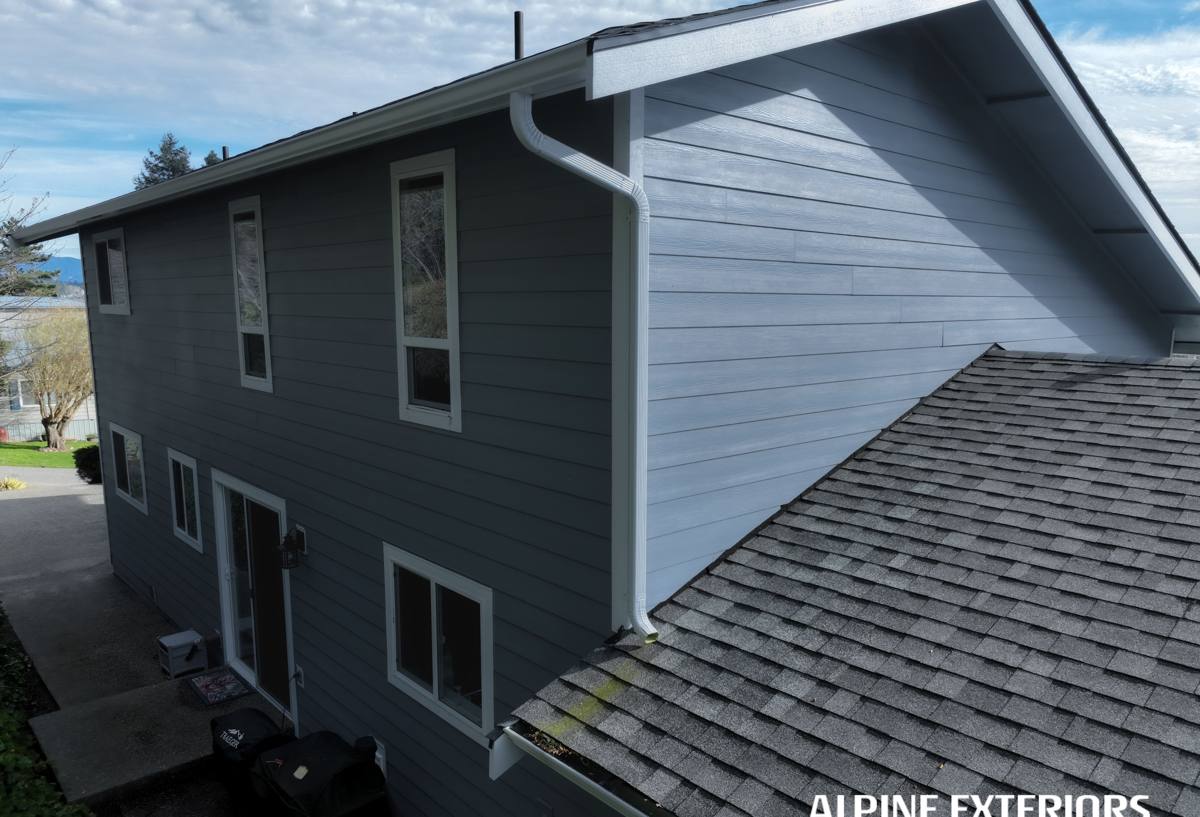
Signs a Lynden Roof Needs Repair — Not a Full Tear-Off
Most roofs don't fail all at once. They show a handful of early warning signs, and catching them early is usually the difference between a repair bill and a replacement bill. Watch for:
- Dark streaking or thick moss growth concentrated on the north-facing or shaded slopes
- Granules collecting in gutters or at downspout outlets (a sign of asphalt shingle wear)
- Soft or discolored ceiling drywall, especially near chimneys, skylights, or where two roof planes meet
- Curling, cupping, or cracked shingle tabs, particularly on south and west exposures
- Rust streaks or gaps around flashing at chimneys, vents, and sidewall intersections
- Daylight visible through the roof deck from inside an attic
Any one of these on its own is often a localized fix. Several showing up together, or a leak that keeps reappearing after a patch, usually means the underlying deck or underlayment has been compromised and needs a closer look before we recommend a path forward.
What a Correct Roof Repair Actually Involves
Diagnosing the Real Source, Not Just the Symptom
Water rarely enters where it shows up on the ceiling — it travels along rafters, sheathing seams, or underlayment before it drips somewhere visible. A repair that only patches the stain location without tracing the water's actual entry point almost always leaks again within a season or two. Our first step is always finding the true entry point, which usually means inspecting from the attic side as well as the roof surface.
Flashing and Penetrations
Flashing around chimneys, skylights, plumbing vents, and roof-to-wall transitions is the single most common failure point on an otherwise sound roof. Metal flashing corrodes, sealant dries out and cracks, and step flashing can loosen over time as the house settles. Correct repair means removing and re-lacing flashing properly, not just running a bead of caulk over the old metal — caulk is a short-term patch, not a repair.
Moss and Debris Removal Done Correctly
Moss has to come off without damaging the roofing material underneath, which means soft-washing and hand removal rather than aggressive pressure-washing or scraping that can strip granules or crack shakes. We also clear gutters and valleys of the needle and leaf debris that dams water and feeds moss growth in the first place — a roof that drains freely dries out faster and grows far less moss between visits.
Matching Materials
A repair that uses mismatched shingles, wrong-gauge flashing metal, or incompatible sealants creates a weak point even if it stops the immediate leak. We match existing materials as closely as possible and use fasteners and flashing metals that won't corrode against each other or against the surrounding materials.
Common Lynden Roof Types and Repair Considerations
Whatcom County has a mix of roofing generations, from older farmhouses with original wood shake to newer builds with architectural asphalt shingle or standing-seam metal. Each behaves differently under our wet-winter, moss-prone conditions:
| Roof Type | Typical Repair Needs Here | Moss/Moisture Notes |
|---|---|---|
| Asphalt (3-tab or architectural) | Re-nailing lifted tabs, flashing replacement, granule-loss patching | Moderate moss risk; shaded slopes need periodic cleaning |
| Cedar shake | Splitting/curling shake replacement, re-flashing valleys, ridge repair | High moss and rot risk if not cleaned and treated regularly |
| Standing-seam metal | Fastener and seam sealant renewal, panel refastening after wind | Low moss risk; sheds water fast but needs correct seam maintenance |
| Composite/synthetic shake | Panel replacement at impact damage, flashing checks | Low-to-moderate moss risk depending on shade exposure |
Knowing which material we're working with — and how it was likely installed a decade or two ago — changes the repair approach. Older cedar shake roofs, for example, often need more careful handling because replacement shakes have to be split and weathered to blend, while metal roofs usually fail at fasteners and seams rather than the panels themselves.
Our Repair Process
- Inspection and diagnosis — we walk the roof and check the attic for the actual water path, not just the visible symptom
- Written scope and estimate — you get a clear explanation of what failed, why, and what the fix involves before any work starts
- Moss and debris clearing — soft-wash removal and gutter/valley clearing where buildup is contributing to the problem
- Repair execution — deck repair if needed, correct flashing replacement, matched shingle or shake work, and re-sealing at penetrations
- Final check — we verify drainage paths are clear and penetrations are properly sealed before we consider the job done
Repair vs. Replacement: What Actually Drives the Decision
Homeowners often assume any leak means a new roof, but that's frequently not the case. The honest answer depends on a few factors we walk through with you rather than guess at:
| Factor | Favors Repair | Favors Replacement |
|---|---|---|
| Roof age vs. expected material lifespan | Under roughly 60-70% of expected life | Near or past expected lifespan |
| Extent of damage | Localized to one area or penetration | Spread across multiple slopes |
| Deck condition | Sheathing is sound under the failure | Soft, delaminated, or rotted decking |
| Moss/moisture history | First or occasional occurrence | Chronic, recurring growth and staining |
| Prior repair history | Few or no previous patches | Multiple past patches in the same area |
We'd rather tell a homeowner honestly that a $500-$1,500 repair will hold for years than sell a full replacement that isn't needed yet — and we'll also tell you plainly when a repair is just delaying an inevitable, more expensive fix so you can plan for it instead of being surprised by it.
Seasonal Maintenance That Prevents the Next Call
Given how long Whatcom County roofs stay wet each year, a bit of seasonal upkeep goes further here than in drier climates. A simple twice-yearly checklist covers most of what causes emergency calls:
- Clear gutters and downspouts before the fall rains start and again after leaf-drop finishes
- Check for moss growth on shaded or north-facing slopes each spring
- Look at flashing around chimneys and vents for gaps or rust after winter storms
- Trim back overhanging branches that keep sections of roof shaded and slow to dry
- Have a professional look at the attic if you notice any new staining, musty smell, or daylight at the deck
Why It Matters to Hire a Crew That Already Works Lynden
Roof repair isn't a one-size-fits-all trade, and Whatcom County's specific combination of long wet seasons and moss pressure rewards contractors who see it every week rather than occasionally. A crew that regularly works Lynden and the surrounding valley knows which slopes on which roof orientations tend to hold moss longest, how local wind-driven rain finds its way into flashing that would hold up fine in a calmer climate, and which repair shortcuts simply don't last through a Whatcom County winter. That local pattern recognition is what keeps a repair from becoming a repeat visit.
It also matters for something more practical: availability when you actually need it. A leak found during a January storm needs a contractor who can respond quickly and already understands the area, not one working from a general playbook written for a drier climate.
If you're seeing moss buildup, a slow ceiling stain, or lifted shingles on your Lynden roof, we're happy to take a look and give you an honest, no-pressure estimate — just fill out the form below to get started.