 Bellingham
 Metal Roofing Built for Columbia's Wet, Wooded Streets
Columbia is one of Bellingham's older, more established neighborhoods, and that history shows up on its roofs. Mature tree canopy, homes with a mix of gable and hip rooflines, and close proximity to Bellingham Bay all combine to put roofing materials through a harder test than they'd face in a drier, more exposed part of Whatcom County. A metal roof, installed correctly for this specific environment, is one of the few systems that can shrug off that combination for decades. Installed poorly, or with the wrong panel system for a shaded, salt-exposed lot, it can develop problems faster than the asphalt shingles it replaced.
This page covers what actually matters for a metal roof going on a Columbia home: the climate factors specific to this part of Bellingham, what a correct installation includes, how we approach the job, and why local experience changes the outcome.
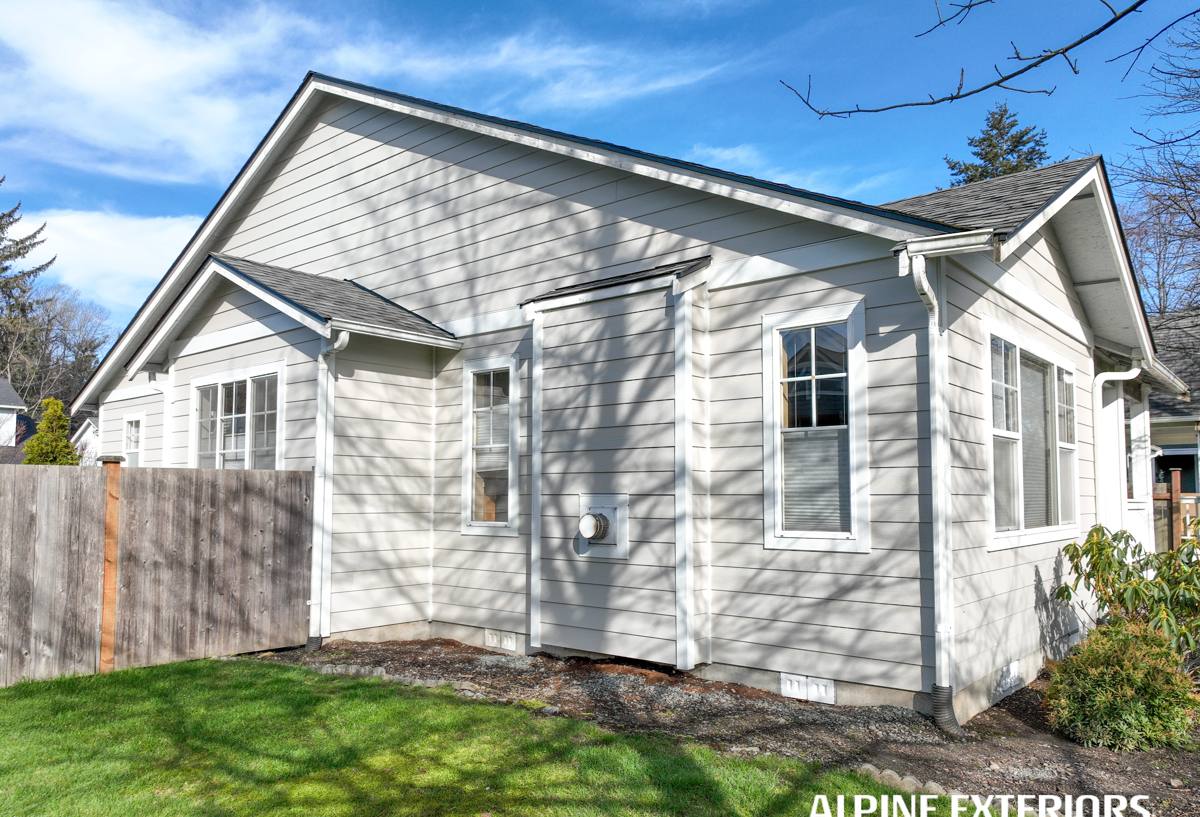
What Bellingham's Climate Does to a Roof
Salt Air and Corrosion
Columbia sits close enough to Bellingham Bay that salt-laden air is a real factor for any exposed metal on a home — roofing panels, fasteners, flashing, and gutters included. Not all metal roofing handles that equally well. Coating quality, fastener material, and panel gauge all affect how a roof ages in a marine air environment, and cutting corners on any of the three shows up as premature rust or streaking well before the panels themselves would otherwise fail.
Driving Rain and Wind-Driven Water
Whatcom County doesn't just get a lot of rain — it gets a lot of sideways rain, especially during fall and winter storms that push moisture up under laps, around penetrations, and into valleys. A roof that only sheds water moving straight down isn't enough here. Every seam, flashing detail, and fastener pattern has to account for wind-driven water finding the smallest gap.
Moss, Shade, and Slow-Drying Roofs
The tree cover that makes Columbia's streets pleasant also means a lot of roof surface stays shaded and damp far longer than it would on an open lot. That's the recipe for moss, and moss doesn't just look bad — it holds moisture against the roof surface and, on the wrong material, works its way under laps and fasteners over time. Metal roofing resists moss far better than asphalt shingle, but it isn't immune, especially on north-facing slopes or sections that sit under heavy branch cover most of the year.
What a Correctly Installed Metal Roof Includes
"Metal roof" covers a wide range of installation quality. A roof that performs well in Columbia's conditions for 40-plus years and one that starts leaking in five years can look nearly identical from the ground. The difference is in details most homeowners never see:
- Underlayment: a synthetic, high-temperature underlayment across the full deck, with self-adhered ice-and-water membrane at eaves, valleys, and any low-slope transitions where wind-driven rain is most likely to intrude.
- Fastening system: concealed clips that allow the panels to expand and contract with temperature swings, rather than fixed fasteners that can work loose or create stress points over years of movement.
- Flashing: custom-formed flashing at every valley, chimney, skylight, and wall intersection — not generic trim stretched to fit. This is where the majority of metal roof leaks actually originate.
- Ventilation: a balanced intake-and-exhaust system (soffit and ridge venting) so moisture from inside the attic doesn't condense against the underside of the panels — a common cause of hidden deck rot under otherwise sound-looking roofs.
- Fastener and trim material matched to the panel: mismatched metals accelerate corrosion through galvanic reaction, which matters even more in a salt-air environment like Columbia's.
Choosing a Metal Panel System for This Climate
Not every metal roofing product is a good fit for a shaded, salt-air, high-rainfall neighborhood. Here's how the common options compare for a Columbia-area home:
| Panel Type | Moisture & Moss Performance | Corrosion Resistance | Typical Lifespan |
|---|---|---|---|
| Standing seam (concealed fastener) | Excellent — smooth, steep-shed profile with no exposed fastener heads to trap debris | Very good with quality coatings | 40-70 years |
| Exposed-fastener panel | Good, but fastener gaskets need periodic inspection as they age | Good, though fastener points are the weak spot in salt air | 25-40 years |
| Stone-coated steel | Good; textured surface holds slightly more debris than smooth panels | Very good — coating protects the steel | 40-50 years |
For most Columbia homes, we lean toward standing seam when budget allows, precisely because the shaded, moss-prone lots in this neighborhood benefit most from a smooth surface with no exposed fastener heads for debris and moisture to collect around. That's a judgment call based on site conditions, not a one-size-fits-all recommendation — a well-detailed exposed-fastener system is still a solid, durable roof.
Our Metal Roofing Process
Every job follows the same sequence, adjusted for the specific roof:
- On-site inspection: we walk the existing roof, check the deck condition, note tree cover and shading patterns, and identify valleys, penetrations, and low-slope areas that need extra attention.
- Tear-off or deck assessment: old roofing is removed and the deck inspected for rot or soft spots, which are repaired before anything new goes on. Installing metal over a compromised deck just hides the problem.
- Underlayment and flashing: full synthetic underlayment goes down first, with ice-and-water membrane at vulnerable areas, followed by custom-formed flashing at every penetration and transition.
- Panel installation: panels are set with the correct fastening system for the chosen profile, with attention to consistent alignment and proper overlap.
- Ridge, trim, and ventilation: ridge caps, trim, and vent components are installed to complete a sealed, properly ventilated system.
- Final walkthrough and cleanup: we walk the finished roof with the homeowner, check gutters and downspouts for debris from the job, and clear the site.
Cost Factors for Metal Roofing in Columbia
Metal roofing typically runs a broad range depending on panel type and roof complexity — generally somewhere in the neighborhood of $9 to $16 per square foot installed for most residential projects, though every roof is different. The factors that move the number most on Columbia homes specifically:
| Factor | Why It Matters Here |
|---|---|
| Roof pitch and complexity | Older Columbia homes often have multiple roof planes, dormers, or steeper pitches than newer builds, which adds flashing and labor time |
| Tear-off vs. overlay | Full tear-off is usually the right call on older homes to check deck condition beneath years of moss and moisture exposure |
| Panel profile | Standing seam runs higher than exposed-fastener panel but needs less long-term maintenance |
| Tree cover and access | Mature trees common in this neighborhood can mean extra care, trimming coordination, or staging adjustments during the job |
| Chimneys, skylights, and penetrations | Each one adds custom flashing work — more common on older, additions-heavy homes |
Keeping Moss and Debris From Undoing the Investment
A well-installed metal roof needs far less upkeep than asphalt shingle, but "far less" isn't "none" — especially on a shaded Columbia lot. A couple of habits go a long way:
- Keep gutters and valleys clear of needles and leaf litter, which hold moisture against the roof edge longer than the panel itself ever would.
- Trim back overhanging branches where practical, both to reduce debris buildup and to let more sun and airflow reach shaded roof sections.
- Have the roof looked at every few years, particularly north-facing slopes, so any early moss growth or flashing wear gets addressed before it becomes a bigger repair.
None of this requires the aggressive pressure-washing or chemical treatments sometimes recommended for shingle roofs — metal handles gentle rinsing and soft brushing just fine, and its smooth, hard surface is inherently more moss-resistant than shingle to begin with.
Why Hire a Crew That Already Works in Columbia
Roofing crews who haven't worked much in wooded, coastal-influenced neighborhoods like Columbia sometimes underestimate how much shading and salt exposure change the maintenance and material equation compared to a more open Whatcom County lot. Local experience means knowing which slopes on a given house typically hold moisture longest, how nearby tree cover tends to affect a roof over time, and which flashing and fastener choices hold up under this specific mix of rain, wind, and salt air — rather than applying a generic install approach and hoping it performs the same way it would somewhere drier or more exposed.
It also means being realistic with homeowners about trade-offs — where a lower-cost panel system is a fine choice and where it isn't, based on how a particular roof actually sits relative to shade and weather exposure, not a one-size-fits-all sales pitch.
A Metal Roofing Checklist Before You Sign a Contract
- Confirm the contractor is licensed and insured to work in Washington State and Whatcom County.
- Ask specifically how valleys, chimneys, and skylights will be flashed — not just what panel brand is being used.
- Confirm whether the quote includes full tear-off and deck inspection, or installation over the existing roof.
- Ask about the ventilation plan — intake and exhaust venting should be addressed, not assumed.
- Get manufacturer warranty terms and workmanship warranty terms in writing, separately.
- Ask how the crew handles tree cover and debris on-site during the job, especially on a shaded lot.
If you're weighing metal roofing for a home in Columbia, we're happy to take a look and walk you through what your specific roof needs — no pressure, no obligation. Use the form below to request a free estimate.