 Bellingham
 Metal Roofing in Fairhaven: Built for the Bay, Not Just the House
Fairhaven sits close enough to Bellingham Bay that the weather off the water is part of daily life — for the roof over your head as much as anything else. Salt-laden air, wind-driven rain coming in sideways off the water, and long stretches of gray, damp months that never quite dry out all add up to a roofing environment that's tougher than it looks from the street. A roof that would hold up fine forty miles inland can wear out faster here, and it usually shows up first at the fasteners, the flashing, and the low-slope sections where water and debris like to sit.
Metal roofing has become a popular answer for homeowners in this part of Whatcom County precisely because it's built to shed water fast, resist the kind of wind uplift that comes through the bay, and stand up to decades of moisture without the slow rot and granule loss you see with other materials. Done right, it's one of the lowest-maintenance roofing systems available for a coastal neighborhood like Fairhaven. Done wrong — wrong fasteners, wrong underlayment, sloppy flashing — it can fail faster than a basic shingle roof would have. The difference is almost entirely in the details of installation.
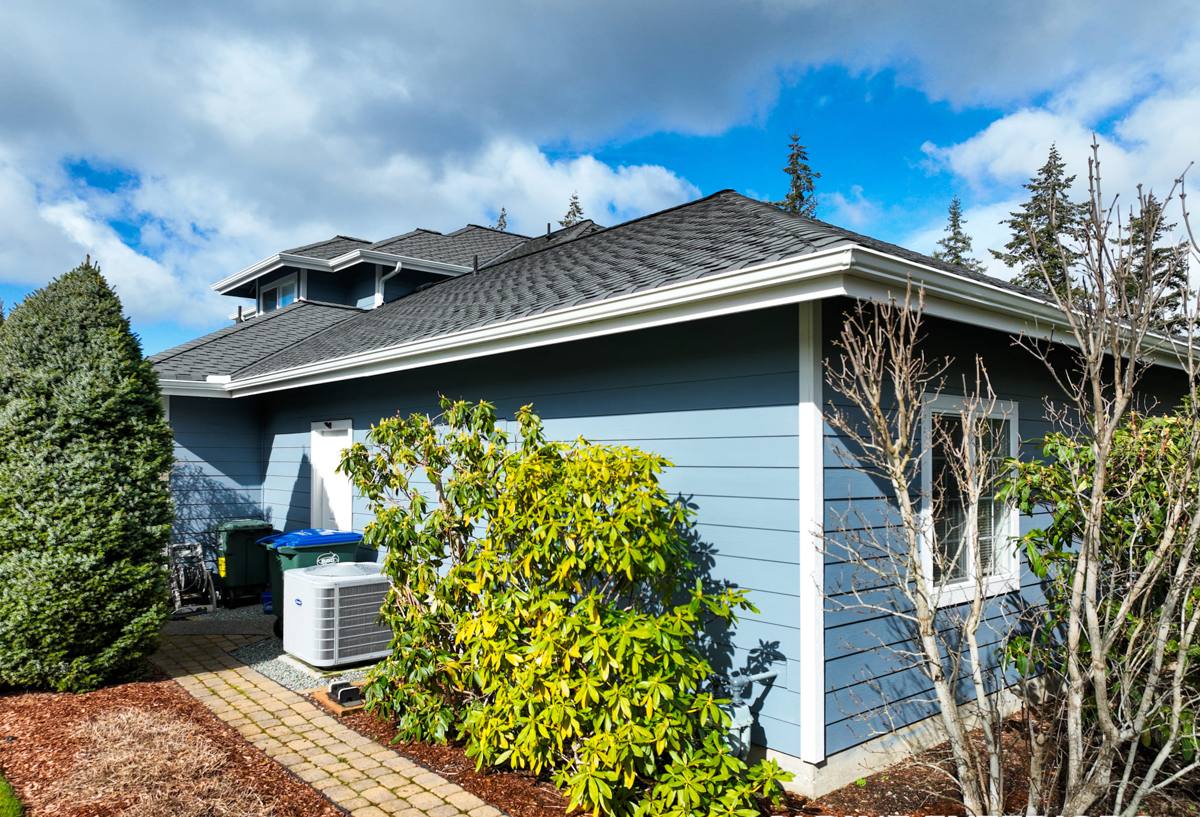
What Bellingham Bay Weather Actually Does to a Roof
It helps to be specific about what's working against a roof here, because it changes what "correct installation" actually means.
Salt Air and Corrosion
Homes closer to the water deal with airborne salt that settles on roofing materials and accelerates corrosion of exposed metal — fasteners, flashing, and any unprotected cut edges. This doesn't mean metal roofing is a bad fit near the bay; it means the coating, fastener grade, and detailing at cut edges matter more here than they would inland.
Driving, Wind-Driven Rain
Storms coming off the bay don't just fall straight down — wind pushes rain sideways and up under laps, seams, and flashing that aren't sealed correctly. A roof system that only handles vertical rainfall well isn't enough for this location. Underlayment quality and lap direction matter as much as the roofing material itself.
Moss and Sustained Dampness
Whatcom County's moss season is long, and shaded, north-facing, or tree-covered sections of a roof stay damp for weeks at a time. Moss and organic debris don't rot metal panels the way they can degrade shingles, but they do trap moisture against fasteners and in valleys, which is exactly where corrosion and leaks tend to start if the roof wasn't detailed well to begin with.
Metal Roofing Options for Fairhaven Homes
Not all metal roofing is the same product wearing different colors. The panel style you choose affects how well it performs against the specific conditions above.
Standing Seam
Concealed fasteners, raised interlocking seams, and no exposed screw heads for water or salt air to work against over time. This is generally our recommendation for homes with direct bay exposure or steep rooflines where wind-driven rain is a bigger factor, since there's no exposed fastener to corrode or back out.
Exposed-Fastener Panel Systems
A more budget-friendly metal option that uses screws driven through the panel face with rubber-gasketed washers. It performs well on many homes, but the gaskets and fasteners are a wear item — they age faster in salt air and need periodic inspection and eventual replacement. We're upfront about that maintenance tradeoff before anyone chooses this route.
Stone-Coated Steel
Steel panels formed and coated to resemble shingle, shake, or tile profiles. It offers metal's durability with a more traditional look, which some homeowners in Fairhaven's older neighborhoods prefer for matching the character of the home.
What a Correct Metal Roof Installation Actually Involves
The panels themselves are only part of the system. Most metal roof failures we get called out to inspect trace back to something underneath the panels, not the panels.
- Underlayment: A high-temperature synthetic or self-adhered underlayment rated for the moisture exposure this climate brings, not a minimal felt layer.
- Fastener selection: Corrosion-resistant fasteners matched to the panel metal — mismatched metals in contact with each other can cause galvanic corrosion, which is a real risk in a salt-air environment.
- Flashing detail: Properly formed and sealed flashing at every valley, wall transition, chimney, and vent penetration — the majority of roof leaks start at a flashing detail, not in the open field of the roof.
- Panel lap and lay direction: Oriented to work with prevailing wind and rain direction off the bay, not just laid the fastest way.
- Ventilation: Proper intake and exhaust airflow so moisture from inside the home doesn't condense against the underside of the panels.
- Ice and water shield at vulnerable areas: Eaves, valleys, and low-slope transitions get extra protection where water is most likely to back up.
Skipping any one of these doesn't usually cause an immediate problem — it causes a problem in year six or year twelve, which is exactly why it's worth getting right the first time.
Metal Roofing Compared to Other Materials
Every roofing material is a set of tradeoffs. Here's how metal generally stacks up against the alternatives most commonly used on homes in this area.
| Material | Typical Lifespan | Coastal/Moisture Performance | Maintenance Burden |
|---|---|---|---|
| Standing Seam Metal | 40-60+ years | Strong — no exposed fasteners, sheds water and debris well | Low |
| Exposed-Fastener Metal | 30-45 years | Good, with fastener/gasket wear over time | Moderate — periodic fastener checks |
| Asphalt Composition Shingle | 15-25 years | Fair — granule loss and moss intrusion in shaded areas | Moderate to high |
| Wood Shake | 20-30 years | Poor in sustained moisture without diligent upkeep | High |
None of these is objectively "wrong" for every home — a shorter-lifespan material at a lower upfront cost is a legitimate choice for some budgets and some timelines. Our job is to lay out the honest tradeoffs for your specific roof, not steer everyone toward the most expensive option.
Our Process, Start to Finish
1. On-Site Assessment
We look at the existing roof structure, decking condition, ventilation, and how exposed the home is to wind and rain off the bay. Fairhaven's mix of older homes and newer construction means every roof deck is a little different, and that affects what prep work is needed before panels ever go on.
2. Written Estimate
A clear, itemized estimate covering material, tear-off (if needed), underlayment, flashing, and labor — no vague lump-sum numbers you can't evaluate.
3. Tear-Off or Overlay Decision
Metal roofing can sometimes be installed over an existing layer in the right conditions, but we won't recommend that if the decking underneath is compromised or if it would trap moisture. We'll tell you plainly which situation you're in.
4. Installation
Deck prep, underlayment, flashing, and panel installation in sequence, with attention to the fastener and lap details covered above. We don't rush flashing work to hit a faster finish time.
5. Final Walkthrough
We walk the finished roof and the property with you, point out what was done, and answer questions before we consider the job complete.
Living With a Metal Roof Through Moss Season
One advantage homeowners notice quickly: metal roofing doesn't give moss the same foothold that shingles do. Moss struggles to root directly into a smooth metal panel the way it can work into shingle granules and seams. That said, moss and organic debris can still accumulate in valleys, around penetrations, and on any horizontal trim, and left alone that buildup holds moisture against the roof longer than it should.
- Clear debris from valleys and gutters at least once before winter and once after, given how long Whatcom County's wet season runs.
- Trim back overhanging branches so shaded sections of roof get more light and air movement.
- Have fasteners and flashing on exposed-fastener systems checked periodically rather than waiting for a visible leak.
- Rinse off heavy moss or algae buildup with a garden hose rather than a pressure washer, which can damage panel coatings and seals.
Signs Your Current Roof Is Telling You Something
You don't need to wait for an active leak to have a roof looked at. Common warning signs we see on homes in this area include:
- Streaking, rust spots, or fastener heads that have backed out or show corrosion
- Moss or dark staining concentrated in valleys or north-facing slopes
- Daylight visible through the attic or soffit at flashing points
- Soft spots or sagging along the roofline
- Granule buildup in gutters (on shingle roofs approaching the end of their service life)
- Higher-than-expected heating bills, which can point to failing ventilation or insulation at the roofline
Any one of these is worth a look before it becomes a bigger repair — catching a flashing issue early is a small fix; catching it after two winters of water intrusion usually isn't.
Why Local Fairhaven Experience Matters
A roofing crew that already works in Fairhaven and the surrounding Bellingham waterfront neighborhoods knows what direction the weather usually comes from, which sections of a given roofline tend to hold moss, and how homes here were typically built. That's not something you can fully substitute with a generic install checklist — it shapes real decisions, like which side of the roof gets extra flashing attention or how much ventilation a shaded, moisture-prone section actually needs. Hiring locally also means someone who's still reachable down the road if a question comes up after a big storm, not a crew that installed once and moved on to the next county.
If you're weighing metal roofing for a home in Fairhaven, we're happy to take a look and give you a straight, no-pressure estimate — no scare tactics, no inflated urgency, just an honest read on your roof and what it actually needs. Use the form below to get started.