 Bellingham
 What Lynden's Climate Does to a Roof, Year After Year
Lynden sits inland from Bellingham Bay in the Nooksack River valley, surrounded by farmland, tree lines, and a lot of standing moisture during the fall and winter months. That inland position means Lynden roofs deal with a slightly different mix of stress than homes right on the water. Salt air is a real concern for roofs closer to Bellingham Bay, and it still plays a role regionally in how fasteners and coatings are chosen, but the bigger day-to-day issue for a Lynden roof is simply how long it stays wet. Whatcom County gets a long stretch of driving rain from fall through spring, and a roof here rarely gets a full dry-out period between storms.
Moss, Algae, and Debris From the Surrounding Tree Cover
Between the farmland and the tree lines around many Lynden properties, roofs collect organic debris — needles, leaves, seed pods, pollen — almost year-round. Combined with shade and persistent moisture, that debris turns into a long moss and algae season. On an asphalt shingle roof, moss roots into the granule surface and holds water against the shingle mat, which shortens the roof's life. It's one of the most common repair calls we see in this part of the county.
A Long Wet Season Means the Roof Rarely Fully Dries
Low winter sun angles and short days mean north-facing slopes and shaded sections of a roof can stay damp for weeks at a stretch. That constant dampness is harder on materials that absorb or trap moisture than it is on materials that shed water and dry quickly. It's the main reason metal roofing keeps coming up as a serious option for homeowners here, not just a cosmetic upgrade.
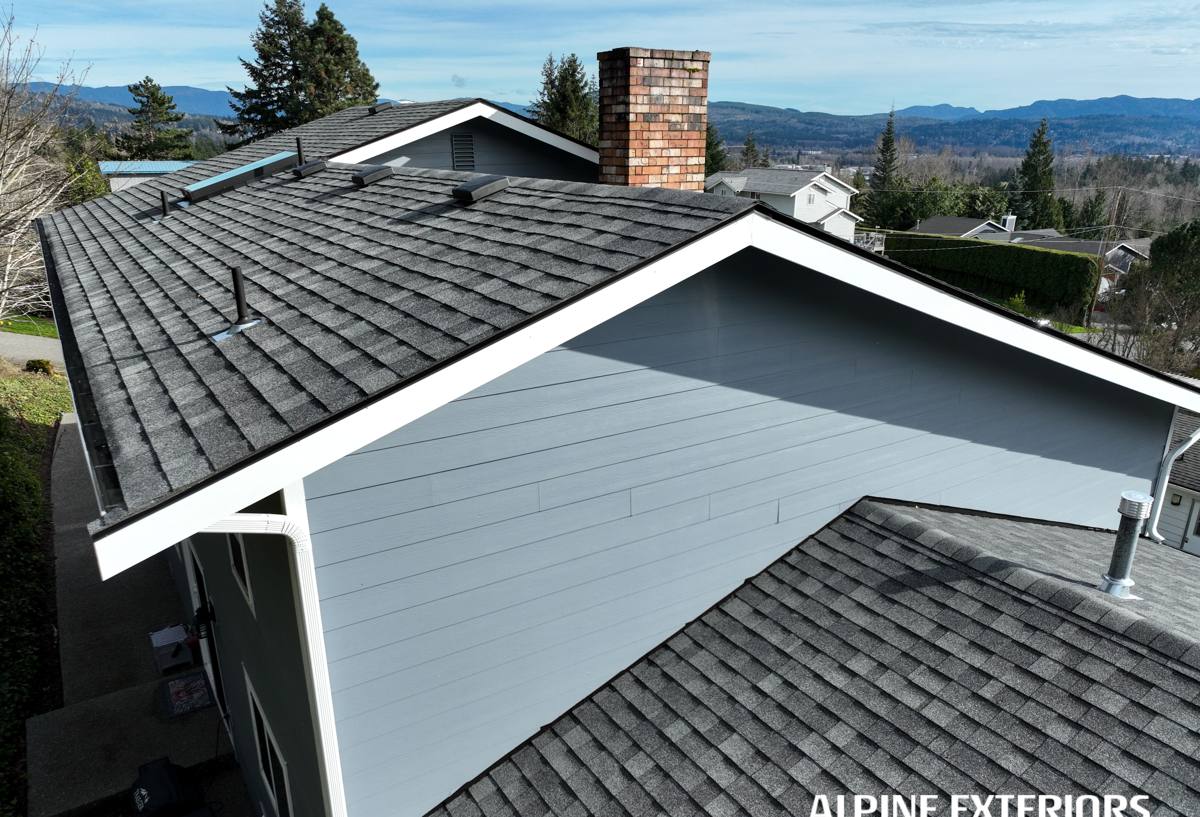
Why Metal Roofing Holds Up Well in This Area
Metal roofing doesn't solve every problem, but it directly addresses the two biggest issues Lynden roofs face: sustained moisture and moss buildup. A properly installed metal panel system sheds water fast, has almost no porous surface for moss and algae to root into, and doesn't absorb water into the material itself the way an asphalt mat can. That translates into fewer moss treatments, less granule loss, and a roof that dries out faster after the rain finally lets up.
Metal roofing also tends to outlast asphalt shingles by a wide margin when it's installed correctly, which matters in a valley climate where you're not just fighting rain but also occasional wind events off the open farmland and, less often, coastal storm systems that push through Whatcom County. For homeowners near agricultural land, metal's fire resistance is also a practical plus, since burn piles and dry-season field work are a normal part of life out here.
What a Correct Metal Roof Installation Actually Involves
Metal roofing has a reputation for being low-maintenance, but that reputation only holds up if the installation is done right. A poorly installed metal roof can trap moisture, leak at the seams, or fail early at the fasteners — problems that are expensive to fix because they're hidden under the panels.
Deck Prep and Underlayment
Before any panel goes down, the roof deck needs to be sound, and the underlayment matters more on a metal roof than most homeowners realize. In a climate like this one, a high-temperature synthetic or self-adhered underlayment at eaves, valleys, and penetrations gives the roof a second line of defense if wind-driven rain ever gets under a seam.
Panel Fastening Method
How the panels attach to the roof is one of the biggest decisions in the whole project. Exposed-fastener panels are screwed directly through the panel face, which is cost-effective but means every screw and its rubber washer is a potential future leak point as the washers age. Standing seam panels interlock or clip together with no fasteners penetrating the visible surface, which costs more up front but removes that long-term maintenance item entirely.
Flashing, Valleys, and Penetrations
Most metal roof failures we get called out to inspect trace back to flashing details, not the panels themselves — a valley that wasn't formed correctly, a pipe boot that wasn't matched to the panel profile, or step flashing that was reused instead of replaced. This is the part of the job that separates a roof that performs for decades from one that leaks within a few winters.
| Attribute | Standing Seam | Exposed-Fastener Panel |
|---|---|---|
| Fasteners | Hidden, clipped or interlocked | Visible screws through panel face |
| Typical lifespan | Longer, fewer wear points | Shorter, limited by washer life |
| Maintenance | Minimal once installed | Periodic fastener/washer checks |
| Upfront cost | Higher | More budget-friendly |
| Common use | Primary roofs, higher-visibility homes | Shops, barns, secondary structures |
Material and Finish Choices
Steel and aluminum are the two common substrates for residential metal roofing in this region. Steel panels, usually in the mid-20s gauge range, are strong and cost-effective, and with a quality protective coating they hold up well to Whatcom County's wet climate. Aluminum costs more but has a natural resistance to corrosion, which can matter more for homes closer to Bellingham Bay where salt air is a bigger factor than it is further inland around Lynden.
The paint or coating system matters as much as the metal underneath it. Basic coatings will fade and chalk faster; premium fluoropolymer-type finishes hold color and gloss much longer under constant UV and rain cycling. We'll walk you through the trade-offs honestly rather than pushing the most expensive option by default — the right coating depends on your budget, the roof's exposure, and how long you plan to be in the home.
Our Process for Lynden Roofing Projects
We start with an on-site inspection of the existing roof and deck, not just a measurement from the road. That tells us whether we're dealing with a straightforward tear-off, a deck that needs repair before any panel goes on, or a situation where an overlay isn't appropriate because of the substrate underneath.
From there we walk through panel profile and color options, confirm the fastening system that fits the budget and the roof, and schedule the work around the weather. Metal roofing seams and sealants need a dry, workable window to install correctly, so on longer projects we plan around Whatcom County's rain patterns rather than rushing panels down in a downpour. Once the crew is on site, work includes proper tear-off and disposal (or deck prep for a compatible overlay), underlayment, panel installation, all flashing and trim, and a final walkthrough with a magnetic sweep of the yard and gutters to pick up stray fasteners.
Maintenance Homeowners Should Expect
Metal roofing is genuinely low-maintenance compared to asphalt, but "low-maintenance" doesn't mean "no maintenance," especially in a valley climate with this much tree cover and rainfall.
- Clear gutters and valleys of needles and debris each fall before the wet season sets in
- Rinse off moss or algae buildup with a gentle wash rather than a high-pressure spray that can damage seams or coatings
- Check sealant around pipe boots, vents, and other penetrations every year or two
- On exposed-fastener panels, have screws and washers checked periodically, especially after a hard windstorm
- Avoid unnecessary foot traffic on the roof, and use proper footwear or walk boards if access is needed
- Touch up any scratches in the finish promptly to prevent isolated corrosion spots
What Drives the Cost of a Metal Roof Here
Metal roofing costs more upfront than asphalt shingles — typically a multiple of a standard shingle roof rather than a small percentage more — but it's spread over a much longer service life and far less maintenance in between. Beyond that broad comparison, a few local factors move the number more than anything else.
| Cost Factor | Why It Matters |
|---|---|
| Roof pitch and complexity | Steeper roofs and more valleys/hips mean more labor and material waste |
| Tear-off vs. overlay | Removing an old roof adds cost but is often the right call for a durable install |
| Panel system chosen | Standing seam costs more than exposed-fastener panel systems |
| Material and gauge | Heavier gauge steel or aluminum substrates cost more than lighter steel |
| Site access | Rural driveways, outbuildings, and difficult staging can affect labor time |
We'll give you a real number for your roof after we've actually looked at it — square footage, pitch, and current condition all factor in, and we'd rather quote it accurately than guess low and revise later.
Why a Crew That Already Works in Lynden Matters
Lynden's mix of older farmhouses, newer builds, and rural properties on well and septic systems means every job has a slightly different set of site conditions — long driveways, outbuildings, agricultural fencing, or seasonal field work that affects when a crew can safely stage equipment. A contractor who already works this part of Whatcom County knows how to plan around that instead of learning it on your job.
Local familiarity also means understanding the permitting process for Lynden and unincorporated Whatcom County, knowing realistic weather windows for installing seams and sealants correctly, and being close enough to respond quickly if a storm causes damage that needs a fast tarp or repair. That's a different level of service than a crew driving in from out of the area for a one-off job.
If you're weighing metal roofing for a home in the Lynden area, we're glad to come take a look and give you a straightforward, no-pressure estimate — just fill out the form below and we'll get in touch.