 Bellingham
 Why Birch Bay Roofs Wear Out Faster Than Inland Homes
Birch Bay sits right on the water, and that location is a big part of why roofs here don't age the same way roofs do a few miles inland. Salt-laden air moves off the bay and settles on every exposed surface, including your shingles, flashing, and fasteners. Add in wind-driven rain that comes at the roof sideways instead of straight down, plus the deep shade from mature evergreens that keeps roof sections damp long after a storm passes, and you've got a combination that shortens the working life of a roofing system if it wasn't built with that exposure in mind.
None of this means a roof in Birch Bay is doomed to fail early. It means the installation has to account for salt exposure, moisture, and moss from day one, rather than treating it like a standard replacement and hoping for the best.
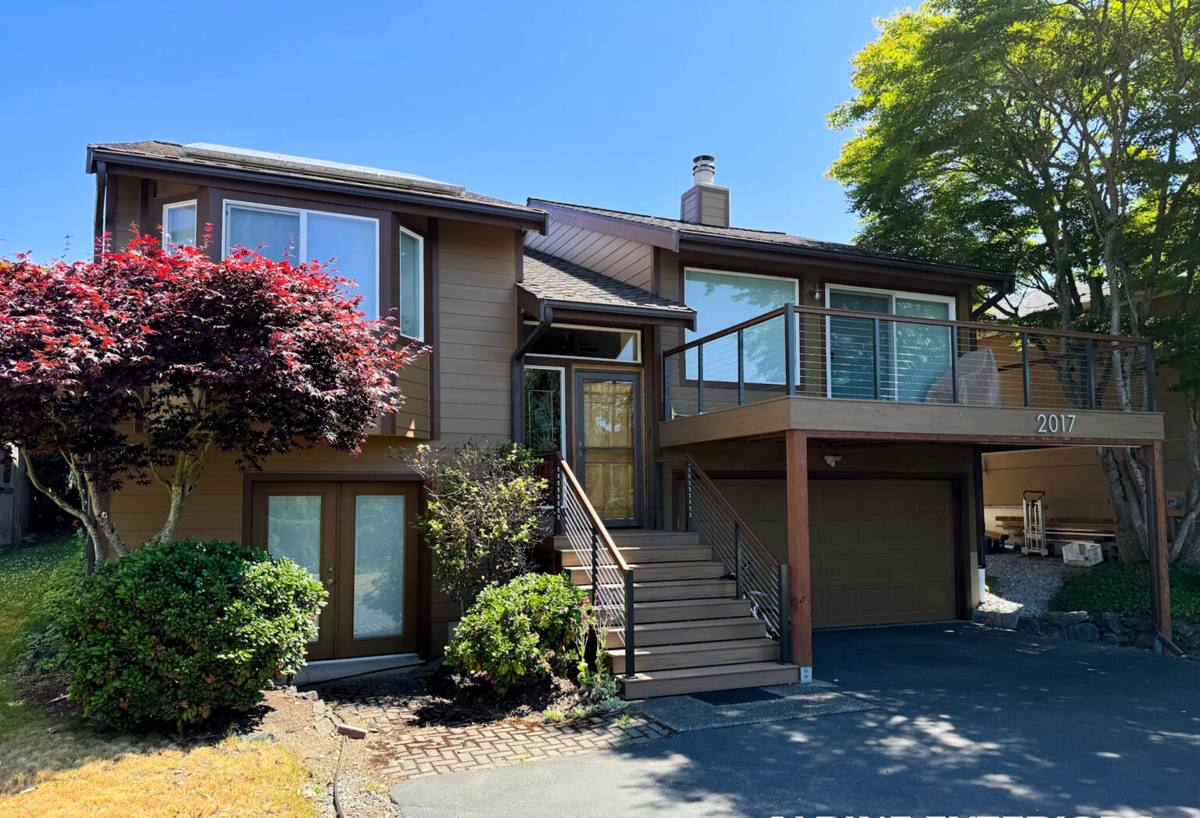
Signs a Birch Bay Home Needs a New Roof, Not Another Patch
A lot of homeowners call us for a repair and end up learning the roof is past the point where patching makes sense. Some signs point clearly toward full replacement rather than another round of spot repairs:
- Granule loss heavy enough that you can see bare, shiny patches on shingles, especially on south- and west-facing slopes exposed to weather off the water
- Moss that keeps coming back within a season or two of cleaning, even after treatment
- Soft spots or sagging in the roof deck, which usually means water has been getting past the surface layer for a while
- Flashing around chimneys, vents, or valleys that's corroded, lifted, or was never sealed correctly to begin with
- Daylight visible through the attic decking, or consistent damp smell in the attic during wetter months
- A roof that's simply reached the end of its expected service life, where repair costs start approaching a fraction of full replacement cost
If you're seeing two or more of these, it's worth having someone look at the whole system rather than chasing individual leaks one at a time.
What a Correct New Roof Installation Actually Involves
Full Tear-Off and Deck Inspection
We don't install new roofing over old material. A full tear-off lets us see the actual condition of the roof deck underneath, which is where hidden rot and soft spots hide. In a coastal, high-moisture area like Birch Bay, skipping this step is how homeowners end up with a new-looking roof sitting on a compromised deck that fails from the inside out.
Moisture Barrier Built for Coastal Exposure
Underlayment is the layer most people never see and never think about, but it's doing a lot of the real work protecting your home. For Birch Bay roofs, we use synthetic underlayment across the full roof and self-adhering ice-and-water membrane in the areas that take the most abuse — eaves, valleys, and around every penetration. That extra layer of protection matters more here than in drier inland neighborhoods because wind-driven rain can push moisture up under shingles rather than just running straight off.
Flashing Details That Actually Get Sealed
Most roof leaks don't come from the shingle field — they come from flashing that was rushed or reused during a previous job. Every chimney, skylight, sidewall, and vent penetration gets new flashing, properly stepped and sealed, not just caulked over the old metal.
Ventilation That Matches the Climate
Balanced intake and exhaust ventilation keeps the attic dry and temperature-regulated year-round. In a damp climate like Whatcom County, poor ventilation traps moisture in the attic space, which speeds up deck rot and gives mold and moss-friendly conditions a head start from underneath.
Comparing Roofing Materials for a Birch Bay Home
There's no single "best" roofing material for every home — it depends on your home's exposure, roof pitch, budget, and how much long-term maintenance you're willing to take on. Here's how the common options stack up for a salt-air, high-moisture, moss-prone environment:
| Material | Salt Air Performance | Moss Resistance | Typical Lifespan |
|---|---|---|---|
| Architectural asphalt shingle | Good with corrosion-resistant fasteners and flashing | Moderate — needs periodic cleaning and good ventilation | 20–30 years |
| Standing seam metal | Very good, especially with coated or coastal-rated finishes | Strong — sheds moss more easily due to smooth, sloped surface | 40–60 years |
| Synthetic/composite shingle | Good, resists corrosion since it's not metal-based | Moderate to good depending on surface texture | 30–50 years |
| Cedar shake | Requires diligent maintenance near salt air | Lower — organic material is more prone to moss and moisture retention | 20–30 years with upkeep |
For most Birch Bay homes, architectural asphalt shingle with proper flashing and ventilation offers the best balance of upfront cost and durability. Metal roofing costs more initially but can make sense on homes with heavy tree cover or steep exposure to wind off the water, since it holds up well against both salt and moss over the long run.
Building Moss Prevention Into the Roof Itself
Moss isn't just cosmetic — it holds moisture against the roof surface and can work its way under shingle edges over time, which shortens the life of the roof. Rather than treating moss as something to fight after the fact, a correct installation reduces the conditions moss needs to take hold in the first place. That includes zinc or copper strips installed near the ridge, which release trace metals that discourage moss growth as rain washes over the roof. It also means being honest with homeowners about tree canopy: if large evergreens keep a roof section shaded and damp most of the year, no amount of product will fully stop moss from returning, and periodic gentle cleaning will still be part of the maintenance routine.
Our Installation Process, Start to Finish
- On-site inspection and estimate — we walk the roof, check the attic, and give you a written estimate based on what we actually find, not a generic quote.
- Material selection — we go over the trade-offs for your specific roof, budget, and exposure so you're choosing with full information.
- Scheduling around weather — we plan installation for a stretch of dry days where possible, since a rushed install in poor weather is where corners get cut.
- Tear-off and deck repair — old material comes off, the deck gets inspected, and any damaged sheathing is replaced before anything new goes down.
- Underlayment, flashing, and ventilation — the protective layers go in correctly, since this is what determines how the roof performs in five, ten, and twenty years.
- Final installation and cleanup — shingles or panels go on, the site is cleaned of debris and nails, and we walk the finished roof with you before we consider the job done.
What Affects the Cost of a New Roof in Birch Bay
Every home is different, so we don't quote a number until we've actually looked at your roof. But the factors that move the price up or down are consistent:
- Total roof size and number of facets, valleys, and penetrations
- Pitch and accessibility — steep or hard-to-reach roofs take longer and require more safety setup
- Condition of the existing deck and whether sheathing replacement is needed
- Material choice, from standard architectural shingle up through metal roofing
- Extent of flashing work required around chimneys, skylights, and dormers
- Ventilation upgrades needed to bring an older attic up to a proper standard
- Disposal and haul-away of the old roofing material
We'd rather walk you through these factors in person and give you a real number than throw out a broad estimate that doesn't hold up once we're actually on your roof.
Why Local Experience in Birch Bay Actually Matters
A roofing crew that mostly works drier, inland areas doesn't always think about salt-air fastener corrosion, wind-driven rain angles, or how much tree cover changes moss behavior on a given slope. Working regularly in Birch Bay and across Whatcom County means we've seen how roofs here actually age — not in a textbook, but on real homes exposed to the same bay-front weather your house deals with every year. That shapes decisions on underlayment coverage, flashing details, and material recommendations that a one-size-fits-all approach would miss.
It also means we're not guessing at permitting or code requirements for the area, and we're not disappearing after the job is done — we're a call away if a question comes up once the roof has been through a full winter.
If your roof is showing its age or you just want an honest opinion on where it stands, we're happy to take a look. Fill out the form below for a free, no-pressure estimate on a new roof installation for your Birch Bay home.