 Bellingham
 Asphalt Shingle Roofing Built for the Puget Area, Not a Generic Climate
Puget sits close enough to the water that salt air is part of daily life, and close enough to the foothills and tree cover that moss has all the shade and moisture it needs to spread across a roof deck almost year-round. Add in Whatcom County's driving, wind-pushed rain — the kind that comes in sideways rather than straight down — and you've got a combination that wears out a poorly installed asphalt shingle roof years before its rated lifespan. A roof that would hold up fine in a dry inland climate can fail early here if it wasn't built with this specific weather in mind.
This page is about one thing: asphalt shingle roofing for homes in and around Puget. Not a general overview of every roofing material we offer — just what this climate does to shingles, what a correct installation actually involves, and why local experience matters more than it might seem.
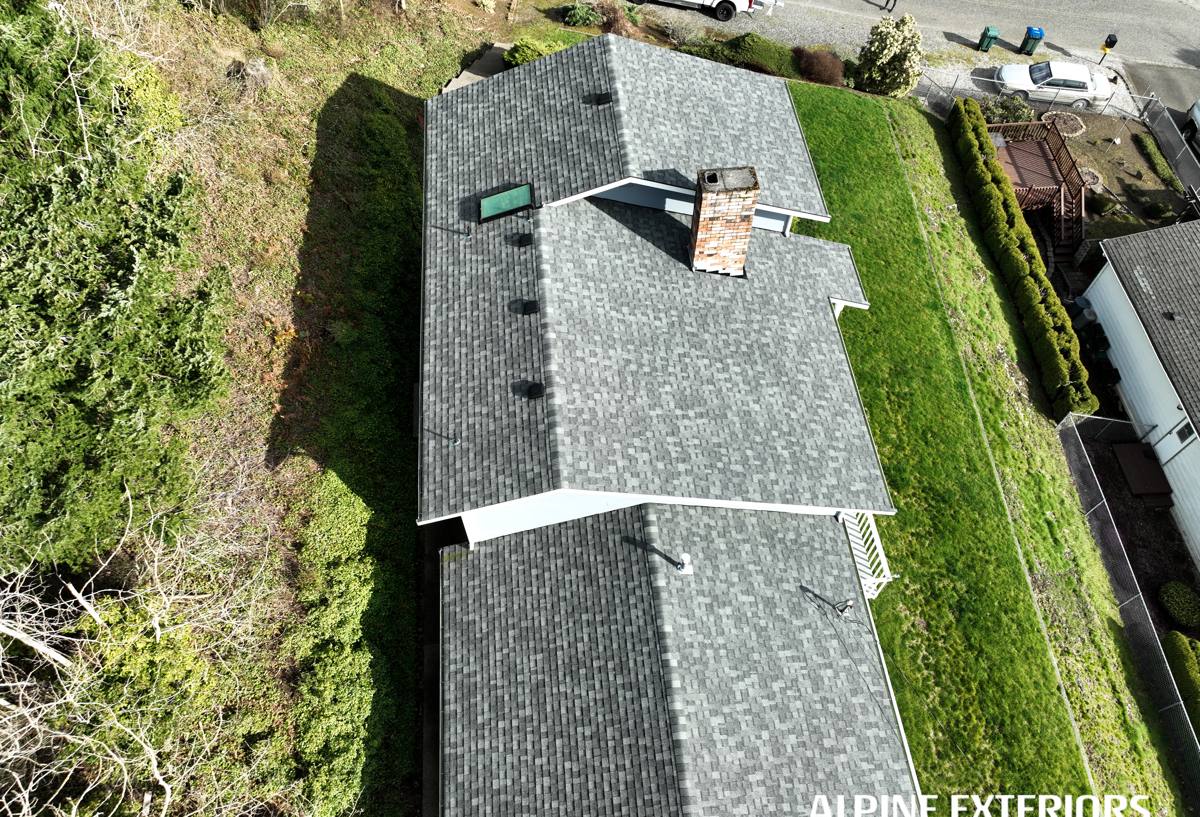
What Salt Air, Rain, and Moss Actually Do to a Shingle Roof
Salt Air and Metal Components
Asphalt shingles themselves tolerate salt exposure reasonably well, but the metal parts of a roofing system don't. Flashing, drip edge, nail heads, and vent hoods are all vulnerable to accelerated corrosion when they sit within reach of salt-laden air moving off the Sound. Once flashing starts to corrode, it stops doing its job at valleys, chimneys, and roof-to-wall transitions — and that's where the majority of roof leaks actually start, not in the open field of shingles.
Wind-Driven, Sideways Rain
Standard shingle installations assume rain falls mostly straight down. In Puget, storms regularly push rain sideways and upward under shingle tabs, especially at eaves, rakes, and low-slope sections. If the underlayment, starter strip, and fastening pattern weren't chosen and installed with that in mind, water finds its way underneath the shingles rather than running off them.
Moss and Sustained Moisture
Whatcom County's long wet season, combined with tree cover common in and around Puget, gives moss spores months of the ideal damp, shaded conditions they need to take hold. Moss isn't just a cosmetic problem — as it grows, it lifts shingle edges, holds water against the roof deck, and works its way under tabs, which accelerates granule loss and rot at the deck level. A roof that looks fine from the ground can be losing structural integrity underneath a mat of moss for years.
What a Correctly Installed Asphalt Shingle Roof Includes
A shingle roof is a system, not a single layer of material. Every component below has to be right for the roof to actually perform in this climate — skipping or downgrading any one of them is usually where premature failures trace back to.
| Component | Why It Matters Here |
|---|---|
| Ice and water shield at eaves, valleys, and penetrations | Backs up the shingles against wind-driven rain and any moisture that gets past the surface layer |
| Synthetic underlayment across the full deck | Sheds water that works past shingles during sustained storms, resists tearing in wind |
| Corrosion-resistant flashing and drip edge | Holds up against salt air exposure where standard galvanized metal degrades faster |
| Balanced attic and roof ventilation | Keeps the deck dry from underneath, which slows moss and rot even when the surface stays wet |
| Proper nailing pattern and fastener count | Keeps shingles sealed down through repeated wind events rather than lifting at the edges |
| Algae-resistant granules on the shingle itself | Slows the growth cycle that leads to staining and moss colonization in a shaded, wet climate |
Any one of these done wrong won't necessarily show up as a leak in year one. It shows up in year five or six, usually at the worst possible time, which is why we treat every layer as non-negotiable rather than an upgrade option.
Choosing a Shingle That Makes Sense for This Climate
Architectural vs. Three-Tab Shingles
Architectural (dimensional) shingles are heavier, have a longer warranty period, and grip better in wind because of their multi-layer construction. Three-tab shingles are lighter and less expensive but generally aren't the better call for a home exposed to sustained coastal wind and rain. For most Puget-area roofs, the added durability of architectural shingles is worth the difference in material cost over the life of the roof.
Algae-Resistant Granules
Standard shingle granules will eventually develop the dark streaking that comes from algae and moss growth in a wet, shaded climate. Shingles with algae-resistant (AR) granules use copper or zinc compounds embedded in the granule coating to slow that growth substantially. It doesn't make moss impossible, but it meaningfully extends the time before a roof needs cleaning or treatment, which matters in a county where the wet season runs long.
Color and Heat Considerations
Darker shingles show moss and streaking more visibly than lighter or variegated colors, which can be a practical consideration as much as an aesthetic one in a climate this shaded and wet. It's a smaller factor than the underlayment and ventilation choices above, but worth discussing when you're picking a shingle line.
Our Process for a Puget-Area Shingle Roof
- On-site inspection. We look at the existing roof, the deck condition underneath, attic ventilation, and any moss or corrosion already present before quoting anything.
- Honest scope and estimate. You get a written estimate that spells out shingle type, underlayment, flashing, and ventilation work — not just a single lump-sum number.
- Deck prep. Any soft, rotted, or moss-damaged decking gets replaced before a single shingle goes down. Installing new shingles over a compromised deck just hides the problem.
- Underlayment and flashing installation. Ice and water shield at vulnerable areas, full synthetic underlayment, and corrosion-resistant flashing throughout.
- Shingle installation. Installed to manufacturer nailing specs, adjusted where needed for wind exposure specific to the site.
- Ventilation check. We confirm intake and exhaust venting are balanced so the deck can dry from underneath between storms.
- Cleanup and final walkthrough. Site cleared of debris and nails, with a walkthrough so you know what was done and why.
Living With a Shingle Roof in Moss Season
Even a well-installed roof needs some homeowner attention in a climate like this. None of it is complicated, but skipping it shortens the roof's life.
- Keep overhanging branches trimmed back to reduce shade and debris buildup on the roof surface.
- Clear gutters and downspouts before the fall rains start, since clogged gutters back water up under the shingle edge.
- Have visible moss growth removed properly rather than left to spread — pressure washing shingles directly can strip granules and do more harm than good.
- Watch for granules collecting in gutters, which usually signals a shingle surface that's aging faster than it should.
- Schedule a roof check after major windstorms, since lifted or missing shingles are easy to miss from the ground.
- Address attic moisture or condensation issues promptly — they're often a ventilation problem, not a roofing material problem.
What Affects the Cost of a Shingle Roof Here
| Factor | Why It Moves the Price |
|---|---|
| Roof size and number of facets | More square footage and more valleys/hips mean more material and labor time |
| Deck condition | Rotted or moss-damaged decking found during tear-off adds repair costs before shingles go on |
| Shingle class chosen | Architectural and algae-resistant lines cost more upfront than basic three-tab shingles |
| Roof pitch and access | Steeper roofs and difficult access take longer and require more safety setup |
| Ventilation upgrades needed | Adding or correcting intake/exhaust venting is sometimes necessary and affects total scope |
| Layers of existing roofing | Full tear-off of old layers takes more labor than a single-layer removal |
We don't quote a job without seeing the roof in person, because deck condition and pitch vary enough house to house that a phone estimate isn't honest. What we can tell you upfront is that a roof built with the right underlayment and flashing for this climate costs more at installation than a stripped-down version — and costs far less over ten or fifteen years than repeated leak repairs and early replacement.
Why Local Experience Matters for This Job
A crew that mostly works drier inland climates tends to under-spec underlayment, skip ice-and-water-shield areas that aren't technically required by code, or use standard fasteners and flashing that aren't suited to salt air exposure. None of that shows up on inspection day — it shows up in year four or five, as a leak that seemed to come out of nowhere. A crew that regularly works roofs in Bellingham and the surrounding Whatcom County area already knows which details matter here and doesn't treat them as optional upgrades.
If your Puget-area home needs a new asphalt shingle roof, or you're not sure whether an existing roof still has good years left in it, we're happy to take a look and give you a straight answer. Fill out the form below for a free, no-pressure estimate.