 Bellingham
 Building Decks for Puget's Marine Climate
A deck in the Puget area of Bellingham lives a different life than one built inland. You're dealing with salt-laden air coming off the water, long stretches of driving rain through fall and winter, and a moss season that can run half the year on any surface that doesn't shed water and light properly. A deck that isn't built with those specific conditions in mind won't necessarily fail fast — but it will age poorly, develop soft spots, rust its own hardware from the inside, and grow a green film that makes it slick and unsafe well before the structure is actually worn out.
We build decks for homes in this part of Whatcom County regularly, and the difference between a deck that holds up for decades and one that needs early repair almost always comes down to details most homeowners never see: what's under the boards, what the fasteners are made of, and how water is actually meant to leave the structure.
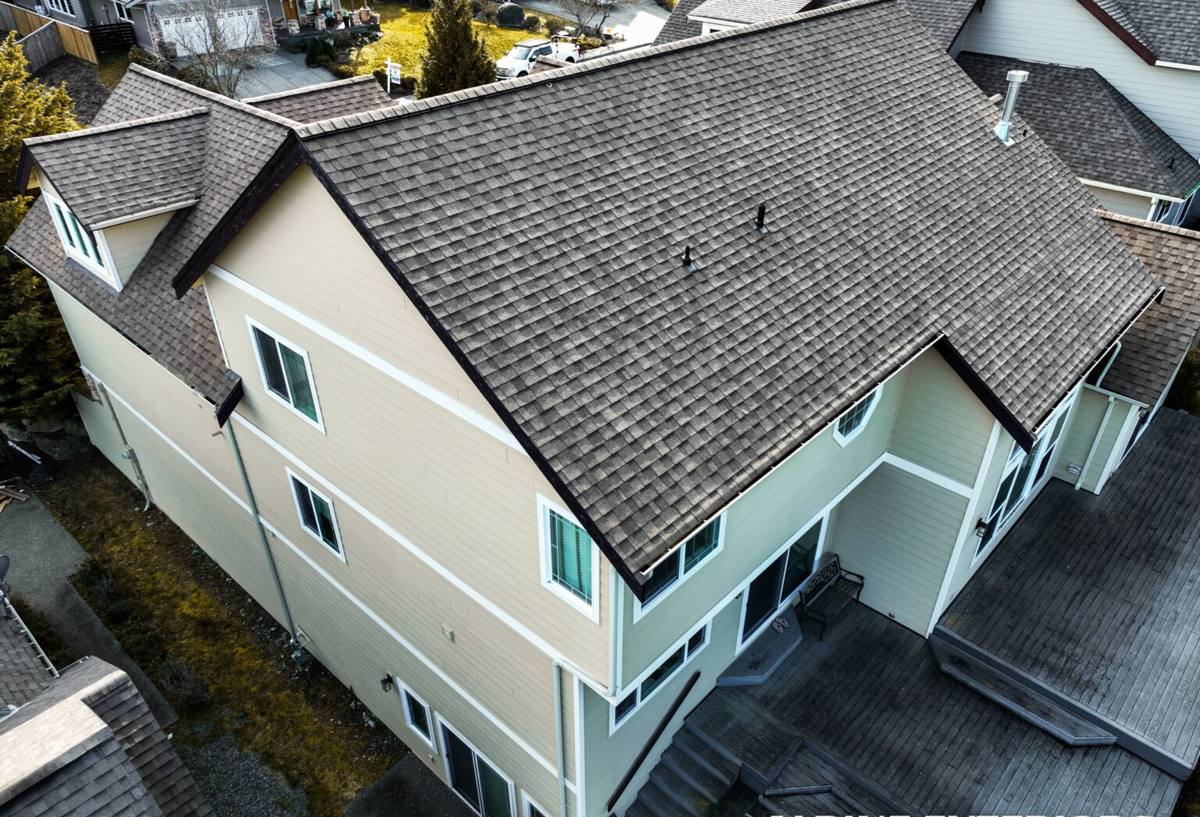
What Puget Homes Actually Need From a Deck
Most of the deck requests we get in this area fall into a few categories: replacing an old, failing deck that was never properly flashed or drained; adding outdoor living space that can hold up to genuine year-round rain rather than just summer use; and building decks that need to handle proximity to salt air without corroding out their own hardware in a few short years. Whatever the goal, the same baseline applies here — the deck has to be built assuming it will be wet, humid, or shaded for a large part of the year, not just on the occasional rainy afternoon.
That changes some decisions that wouldn't matter as much in a drier climate: board spacing, fastener selection, how the ledger connects to the house, and how much slope and airflow the design allows underneath.
The Foundation of a Correct Deck Build
Footings and Framing
Footings need to be sized and set to the depth required by local code, on soil that's been properly evaluated rather than assumed. In a region that sees sustained wet ground for months at a time, footings that are too shallow or poured on disturbed soil are one of the more common causes of a deck that develops a slow lean or bounce within a few years. Framing lumber should be rated for ground contact where it's close to grade, and joists should be protected with a flashing tape over the top edge — this single detail is one of the most skipped steps on lower-cost deck jobs, and it's one of the fastest ways a deck rots from the inside out in a wet climate.
The Ledger Board Connection
Where the deck attaches to the house is the single most important — and most commonly mishandled — connection on the entire structure. It needs proper flashing that directs water away from the house sheathing, not toward it, along with correct fastener spacing and, where required, structural connectors rather than relying on nails or lag screws alone. A poorly flashed ledger is one of the leading causes of hidden rot behind siding, and it's a problem that can go unnoticed for years in a rainy climate before it shows up as a soft spot or a sagging deck edge.
Fasteners and Hardware
Salt air accelerates corrosion on standard fasteners and connectors. We use stainless steel or marine-grade coated fasteners and hardware on decks in this area rather than standard galvanized products, particularly on any hardware that's structural or hard to access later. It costs more up front. It also means you're not looking at rust streaks down your deck boards or a corroded joist hanger in five years.
Choosing Decking Material for a Wet, Salty, Moss-Prone Climate
There's no single "correct" decking material for every home — it depends on budget, maintenance appetite, and how the deck will be used. But in this climate, some trade-offs matter more than they would elsewhere.
| Material | Moisture & Moss Behavior | Maintenance | Typical Lifespan |
|---|---|---|---|
| Pressure-treated fir/hem-fir | Absorbs moisture; needs good drainage and airflow to resist rot and moss buildup | Annual cleaning, periodic sealing/staining | 15-20 years with upkeep |
| Cedar | Naturally rot- and insect-resistant, but still needs sealing to resist moss staining and graying | Regular sealing, cleaning to prevent moss | 20-25 years with upkeep |
| Capped composite | Doesn't absorb water like wood; grooved/textured boards shed water and resist algae film better than smooth boards | Occasional washing, no sealing or staining | 25-30+ years, manufacturer-dependent |
| PVC decking | Fully non-absorbent; performs well in constant wet/shade but can be more slippery when mossy without a textured surface | Occasional washing | 25-30+ years, manufacturer-dependent |
We'll walk you through this trade-off honestly based on your home, your budget, and how much maintenance you actually want to do. Wood costs less up front and can look excellent, but it asks more of you every year in this climate. Composite and PVC cost more initially and remove most of the moss and rot maintenance burden, but they're not maintenance-free — they still need occasional cleaning, and product quality varies enough between manufacturers that we only install lines with a track record we trust and a warranty structure that actually holds up.
Moss, Algae, and Drainage: The Details That Actually Matter
Moss and algae don't grow because a deck is "old" — they grow wherever moisture sits and sunlight is limited, which describes a lot of shaded or tree-covered lots around Bellingham for a good chunk of the year. A few design choices make a real difference:
- Grooved-edge boards with proper gapping let water drain through rather than pool on the surface
- Adequate slope away from the house (built into the framing, not corrected later) keeps standing water off the deck entirely
- Open or vented skirting under the deck allows airflow so the underside dries out instead of staying damp and dark
- Keeping boards a few inches clear of siding, planters, and dense landscaping reduces the shaded, still-air pockets where moss takes hold fastest
- Hidden fastener systems reduce the small surface pits and screw heads where moisture and grime collect and moss gets a foothold
None of these are dramatic changes to the design. They're small decisions made correctly during the build that save you a pressure washer and a slippery deck every spring.
Railings, Stairs, and Code in a Wet Climate
Railing height, baluster spacing, and stair geometry are governed by code, and we build to those requirements as a baseline, not an afterthought. Beyond code minimums, in a climate with sustained rain, we pay close attention to railing post attachment (this is a common failure point when it's under-built) and to stair tread surfaces, since smooth wood or smooth composite treads get genuinely dangerous once they're wet or lightly mossy. Textured or grooved tread caps are a small upgrade that matters more here than in a dry climate.
Our Process, Start to Finish
- On-site consultation — we look at your lot, sun/shade exposure, drainage, and how you actually want to use the space
- Design and material selection — honest conversation about wood versus composite versus PVC based on your budget and maintenance preference
- Permitting — we handle the permit process with the local building department where required
- Site prep and footings — footings set to proper depth for your soil and local code
- Framing — ledger flashing, joist tape, corrosion-resistant hardware throughout
- Decking, railing, and stairs — installed with attention to drainage, spacing, and airflow
- Final walkthrough — we go over the finished deck with you, including basic care for your specific material
Why a Crew That Already Works Puget Makes a Difference
A deck built by a crew that hasn't worked this specific climate tends to make the same avoidable mistakes: undersized footings for wet soil conditions, standard fasteners that weren't rated for salt air exposure, or a design that looks fine on paper but traps moisture in exactly the wrong spot. Working in and around Bellingham and Whatcom County regularly means we've already seen how decks in this area actually fail — not in a brochure, but on real jobs — and we build to prevent those specific problems rather than generic ones. It also means we know the local permitting process and typical soil conditions in the area, so there are fewer surprises mid-project.
Keeping Your Deck Looking Right Through the Wet Season
Whatever material you choose, a little seasonal attention goes a long way in this climate:
- Sweep leaves and debris off the deck regularly in fall — trapped organic matter is the number one moss and algae starter
- Rinse or wash the deck surface a few times a year, more often in shaded areas
- Check and clear gaps between boards so water keeps draining as designed
- Re-seal or re-stain wood decking on the schedule recommended for your specific product — don't wait until it visibly needs it
- Keep gutters and downspouts near the deck clear so runoff isn't dumping extra water onto or under the structure
- Trim back vegetation that's shading and dampening the deck surface where practical
If you're planning a new deck or replacing one that's showing its age, we're happy to take a look and walk you through what it would actually take for your property — no pressure, no hard sell. Reach out using the form below for a free estimate.