 Bellingham
 Why Decks in Puget Take a Different Kind of Beating
Puget sits close enough to Bellingham Bay that salt-laden air is part of daily life, not an occasional event. That air settles into fasteners, hardware, and any exposed end grain on a deck, and it does its work slowly and constantly — which is exactly why so many decks in this pocket of Whatcom County fail from the inside out before they look bad from the top. By the time boards are visibly cupping or hardware is streaking rust down the face of a deck, the substructure underneath has usually been absorbing moisture and salt for years.
Add in Bellingham's driving rain — often blown sideways off the water rather than falling straight down — and you get water finding its way into joints, fastener holes, and ledger connections that a drier climate would never test. Then there's moss season, which up here isn't really a season so much as most of the year. Moss holds moisture against wood and composite surfaces long after a dry day should have let them air out, and it turns any shaded or north-facing section of a deck into a slow, steady moisture trap.
None of this means decks in Puget can't last. It means they need to be built and replaced with this specific combination of exposure in mind, not with a generic approach that would work fine somewhere with a drier, calmer climate.
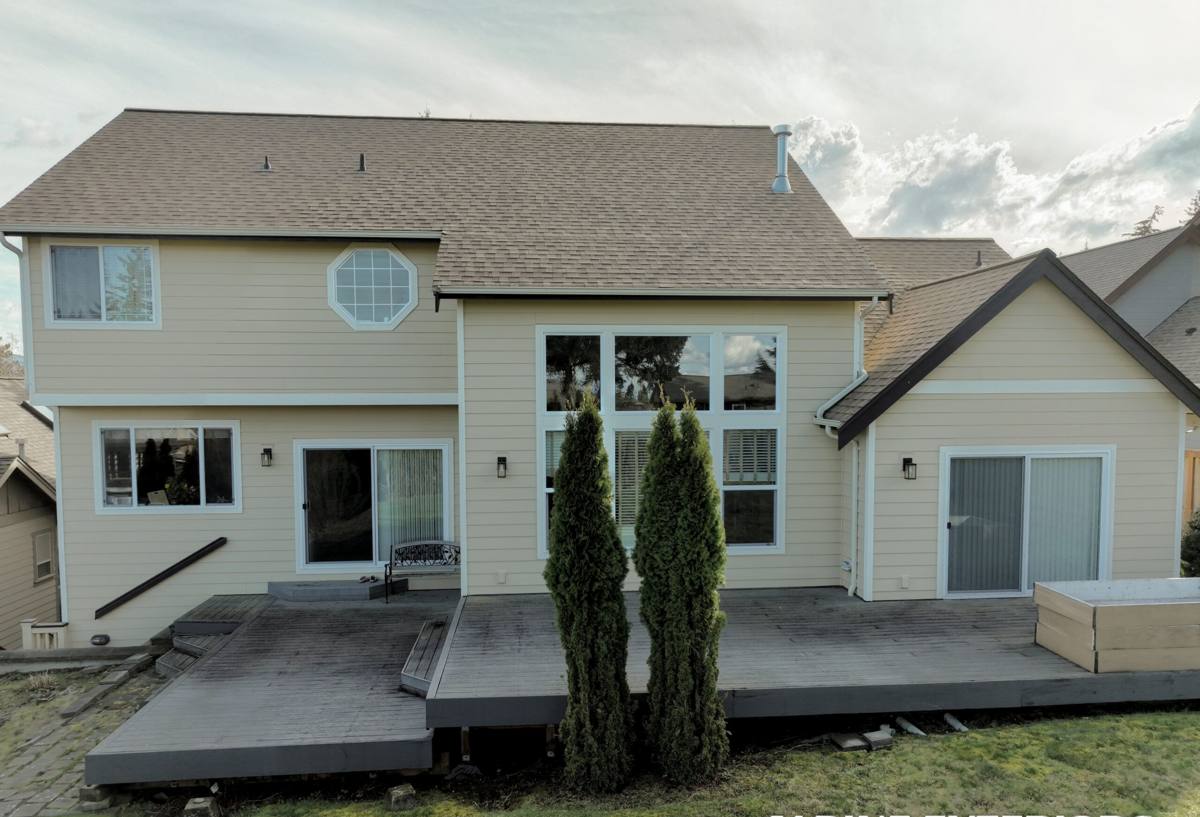
What "Replacement" Should Actually Include
A lot of deck jobs sold as "replacement" are really just a new set of boards laid over an old, unexamined frame. That approach can look good for a season or two and then create problems that are more expensive to fix than if they'd been caught at the start. A proper replacement treats the frame, not just the surface, as the part that determines how long the deck actually lasts.
The Substructure
Joists, beams, and posts take the real structural load, and they're also the part most likely to be hiding rot or insect damage under intact-looking decking. Any replacement worth doing includes pulling the old boards and actually inspecting what's underneath — not assuming it's fine because the top looked okay.
The Ledger and Flashing
Where a deck attaches to the house is the single most common failure point we see in this region, because it's the one spot where water is almost guaranteed to collect if the flashing isn't done correctly. A ledger board without proper flashing, or with flashing that's degraded, lets water track directly into the house's rim joist — a problem that starts as a deck issue and ends as a siding and framing issue.
Fasteners and Hardware
Salt air is hard on standard hardware. Fasteners, joist hangers, and post connectors that aren't rated for coastal exposure corrode faster here than they would inland, and corroded hardware is a structural problem, not a cosmetic one. Replacement is the right time to make sure every piece of hardware is actually suited to this environment.
Choosing Materials for This Climate
There's no single "best" decking material — there's a best material for a given budget, maintenance appetite, and how much sun or shade the deck gets. In a climate with this much moisture and moss pressure, those trade-offs matter more than they would somewhere drier.
| Material | Moisture Behavior | Maintenance | Typical Lifespan Here |
|---|---|---|---|
| Pressure-treated wood | Absorbs and releases moisture; needs to dry between rain events | Regular cleaning, sealing, and moss removal | 10–15 years with upkeep |
| Cedar | Naturally moisture-resistant but still needs sealing in shaded/mossy areas | Periodic cleaning and refinishing | 15–20 years with upkeep |
| Capped composite | Resists moisture absorption; moss sits on the surface rather than soaking in | Periodic washing to prevent surface moss and algae | 25+ years |
| PVC decking | Does not absorb moisture at all | Lowest — occasional rinsing | 25+ years |
Wood costs less upfront and has a warmer, traditional look that a lot of Puget homeowners still prefer, especially on older homes where composite can look out of place. The trade-off is that wood needs consistent maintenance to keep moss and moisture from working into the grain — skip a season of cleaning and sealing here, and it shows. Composite and PVC cost more initially but handle the moss-and-moisture cycle with far less homeowner effort, which is why we see more of them going in every year in this area. We'll walk through what makes sense for your specific deck's sun exposure and how much upkeep you actually want to do, rather than push one product as the automatic right answer.
Signs Your Deck Needs Replacement, Not Repair
Not every deck problem means a full tear-off. But there's a point where patching individual boards is just delaying a more expensive fix. A few things worth checking before deciding which route makes sense:
- Soft or spongy spots when you walk across the deck, especially near the house
- Visible gaps, rust streaks, or corrosion around fasteners and joist hangers
- A ledger board that looks separated, stained, or has visible flashing damage where it meets the house
- Persistent moss or algae that comes back within weeks of cleaning, especially in shaded sections
- Posts that feel loose or that show soft wood when tested with a screwdriver near the base
- A deck that's more than 15–20 years old and has never had the substructure inspected
If it's just surface wear on a structurally sound frame, repair or refinishing can be the right call. If any of the above show up, especially near the ledger or at post bases, that's usually a sign the frame itself needs to come out.
Our Deck Replacement Process
Assessment
We start by getting under the deck, not just walking on top of it. That means checking joists, the ledger connection, post bases, and footings before we ever talk about decking material. This is also when we figure out whether the problem is isolated or affects the whole structure.
Tear-Off and Frame Work
Old decking and any compromised framing come out completely. We replace ledger flashing as a matter of course on any full replacement in this area — it's cheap insurance against the single most common failure point we see, and skipping it to save a step isn't a trade-off we're willing to make on a homeowner's behalf.
Build and Fastening
New framing and decking go in with hardware rated for coastal, high-moisture exposure — not standard fasteners that will corrode faster than the decking itself. Spacing and fastening follow manufacturer specs for whatever material you've chosen, since composite and PVC products in particular have specific installation requirements tied to their warranties.
Final Inspection
Before we call the job done, we check drainage paths, confirm flashing is properly lapped and sealed, and make sure the whole structure is solid — not just that the decking looks good.
Moss, Drainage, and Keeping It That Way
A well-built deck in Puget still needs some ongoing attention, because the climate doesn't let up once the job is finished. Water needs somewhere to go — decks built tight against the house or without a slight slope for drainage will hold water longer than they should, which accelerates moss growth and wood degradation alike. Gaps between boards matter too; they're not just for looks, they let air move underneath and let the deck actually dry out between rain events.
For any material, periodic washing to remove moss and organic debris — especially in shaded corners — is the single biggest thing a homeowner can do to extend a deck's life here. It's a lighter lift on composite and PVC than on wood, but no material is entirely maintenance-free in a climate with this much moisture and shade.
Why a Crew That Already Works in Puget Matters
Deck framing and flashing details that work fine in a drier inland climate aren't automatically right for a deck exposed to salt air and near-constant moisture. A crew that works this specific area regularly already knows which fastener grades hold up, which ledger flashing details actually keep water out under driving rain, and which sections of a typical Puget lot tend to stay shaded and moss-prone long enough to affect material choice. That's the kind of judgment that comes from repetition in this exact environment, not from a general decking background applied to a new zip code.
It also matters for permitting and inspection — Bellingham and Whatcom County have their own requirements for deck structural work, and a local crew handles that process routinely rather than learning it project by project.
What This Typically Costs
Deck replacement costs vary a lot based on size, material, and how much structural work is needed underneath — anyone quoting a firm number before seeing the deck in person is guessing. A few of the factors that actually move the price:
| Factor | Why It Matters |
|---|---|
| Deck size and layout | More square footage and complex shapes (multiple levels, angles) mean more material and labor |
| Substructure condition | Rotted joists, posts, or footings add cost that isn't visible until tear-off |
| Material choice | Wood costs less upfront; composite and PVC cost more but reduce long-term maintenance |
| Ledger and flashing work | Proper flashing replacement is a fixed cost worth including on every job, not an optional add-on |
| Railing and stair requirements | Code-compliant railings and stairs add material and labor beyond the deck surface itself |
We give a written estimate after seeing the actual deck and frame condition, so the number reflects your specific situation rather than a generic average.
If your Puget-area deck is showing its age, or you just want an honest read on whether it needs repair or replacement, we're happy to take a look. Use the form below to request a free, no-pressure estimate.