 Bellingham
 Roof Repair for Puget: A Bellingham Neighborhood That Takes Weather Head-On
Puget sits inside the same weather system that shapes every roof decision in Bellingham: moisture-laden marine air moving in off the water, rain that comes in sideways as often as it falls straight down, and a moss season that can run most of the calendar year on shaded slopes. A roof in Puget doesn't fail because of one bad storm. It fails slowly, from thousands of small exposures that add up over years, and by the time a stain shows up on a ceiling inside the house, the water has usually been finding its way in for a while already.
We work roof repair calls in Puget regularly enough to know what tends to go wrong first on homes here, and it's rarely the field of the roof itself. It's the details: the valleys, the penetrations, the transitions where two roof planes or a roof and a wall meet. Those are the spots wind-driven rain and standing moss find first, and they're the spots we check first on every repair call, whether the homeowner mentioned them or not.
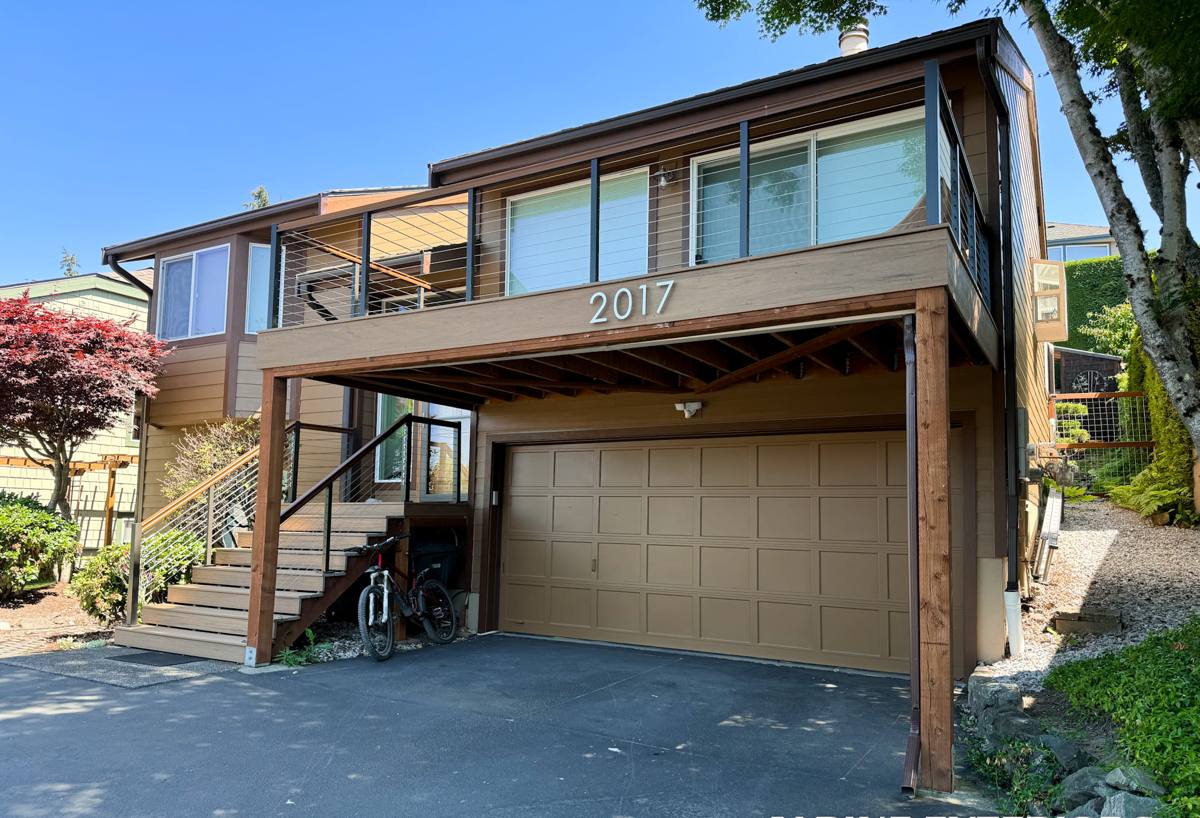
What Puget's Climate Actually Does to a Roof
Salt Air and Slow Corrosion
Bellingham's proximity to the water means a steady background level of salt-tinged moisture in the air, not just on days with an obvious storm rolling through. That kind of sustained exposure works on exposed metal over time, flashing, fasteners, vent caps, drip edge, softening or corroding them well before a homeowner would think to look. It's a quiet failure mode, and it's one of the first things we inspect on any Puget roof repair, because a shingle field can look fine while the metal underneath it is already compromised.
Driving Rain at an Angle
Wind-driven rain doesn't just fall on a roof, it gets pushed into it sideways. That matters because flashing and underlayment details that would hold up fine in a calmer, drier climate can still let water in here specifically because the wind is driving rain up and under laps, into valley seams, and around chimney and vent penetrations from angles a straight-down rainfall assumption doesn't account for. A lot of the leaks we trace back start at exactly these pressure points, not in the middle of an open roof plane.
A Long Moss Season
Mild temperatures, tree cover, and near-constant dampness add up to extended moss growth on north-facing and shaded roof slopes across Puget and the rest of Bellingham. Moss isn't just cosmetic. It holds moisture directly against the roofing material, works its way under shingle tabs and shakes as it grows, and can lift edges enough to give wind-driven rain a place to start. A roof that looks intact from the ground can already have moss quietly prying at it from underneath.
What a Correct Roof Repair Actually Involves
A roof repair that holds up in this climate is more than swapping a few damaged shingles and calling it done. We look at the repair as part of the whole system: the roofing material, the underlayment beneath it, the flashing at every transition, and the ventilation that keeps moisture from building up in the attic in the first place. Missing any one of those pieces is how a "fixed" roof leaks again the next wet season.
Diagnosing Before Patching
Water shows up where it wants to inside a house, not necessarily where it entered the roof. A stain near a bedroom wall can trace back to a valley several feet away, or a chimney flashing that's been letting water track down a rafter before it finally shows itself. We trace the actual path before we patch anything, because repairing the visible symptom without finding the real entry point just delays the next leak.
Flashing and Valley Work
Valleys, chimneys, skylights, and roof-to-wall transitions are where most Puget roof leaks start, and they're where a repair needs the most care. That means flashing that's properly lapped, sealed, and tied into the underlayment correctly, not just caulked over as a shortcut. Caulk is a temporary fix at best in a climate this wet; it dries out, cracks, and fails long before proper flashing would.
Matching Materials
When we replace a section of roofing, we match the existing material as closely as the market allows, both for appearance and for how the new section performs alongside the old one. Mismatched shingle profiles or incompatible underlayment at a repair seam can create their own small weak point, which defeats the purpose of the repair.
Repair vs. Full Roof Replacement
Not every roof problem in Puget means a full replacement, and we don't push a tear-off when a targeted repair will genuinely hold. Isolated storm damage, a failed section of flashing, or a handful of damaged shingles can usually be repaired cleanly and matched into the surrounding roof. But there are situations where a repair is really just postponing the inevitable, and we'll tell you plainly which one you're in rather than let you spend money on a patch that won't last.
| Sign | Usually Points To | Typical Path |
|---|---|---|
| Isolated leak near one valley or penetration | Localized flashing failure | Targeted repair |
| Granule loss and thinning shingles across the whole roof | Roofing material near the end of its service life | Full or partial replacement |
| Soft or spongy decking in more than one area | Sustained moisture intrusion over time | Deck repair, often paired with larger roofing work |
| Heavy moss recurring within a year of cleaning | Underlying moisture retention, not just surface growth | Inspection to rule out material or ventilation issues |
| Multiple unrelated leak points appearing the same season | Roof-wide material fatigue | Full replacement usually more cost-effective than repeated repairs |
Real answers depend on getting up on the roof and into the attic, which is why we inspect in person rather than quoting a repair over the phone.
Signs a Puget Roof Needs Repair Attention
- Water stains on ceilings or upper walls, especially after a stretch of wind-driven rain
- Moss that returns quickly after cleaning, particularly on shaded or north-facing slopes
- Missing, cracked, or curling shingles, or shakes that have visibly lifted at the edges
- Rusted or visibly corroded flashing around chimneys, vents, or skylights
- Granules collecting in gutters, a sign the shingle surface is wearing thin
- Sagging areas on the roofline or soft spots felt underfoot during a careful inspection
- Daylight visible through the roof deck from inside the attic
Our Roof Repair Process in Puget
- Inspection: We check the roof surface, flashing, valleys, penetrations, and attic for moisture signs, not just the spot the homeowner mentioned.
- Honest diagnosis: We explain what's actually failing, why, and whether a repair will genuinely hold given the roof's age and condition.
- Written estimate: A clear scope of work and price before anything starts, no surprise add-ons mid-job.
- Repair: Proper flashing, matched materials, and underlayment work done to hold up through the next wet season, not just patched to look done.
- Follow-up: A final check to confirm the repair is sealed and performing before we consider the job finished.
Roof Repair Cost Factors in Puget
| Factor | What It Affects | Why It Matters Here |
|---|---|---|
| Extent of damage found on inspection | Repair vs. larger scope | Trapped moisture behind flashing or shingles is often more extensive than what's visible from the ground |
| Roof pitch and access | Labor time and equipment needs | Steeper rooflines and tree-covered lots common around Puget can add setup and staging time |
| Roofing material | Material cost and match quality | Matching existing shingles or shakes affects both appearance and how well the repair seals into the old roof |
| Flashing and valley condition | Scope of metal work needed | Salt air and years of wind-driven rain can corrode flashing well before the shingles themselves fail |
| Underlying deck condition | Whether decking needs repair before new roofing goes on | Sustained moisture intrusion common in this climate can rot sheathing that isn't visible until the old roofing is pulled back |
Real numbers depend on the specific roof, which is why we inspect the property before quoting instead of pricing off a phone description.
Why Hiring a Crew That Already Works Puget Matters
A crew that works this part of Bellingham regularly knows how salt air, wind-driven rain, and moss actually behave on real roofs across a full year, not just how a shingle performs on a spec sheet. That experience shows up in practical decisions on a repair: where flashing needs extra attention, which roof orientations hold moisture longest, and which shortcuts tend to come back as callbacks a couple winters later. Puget's mix of tree cover, terrain, and proximity to the water isn't identical to every Bellingham neighborhood, and a crew with hands-on experience here accounts for that instead of applying a one-size-fits-all repair approach.
Roofing problems also rarely stay isolated. A flashing leak left unaddressed can work its way down into siding, trim, or a wall assembly before it's ever obvious from outside. Because we handle roofing alongside siding, windows, and decks, we can look at a Puget property as one connected exterior system and trace a leak back to where it actually starts.
If your Puget home has a roof leak, storm damage, or moss buildup you'd like a straight answer on, we're glad to take a look. Reach out using the form below to schedule a free, no-pressure estimate.