 Bellingham
 Blaine's Coastal Climate Is Hard on Roofs
Blaine sits right on the water at the northern edge of Whatcom County, and that location comes with a specific set of roofing problems that inland homes simply don't deal with as often. Salt-laden air off the Salish Sea works on metal fasteners, flashing, and vents year-round. Driving rain, often pushed sideways by wind coming off the water, finds its way into laps and seams that would stay dry in a calmer climate. And the long, overcast, damp season that defines this part of Washington gives moss and algae months at a stretch to take hold on north-facing slopes and shaded valleys.
None of this means Blaine roofs fail faster than roofs anywhere else in Western Washington. It means the failure points are different, and a repair that doesn't account for salt exposure or moss growth tends to come back sooner than it should. This page covers what we look for on Blaine roofs specifically, what a correct repair involves, and how we approach the job.
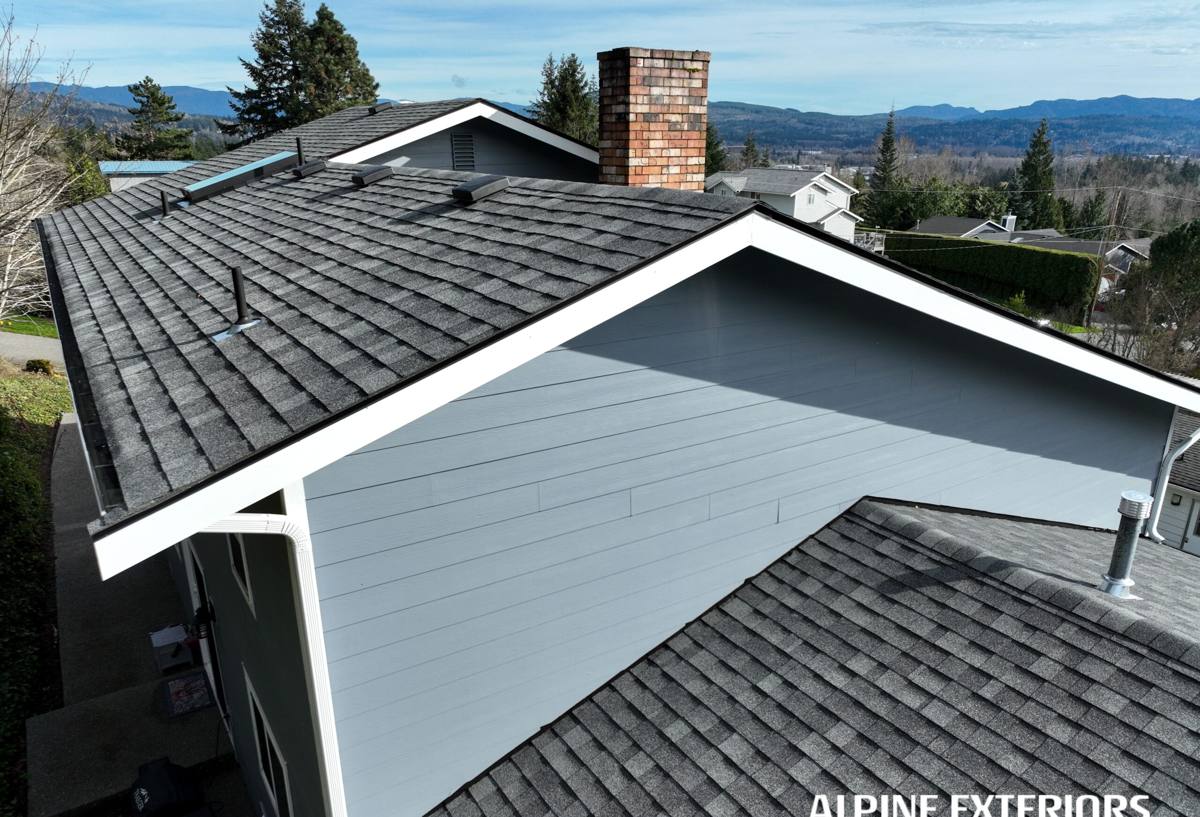
Signs a Blaine Roof Needs Repair
Most roof problems in this area start small and stay hidden until they've already caused interior damage. Homeowners who catch issues early almost always spend less than those who wait for a ceiling stain to show up.
- Granules collecting in gutters or at downspout outlets, which signals shingle wear
- Curling, cracked, or lifted shingle edges, especially on south- and west-facing slopes exposed to wind
- Dark streaking or thick moss growth along ridges, valleys, and shaded eaves
- Rust staining or soft, pitted spots on metal flashing around chimneys, skylights, and vent pipes
- Soft or spongy decking felt underfoot in the attic, or daylight visible through the roof deck
- Water stains on interior ceilings or attic insulation, particularly after a windy rainstorm
- Loose, missing, or visibly corroded fasteners on ridge caps or metal accessories
If you're seeing more than one of these, it's worth having someone look at the roof before the next storm rather than after.
What Salt Air Does to Roofing Materials
Metal Components
Flashing, drip edge, nails, and vent boots are usually the first parts of a roof to show salt-air wear. Standard galvanized fasteners can corrode faster near the water than they would a few miles inland, and once a fastener starts to go, the shingle or flashing it's holding loosens. On repairs in Blaine, we default to corrosion-resistant fasteners and flashing rated for coastal exposure rather than whatever happens to be standard elsewhere in the county.
Asphalt Shingles
Shingles themselves hold up reasonably well against salt air, but the sealant strips and exposed edges take more abrasion from wind-driven grit and moisture cycling. Repeated wet-dry cycling near the water can accelerate granule loss on aging shingles, which is why a 12-year-old roof in Blaine may show more wear than a 12-year-old roof in a drier inland town.
Wood Trim and Fascia
Salt-laden moisture combined with constant shade from evergreen tree cover keeps wood trim and fascia boards damp longer after a rain. That extended damp period is what invites rot, so repairs near the roofline often include a close look at the fascia and any exposed rafter tails, not just the shingles themselves.
Moss, Algae, and Blaine's Long Wet Season
Whatcom County's wet season runs long, and Blaine's tree cover and marine layer keep roofs damp even on days without measurable rainfall. That combination is ideal for moss and algae, particularly on north-facing slopes and in valleys where debris collects and water drains slowly.
Moss isn't just cosmetic. As it grows, it holds moisture directly against the shingle surface and works its rhizoids under shingle tabs and fasteners, lifting them slightly over time. That lifting is exactly what allows wind-driven rain to get underneath the shingle course instead of shedding over it. A roof with heavy moss cover is also more likely to trap wet leaf debris in valleys, which is one of the more common sources of hidden leaks we find during repair calls.
Pressure washing moss off a roof does more harm than good — it strips granules and can drive water under shingles. The correct approach is a gentle low-pressure treatment or manual removal, followed by zinc or copper strips at the ridge that let rainwater carry moss-inhibiting metal ions down the slope over time.
Common Roof Repairs We Handle in Blaine
| Repair Type | Typical Cause in Blaine | What's Involved |
|---|---|---|
| Flashing repair or replacement | Salt-air corrosion, wind-driven rain intrusion | Remove failed flashing, correct any underlying deck damage, install corrosion-resistant flashing with proper laps |
| Shingle replacement (spot repair) | Wind lift, granule loss, aging sealant strips | Match existing shingle profile and color as closely as possible, reseal or nail per manufacturer spec |
| Valley repair | Debris buildup, moss holding moisture, slow drainage | Clear debris, inspect underlayment, replace valley metal or membrane if compromised |
| Vent boot and pipe collar repair | Rubber gaskets breaking down from UV and moisture cycling | Replace boot with a durable gasket type, check surrounding shingles for secondary damage |
| Fascia and rafter tail repair | Extended dampness under tree cover, salt-air exposure | Remove and replace rotted wood, address the moisture source before closing it back up |
| Moss and algae treatment | Long wet season, shaded north slopes | Gentle removal, ridge treatment strips, drainage correction if moss is tied to a valley or debris problem |
How We Approach a Repair
Inspection First
We start by getting on the roof, not just looking at it from the ground. A leak that shows up on an interior ceiling can originate several feet away from the stain, especially where wind-driven rain is involved, so we trace the actual entry point rather than patching where the damage appears indoors.
Diagnosis and Options
Once we know what's actually failing, we explain what we found in plain terms — what's causing it, what a proper fix involves, and roughly what it will cost. If a roof has isolated damage, we repair it. If we find that the underlying materials are past the point where a patch will hold, we'll say so and explain why, rather than repairing over a problem that's likely to resurface.
The Repair
We match materials as closely as possible to what's already on the roof, use fasteners and flashing suited to coastal exposure, and make sure any moss or debris that contributed to the problem is cleared before we close things up. A repair that ignores the moss or drainage issue that caused the leak in the first place is a repair that's likely to fail again.
Cleanup and Follow-Up
We clear debris, remove old materials from the property, and walk you through what we did and what to watch for going forward.
Repair or Replace? How We Help You Decide
| Factor | Leans Toward Repair | Leans Toward Replacement |
|---|---|---|
| Extent of damage | Isolated to one area or slope | Widespread across multiple slopes |
| Roof age | Under roughly 15 years | Near or past typical material lifespan |
| Deck condition | Solid, no soft spots | Soft decking or rot found in multiple areas |
| Moss/algae history | First occurrence, addressed early | Repeated growth despite treatment, shingle lift widespread |
| Cost of repeated repairs | One-time or infrequent fix | Recurring repairs in the same areas |
We'll always give you our honest read on which side of that line your roof falls on. A roof with one damaged section and a sound deck almost always makes more sense to repair than replace.
Why It Matters to Hire a Crew That Already Works Blaine
Roofing materials and techniques that work fine in a drier or more inland part of Whatcom County don't always hold up the same way this close to the water. A crew that regularly works Blaine roofs knows to spec corrosion-resistant fasteners as a default, knows which slopes tend to hold moss longest, and knows how local wind patterns off the water drive rain into flashing and valleys that a text-book install might miss. That familiarity shows up in fewer callbacks and repairs that actually last through the next wet season, not just until the next storm.
It also matters for scheduling. Weather off the water can change a workable roofing window into an unworkable one faster than inland forecasts suggest, and a crew that works this coastline regularly plans around that instead of getting caught mid-repair.
Maintenance Tips for Blaine's Climate
- Have gutters and valleys cleared of debris at least twice a year, more often under heavy tree cover
- Treat moss before it spreads rather than after it's covering a full slope
- Check attic ventilation — poor airflow traps moisture and accelerates deck rot in a damp climate
- Have flashing and fasteners inspected every couple of years for salt-air corrosion, especially around chimneys and vents
- Trim back overhanging branches to reduce shade and debris buildup on north-facing slopes
If you're dealing with a leak, visible moss, or damaged flashing on a Blaine roof, we're glad to take a look and give you a straight answer on what it needs. Reach out for a free, no-pressure estimate using the form below.