 Bellingham
 Roofing in Sudden Valley: What the Local Conditions Demand
Sudden Valley sits in a wooded, lake-adjacent pocket of Whatcom County, and that setting shapes what a roof has to survive here more than most homeowners realize. Heavy tree cover means shade lingers on north- and east-facing slopes long after the rest of Bellingham has dried out. That shade, combined with our region's driving rain and a moss season that can run from fall through spring, creates conditions where roofs age faster than the calendar suggests. A roof that looks fine from the driveway can already be losing granules, holding moisture under moss mats, or letting water track sideways under the shingle course.
We replace roofs across Bellingham and Whatcom County, and Sudden Valley jobs come with their own checklist in our heads before we even climb the ladder: how much canopy is over the house, which slopes stay damp longest, whether the deck underneath has soaked up years of slow moisture, and what the access and staging will look like on a wooded lot with a private road system. None of that is guesswork — it's the difference between a replacement that holds up and one that needs attention again in five years.
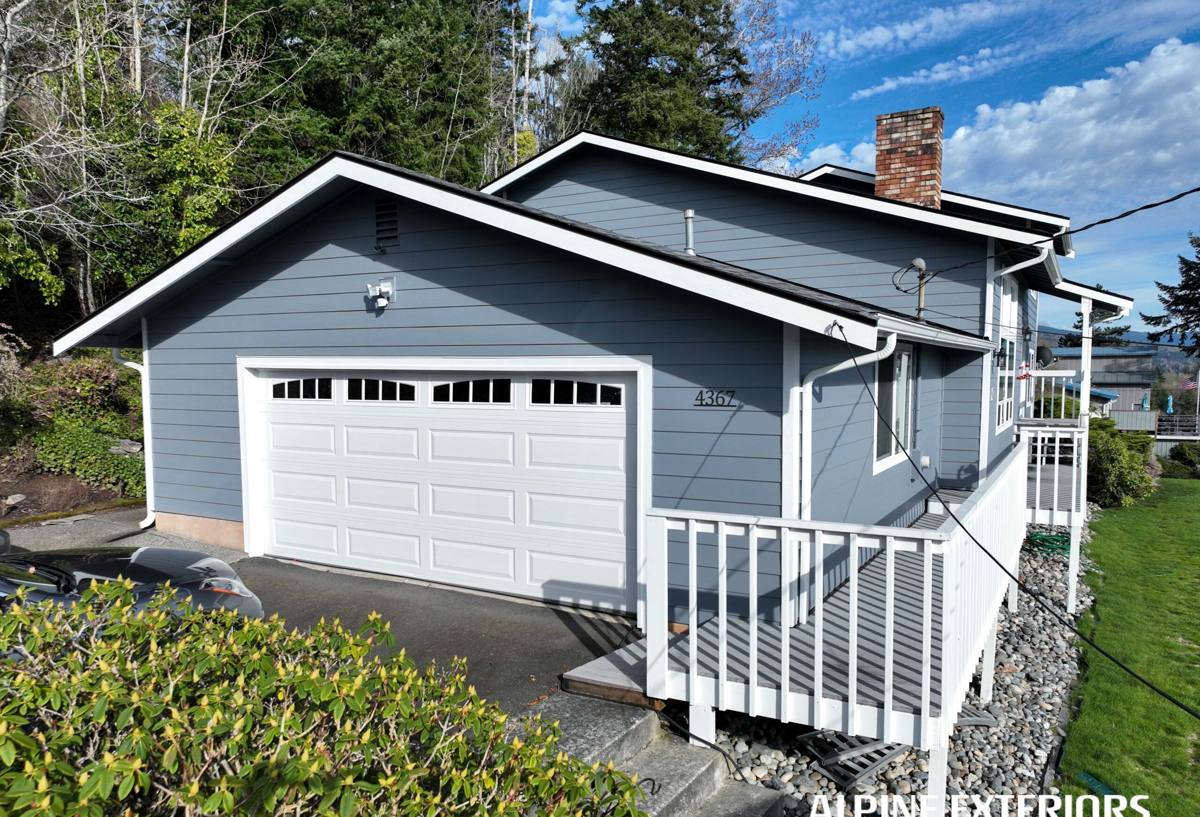
Why Roofs Wear Differently on Shaded, Lakeside Lots
Three things combine to shorten roof life in this part of the county, and they don't act independently — they compound each other.
Moss and organic growth
Moss doesn't just look bad. It holds water against the shingle surface long after a storm has passed, and that constant dampness accelerates granule loss, softens the asphalt mat underneath, and can work its way under shingle tabs and lift them. On heavily treed lots, moss can establish within a couple of seasons on a roof that gets little direct sun.
Driving rain and wind-driven moisture
Storms coming off the Sound and across the county don't always fall straight down. Wind-driven rain pushes water sideways and upward under shingle edges, ridge caps, and flashing details that were never designed to handle water moving in the "wrong" direction. This is where installation quality — not just material choice — makes or breaks a roof's watertightness.
Debris load
Conifer needles, leaves, and cones collect in valleys and behind chimneys faster on a wooded lot than on an open one. Debris dams hold water, and standing water is the single fastest way to shorten the life of any roofing material, regardless of brand or price point.
Signs a Sudden Valley Roof Needs Replacing, Not Patching
Not every problem roof needs a full tear-off. But there's a point where patching becomes a false economy — you spend money on repairs and still face the same underlying decay a year or two later. Some signals that point toward replacement rather than repair:
- Moss coverage across large sections of the roof rather than isolated patches, especially if it's been there more than one season
- Granules collecting in gutters or downspouts in noticeable amounts
- Soft spots or sponginess underfoot when walking the roof — a sign the deck itself may be compromised
- Daylight visible through the attic roof boards, or damp insulation below the deck
- Curling, cupping, or cracked shingles on multiple slopes, not just the sun-exposed side
- Repeated leak calls at the same spot despite prior patch repairs
- A roof that's approaching or past the manufacturer's expected service life for its material and exposure
If a roof only shows one or two of these on a limited area, a targeted repair may genuinely be the right call — we'll tell you that if it's true. Replacement makes sense when the underlying deck and multiple roofing layers are compromised, not just the surface.
What a Correct Replacement Involves
Tear-off and deck inspection
We remove the existing roofing down to the deck rather than layering over it. This is the only way to actually see the plywood or plank sheathing underneath, which is especially important on shaded, moss-prone roofs where hidden moisture damage is common. Any soft or delaminated decking gets replaced before anything new goes down — installing new roofing over a compromised deck just guarantees a shorter lifespan for the new material.
Underlayment and water protection
Given how much wind-driven rain this area sees, underlayment selection matters more here than in drier parts of the state. We use synthetic underlayment as the primary water-resistant layer, with self-adhering ice-and-water membrane at vulnerable points — eaves, valleys, around chimneys and skylights, and low-slope transitions — where wind-driven moisture is most likely to find a way in.
Ventilation
A roof that traps heat and moisture in the attic ages faster from the underside, which is easy to overlook since it's invisible from the ground. Balanced intake (soffit) and exhaust (ridge or box vents) ventilation keeps attic moisture moving out rather than condensing on the deck — a real concern in a humid, tree-shaded microclimate where the air around the house doesn't dry out quickly.
Flashing details
Most roof leaks trace back to flashing, not shingle failure. Chimneys, sidewall transitions, valleys, and any roof penetration get new metal flashing set correctly into the roofing system — not caulked over old flashing, which is a shortcut that fails within a few years.
Material Choices for This Kind of Setting
There's no single "best" roofing material — the right choice depends on how much shade and moss exposure the roof will face, the roof's pitch, and your budget. Here's how the common options compare for a shaded, moisture-heavy lot like most of Sudden Valley:
| Material | Moss/Moisture Resistance | Typical Lifespan | Relative Cost |
|---|---|---|---|
| Architectural asphalt shingles | Good with proper ventilation and algae-resistant granules; still needs periodic moss removal on heavy shade | 25–30 years | $ |
| Standard 3-tab asphalt shingles | Fair; thinner profile holds less debris but also has less wear margin | 15–20 years | $ |
| Standing seam metal | Excellent; smooth surface sheds moss and debris far better than any shingle | 40–60 years | $$$ |
| Synthetic composite shingle/shake | Good; resists rot better than wood shake, more moss-resistant than standard asphalt | 30–50 years | $$ |
We don't install traditional wood shake roofing on shaded lots like these. It's not that cedar shake can't perform — it's that on a heavily treed, low-sun lot it needs a level of ongoing maintenance and moisture management most homeowners don't want to sign up for, and the failure mode when that maintenance lapses is rot, not a cosmetic issue. If you want the look, synthetic composite shake gets you close without that maintenance burden.
Our Process for Sudden Valley Homeowners
- On-site inspection: We walk the roof, check the attic from inside where accessible, and look specifically at moss coverage, valley condition, and flashing points.
- Written estimate: A clear scope of work and price — what's being torn off, what deck repair allowance is included, what underlayment and material you're getting, and what's excluded.
- Material selection: We walk through the tradeoffs above based on your specific roof's shade exposure, pitch, and budget — not a one-size answer.
- Scheduling around weather and access: We plan tear-off days around dry weather windows and confirm access for material delivery and staging on your lot and road.
- Tear-off and deck inspection: Old roofing comes off, the deck is inspected, and any needed repairs are documented and completed before dry-in.
- Installation: Underlayment, ice-and-water membrane at vulnerable points, ventilation components, new roofing material, and flashing — installed in that order, correctly, not shortcut.
- Final walkthrough: We review the completed roof with you, including gutter and debris cleanup from the job site.
Living With a Wooded Roof: Ongoing Care That Actually Matters
A correct installation is most of the battle, but a shaded roof in this climate still benefits from some basic upkeep between now and its next replacement. This isn't about constant maintenance — it's a short list that actually moves the needle:
- Clear gutters and valleys of needles and leaves at least twice a year, more often if the lot is heavily wooded
- Have moss physically removed (not just chemically treated) if it re-establishes on shaded slopes, ideally before it's visible from the ground
- Trim back branches that overhang the roofline — this reduces both debris load and the shade that keeps shingles damp
- Check attic ventilation isn't blocked by insulation or storage that's crept in over the years
- After major windstorms, do a visual check for lifted shingles or displaced flashing rather than waiting for a leak to show up inside
None of this replaces a properly installed roof — it just protects the investment once it's in.
Timeline, Access, and Scheduling on a Private-Road Community
Roof replacement projects on wooded, private-road lots take some coordination that a straightforward city-street job doesn't. Material delivery trucks and dumpster placement need a plan that works with your driveway and road access, and we account for that when we schedule rather than showing up and figuring it out on the day. Most straightforward roof replacements take one to three days on-site depending on roof size, pitch, and complexity — steep or heavily cut-up rooflines with multiple valleys and penetrations take longer than a simple gable roof. We also build weather buffers into scheduling, since a dry-in that gets rained on mid-project is exactly the kind of risk we're trying to design around in the first place.
Permitting for roof replacement in unincorporated Whatcom County is generally more straightforward than a full remodel, but it's still handled correctly and pulled before work starts, not treated as optional paperwork.
Why a Crew That Already Works Sudden Valley Matters
Roofing crews who mostly work open, sunny subdivisions can do fine work — but they're not necessarily thinking about moss cycles, deck moisture from years of shade, or how wind-driven rain behaves on a heavily treed slope. Familiarity with this specific kind of setting changes decisions that aren't obvious from a generic spec sheet: where extra ice-and-water membrane earns its cost, which ventilation setup actually keeps up with the humidity here, and how to sequence a job around this area's weather and access realities. That's the practical value of hiring a Bellingham-based crew that already understands Whatcom County's marine climate and has worked lakeside, wooded properties before — not a claim about brand names, just a difference in what gets checked before the first shingle comes off.
If your Sudden Valley roof is showing moss, age, or leak signs, we're happy to take a look and give you a straight answer — replacement, repair, or "you've got a few more years." Reach out for a free, no-pressure estimate using the form below.