 Bellingham
 Why Decks in Sehome Wear Out Faster Than Homeowners Expect
Sehome sits close enough to Bellingham Bay that salt-laden air is a real factor in how fast exterior wood and hardware break down, and it combines with two other stresses that are hard on decks anywhere in Whatcom County: long stretches of driving rain and a moss season that can run from fall through spring. None of these on their own would necessarily wreck a deck. Together, over years, they're why so many decks in this part of Bellingham look tired well before the homeowner expects them to.
Salt air accelerates corrosion in fasteners, joist hangers, and any exposed metal hardware. Once a fastener starts to rust, it loses holding strength long before the rust is visible from the surface. Driving rain — often blown sideways by wind off the water — finds its way into joints, deck-to-house connections, and end grain that a calmer climate would leave alone. And moss doesn't just look bad; it holds moisture against the decking and framing far longer than bare wood would dry on its own, which is exactly the condition rot needs to take hold.
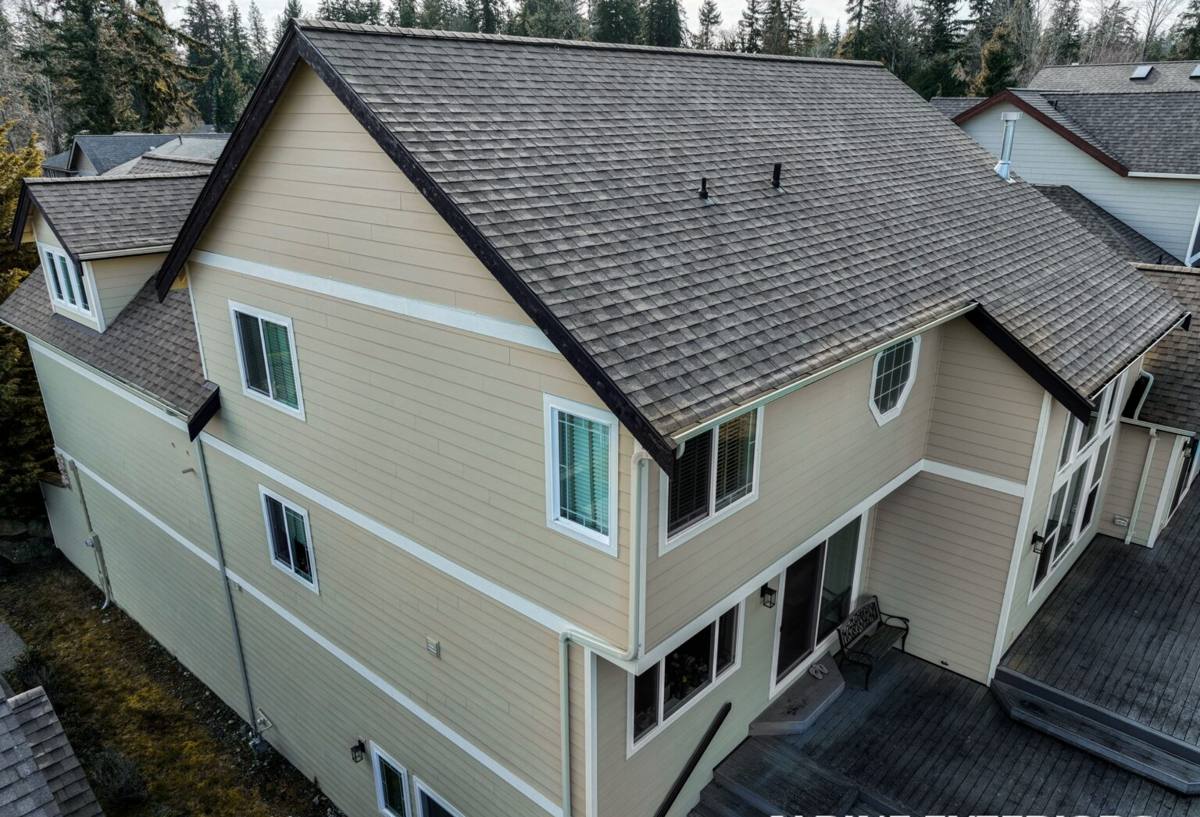
Signs a Deck Needs Replacement, Not Another Repair
A lot of Sehome homeowners call us after already replacing a few boards themselves, only to find the problem keeps coming back. That's usually a sign the issue is below the surface. Here's what tells us a deck has moved past the point of patching:
- Soft, spongy, or springy spots underfoot, especially near the house or at board ends
- Rust streaking from screws or nails, or fasteners that back out on their own
- A ledger board (where the deck attaches to the house) that's discolored, soft, or pulling away
- Persistent moss or dark staining that comes back within weeks of cleaning
- Wobble in the railing posts or stairs, which often points to compromised framing, not just loose hardware
- Visible gaps opening up between the house siding and the deck's ledger connection
- A musty smell coming from underneath the deck, which usually means trapped moisture and active decay
If it's one or two boards on an otherwise sound structure, repair makes sense. If it's the framing, ledger, or footings, replacement is almost always the more honest recommendation — patching a failing structure just delays the cost and adds risk.
What a Correct Deck Replacement Actually Involves
A deck replacement done right is a structural project, not a cosmetic one. The decking boards you see are the last thing installed, not the first thing to worry about.
Ledger Board and Flashing
The ledger board — the piece that bolts the deck to your house — is the single most important connection on the entire structure, and it's also the point most exposed to the kind of driving rain this area gets. Correct flashing detail here, installed so water is shed away from the house rather than trapped behind the ledger, is what keeps both your deck and your siding from rotting from the inside out. This is the detail we see missed most often on older decks in this neighborhood.
Framing, Footings, and Fasteners
Joists, beams, and posts need to be sized correctly for the deck's span and load, and footings need to sit below frost depth and bear on solid ground — not just whatever was convenient when the original deck went in. Given the salt air off the bay, we favor stainless or high-grade coated fasteners and hardware over standard galvanized wherever the deck is exposed, since standard coatings corrode noticeably faster this close to salt water.
Decking Material Choices
Once the structure is right, the decking surface itself is mostly a question of maintenance tolerance, moisture behavior, and budget. There's no universally "best" material — there's a best fit for how you use the deck and how much upkeep you want to do.
| Material | Moss & Moisture Behavior | Maintenance | Typical Lifespan |
|---|---|---|---|
| Pressure-treated wood | Absorbs moisture; needs sealing to resist moss and staining | Annual cleaning, periodic sealing/staining | 10–15 years with upkeep |
| Cedar | Naturally moisture-resistant, but still needs attention to prevent moss | Regular cleaning, sealing every 1–2 years | 15–20 years with care |
| Composite decking | Doesn't absorb water like wood, but can stay damp on the surface if not cleaned, letting moss take hold on grain-textured boards | Periodic washing; no staining or sealing | 25–30 years |
| PVC/capped polymer | Fully sealed surface; sheds moisture and resists moss better than any wood option | Occasional washing | 25–30+ years |
We're upfront with clients about trade-offs: composite and PVC cost more up front but remove most of the moss-and-moisture maintenance cycle that wood requires here. Wood costs less initially but only performs well if someone keeps up with cleaning and sealing on a real schedule — something that's easy to fall behind on with our wet stretches of the year.
Moss, Drainage, and Salt Air — Managing the Three Local Stressors
Beyond material choice, a few build details make a real difference in how well a deck holds up to Bellingham's climate:
- Proper board spacing so water drains through rather than pooling on the surface
- Grading and drainage under the deck so runoff doesn't sit against footings or posts
- Airflow underneath the structure, which helps everything dry out between rain events instead of staying damp
- Corrosion-resistant hardware anywhere the deck is exposed to salt-laden air off the bay
- Trimming back nearby vegetation where practical, since shaded, damp spots are where moss establishes first
None of these are exotic requirements — they're just details that matter more here than they would in a drier inland climate, and they're easy to skip if a crew isn't used to building for this specific combination of rain, moss, and salt exposure.
Permits and Code Considerations in Bellingham
Most full deck replacements in the City of Bellingham require a permit, particularly when the ledger connection, footings, or framing are being redone rather than just the surface boards. Permitted work gets inspected at key stages — typically the framing and the ledger/footing connections — which is a good thing for you as the homeowner, since it means someone besides your contractor is checking that the structural connections meet code before it's covered up. We handle the permit process as part of the job rather than leaving it for the homeowner to sort out separately.
Our Deck Replacement Process
- On-site assessment — we check the ledger, framing, footings, and decking to determine what's actually failing versus what's cosmetic
- Honest scope and options — we walk you through repair-versus-replace, material options, and what each realistically costs to maintain over time
- Permitting — we pull the necessary permits and schedule required inspections
- Removal — the old structure comes out, including anything hidden under the surface that turns out to be compromised
- Rebuild — correct ledger flashing, sized framing, code-depth footings, and corrosion-resistant hardware go in first
- Decking and railing installation — your chosen material is installed to proper spacing and drainage detail
- Final walkthrough — we go over the finished deck and what maintenance, if any, it needs going forward
Why Hiring a Crew That Already Works in Sehome Matters
A deck built to a generic spec sheet can still fail early in this climate if the crew installing it hasn't accounted for what Whatcom County weather actually does to a structure year over year. Crews who regularly work Sehome and the surrounding Bellingham neighborhoods know which fastener grades hold up near the bay, which flashing details actually keep water out of a ledger connection in a sustained rain, and which decking surfaces are going to fight moss versus which ones need constant babysitting. That familiarity shows up in fewer callbacks and a deck that's still solid well past the point a poorly built one would be showing rot.
It also matters for permitting — a local crew already knows the City of Bellingham's inspection process and what inspectors are looking for at the framing and ledger stage, so there are fewer surprises and delays.
What Deck Replacement Typically Costs
Every deck is different, so we don't quote pricing without seeing the site, but a few factors consistently drive the cost up or down:
| Factor | Effect on Cost |
|---|---|
| Deck size and height off grade | Larger and taller decks need more framing, more footings, and more labor |
| Decking material | Wood costs less upfront; composite and PVC cost more but need less ongoing maintenance spend |
| Extent of structural damage | Rotted framing or a failed ledger adds cost beyond a straightforward resurface |
| Site access | Tight lots or difficult grading can add labor and equipment time |
| Railings and stairs | Custom railing systems and multi-level stairs add material and labor |
As a rough sense of scale, most full deck replacements in this area run from the low thousands for a small, simple deck up into the five-figure range for larger or more complex structures — but the only way to give you a real number is to see the deck in person.
Ready for an Honest Look at Your Deck?
If your deck in Sehome is showing soft spots, recurring moss, rusted hardware, or just feels less solid than it used to, we're happy to come take a look and tell you straight whether it needs a repair or a full replacement. We offer free, no-pressure estimates — no obligation, just a clear assessment and honest options for your home.