 Bellingham
 Siding Installation in York: Built for This Neighborhood's Climate
York is one of Bellingham's older, established neighborhoods, and that means a lot of the housing stock here was built decades before anyone was thinking hard about moisture management, rainscreen gaps, or how a wall assembly actually dries out after a wet Whatcom County winter. If you own a home in York and you're looking at a siding replacement, you're not just picking a color and a material — you're deciding how well your house is going to shed water, resist moss, and hold up to salt-laden air rolling in off Bellingham Bay for the next several decades.
We install siding across Bellingham, and York jobs have their own personality. Mature tree canopy in parts of the neighborhood keeps siding shaded and slow to dry. Proximity to the water means airborne salt settles on exterior surfaces and accelerates corrosion on anything metal — fasteners, flashing, trim. And the long Pacific Northwest wet season means any gap in the water management plan doesn't just get tested once a year, it gets tested for months at a stretch. Getting siding installation right in York isn't about a fancier product — it's about respecting what this specific climate does to a house over time.
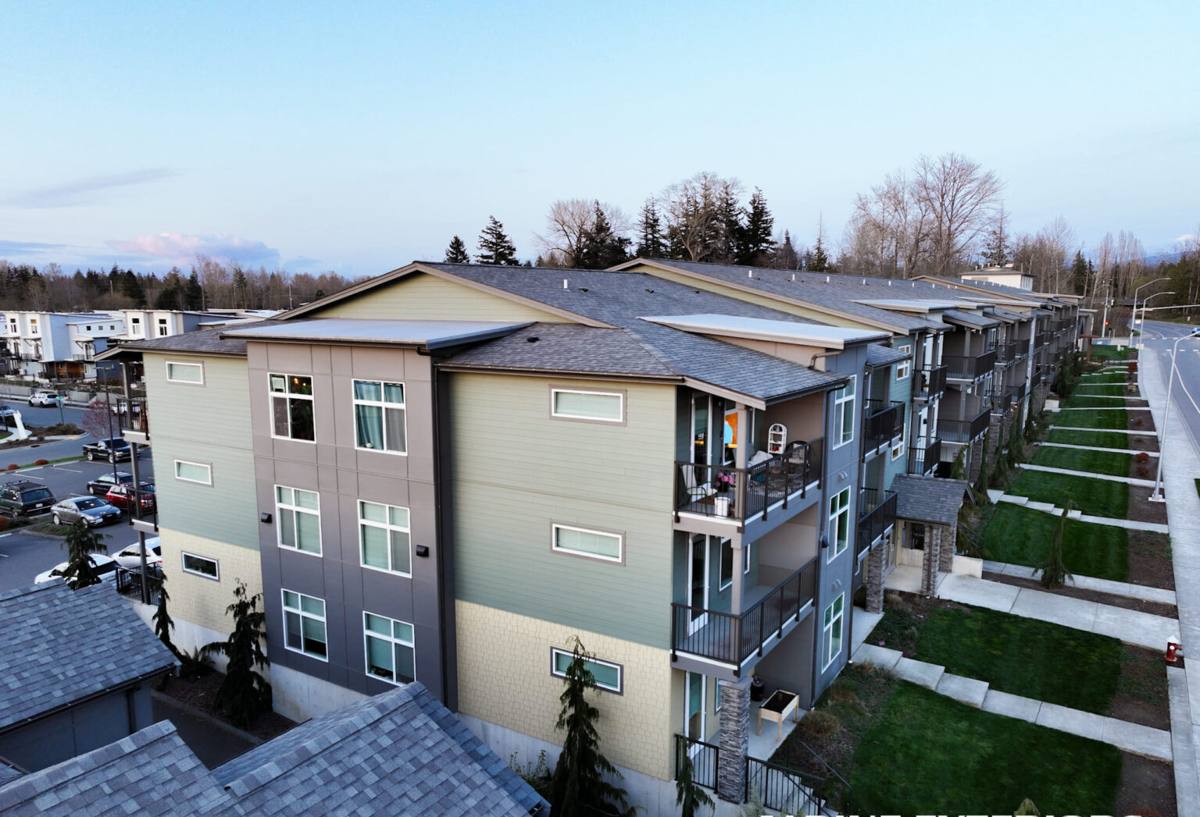
What This Climate Actually Does to Siding
Driving rain, not just rain
Bellingham doesn't just get a lot of rain — it gets wind-driven rain that comes in sideways, especially on exposed elevations. That matters because it pushes water into laps, seams, and fastener penetrations that would stay dry in a calmer climate. Siding installed with generous overlaps, correct flashing, and proper caulking joints holds up. Siding installed to a bare-minimum standard starts showing water intrusion at the seams within a few years.
Moss season is most of the year
In shaded, moisture-retentive spots — which describes a lot of York's tree-lined lots — moss and algae aren't a once-a-decade problem, they're a standing condition. Siding that stays damp for extended periods because of poor drainage or bad venting will grow moss faster than siding that's allowed to dry between rain events. The installation detail that controls this the most is the drainage plane behind the siding, not the surface material itself.
Salt air corrosion
Homes closer to Bellingham Bay deal with airborne salt settling on every exterior surface. Over years, that accelerates corrosion on exposed steel and lower-grade fasteners, which is why fastener selection and flashing material matter as much as the siding panel itself. A siding job that looks identical to one done inland can fail years earlier near the water if the hardware wasn't chosen with that exposure in mind.
Why James Hardie Fiber Cement Is What We Install
We install James Hardie fiber cement siding exclusively. We don't install vinyl, LP SmartSide, Cemplank, Allura, or unfinished cedar or spruce siding, and we think York homeowners deserve an honest explanation of why, not just a sales pitch for whatever we happen to carry.
Vinyl siding is inexpensive and low-maintenance in mild climates, but it's a thin plastic product that can warp in sustained heat, crack in cold snaps, and it relies almost entirely on trim and J-channel to manage water rather than the panel itself. LP SmartSide is a wood-strand product with a resin-treated surface that performs reasonably well when installation is flawless, but any breach in that surface treatment — a missed caulk joint, a cut edge left unsealed — gives moisture a path into a wood-based substrate, which is a bad combination in a climate this wet. Cemplank and Allura are also fiber cement, and they're not bad materials, but we've standardized on one product line so our crews master its specific installation details rather than splitting attention across several systems. Unfinished cedar and spruce look beautiful on day one and require a maintenance commitment — painting, sealing, re-caulking — that most homeowners underestimate until they're three years in and behind on it.
James Hardie fiber cement is non-combustible, dimensionally stable across our wet-to-dry swings, and comes with a factory-applied ColorPlus finish that's baked on rather than field-painted, which matters a lot in a climate where field-applied paint has fewer good drying windows per year. Hardie's HZ5 product line is engineered for climates with freeze-thaw cycling and sustained moisture exposure, which describes Whatcom County well. It's also backed by a strong, transferable manufacturer warranty — but that warranty is conditioned on installation to Hardie's published specifications, which is exactly why installation quality is the real subject of this page, not just the product choice.
What a Correct Siding Installation Actually Involves
The siding panel is the part homeowners see. The parts that determine whether it lasts 10 years or 40 are mostly hidden once the job is done. A correct installation in a climate like York's includes:
- Removal of old siding and inspection of the sheathing underneath for rot, soft spots, or existing moisture damage before anything new goes up
- A code-compliant weather-resistive barrier installed with proper shingle-lap orientation so water sheds downward and outward
- A drainage gap or rainscreen strategy so moisture that gets behind the siding has somewhere to go instead of sitting against the wall assembly
- Corrosion-resistant fasteners and flashing, sized and spaced to Hardie's specification, chosen with the region's salt-air exposure in mind
- Correct flashing at every window, door, and roof-to-wall intersection — the majority of siding failures start at these transitions, not in the field of the wall
- Proper clearance between the bottom of the siding and grade, decks, and roof lines, so splash-back and standing moisture don't sit against the material
- Factory-mitered or properly caulked joints at every butt seam, using sealant rated for exterior fiber cement
Skip any one of these and the siding can still look fine going up. The failures show up two, five, or ten years later — which is exactly why installation quality is hard for a homeowner to judge just by looking at a finished wall.
Our Process, Start to Finish
1. On-site assessment
We walk the exterior with you, look at existing siding condition, check for moisture damage or rot at trim and penetrations, and talk through what your home's exposure looks like — how much shade, how much wind-driven rain it takes on, how close it sits to the water.
2. Scope and product selection
We spec the right Hardie product line and profile for your home — lap siding, shingle-style panels, or a mix — and walk through ColorPlus finish options. We give you a clear, written estimate with no vague allowances.
3. Tear-off and substrate check
Old siding comes off, and we inspect the sheathing before covering anything up. If there's rot or water damage from a prior installation, we address it before new siding goes on — covering damaged substrate just hides a problem, it doesn't fix it.
4. Weather barrier and flashing
This is the step that determines long-term performance. We install the weather-resistive barrier and flashing to manage water at every seam, penetration, and transition, following Hardie's installation requirements to the letter — both for performance and to keep your warranty intact.
5. Siding installation
Panels go up with correct fastener type, spacing, and nailing pattern, proper overlap, and sealed joints. We maintain the clearances the product requires at grade, roof lines, and decks.
6. Final walkthrough
We walk the finished job with you, check every elevation, and make sure trim, caulking, and touch-up paint at cut edges are complete before we call it done.
Comparing Siding Materials for a York Climate
| Material | Moisture Performance Here | Maintenance | Typical Lifespan |
|---|---|---|---|
| James Hardie fiber cement | Excellent when installed to spec; stable in wet-dry cycling | Occasional wash; factory finish, no repainting for years | 30-50 years |
| Vinyl | Relies on trim/flashing, not the panel, to manage water; can warp/crack | Low, but limited repair options if damaged | 15-25 years |
| LP SmartSide | Wood-based; vulnerable if surface treatment is breached | Moderate; needs prompt attention to any surface damage | 20-30 years with diligent upkeep |
| Unfinished cedar/spruce | Handsome but absorbs moisture without upkeep | High; repainting/sealing on a recurring schedule | Highly maintenance-dependent |
Cost Factors for a York Siding Project
Every home is different, so we don't publish blanket pricing, but the main drivers of cost on a York job are consistent enough to explain up front:
| Factor | Why It Matters |
|---|---|
| Home size and number of elevations | More wall area and more corners/transitions means more material and more flashing detail work |
| Existing siding removal and substrate condition | Rot or water damage found under old siding needs repair before new siding goes on |
| Product line and profile | Lap width, shingle-style panels, and trim details all affect material and labor |
| Access and site conditions | Mature landscaping, tight lot lines, and multi-story walls affect scaffolding and staging |
| Trim and detail work | Window and door surrounds, corner boards, and fascia detail add labor time |
Signs Your York Home Needs New Siding
- Moss or dark streaking that returns quickly after cleaning
- Soft or spongy spots when you press on siding near the base of the wall
- Cracking, warping, or panels pulling away from the wall
- Peeling or bubbling paint that keeps recurring in the same spots
- Visible gaps at seams, corners, or around windows and doors
- Rising energy bills that suggest the wall assembly isn't performing the way it should
Why a Crew That Already Works in York Matters
Siding installation isn't one-size-fits-all, even within Bellingham. A crew that regularly works in York already understands the exposure patterns in this part of town — where the tree cover keeps things shaded and slow-drying, where lots sit close enough to the water that salt air is a real factor in hardware selection, and how the older housing stock here tends to be built underneath whatever siding is currently on it. That familiarity shows up in fewer surprises once tear-off starts and a more accurate estimate from the first walkthrough, because we're not guessing at conditions we've never seen before.
It also means we're not learning Whatcom County's rain patterns and moss cycles on your project. We plan installation timing around the wetter stretches of the year, sequence tear-off so your home isn't exposed to the elements longer than necessary, and build in the drainage details that this specific climate requires — not generic details borrowed from a drier region's spec sheet.
Warranty and What It Actually Protects
James Hardie's manufacturer warranty on ColorPlus finished products is strong and transferable to a future homeowner, which matters if you're thinking about resale. But that warranty is tied to installation meeting Hardie's published requirements — fastener type and spacing, clearances, flashing details, and finish care. A poor installation can void protection on a good product, which is another reason we treat installation process as the real deliverable, not just the siding panel itself.
If your York home's siding is showing its age, or you're planning ahead of a sale or a long stretch of Bellingham winters, we're happy to walk your property, look at what's really going on, and give you a straightforward, no-pressure estimate — just fill out the form below.