 Bellingham
 Birch Bay's Siding Takes a Different Kind of Beating
Birch Bay sits right on the water, and that changes what siding has to survive here compared to a home a few miles inland in Bellingham or Ferndale. Homes along the bay and the neighborhoods stepping back from the shoreline deal with salt-laden air, wind that drives rain sideways into wall assemblies, and long stretches of the year where surfaces simply don't dry out. Add the shade from mature evergreens on many lots, and you get a moss season that runs longer than almost anywhere else in Whatcom County. Siding repair out here isn't just about patching what's visibly damaged — it's about understanding why that damage happened in the first place and making sure the repair doesn't just fail again in two winters.
We work Birch Bay regularly, and the failure patterns we see are consistent enough that we can usually tell a homeowner what we'll find before we even get a ladder up.
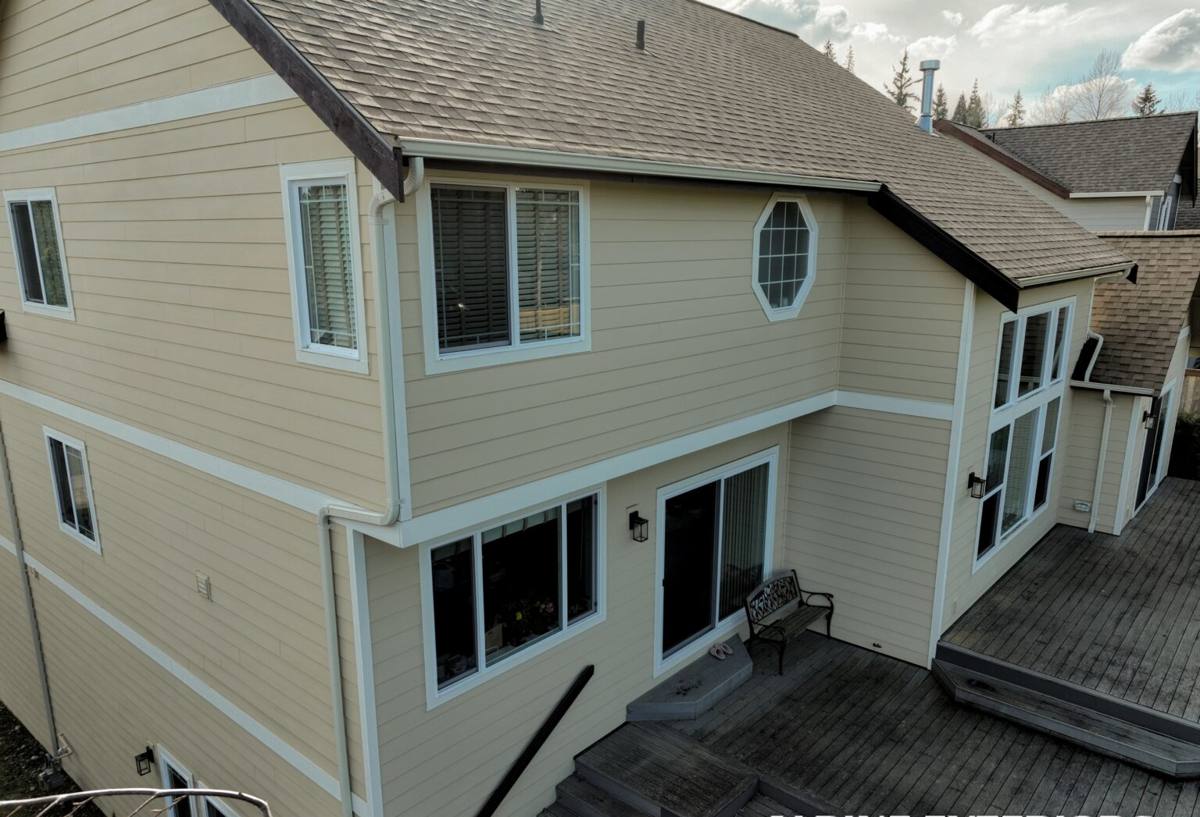
What Salt Air, Wind-Driven Rain, and Moss Actually Do to Siding
Salt Air
Airborne salt doesn't just sit on the surface — it accelerates the breakdown of caulk, fasteners, and any siding material that isn't formulated to resist it. Cheaper trim and fastener systems corrode faster near the water, and once a fastener starts to fail, the siding panel around it loses its grip and starts working loose in wind.
Wind-Driven Rain
Birch Bay gets weather straight off the water with little to break it up. Rain doesn't fall straight down here — it gets pushed sideways into every seam, lap joint, and penetration. Siding systems that rely on face-sealing (caulk alone, rather than proper lap and flashing details) tend to let water behind the cladding over time, which shows up later as soft trim, staining, or rot in the sheathing behind the siding.
Moss and Sustained Moisture
Shaded, north-facing walls and roof lines that stay damp for days after a storm create ideal conditions for moss and algae growth. Beyond the cosmetic green streaking, moss holds moisture against the siding surface far longer than open air ever would, which is exactly the condition that causes paint failure, substrate softening, and, in wood-based products, rot.
How This Plays Out by Siding Type
| Siding Type | Common Birch Bay Failure Mode | Repair Difficulty |
|---|---|---|
| Vinyl | Cracking in cold snaps, warping near dark trim, wind lifting loose panels | Often needs full panel replacement — color-matching old vinyl is difficult once faded |
| Cedar / untreated wood | Moss-driven rot, split boards, paint failure on shaded elevations | Labor-intensive; hidden rot is frequently worse than the surface suggests |
| Primed spruce / OSB-based panel siding | Swelling at edges and seams where moisture gets behind the face | Repairs rarely hold long-term once the substrate has taken on water |
| James Hardie fiber cement | Isolated impact damage, caulk failure at seams, fastener issues from poor original install | Straightforward — the material itself doesn't rot or absorb water like wood-based products |
Signs a Birch Bay Home Needs Siding Repair Now
- Soft or spongy spots when you press on the siding, especially near the bottom courses or around windows
- Persistent moss or algae streaking that comes back within weeks of cleaning
- Visible gaps, cracks, or warping at lap joints and corner trim
- Peeling or bubbling paint concentrated on one elevation, usually the side facing the water or shaded by trees
- Staining on interior walls or ceilings near exterior walls, which often means water is already behind the siding
- Fastener heads showing rust bleed or siding that has started to work loose in wind
- A musty smell near exterior walls that wasn't there before
Any one of these on its own might just need a small patch. Several together, especially on the same elevation, usually mean water has been getting behind the cladding for a while and the repair needs to address the water management underneath, not just the visible surface.
Repair vs. Replacement: How We Make the Call
Not every damaged section needs a full re-side, and we don't push replacement when a targeted repair will genuinely hold up. The decision comes down to a few honest questions:
| Factor | Leans Toward Repair | Leans Toward Replacement |
|---|---|---|
| Extent of damage | Isolated to one or two boards/panels | Spread across a full wall or multiple elevations |
| Underlying sheathing | Dry, solid when probed | Soft, damp, or showing rot |
| Age and material of existing siding | Newer Hardie or sound material still under warranty | Original material is wood-based, vinyl, or near end of service life |
| Original installation quality | Flashing and water management done correctly | Missing kick-out flashing, poor caulking, panels installed too tight to the ground |
| Cause of failure | One-time impact or isolated fastener failure | Systemic moisture intrusion likely to keep recurring |
We'll always tell you which category your home falls into and why, including when the honest answer is that a repair now will buy you a few good years before a larger project makes sense.
What a Correct Repair Actually Involves
A repair that's just cosmetic patching over a moisture problem doesn't hold up in this climate. Done right, a Birch Bay siding repair includes:
- Removing enough surrounding material to see what's actually happening behind the siding — not just the board that's visibly damaged.
- Checking the sheathing and framing underneath for soft spots, staining, or rot, and addressing any of that before new siding goes back on.
- Correcting the water management detail that caused the failure — proper flashing at windows, doors, and horizontal trim; correct lap sequencing; house wrap integrity restored where it was disturbed.
- Matching materials appropriately. When we're repairing a home already sided in James Hardie, we match the existing profile and ColorPlus finish. When we're repairing a section of a different material, we'll talk through whether that spot makes sense as a like-for-like patch or an opportunity to start transitioning toward Hardie.
- Fastening and sealing to spec — using the right fastener type and spacing for a coastal environment, and sealing seams in a way that sheds water rather than trapping it.
Why We Only Work in James Hardie Fiber Cement
We don't install vinyl, LP SmartSide, cedar, primed spruce, or other fiber cement brands. That's a deliberate standard, not a sales pitch, and it matters most in a place like Birch Bay where the climate punishes shortcuts. Fiber cement doesn't swell, rot, or feed moss the way wood-based products can, and it holds paint and its factory finish far longer in salt air than vinyl or bare wood trim. James Hardie's HZ5 product line in particular is engineered for the kind of freeze-thaw and moisture cycling this region sees. When we do a repair on a Hardie home, we're working with a material that was built to take this weather in the first place — which is a big part of why those repairs tend to be simpler and more durable than repairs on wood-based or vinyl siding.
If your home currently has a different siding material and repair after repair isn't holding, that's usually the underlying reason, not bad luck.
Our Process for Birch Bay Jobs
Being a Bellingham-based crew that already works Birch Bay regularly means a few practical things for you:
- We know the typical exposure patterns for waterfront and near-waterfront lots and check those spots first
- We're familiar with the moss and drainage issues common to shaded, tree-covered properties set back from the water
- Scheduling and site visits aren't a special trip — we're already in the area on a regular basis
- We give straight answers about whether a repair will genuinely last in this environment, rather than guessing based on inland assumptions
Maintenance That Extends the Repair
A well-done repair still needs some upkeep in a coastal, moss-prone environment. Rinsing salt residue off siding periodically, keeping gutters clear so water isn't sheeting down the wall face, trimming back vegetation that's shading and dampening a wall, and treating moss growth before it establishes all extend the life of both repaired and original siding. None of this is complicated, but it's the difference between a repair that lasts a decade and one that needs revisiting in two years.
If you're seeing soft spots, moss you can't keep ahead of, or siding that's been patched before without really getting fixed, we're happy to take a look. We'll give you a straightforward, no-pressure estimate and tell you honestly whether you're looking at a repair or something bigger — use the form below to get started.