 Bellingham
 Siding Repair Built for Edgemoor's Coastal Climate
Edgemoor sits close to Bellingham Bay, with wooded, often shaded lots and a front-row seat to whatever weather rolls in off the water. That's part of what makes the neighborhood desirable, and it's also exactly why siding here takes more punishment than siding in a drier, more sheltered part of Whatcom County. Salt-laden air, sideways rain off the bay, and long stretches of damp shade all work on a home's exterior year-round, not just during a big storm.
When we get a call about siding repair in Edgemoor, we're rarely looking at one isolated problem. Usually there's a combination of factors — a failed caulk joint here, a shaded north wall growing moss there, a piece of trim that's been absorbing rain for a few seasons too long. Repairing siding correctly in this environment means understanding how those factors interact, not just patching whatever's visible.
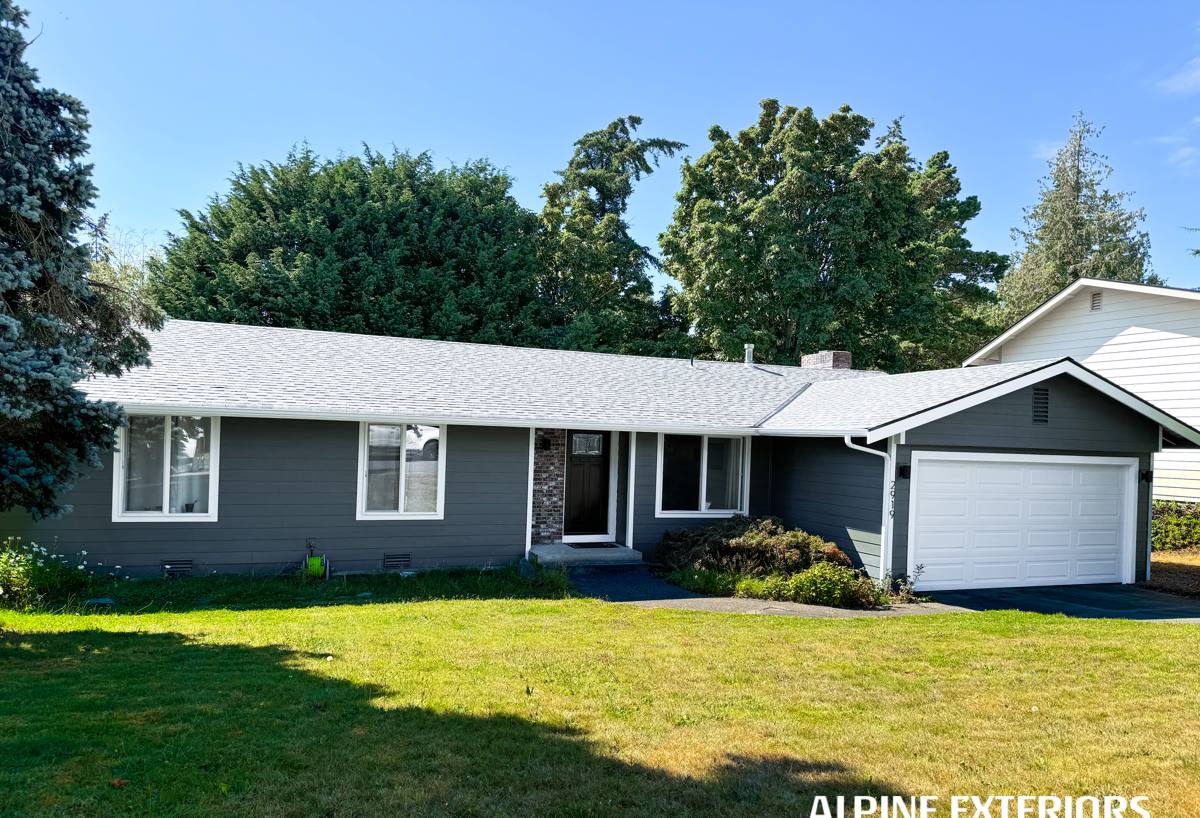
Signs Your Edgemoor Home Needs Siding Repair
Some siding problems announce themselves. Others sit quietly behind the surface until they've done real damage. Here's what we tell Edgemoor homeowners to watch for between routine inspections:
- Soft or spongy spots when you press on siding, especially near the bottom edges and around windows
- Visible cracking, splitting, or warping in individual boards or panels
- Paint that's bubbling, peeling, or failing faster than it should
- Dark streaking, green or black film, or persistent moss growth on shaded or north-facing walls
- Gaps opening up at seams, corners, or where siding meets trim, window frames, or flashing
- A musty smell near exterior walls inside the home, which often points to moisture already past the siding
- Nail heads popping or fasteners that look rusted or loose
Any one of these on its own might be minor. Several showing up in the same area of the house, especially a wall that faces prevailing wind and rain off the bay, is a sign the siding's moisture defenses have been compromised and it's worth having someone look before it spreads.
Why Edgemoor's Climate Is Tougher on Siding Than You'd Think
Salt Air and Corrosion
Proximity to Bellingham Bay means a steady low-level exposure to salt in the air, which accelerates corrosion of exposed metal fasteners, flashing, and trim hardware. Over years, that corrosion can loosen fastening points and compromise the metal flashing details that keep water out around windows, doors, and roof-to-wall transitions. Siding itself may look fine while the hardware holding it in place is quietly failing underneath.
Driving Rain and Wind-Driven Moisture
Bellingham gets a lot of rain, and on exposed or elevated lots like many in Edgemoor, that rain often arrives at an angle rather than falling straight down. Wind-driven rain finds its way into gaps and seams that would stay dry in calmer conditions, which is why proper flashing, house wrap, and caulking at every joint matter more here than they would in a more sheltered inland location.
The Long Moss Season
Whatcom County's moss season isn't a few weeks — it's most of the year on shaded, north-facing, or tree-covered walls. Moss and algae hold moisture directly against the siding surface, which keeps that area of the wall damp far longer than it should be. On absorbent materials that can mean slow, hidden water damage; even on more moisture-resistant materials, prolonged dampness accelerates paint failure and surface breakdown.
What a Correct Siding Repair Actually Involves
Diagnosing the Cause, Not Just the Symptom
Replacing a damaged board without figuring out why it failed usually means repairing the same spot again in a few years. A proper repair starts with finding the actual entry point — a failed seal, a flashing gap, a caulking joint that gave out — and fixing that root cause alongside the visible damage. That often means pulling back more siding than a homeowner expects, checking the house wrap and sheathing underneath, and confirming there's no hidden rot before anything new goes back up.
Matching Material and Finish
Repairs that don't match the surrounding siding in profile, texture, or color stand out immediately, and mismatched materials can also behave differently in moisture and temperature, creating new stress points at the seams between old and new. Getting the match right takes knowing what's currently on the wall and sourcing a genuine replacement, not an approximate substitute.
Sealing and Flashing Details
Given how much of Edgemoor's siding damage traces back to wind-driven rain and salt exposure, the flashing and sealant work around a repair matters as much as the siding itself. That means correct flashing at every horizontal joint, properly lapped house wrap, and sealant rated to hold up in a marine climate rather than whatever's cheapest at the hardware store.
Repair or Replace? How We Help You Decide
Not every siding problem calls for full replacement, and not every problem is a quick patch. We walk Edgemoor homeowners through the honest tradeoffs based on what we actually find on the wall:
| Situation | Usually Points To | Why |
|---|---|---|
| Isolated damage on one or two boards, sound siding elsewhere | Targeted repair | The rest of the siding and its moisture barrier are still doing their job |
| Repeated failures in the same spot over the years | Repair plus a flashing/detail fix | A recurring problem usually means an unresolved water path, not bad luck |
| Widespread rot, warping, or moisture damage across multiple walls | Full or partial replacement | Patching individual spots won't address a system-wide moisture problem |
| Aging non-Hardie siding nearing the end of its service life | Replacement conversation | Repairing failing material short-term often costs more than replacing it once, right |
| Cosmetic wear only — chalking, minor fading, light moss film | Cleaning and maintenance, not repair | No underlying damage yet; a repair would be unnecessary spend |
We'll always tell you plainly which category your siding falls into, including when the honest answer is that you don't need us yet — just a good exterior cleaning and another look next season.
Our Process for Edgemoor Siding Repairs
- Inspection. We look at the damaged area and the surrounding siding, checking fasteners, seams, flashing, and any signs of moisture behind the surface.
- Diagnosis. We identify the actual cause of the failure, not just the visible symptom, so the repair addresses the source of the problem.
- Honest scope. We tell you what's actually needed — a simple patch, a broader repair, or a conversation about replacement — before any work starts.
- Repair. Damaged material is removed, the sheathing and house wrap underneath are checked and corrected if needed, and new material is fitted, fastened, and finished to match.
- Sealing and flashing. Every seam and transition gets proper flashing and sealant rated for our marine climate, not just cosmetic caulk.
- Final check. We walk the repair with you so you know exactly what was done and why, and what to watch for going forward.
Why We Repair — and Recommend — James Hardie Fiber Cement
We install exclusively James Hardie fiber cement siding, and that standard shapes how we approach repairs too. If your home already has Hardie siding, repairs are usually straightforward: it's a stable, non-combustible material with a factory-applied ColorPlus finish, so a well-matched repair blends in and holds up the same way the surrounding siding does.
If your home has vinyl, LP SmartSide, cedar, or another material, we'll still repair it honestly and correctly — patching a functioning wall doesn't require ripping out material that's holding up fine. But when damage is widespread, or a homeowner is facing the same repair for the second or third time, we'll be straight with you: those materials each carry their own long-term maintenance burden or moisture sensitivity, and in a climate like Bellingham's — with the bay's salt air, driving rain, and a moss season that barely lets up — that burden shows up faster than it would somewhere drier. That's the point where we'll talk through what a Hardie replacement would mean for your home, not because we're pushing a product, but because it's what we'd put on our own houses in this climate.
Why Local Experience in Edgemoor Matters
A crew that already works in Edgemoor knows what these homes typically deal with — which walls take the brunt of the wind and rain off the bay, how much moss buildup is normal versus a warning sign, and how wooded, shaded lots change the maintenance picture compared to a more open, sun-exposed property. That local pattern recognition shortens the diagnosis step and helps avoid guesswork.
It also means showing up prepared for how Bellingham weather actually behaves — scheduling around wet stretches, protecting an open wall properly if rain moves in mid-repair, and not leaving a home exposed longer than necessary. A contractor unfamiliar with Whatcom County's rain patterns can turn a two-day repair into a moisture problem of its own.
What Siding Repair Typically Costs to Consider
Every repair is different, but the scope of the work generally comes down to a few factors:
| Factor | Why It Affects Cost |
|---|---|
| Extent of hidden damage | Rot found behind the siding often means replacing sheathing or house wrap, not just the visible boards |
| Material match | Sourcing an exact color and profile match takes more time than using whatever's on hand |
| Accessibility | Second-story walls, steep lots, or tight tree cover add time and equipment needs |
| Flashing and detail work | Correcting a failed flashing detail properly costs more upfront than a cosmetic patch, but prevents a repeat call |
| Number of affected areas | One isolated spot is a different job than damage spread across several walls |
We'll always give you a clear, itemized picture of what we're seeing and what it will take to fix it correctly — no vague estimates and no upselling repairs you don't need.
Get a Straight Answer on Your Edgemoor Siding
If you're seeing soft spots, moss buildup, or gaps opening up on your Edgemoor home's siding, it's worth having a second set of eyes on it before the next round of Bellingham rain finds its way in. We offer free, no-pressure estimates — we'll tell you honestly whether you need a repair, a bigger conversation about replacement, or nothing at all right now. Use the form below to get started.