 Bellingham
 Why Cordata's Climate Is Harder on Siding Than It Looks
Cordata sits far enough inland from downtown Bellingham that homeowners sometimes assume they're shielded from the coastal weather that batters houses closer to the water. In practice, Whatcom County's marine air moves inland easily, and Cordata homes still deal with salt-laden moisture, near-constant winter rain, and shaded, damp microclimates created by mature landscaping and close-set rooflines. The result is siding that looks fine from the curb but is quietly failing at the seams, the bottom courses, and anywhere two materials meet.
Three conditions do most of the damage here, and any siding replacement plan for this neighborhood has to be built around all three, not just the obvious one.
Salt Air and Slow Corrosion
Salt-tinged marine air corrodes fasteners, staples, and thin metal flashing faster than dry-climate installations ever experience. On older homes this shows up as rust streaking below nail heads or staining around window trim — a sign that the fastener underneath has already started to fail, well before the siding face shows visible damage.
Driving Rain and Wind-Driven Moisture
Bellingham's rain rarely falls straight down. Wind off the Sound and the Nooksack valley pushes rain sideways into wall assemblies, forcing water behind laps, into butt joints, and up under trim edges that were caulked but never properly flashed. Siding that was installed to shed water only from directly above will leak here, sometimes for years, before the damage becomes visible on the interior.
A Long Moss and Mildew Season
Cordata's tree cover and the region's extended damp season keep siding wet longer than open, sun-exposed lots. Moss and algae take hold on north-facing walls and shaded elevations, and on wood or wood-composite products that moisture works its way into the substrate underneath the growth, softening it from the inside even while the surface still looks paintable.
Signs a Cordata Home Needs Replacement, Not Another Repair
Not every siding problem calls for a full tear-off. But in this climate, patch repairs on aging siding often just delay a bigger job while the underlying wall assembly keeps absorbing moisture. Here's how we tell the difference on a walkthrough.
- Soft, spongy spots when pressed, especially near the bottom few feet of a wall or below window sills
- Bubbling or peeling paint that keeps returning within a year or two of repainting
- Persistent moss or dark staining that comes back within one season of cleaning
- Visible gaps, warping, or delamination at seams and corner boards
- Rusty streaking around nail heads or fastener locations
- Musty smell or soft drywall on interior walls that back onto exterior siding
- Siding that's original to a home built before better weather-resistive barrier practices were standard
If two or more of these show up during an inspection, we typically recommend planning for full replacement on that elevation rather than continuing to spot-patch.
What a Correct Siding Replacement Actually Involves
Siding is a system, not a single layer. A replacement done right addresses everything behind the visible surface, because that's where Cordata's moisture problems actually start.
Full Tear-Off and Substrate Inspection
We remove the old siding completely rather than covering over it, because covering over hides exactly the kind of hidden rot and fastener corrosion this climate produces. Any soft sheathing or framing found underneath gets repaired before anything new goes back on — patching over compromised wood only guarantees a repeat failure a few years later.
Weather-Resistive Barrier and Flashing
A new, continuous weather-resistive barrier goes down first, with proper overlap and integration at every penetration — windows, doors, hose bibs, vents, and light fixtures. Flashing gets installed above windows, at horizontal trim, and anywhere two planes meet, so wind-driven rain has a drainage path out of the wall instead of a path in.
Correct Fastening and Clearances
Fastener choice and placement matter more here than in drier climates. We use corrosion-resistant fasteners set to the manufacturer's spec, and we keep proper clearance between the bottom of the siding and grade, decks, and roof lines so water has nowhere to wick up into the material.
Factory-Finished Material
Wherever possible we use factory-applied finishes rather than field-painted siding. A factory finish cures under controlled conditions and bonds more consistently than paint applied on-site in variable weather — which matters in a place where you rarely get a long stretch of dry, moderate-temperature days to paint in.
Why We Install Only James Hardie Fiber Cement
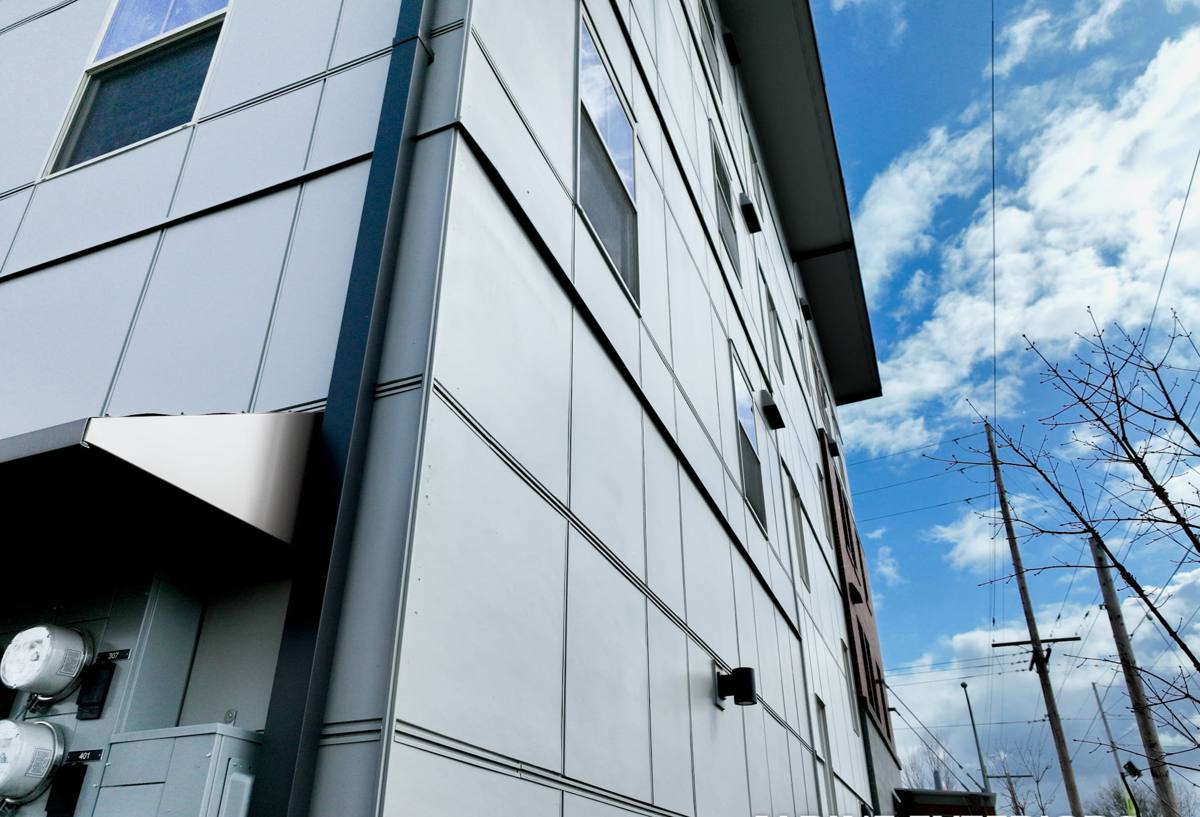
We standardized on James Hardie fiber cement siding for every replacement job, including here in Cordata, and we don't install vinyl, LP SmartSide, or wood siding as alternatives. That's a deliberate call based on how those products perform against the specific conditions above.
Fiber cement doesn't feed mold or moss growth the way wood-based products can, since there's no organic wood fiber at the surface for spores to take hold in. It's non-combustible, which matters given the wildfire smoke seasons Whatcom County has seen in recent summers. And Hardie's ColorPlus factory finish is baked on and warranted separately from the substrate, so you're not relying on field-applied paint to hold up through a wet Bellingham winter.
James Hardie also makes climate-engineered product lines (the HZ5 and HZ10 designations) formulated for specific moisture and freeze-thaw conditions across the country. For the Pacific Northwest, that means a formulation built around sustained moisture exposure rather than dry-climate assumptions — which lines up directly with what Cordata's rain and shade actually demand.
Comparing Siding Approaches for a Home Like This
| Factor | Vinyl | Wood / Engineered Wood | James Hardie Fiber Cement |
|---|---|---|---|
| Moisture resistance | Sheds water but seams and J-channels can trap it behind the panel | Absorbs moisture at cut edges and damaged coating | Resists moisture absorption; engineered for wet climates |
| Moss and algae susceptibility | Low growth on the panel itself, but traps moisture that feeds growth underneath | High — organic material supports growth directly | Low — non-organic substrate |
| Finish durability | Color molded in, can fade and become brittle over time | Field-applied paint, needs recoating on a regular cycle | Factory-applied finish with its own warranty coverage |
| Fire resistance | Combustible | Combustible | Non-combustible |
| Typical lifespan when installed to spec | 20-30 years | 15-25 years, shorter with maintenance gaps | 30+ years |
This table reflects general product behavior, not a claim about any specific competitor's installation. The real-world difference almost always comes down to whether the underlying wall assembly — the barrier, flashing, and fastening — was done correctly, regardless of which siding sits on top of it.
Our Process for a Cordata Siding Replacement
1. On-Site Walkthrough and Assessment
We inspect every elevation, paying particular attention to north- and west-facing walls where moss and wind-driven rain tend to concentrate, and we check trim, window flashing, and any areas near grade or decking where moisture collects.
2. Written Scope and Estimate
You get a clear, itemized estimate covering tear-off, any substrate repair, the weather-resistive barrier and flashing package, material and color selection, and installation — no vague allowances buried in the total.
3. Tear-Off and Repair
Old siding comes off, sheathing and framing get inspected, and any soft or damaged wood is replaced before anything new goes up.
4. Barrier, Flashing, and Install
New weather-resistive barrier, flashing at every penetration, and Hardie siding installed to manufacturer clearance and fastening specs.
5. Final Walkthrough
We walk the finished job with you, check caulking and trim details up close, and make sure the color and finish match what was ordered before we consider the job done.
What to Ask Before Hiring a Crew for This Kind of Work
Siding replacement is easy to get away with doing poorly, because the mistakes that cause the most damage — a missing flashing detail, a skipped barrier overlap — are invisible once the siding goes back on. Use this checklist when comparing bids.
- Do they inspect and repair sheathing, or just install over whatever is underneath?
- Do they specify the weather-resistive barrier and flashing details in writing, not just "siding install"?
- Are they factory-certified or specifically trained on the product they're proposing to install?
- Do they carry current liability insurance and workers' compensation coverage?
- Can they explain how their approach accounts for driving rain and shaded, damp elevations specifically?
- Is the warranty structure clear — what's covered by the manufacturer versus the installer?
Why Local Experience in Cordata Specifically Matters
A siding crew that already works this part of Bellingham has seen how these houses actually age — which elevations moss first, where the wind pushes rain hardest on a typical lot, and which older tract-built homes in the area tend to have thinner original weather barriers. That's the kind of pattern recognition that shows up in better flashing decisions and fewer callbacks, not in anything you can put in a brochure. It's also why we scope every Cordata estimate in person rather than from a satellite photo — the shade, slope, and exposure vary block to block even within one neighborhood.
Get a Straight Answer on Your Siding
If your Cordata home's siding is past patching or you're just not sure which category it falls into, we're glad to take a look. Use the form below to request a free, no-pressure estimate — we'll walk the exterior with you, point out what we actually see, and give you a straightforward recommendation either way.