 Bellingham
 Building Decks for Silver Beach's Particular Conditions
Silver Beach sits in one of Bellingham's more wooded, lake-adjacent pockets, and that setting shapes what a deck out here actually has to withstand. Mature tree cover means more shade on the structure through most of the year, which means slower drying after every rain. Add in Whatcom County's long wet season and the general moss pressure that comes with any shaded, humid corner of the Pacific Northwest, and you've got a set of conditions that reward good building decisions and punish shortcuts fast. A deck built the same way you'd build one in a dry, sunny climate will show problems here years before it should.
This page is about what a custom deck needs to hold up in this specific part of Bellingham — not a generic overview of decking. If you're planning a new deck, replacing an old one, or trying to figure out why your current deck is graying, sagging, or growing moss faster than it should, this is written for that conversation.
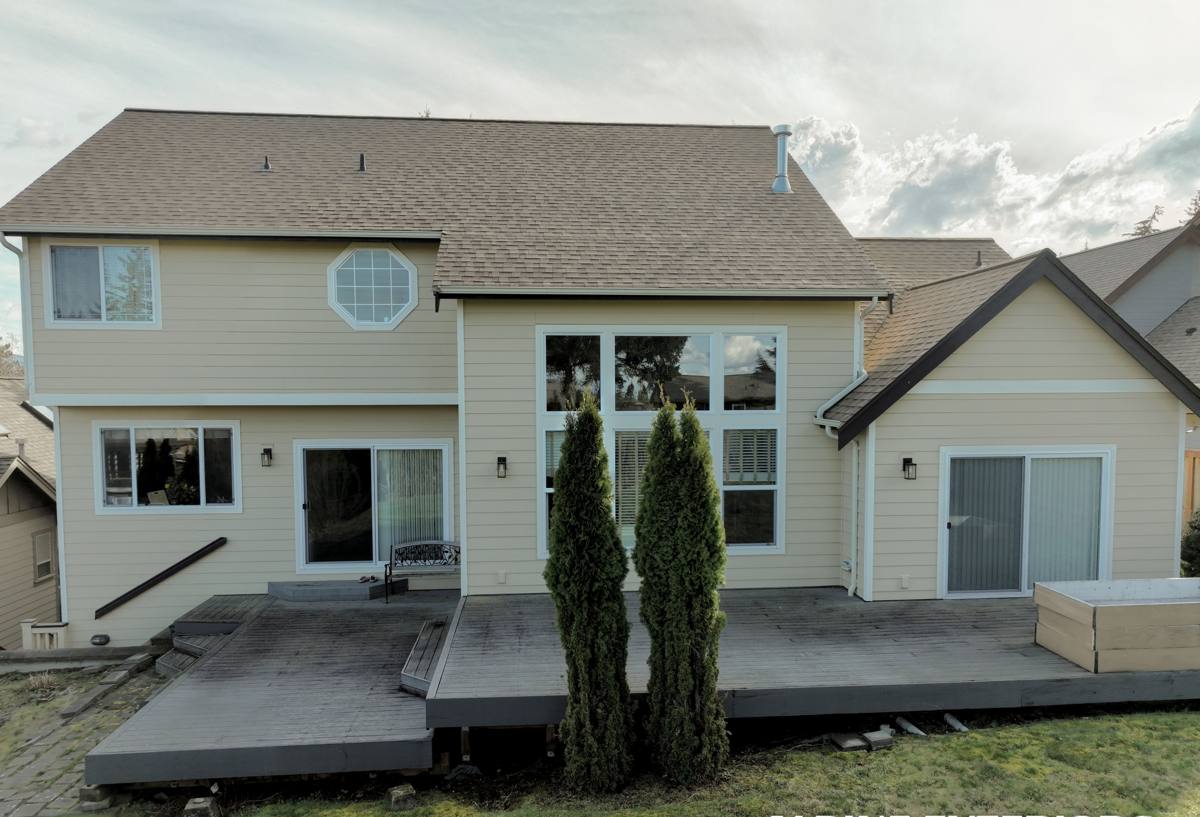
What Shade, Rain, and Moss Actually Do to a Deck
Moisture is the enemy of almost every deck problem we see. It doesn't usually fail a deck outright — it works slowly, and the damage shows up as a series of smaller issues that compound:
- Slow drying cycles. A deck under tree canopy or in a shaded yard can stay damp for days after a storm instead of hours. That extended wet time is exactly what wood rot and mildew need.
- Moss and algae buildup. Moss doesn't just look bad — it holds moisture against the decking surface, blocks airflow at board gaps, and turns a walking surface slick and genuinely dangerous when wet.
- Fastener corrosion. Standard screws and nails rust in this kind of sustained damp environment, which stains the decking, weakens the connection, and eventually needs to be dug out and replaced.
- Ledger and framing rot. The ledger board — where the deck attaches to the house — is the single most common failure point on older Bellingham-area decks, almost always because of poor flashing letting water behind the siding.
- Footing movement. Whatcom County soils that stay saturated for months at a time can shift or heave footings that weren't set to the correct depth and bearing.
None of this means a deck in Silver Beach can't last decades — it means the building details matter more here than they would in a drier climate, and cutting corners on any one of them shortens the deck's life significantly.
Choosing Decking Material for a Shaded, Wet Lot
There's no single "best" decking material — there's a best material for your yard, your budget, and how much upkeep you're willing to do. In a shaded, moisture-heavy setting like Silver Beach, we weigh those trade-offs a little differently than we would on an open, sunny lot.
| Material | How It Handles Shade & Moisture | Maintenance | Typical Lifespan |
|---|---|---|---|
| Pressure-treated wood | Needs regular cleaning to prevent moss and algae buildup in shaded spots; performs fine if sealed and maintained on schedule | Annual cleaning, re-sealing every 2-3 years | 15-20 years with upkeep |
| Cedar | Naturally more rot- and insect-resistant, but still needs finish maintenance in constant shade to prevent graying and moss | Cleaning and finish renewal every 2-3 years | 20-25 years with upkeep |
| Composite decking | Doesn't rot or absorb water like wood, but can still grow surface algae/moss in deep shade — needs periodic washing | Occasional washing, no sealing or staining | 25-30+ years |
| PVC/capped decking | Fully moisture-resistant surface, least hospitable to moss and algae of the common options | Occasional washing | Manufacturer warranties often 25-50 years |
We'll walk you through actual product lines and pricing during a site visit rather than quoting numbers that don't mean much without seeing your yard, but as a general pattern: composite and capped boards cost more upfront and less over time in a shaded, damp setting, because they sidestep the moss-and-rot maintenance cycle that wood requires. Wood costs less to install and can look great, but only if you're realistic about the sealing and cleaning schedule it needs here. We're happy to build with either — our job is to make sure you understand the trade-off before you decide, not to steer you toward whatever's easiest for us to install.
A Note on Ground-Level and Low Decks
Low-to-grade decks are popular and often the right call on a sloped or wooded lot, but they're also the decks most prone to trapped moisture and poor airflow underneath — which is exactly the combination that accelerates rot in a shaded yard. If your site calls for a low deck, the framing ventilation and ground clearance details matter even more than usual, and we plan for that at the design stage rather than trying to fix airflow problems after the fact.
Framing, Footings, and Flashing: The Parts You Don't See
A deck's finish surface gets all the attention, but the structure underneath is what determines whether it's still solid in fifteen years. In a wet, shaded setting like Silver Beach, three details matter more than anywhere else on the build:
Footings Set for Local Ground Conditions
Footings need to be sized and set to the depth required for the soil and frost conditions on your specific lot, not just poured to whatever's fastest. Saturated Whatcom County soil that isn't properly drained around the footing can lead to movement over time, which shows up later as a deck that's started to rack, squeak, or pull away from the house.
Ledger Flashing Done Right
Where the deck ties into the house is the single spot most likely to leak if it's flashed wrong. Proper flashing — installed correctly under the siding or house wrap, not just caulked over the top — is non-negotiable on every deck we attach to a structure. This is also the detail most commonly done poorly on older decks we get called to repair.
Framing That Can Actually Dry Out
Joists, beams, and ledger boards need airflow to shed the moisture they inevitably pick up in this climate. That means correct joist spacing, proper gaps at board ends, and avoiding framing choices that trap water against wood with nowhere to go.
Fasteners and Hardware That Hold Up in This Climate
Standard hardware store fasteners are a false economy on a deck that's going to sit in shade and damp for most of the year. We build with corrosion-resistant, code-rated structural hardware — hot-dip galvanized or stainless connectors, and fasteners rated for the decking material being used — because the alternative is hardware that rusts, stains the wood around it, and loosens years before the decking itself is due for replacement. This is one of those details that costs a little more on day one and saves a full hardware replacement job down the road.
How the Project Works, Start to Finish
- Site visit and design conversation. We look at your yard's sun exposure, drainage, slope, and how you actually plan to use the space, then talk through material and layout options honestly.
- Plans and permitting. Most new decks and significant rebuilds in Bellingham require a permit. We handle the plan details needed for that process so you're not stuck figuring out city requirements on your own.
- Site prep and footings. Layout, excavation, and footings set to the depth and bearing your lot requires.
- Framing. Structural framing with attention to ledger flashing, joist spacing, and drainage/airflow underneath.
- Decking and railing installation. Surface material and railing installed to your chosen spec, with fastening details built for long-term performance in this climate, not just a clean first-year look.
- Final walkthrough. We go over the finished deck with you, including what maintenance it'll actually need and on what schedule.
Keeping a Silver Beach Deck in Good Shape Year-Round
Whatever material you choose, a little regular attention prevents almost every major deck problem we get called out for. This is the maintenance routine we'd recommend for a shaded, damp lot in this part of Bellingham:
- Sweep debris — leaves, needles, seed pods — off the deck regularly, especially in fall; trapped organic matter is what moss and rot feed on.
- Wash the deck surface at least once or twice a year to remove algae and moss buildup before it takes hold.
- Check the gaps between boards each spring and clear out compacted debris so water can drain instead of pooling.
- Inspect the ledger board area where the deck meets the house for any signs of staining, softness, or gaps in the flashing.
- For wood decks, keep sealant or stain on schedule — don't let it wear through and expose bare wood to the wet season.
- Look under the deck once a year for framing that's staying wet longer than it should, which usually points to a drainage or airflow issue worth addressing early.
Why a Crew That Already Works This Neighborhood Makes a Difference
A deck built with generic, one-size-fits-all specs can look fine the day it's finished and still be a maintenance headache — or a structural problem — within a few years if it wasn't built for shade, moisture, and the local ground conditions. Working regularly in Bellingham and Whatcom County means we're not guessing at how a design will hold up here; we've seen which details actually matter on lots like this one and which corners get cut on decks that end up needing early repair. That's the difference between a deck that needs real attention every year and one that just needs the basic upkeep above.
If you're planning a new deck in Silver Beach or thinking about replacing one that's past its prime, we're glad to come take a look and talk through honest options for your yard. There's no pressure and no cost to get our take — just fill out the form below and we'll set up a time to come out.