 Bellingham
 South Hill's Setting Is Tough on Siding
South Hill sits above downtown Bellingham on a hillside with views out over Bellingham Bay and the San Juans, and that setting comes with real trade-offs for a home's exterior. The elevation and proximity to the water mean siding here deals with salt-laden air blowing in off the bay, driving rain that hits west- and south-facing walls hard during fall and winter storms, and a long, damp moss season under the mature tree canopy that shades much of the neighborhood. Add in Whatcom County's cool, wet climate for most of the year, and you have a set of conditions that will find every weak point in a siding system — loose caulk joints, thin factory coatings, poor flashing, wood that was never properly primed on all six sides.
Many South Hill homes are also older, which means their siding has already been through one or two replacement cycles, or is original material that's simply aged out. Replacing siding on a hillside lot correctly isn't the same job as replacing it on a flat suburban lot — drainage, slope, and access all factor in, and getting those details right the first time matters more here than almost anywhere else in Bellingham.
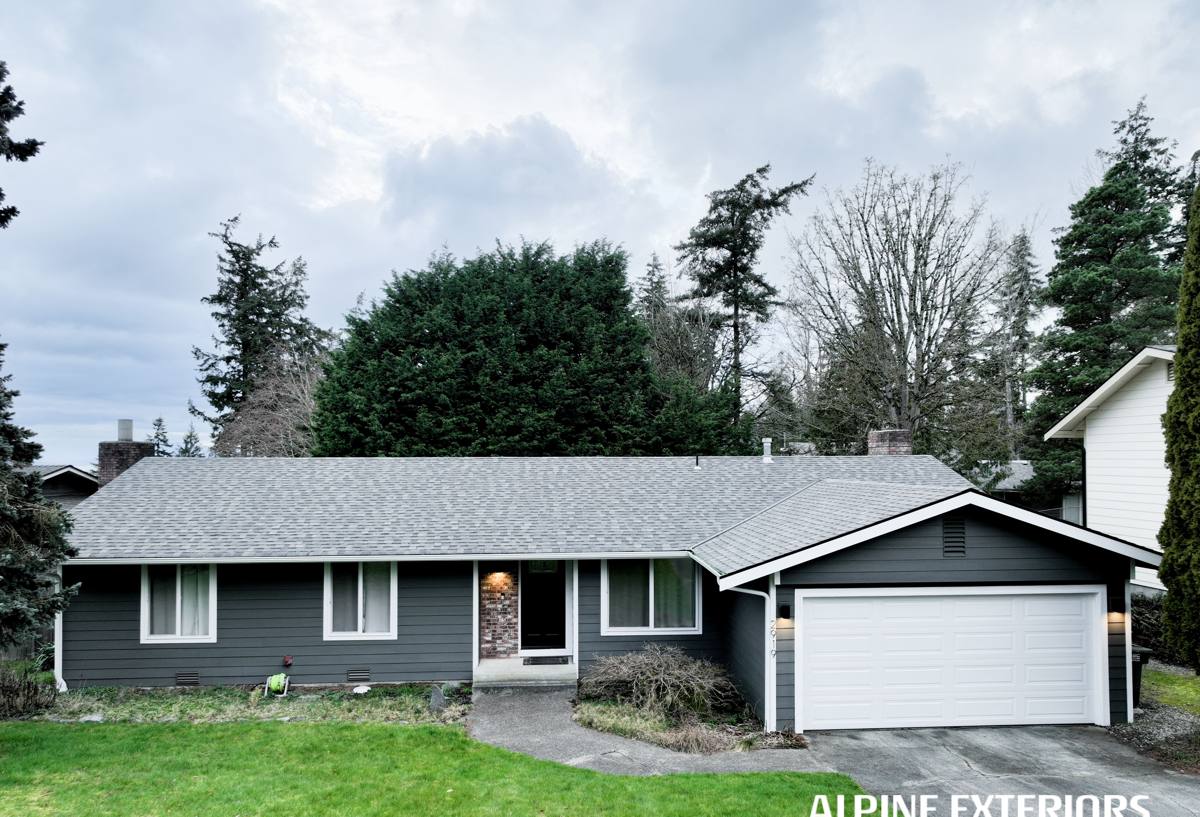
Signs a South Hill Home Needs Replacement, Not Repair
Homeowners often ask whether a problem area can just be patched. Sometimes it can. But certain signs point to a siding system that's past the point of spot repair:
- Soft or spongy spots when you press on the siding, especially near the bottom courses and around window trim
- Persistent moss or algae growth that returns within weeks of cleaning, especially on shaded north- and east-facing walls
- Paint that's bubbling, peeling, or won't hold for more than a couple years between coats
- Visible warping, cupping, or separation at the seams between boards or panels
- Gaps opening up around window and door trim, letting wind-driven rain track behind the siding
- A musty smell in interior rooms along exterior walls, which often points to moisture already inside the wall assembly
If you're only seeing one or two of these in a small area, targeted repair may still make sense. Once several of these show up across multiple walls, patching becomes a losing game — you're chasing failures one at a time on a wall system that's already compromised underneath.
What a Correct Siding Replacement Actually Involves
Siding replacement is often sold as "tear off the old, nail up the new," but the work that happens between those two steps is what determines whether the next 30 years go well or badly. On a hillside home exposed to driving rain and salt air, skipping any of these steps shows up as a callback within a few years.
Tear-Off and Inspection
Once the old siding is off, the sheathing and framing underneath get a real inspection — not a glance. This is where rot from years of trapped moisture behind failed siding gets found, and it's far cheaper to address it now than to discover it later once new siding is already up.
Weather-Resistive Barrier and Flashing
A correctly installed weather-resistive barrier, properly lapped and sealed, is what keeps wind-driven rain from ever reaching the sheathing in the first place. Flashing at windows, doors, and any horizontal trim needs to be integrated with that barrier — not just caulked — so water has a clear path down and out instead of pooling behind the siding.
Siding Installation to Spec
Fastener spacing, butt joint treatment, clearance from grade and roof lines, and caulking at penetrations all matter. Manufacturers publish exact installation specs for a reason: siding that's installed off-spec voids the warranty and tends to fail early, especially in a climate that gives it no real dry season to recover in.
Why We Install Only James Hardie Fiber Cement
We don't install vinyl, LP SmartSide, primed wood, or cedar, and we're upfront about why. Vinyl can warp and crack in temperature swings and doesn't hold paint if a homeowner ever wants to change the color. Engineered wood products and primed wood siding depend on an unbroken factory or field coating to keep moisture out — the moment that coating is compromised, wood-based substrates start to absorb water and swell, and in a climate as damp as Bellingham's, that coating rarely stays perfect for long. Cedar is a beautiful traditional material, but it demands ongoing maintenance and refinishing that most homeowners don't want to keep up with for decades.
James Hardie fiber cement is non-combustible, doesn't support the moisture-driven swelling and rot that wood-based products are prone to, and comes with a factory-applied ColorPlus finish that's baked on rather than field-sprayed, so it holds up to UV and salt air exposure far better than a job-site paint job. Hardie also engineers specific product lines for different climate zones — the HZ5 line used in the Pacific Northwest is formulated for regions that see significant moisture and freeze-thaw cycling, which is exactly what South Hill gets most of the year.
Choosing the Right Hardie Line for a South Hill Home
Not every Hardie product fits every home. On a hillside street with mature trees and a mix of older and updated architecture, the right choice depends on the home's style and how much of the wall is shaded versus exposed to driving rain.
| Product | Best Fit | Why It Works Here |
|---|---|---|
| HardiePlank Lap Siding | Traditional and craftsman-style homes | Matches the horizontal lap look common on older South Hill homes while resisting moss and moisture far better than the original wood siding it replaces |
| HardiePanel Vertical Siding | Accent walls, gables, modern updates | Clean vertical lines that pair well with lap siding on homes doing a partial style refresh |
| HardieShingle | Homes with a shingle-style or cottage look | Keeps a traditional textured appearance without the upkeep of real cedar shingles |
| HardieTrim | Window, door, and corner trim on any of the above | Matches the fiber cement performance of the field siding so trim doesn't become the next weak point |
Color selection also matters more on a hillside lot with tree cover — darker ColorPlus finishes can help mask the moss and organic staining that shows up faster in shaded areas, while lighter finishes on sun-exposed walls hold up well against fading.
Our Process, Start to Finish
- Free on-site estimate — we walk the exterior, check the current siding and any visible sheathing issues, and talk through product and color options.
- Written scope and pricing — a clear breakdown of what's included, so there's no ambiguity about tear-off, sheathing repair contingencies, or trim work.
- Tear-off and sheathing inspection — old material comes off and the wall assembly gets checked before anything new goes up.
- Weather barrier and flashing installation — done to manufacturer spec, not shortcuts.
- Hardie siding installation — installed to the fastening, clearance, and joint specs required to keep the warranty intact.
- Final walkthrough — we go over the finished job with the homeowner before calling it done.
What Affects the Cost of a South Hill Siding Job
| Factor | Why It Matters |
|---|---|
| Home size and wall area | More square footage means more material and labor, the biggest single cost driver |
| Condition of the sheathing underneath | Rot found during tear-off adds repair cost but is far cheaper to fix now than after new siding is up |
| Site access and slope | Steep or terraced hillside lots can require more setup time for scaffolding and material staging |
| Product line and trim detail | HardieShingle and custom trim work cost more than straight HardiePlank lap siding |
| Number of stories and roof lines | Multi-story homes and complex rooflines add cutting, flashing, and safety setup time |
We give firm, itemized numbers after seeing the home in person — general square-footage rules of thumb rarely hold up once sheathing condition and site access are factored in.
Why Local Experience on South Hill Matters
A crew that's already worked hillside streets in Bellingham knows what to expect before they even start tearing off the old siding: sheathing that's likely seen decades of driving rain, shaded walls where moss has had a permanent foothold, and lots where staging equipment safely on a slope takes real planning. That experience shows up in fewer surprises mid-job and a final result that's built for the specific way weather hits a South Hill wall, not a generic install.
It also means knowing how Bellingham's permitting and inspection process works for exterior replacement projects, so the job moves without delays that catch homeowners off guard.
If your South Hill home's siding is showing its age, we'll come take a look and give you a straightforward, no-pressure estimate — no obligation, just an honest read on what your home needs. Use the form below to get started.