 Bellingham
 Storm Damage Roof Repair for South Hill, Bellingham
South Hill sits up on the elevated ground overlooking Bellingham Bay, which means it catches wind and rain differently than homes down in the flats. When a winter system rolls in off the Strait of Georgia and pushes rain sideways across the hill, roofs up here take a harder hit than most people realize — not just from the wind itself, but from what wind-driven rain does once it finds a weak spot. We repair storm-damaged roofs on South Hill regularly, and the pattern is consistent: it's rarely one dramatic event that causes the real damage. It's usually a smaller storm exposing a flashing detail or a shingle run that was already marginal, and then months of Whatcom County drizzle working through that opening before anyone notices a stain on the ceiling.
This page is about that specific job: repairing a roof after wind, rain, or falling debris has damaged it, on a hillside property in a salt-air, high-moisture climate. Not a full re-roof pitch, not a generic storm page — the actual work of finding what a storm broke and putting it back together correctly.
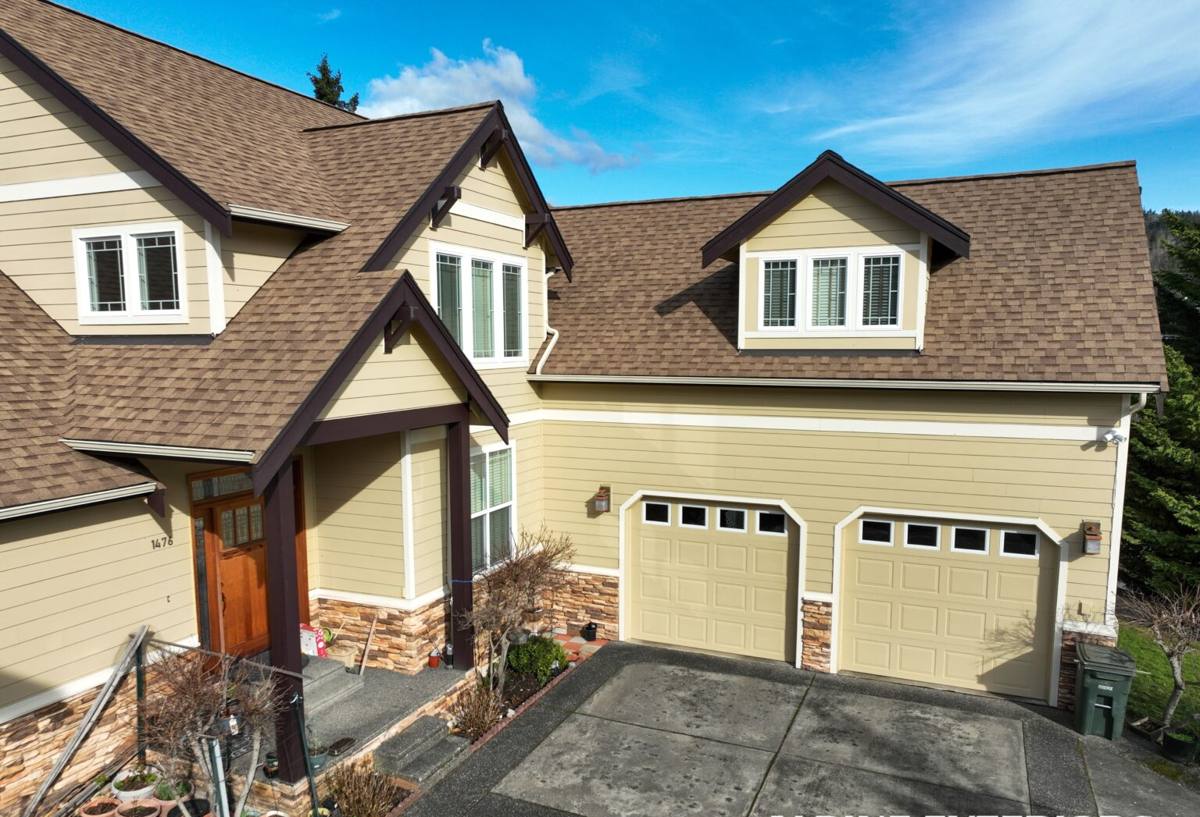
What Driving Rain and Salt Air Do to a South Hill Roof
Three climate factors matter more on South Hill than in a lot of other Bellingham neighborhoods, and all three show up in the repairs we do.
Wind-driven rain on elevated, exposed slopes
Elevation and proximity to open water mean South Hill gets more direct exposure to storm winds than sheltered inland lots. Wind-driven rain doesn't behave like rain falling straight down — it gets pushed up and under shingle edges, into exposed nail heads, and through any flashing joint that isn't sealed tight. A roof that would shrug off a calm rain can leak in a wind event because water is being forced in a direction the roofing system wasn't designed to handle at that angle.
Salt air and metal fatigue
Being close to Bellingham Bay means a steady low level of salt in the air, and salt air accelerates corrosion on exposed metal — flashing, fasteners, gutter hardware, vent caps. Corroded metal doesn't fail all at once; it thins out over years until a storm finally finds the weak point and pushes water through. When we're repairing storm damage on a South Hill roof, we're almost always checking metal condition well beyond the immediate damaged area, because salt-related corrosion is rarely limited to one spot.
A long moss season
Western Washington's wet season runs long, and moss grows on roofs here nearly year-round on shaded or north-facing slopes. Moss holds moisture directly against roofing material, lifts shingle edges as it grows, and adds weight. A storm doesn't need to be dramatic to cause damage on a roof that moss has already been prying at for a season or two — it just needs to finish the job moss started.
Signs a Storm Has Damaged Your Roof
Storm damage isn't always obvious from the ground. Some signs are easy to spot; others take a trained eye or a closer look at the attic. Here's what we tell South Hill homeowners to watch for after any significant wind or rain event:
- Shingles that look lifted, curled, or missing at the edges or ridge
- Granules collecting in gutters or at downspout outlets (a sign of shingle surface wear or impact damage)
- Bent, lifted, or missing flashing around chimneys, vent pipes, or roof-to-wall joints
- New or worsening water stains on ceilings or upper interior walls
- Damp insulation, musty smell, or visible daylight in the attic
- Debris, broken branches, or dents from wind-carried material
- Gutters pulled loose or sagging, which redirects water back toward the roof edge and fascia
- Soft or spongy spots underfoot in areas that were previously solid (a sign the decking is wet)
Any one of these on its own might be minor. Several together, especially after a specific storm, usually means water has already gotten past the roofing surface and into the structure underneath — which changes the scope of the repair.
What a Correct Storm Damage Repair Actually Involves
A storm repair done right is not just replacing the shingles that are visibly missing. It's tracing water back to every point it entered and confirming the material underneath is sound before anything new goes on top.
Inspection before any repair starts
We start on the roof surface and in the attic. From the roof, we're checking the damaged area plus the surrounding field — storms rarely damage in a perfectly isolated spot, and wind lift often loosens fasteners well beyond where shingles actually tore off. From the attic, we're looking for water staining, wet insulation, and daylight, which tell us whether water has already tracked past the point of visible exterior damage.
Decking condition, not just the roofing layer
If water has been getting in for a while before the storm exposed it, the plywood or board decking underneath can be soft, delaminated, or rotted. Laying new shingles over compromised decking doesn't fix anything — it just hides a structural problem under new material. Any repair we do includes checking decking condition in the affected area and replacing sections that won't hold a fastener properly.
Flashing and transition details
Most storm leaks trace back to a flashing detail, not the shingle field itself — chimney flashing, valley flashing, roof-to-wall step flashing, or vent boot seals. Given the salt-air corrosion South Hill roofs deal with, we treat flashing repair as its own line item, not an afterthought bundled into shingle replacement. Corroded or improperly lapped flashing left in place is one of the most common reasons a "repaired" roof leaks again in the next storm.
Matching materials correctly
Shingle color and profile change over the years, and a repair patch that doesn't match won't seal properly against surrounding courses even if it looks close enough visually. We match material as closely as the existing roof allows and explain honestly when an exact match isn't possible, so there are no surprises about appearance after the work is done.
Repair vs. Replacement: How We Make the Call
Not every storm-damaged roof needs to be torn off and replaced, and not every roof can be safely patched. The decision comes down to a few honest factors, which we walk through with the homeowner before recommending either direction.
| Factor | Favors Repair | Favors Replacement |
|---|---|---|
| Age of existing roof | Under roughly two-thirds of expected lifespan | Near or past expected lifespan already |
| Extent of damage | Localized to one section or slope | Multiple slopes or widespread wind lift |
| Decking condition | Sound, dry, holds fasteners well | Soft, delaminated, or rotted in multiple areas |
| Prior repair history | Few or no previous patches | Several past patches, ongoing recurring leaks |
| Material availability | Close match to existing shingles available | Discontinued material, poor match likely |
We'd rather do an honest repair on a roof that has real life left in it than push a replacement that isn't needed. We'd also rather tell a homeowner up front that a patch won't hold than take the smaller job and have them calling us back after the next storm.
Our Process, Start to Finish
1. Initial contact and scheduling
We ask what happened, when, and what's been noticed since — active leaking, staining, visible damage — so we can prioritize active leaks appropriately and bring the right materials to the first visit.
2. On-site inspection
Roof surface and attic, as described above. We explain what we find in plain terms, including what's storm-related and what's pre-existing wear that the storm simply exposed.
3. Written scope and estimate
A clear description of what will be repaired, what materials will be used, and a price range before work begins. No vague "we'll figure it out once we're up there" pricing on the parts of the job we can already see.
4. Repair work
Tear-off of damaged material, decking repair where needed, flashing work, new roofing material installed and properly lapped and sealed at every transition — not just at the center of the damaged area.
5. Cleanup and final check
Debris and old material hauled off, gutters and ground checked for stray nails and granules, and a final walkthrough so the homeowner can see exactly what was done.
Storm Damage and Insurance Claims
Many storm repairs on South Hill go through homeowner's insurance, and the difference between a smooth claim and a frustrating one usually comes down to documentation. We photograph damage before starting work, note the likely cause (wind, impact, water intrusion) in plain language, and can provide a written estimate an adjuster can review. We're not a public adjuster and don't negotiate your claim for you, but we give you the documentation and honest assessment needed to support one. If a section of "storm damage" turns out to be long-term wear rather than storm-caused, we'll say so directly — that distinction matters for a claim, and an honest answer up front is more useful than a surprise later.
After the Repair: Reducing the Next Storm's Impact
A storm repair is a good moment to address the conditions that made the damage worse than it needed to be, especially on a hillside, salt-air property like South Hill.
- Clear moss from north-facing and shaded slopes before it lifts more material
- Check and clean gutters so storm water has somewhere to go besides back under the roof edge
- Trim back branches that overhang the roof and could drop debris in the next wind event
- Re-check flashing and vent seals annually given the pace of salt-air corrosion here
- Address any attic ventilation issues found during the repair, since poor ventilation speeds up decking and shingle wear
None of this prevents every future storm issue, but it reduces how much damage a given storm can do, and it's far cheaper than another emergency repair.
Why a Crew That Already Works South Hill Matters
Roofing crews who work Bellingham broadly but don't spend regular time on South Hill specifically can miss things that are obvious to someone who's up on this hill often — how exposed a particular slope orientation is to prevailing storm wind, how fast moss comes back on the shaded side of a hillside lot, or how quickly certain metal flashing types corrode this close to the bay. That kind of pattern recognition comes from repeated work in the same conditions, not from a single visit. It's also practical: a local crew can respond faster after a storm, when a tarped roof or an active leak is a time-sensitive problem, not a scheduling convenience.
We're not going to tell you every roof needs replacing or that a small storm means catastrophic damage. Most storm repairs are real, necessary work, but they're also bounded — find what broke, fix it properly, and check the surrounding area so the same storm doesn't cause a repeat problem next season. That's the standard we hold every South Hill repair to.
If a recent storm has left you with a leak, missing shingles, or damage you're not sure how to assess, we're glad to take a look. Fill out the form below for a free, no-pressure estimate — we'll give you an honest read on what happened and what it actually takes to fix it right.