 Bellingham
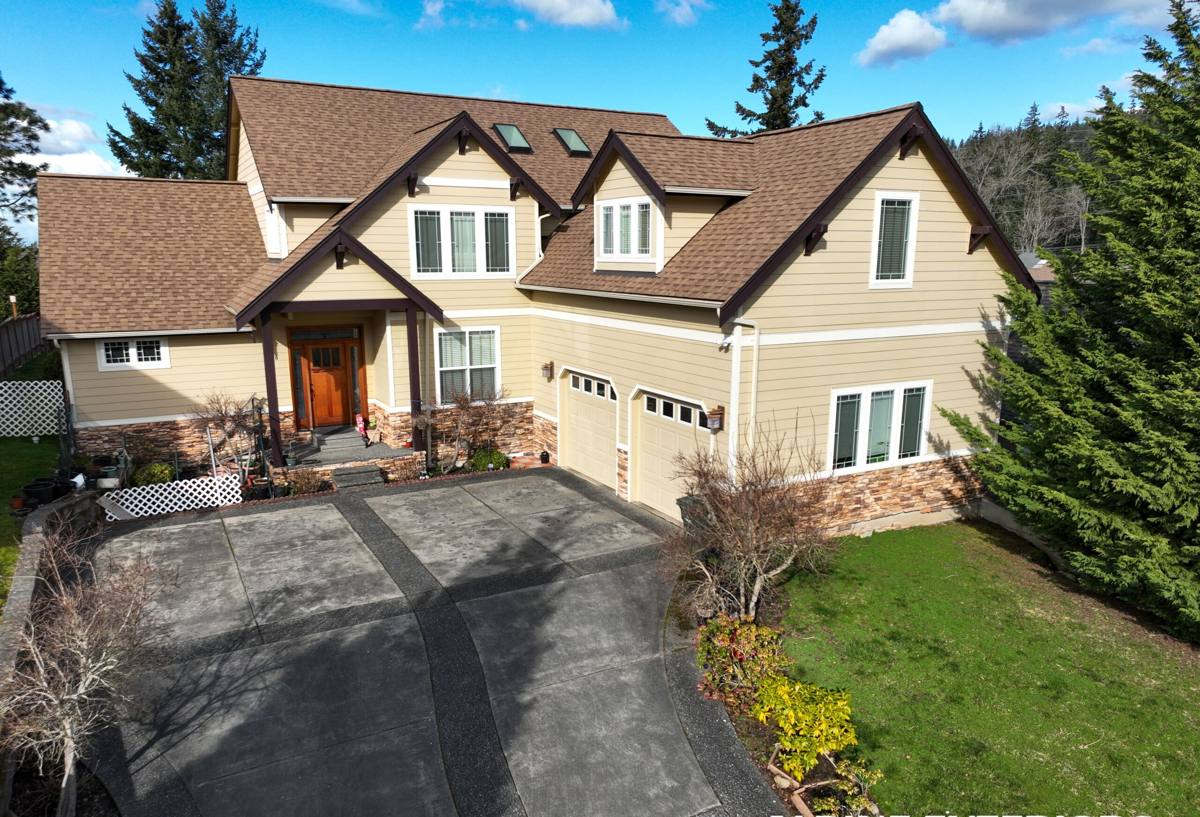
 A roof over a home in Sudden Valley works harder than a roof out in the open. This is a heavily wooded community on the south shore of Lake Whatcom, and most lots sit under real tree canopy, on sloped terrain, at a range of elevations relative to the lake and the surrounding ridgelines. That combination means shade that never fully burns off, humidity that lingers off the water, and rain that hits different roof planes on the same house with different force depending on orientation. New roof installation here isn't a bigger version of a job we'd do on an open lot in town — it's a different set of defaults for underlayment, flashing, ventilation, and material choice. This page covers what a Sudden Valley home actually needs from a new roof, what a correct installation involves, and how our process works from first look to final walk-through.
What Sudden Valley's Climate Does to a Roof
Three conditions drive most of what we see on Sudden Valley roofs, and they don't act in isolation — they compound each other.
Heavy Tree Canopy and Persistent Shade
Most Sudden Valley lots sit under substantial second-growth forest, and it's common for a home to have one or more roof slopes that get very little direct sun for most of the year. Shaded slopes stay damp longer after every rain than an open, sun-exposed roof would, and that extended dampness is exactly what accelerates moss growth and slows down the natural drying a roof needs to hold up over decades.
Driving Rain Across Uneven Terrain
Sudden Valley's hilly layout means homes face the weather at a range of elevations and orientations relative to the lake and the surrounding ridgelines. Wind-driven rain that hits one roof plane hard can barely touch another plane on the same house, and flashing or underlayment choices that assume uniform exposure across the whole roof are a common reason leaks show up at valleys, roof-to-wall transitions, and chimney flashing years before they should. Add the salt-tinged marine air that moves through this part of Whatcom County even away from open water, and fastener and flashing corrosion becomes a real factor too, not just a coastal-property concern.
A Long Moss Season
Shade, humidity off the lake, and mild year-round temperatures add up to a moss and algae season that runs most of the year on north-facing and heavily shaded slopes in Sudden Valley. Moss isn't just cosmetic on a roof — it holds water against the roofing surface, works under shingle edges and laps over time, and traps falling debris from the surrounding trees, which holds even more moisture in place. A roof installed without moss-resistant materials or without real attention to airflow underneath will grow moss faster and shed water worse than one installed with those factors accounted for from the start.
Signs a Sudden Valley Home Needs a New Roof
Not every roofing problem here means a full replacement, but these are the signs that usually point toward it rather than a patch:
- Moss growth in valleys or on shaded slopes that returns quickly after cleaning
- Shingles that are cupping, curling, or losing granules across large sections rather than one isolated spot
- Rust staining at nail heads, flashing, or metal vent stacks
- Debris buildup in valleys and against roof-to-wall transitions from surrounding trees, holding moisture in place
- Soft or spongy spots underfoot, or sagging visible from the ground
- Leaks that show up in more than one spot during heavy wind-driven rain
- Water staining on interior ceilings near exterior walls after an extended wet stretch
- A roof approaching or past its manufacturer-rated service life for this kind of exposure
Choosing a Roofing System for This Climate
Material choice carries more weight on a shaded, moisture-heavy lot than it would on an open, sunny one. The table below is a general comparison — actual performance still depends on installation quality as much as the product itself.
| Material | Behavior in Shade & Driving Rain | Moss Resistance | Typical Service Life Here |
|---|---|---|---|
| Architectural asphalt shingle | Good with marine-rated fasteners and proper flashing; standard hardware corrodes faster in this air | Moderate; algae-resistant granule versions help on shaded slopes | 25-30 years with correct install |
| Standing seam metal | Excellent when specified in a corrosion-resistant finish; sheds wind-driven rain aggressively | High; smooth surface and typical steep pitch discourage moss buildup | 40-50+ years |
| Cedar shake | Holds moisture longer under heavy canopy; needs active upkeep to keep performing | Low without regular treatment and cleaning | 20-30 years with consistent maintenance |
| Composition/synthetic shake | Good; manufactured for consistent weather resistance | Moderate to high depending on product | 30-50 years |
We'll go over which option fits a given roof's pitch, sun and shade exposure, and budget during the estimate rather than defaulting to one product for every home. Two houses on the same street in Sudden Valley can reasonably end up with different recommendations once we've looked at which slopes stay shaded and which see real sun.
What a Correct Installation Actually Involves
The visible shingle or panel layer is the smallest part of what determines whether a roof performs on a lot like this. Most leaks and premature failures trace back to what's underneath or around it.
Tear-Off and Deck Inspection
A full tear-off lets us see the actual condition of the roof deck — soft spots, rot, or prior water damage that a re-roof over the old layer would simply bury. On a shaded property where moisture has more time to work on a roof over the years, this step catches problems that aren't visible from the ground. Any damaged sheathing gets replaced before new roofing goes down.
Underlayment
Given the rain exposure and extended dampness common here, we don't treat underlayment as a formality. A synthetic underlayment with strong water resistance, plus self-adhered membrane at eaves, valleys, and other vulnerable points, gives the roof a second line of defense if wind-driven rain ever gets past the primary surface.
Flashing
Flashing at chimneys, skylights, vent penetrations, and roof-to-wall transitions is where most leaks on an older roof actually start. We use corrosion-resistant flashing suited to this air and integrate it properly with the underlayment, rather than relying on sealant alone to hold water out.
Fasteners and Hardware
Standard fasteners corrode faster here than most homeowners expect, especially on shaded slopes that stay damp longer between dry spells. We spec corrosion-resistant fasteners and hardware, since a fastener failure years down the road is hard to trace and easy to prevent up front.
Ventilation
Proper intake and exhaust ventilation keeps the roof deck drier and works against the exact conditions moss needs to establish itself. It also protects the underside of the roof from condensation damage, which matters more on a home with limited direct sun to help dry things out.
Our Installation Process
- On-site assessment. We inspect the existing roof, deck condition, ventilation, and shade pattern across each slope, and take measurements for an accurate estimate.
- Material selection. We go over the options that fit the home's exposure, pitch, and budget, with honest trade-offs for each.
- Scheduling around community access. Sudden Valley's private road network means material delivery and crew staging get planned around access and parking realities up front, not worked out on the fly.
- Tear-off and deck repair. Old roofing comes off, the deck is inspected, and any damaged sheathing is replaced.
- Underlayment and flashing installation. The moisture barrier and flashing go in first, since this layer determines whether the roof actually stays dry through a wet Whatcom County winter.
- Roofing material installation. The chosen material is installed to manufacturer specification, with attention to fastening pattern and slope-specific exposure.
- Ventilation check. Intake and exhaust ventilation are confirmed working correctly before close-out.
- Final walk-through. We review the completed roof with the homeowner and go over care and warranty details specific to a shaded, tree-covered property.
Cost Factors for a Sudden Valley Roof
Every roof prices out differently, and we don't quote a number without seeing the roof in person, since pitch, access, and shade pattern alone can shift a bid significantly.
| Factor | Why It Matters Here |
|---|---|
| Roof size and complexity | More valleys, dormers, and penetrations mean more flashing detail and labor |
| Pitch and access | Steep or hard-to-access roofs common on hillside lots take longer and need more safety setup |
| Material choice | Metal and premium composites cost more up front but often need less maintenance under heavy tree cover |
| Deck condition | Rot or soft sheathing found during tear-off adds repair cost not visible before the old roof comes off |
| Underlayment upgrade | Full self-adhered membrane coverage costs more than minimum-code underlayment but reduces wind-driven rain risk |
| Site access and staging | Private roads, tree cover, and limited parking on some Sudden Valley lots can add setup and staging time |
Why Hire a Crew That Already Works Sudden Valley
A roofer who mostly works open, in-town lots isn't wrong about roofing in general — they're just working from a different set of defaults. Fastener specs, flashing choices, and underlayment coverage that are adequate on a typical sunny, open-lot roof are often undersized for what a shaded Sudden Valley roof deals with year-round. A crew that's already worked this community has seen which slopes hold moss no matter what, which roof-to-wall transitions need extra flashing attention because of how the terrain channels rain, and which fastener grade actually holds up in a damp, wooded microclimate.
There's also the practical side of working in a private, HOA-governed community: knowing how access and staging work on Sudden Valley's internal road network, and, if the community has architectural or exterior-change guidelines, being ready to work within them rather than treating that step as a surprise mid-project. Local experience means that gets planned for from the start instead of causing delays partway through the job.
Maintaining a New Roof in This Climate
A correctly installed roof still benefits from basic upkeep given Sudden Valley's conditions:
- Keep gutters and valleys clear of needles and leaves so water isn't backing up under roof edges
- Have moss growth addressed before it spreads across a full slope, not after it's established
- Trim back tree limbs that keep a section of roof shaded and slow to dry, where it's practical to do so
- Schedule a periodic inspection of flashing points, especially after major wind and rain events
- Address any small leak signs right away rather than waiting for the next dry stretch
If your Sudden Valley roof is showing its age, or you're planning ahead for a replacement, we're glad to walk it with you and talk through honest options for your specific slopes and exposure. Reach out using the form below for a free, no-pressure estimate.