 Bellingham
 Asphalt Shingle Roofing for Sunnyland: One Bellingham Neighborhood, One Consistent Climate Problem
Sunnyland is one of Bellingham's older, established residential neighborhoods, with a housing stock that spans mid-century single-family homes through more recent infill construction. What ties those different-aged roofs together isn't the house underneath them — it's the weather sitting on top of them. Bellingham's location on Bellingham Bay means Sunnyland roofs deal with salt-tinged marine air, rain that regularly arrives sideways instead of straight down, and a moss season that can run nearly year-round on shaded or north-facing roof planes. An asphalt shingle roof built for a drier, calmer climate simply doesn't hold up the same way here, and a lot of the roofing problems we see in this neighborhood trace back to a roof that was installed to a generic spec instead of this specific one.
Bellingham Siding works roofs, siding, windows, and decks across Bellingham and greater Whatcom County, and asphalt shingle roofing is one of the more common systems we install and repair in Sunnyland specifically. This page covers what that climate actually does to a shingle roof, what a correct installation requires, and how we approach the work when we're called to a Sunnyland home.
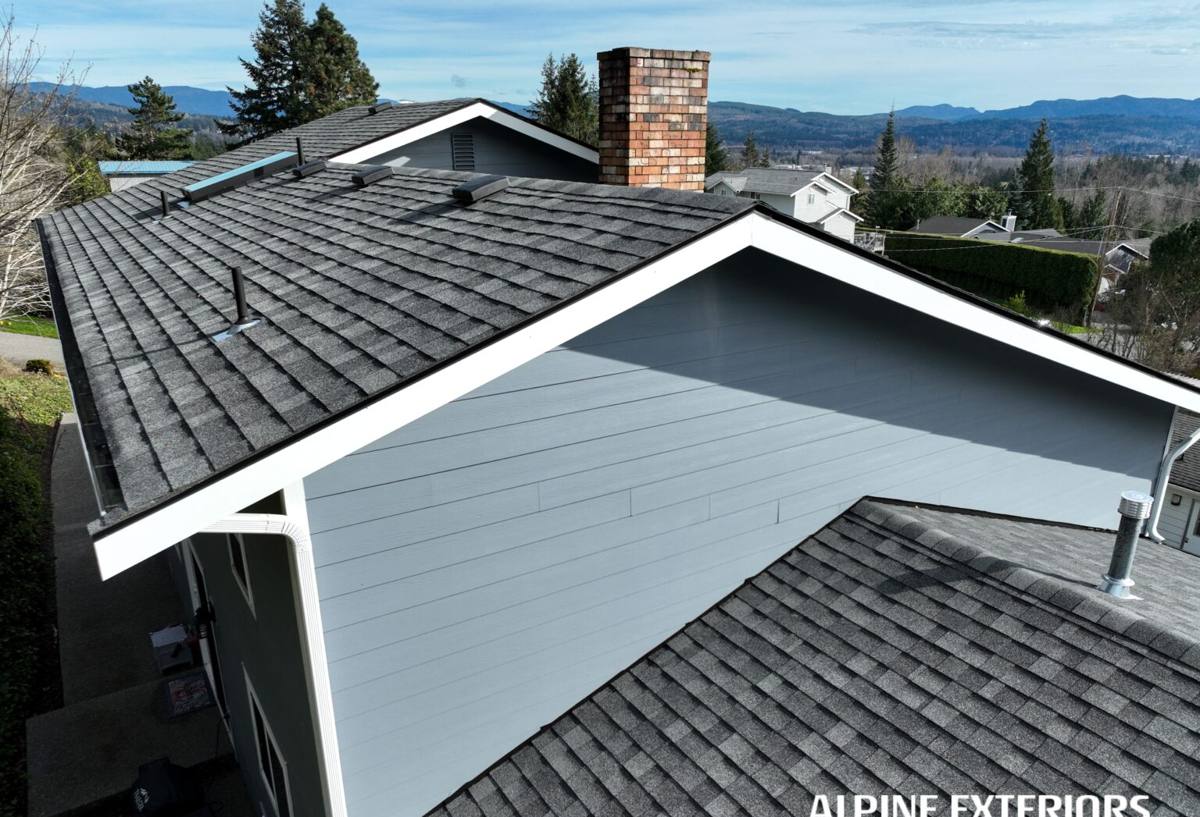
What Bellingham's Climate Does to a Sunnyland Roof
Salt Air and Slow Corrosion
Sunnyland's proximity to Bellingham Bay means a steady flow of moisture-laden, salt-tinged air moving across the neighborhood, not just during obvious storms. That kind of sustained exposure is harder on exposed fasteners, flashing metal, and lower-grade roofing components than an inland climate would be. It's a slow, quiet kind of wear — the kind that often isn't obvious from the ground until a fastener has already started to rust or a flashing seam has begun to fail underneath the shingles above it.
Wind-Driven Rain
Like most of coastal Whatcom County, Sunnyland gets rain that's pushed sideways by wind off the water rather than falling straight down. That matters because a shingle system, underlayment, and flashing detail that would perform fine in a calmer, drier region can still let water in here specifically because the wind is driving it under shingle tabs, into valleys, and around chimney and vent penetrations from an angle a simple rainfall total doesn't account for.
A Long Moss and Algae Season
Mild year-round temperatures, tree cover common in older Sunnyland yards, and consistent dampness add up to extended moss and algae growth on shaded roof slopes. Moss does more than look bad on a roof — it holds water against the shingle surface, works its way under tab edges, and over time can lift or loosen shingles that would otherwise still have years of life left in them. It tends to show up first on the roof sections a homeowner rarely looks at closely: north-facing slopes, valleys, and areas shaded by mature trees.
Asphalt Shingle Systems: What Actually Holds Up in This Climate
Not every asphalt shingle is built the same way, and the difference matters more here than it would in a drier part of the country. The table below lays out the practical trade-offs we walk homeowners through before recommending a product.
| Shingle Type | Wind & Rain Performance | Moss Resistance | Realistic Lifespan Here |
|---|---|---|---|
| Standard 3-tab shingle | Lower wind rating; more seams for wind-driven rain to work into | Standard granules only; no built-in resistance | 15-20 years |
| Architectural (laminated) shingle | Higher wind rating, better sealing at overlaps | Available with algae-resistant granule options | 25-30 years |
| Impact-resistant architectural shingle | Reinforced mat resists tearing and lifting in gusts | Usually paired with algae-resistant granules | 25-30+ years, better storm resilience |
For most Sunnyland homes, we recommend an architectural shingle with algae-resistant granules as the practical baseline, then adjust up or down based on roof pitch, tree shade, and how long you plan to stay in the house. A steeply pitched, sun-exposed roof and a low-slope roof shaded by mature trees don't call for the same answer, and we'll walk you through that trade-off rather than defaulting to whatever's easiest to sell.
What a Correct Asphalt Shingle Installation Actually Requires
Buying a better shingle is only part of the job. Most of the roof failures we see in Sunnyland didn't start with the shingles themselves — they started with something skipped underneath them that didn't show up as a problem until years later.
Underlayment and Ice-and-Water Shield
A synthetic underlayment rated for sustained moisture exposure, not just a minimum-code product, gives the roof deck a real second line of defense when wind-driven rain gets past the shingles. Ice-and-water shield belongs at eaves, valleys, and around penetrations, where water and debris naturally collect and linger longest.
Flashing and Ventilation
Every valley, chimney, vent pipe, and roof-to-wall transition needs flashing that's properly lapped and sealed as part of one continuous water path, not treated as a separate afterthought once the shingles are down. Attic and roof deck ventilation matters just as much — a roof that traps moisture underneath the deck ages from the inside out, regardless of how good the shingles on top are.
Fastening and Nailing Pattern
Shingle manufacturers specify exact nail placement and fastener counts for a reason: it's what the wind rating and warranty are actually based on. Under-nailing or misplaced fasteners are a common, largely invisible shortcut that shows up later as lifted or blown-off shingles in the first serious windstorm, which happens more than once a season on the Bellingham waterfront.
Signs a Sunnyland Roof Needs Attention
- Moss buildup on shaded or north-facing slopes that returns quickly after cleaning
- Granules collecting in gutters or at the base of downspouts
- Curling, cupping, or missing shingles, especially after a windstorm
- Water staining on interior ceilings near exterior walls, chimneys, or skylights
- Daylight visible through the roof deck when viewed from inside the attic
- Soft spots or noticeable give when the roof is walked
- Flashing that looks lifted, rusted, or missing sealant
Any single item on that list is worth a professional look. Caught early, most of these are a straightforward repair. Left through another wet season, several of them compound into a full tear-off.
Repair or Replace? How We Help You Decide
Not every roofing call in Sunnyland ends in a recommendation to replace the whole roof, and we don't default to that answer. We look at the roof's age relative to its shingle type, how much of the total roof surface is affected, whether the underlying deck shows moisture damage, and how many prior repairs the roof has already had. A localized leak on a roof that's otherwise sound is usually a real repair, not a sales pitch toward something bigger. A roof nearing the end of its rated life with moss-related damage spread across multiple slopes, or a deck with soft spots from long-term trapped moisture, is more honestly addressed with a replacement than another round of patchwork that just delays the same conversation a year or two.
Our Process on a Sunnyland Roofing Job
1. On-Site Inspection
We start by actually getting on the roof, not estimating from the ground or a satellite photo. That means checking shingle condition slope by slope, examining flashing at every valley and penetration, and looking inside the attic for moisture staining or ventilation problems that don't show from outside.
2. A Straightforward Written Estimate
You get a clear scope of work and pricing before anything starts, including what shingle line and underlayment system we're recommending and why, based on your roof's specific pitch and shade exposure rather than a one-size-fits-all package.
3. Tear-Off and Deck Assessment
On a full replacement, we remove old roofing down to the deck and check the sheathing for rot or soft spots before anything new goes down. This is where hidden moisture damage from years of trapped water often turns up, and we'll show you what we find rather than covering over it.
4. Installation to Manufacturer Spec
Underlayment, ice-and-water shield, flashing, and shingles go down in the sequence and fastening pattern the manufacturer actually specifies, which is what keeps the wind rating and warranty intact rather than just theoretical.
5. Final Walkthrough
We walk the finished roof with you, cover basic maintenance expectations for this climate, and make sure you know what a properly installed roof should and shouldn't be doing in its first few wet seasons.
Why a Crew That Already Works Sunnyland Matters
A roofing crew that works this specific stretch of Bellingham regularly sees how salt air, wind-driven rain, and moss actually behave on real Sunnyland roofs across a full year, not just how a shingle performs on a spec sheet. That shows up in practical decisions on install day: which roof orientations in this neighborhood hold moisture longest because of tree cover, where extra ice-and-water shield earns its cost, and which flashing details are worth the additional time so you're not dealing with a callback two winters later. It also means a crew that isn't guessing at how Bellingham's marine climate differs from a drier inland job, because it's the climate we work in every week.
Beyond the Roof: Siding and the Rest of the Exterior
Roof problems in Sunnyland rarely start and end with the roof. A leaking valley, poorly flashed chimney, or roof-to-wall transition can surface as siding damage or interior water stains well before the roof itself looks obviously bad. Because Bellingham Siding also handles siding, window, and deck work, we can look at a Sunnyland property as one connected exterior system and trace a problem back to where it actually starts, instead of replacing shingles over a leak that's still active somewhere else.
If your Sunnyland home needs a roof inspection, a repair, or you're weighing a full asphalt shingle replacement, we're glad to take an honest look. Reach out using the form below to schedule a free, no-pressure estimate.