 Bellingham
 Why Storm Damage Hits Sunnyland Roofs Differently
Sunnyland sits close enough to Bellingham Bay that homes here take weather straight off the water. Wind doesn't just blow through — it drives rain sideways under shingle edges and into anything that's even slightly loose. Add in Whatcom County's long, wet fall-through-spring stretch and you get a climate that punishes roofs in two separate ways: sudden wind events that lift and tear, and months of standing moisture that quietly rot what the wind didn't finish.
The salt air off the bay is the part homeowners tend to underestimate. It accelerates corrosion on exposed fasteners, flashing, and gutter hardware faster than an inland roof would ever see. A nail or flashing seam that would last decades in a dry climate can start failing years earlier here, and a failing fastener during a windstorm is exactly how a small storm becomes a roof leak.
Then there's moss. Bellingham's moss season isn't a minor cosmetic issue — it's a moisture-management problem. Moss holds water against the shingle surface long after a storm has passed, which means a roof that took wind damage during a storm often keeps absorbing water for weeks afterward if the moss isn't dealt with at the same time as the repair.
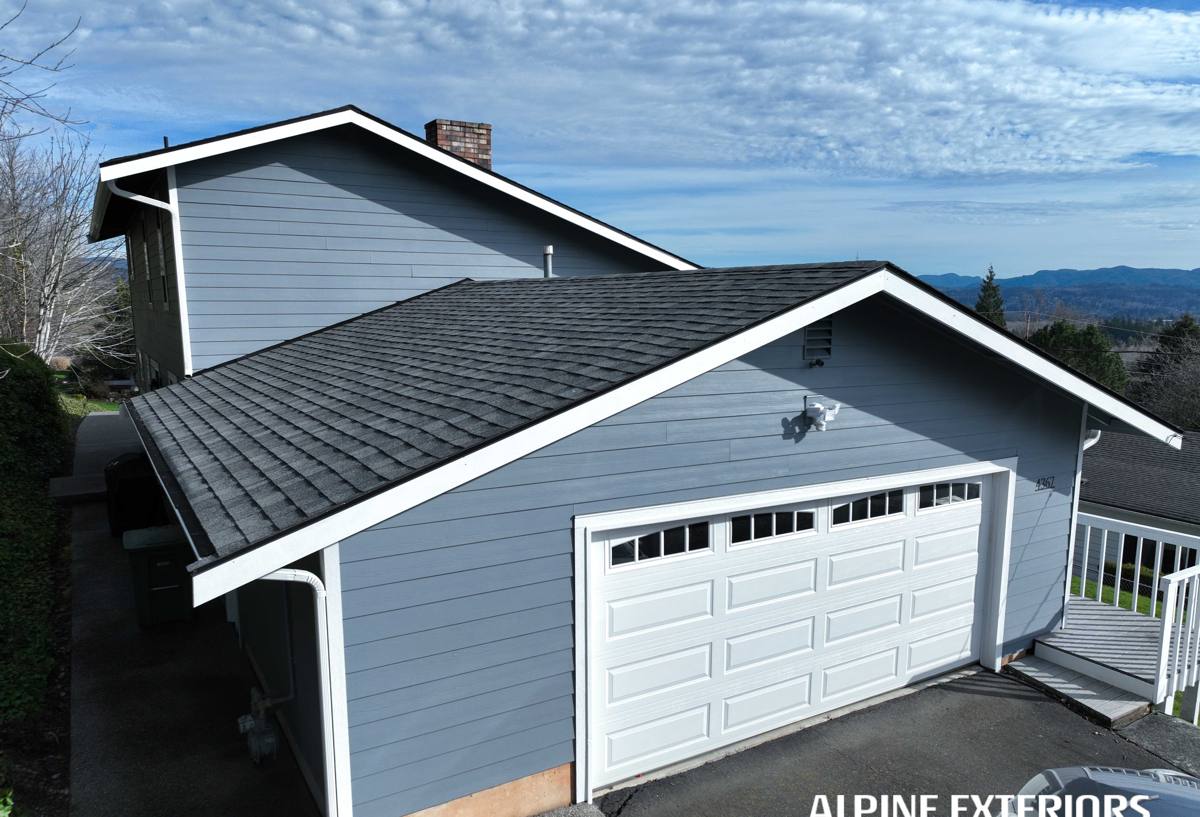
What Storm Damage Actually Looks Like
Wind Damage
Lifted, curled, or missing shingles are the most obvious sign, but wind damage is often worse than it looks from the ground. Shingles can be creased or have their seal broken without actually blowing off — they stay in place but no longer shed water correctly. That kind of damage doesn't show up as a hole; it shows up months later as a stain on a ceiling.
Moss and Moisture Damage
Where moss has been established for a while, storm winds can peel back shingle mats that were already weakened by trapped moisture underneath. Eaves, valleys, and north-facing slopes — the areas that dry out slowest in this climate — are where we most often find soft decking and early rot once we pull back the surface layer.
Debris and Impact Damage
Fallen branches, wind-thrown debris, and heavy rain overwhelming clogged gutters are common after Whatcom County storms. Impact damage can crack shingles or dent flashing and gutter runs in ways that aren't always visible until water starts finding the gap.
Right After a Storm: What to Do
What you do in the first day or two after a storm affects how much the repair ends up costing. A few basics matter more than people expect:
- Stay off the roof — storm-damaged roofs are unstable and wet shingles are dangerously slick, even for experienced crews without the right equipment
- Check ceilings and attic spaces for new staining, sagging, or a musty smell, since interior signs often show up before you'd notice anything from the yard
- Take photos of any visible damage and debris on the roof or in the yard for your own records
- Get a tarp over any obvious hole or exposed area only if it can be done safely from a ladder — otherwise, call for help
- Schedule an inspection before the next significant rain, not weeks later — a small opening left exposed through even one more storm can turn into a much larger repair
What a Correct Storm Damage Repair Actually Involves
A Full Inspection, Not Just a Patch
A proper storm damage repair starts by checking well beyond the spot that's obviously damaged. That means walking the full roof plane, checking decking for soft or spongy spots, confirming the underlayment underneath the shingles is still intact, and inspecting flashing at every valley, chimney, and vent penetration nearby. Wind damage rarely stays confined to one shingle — it tends to compromise a section, and repairing only the most visible piece just guarantees a callback.
Matching Materials and Technique
Shingles fade with age, so a repair that uses the wrong shade or profile stands out and can also create a slightly mismatched water-shedding pattern at the seams. We match the existing material as closely as possible and tie new flashing and underlayment into the existing roof system correctly rather than just caulking over a gap, which is a common shortcut that fails within a season or two in this climate.
Addressing the Cause, Not Just the Symptom
If moss contributed to the damage, a repair that doesn't also address the moss just resets the clock on the same problem. Part of doing this correctly is treating or removing moss in and around the repaired area and checking that gutters and downspouts are clear so water actually leaves the roof instead of sitting on it.
Repair or Replace? What Actually Decides It
Not every storm-damaged roof needs full replacement, and not every roof is worth repairing again. The honest answer depends on a few factors working together, not any single one:
| Factor | Repair Is Usually the Right Call | Replacement Should Be Considered |
|---|---|---|
| Roof age | Under roughly two-thirds of expected shingle lifespan | Nearing or past expected lifespan for the material |
| Extent of damage | Isolated to one section or slope | Spread across multiple slopes or repeated storm events |
| Moss and moisture history | Caught early, decking still sound | Widespread rot found once shingles are pulled back |
| Insurance involvement | Claim covers targeted repair scope | Adjuster scope already calls for full replacement |
Costs for storm damage repair vary widely depending on how much decking needs to be replaced and how much flashing work is involved — anywhere from a modest patch repair to a much larger job if rot is found underneath. We give you actual numbers after inspection, not a guess over the phone.
Our Storm Damage Repair Process
We keep this straightforward because storm damage is stressful enough without a confusing process on top of it:
- On-site inspection of the full roof, not just the reported damage area
- A written estimate that separates repair scope from any additional issues found, like moss or decking damage
- Documentation you can use for an insurance claim if you're filing one, including photos and a description of cause and scope
- The repair itself, matched to your existing roofing material and tied properly into the surrounding system
- A final check confirming flashing, gutters, and the repaired area are all shedding water correctly before we consider the job done
Working With Your Insurance Claim
We're not adjusters and we don't handle your claim for you, but we can document damage clearly and explain what we find in plain terms, which helps when you're talking to your insurance company. If an adjuster's scope looks like it's missing something we found during inspection — a section of soft decking, for example, or flashing damage that isn't visible from the ground — we'll point that out so you can raise it before the claim is finalized, not after the repair has already been paid out at the wrong scope.
Why Hiring a Crew That Already Works in Sunnyland Matters
A lot of storm damage repair mistakes come from crews that don't normally work in this climate — they treat it like a dry-region repair and skip the moss and moisture check that actually matters here. Working regularly in Bellingham and Whatcom County neighborhoods like Sunnyland means we're used to the roof ages and styles common in this area, we know how fast moss reestablishes itself after a wet winter, and we're not guessing at what "normal" storm damage looks like on a marine-climate roof. That familiarity shows up in fewer repeat callbacks and repairs that hold up through the next season, not just the next dry week.
Preventing the Next Round of Storm Damage
A repair is a good time to reduce the odds of the same thing happening again. A few habits go a long way in this climate:
- Clean gutters and downspouts at least twice a year, more often if there's tree cover near the roofline
- Have moss treated on a regular schedule rather than waiting until it's visibly thick
- Trim back branches that overhang the roof, since they're a common source of both debris damage and shade that keeps moss growing
- Have the roof checked after any significant windstorm, even if nothing looks obviously wrong from the ground
- Address small issues — a lifted shingle, a loose flashing edge — as soon as they're found instead of waiting for the next storm to make them worse
If your Sunnyland home has taken storm damage, or you just want a straight answer on what shape your roof is really in, we're glad to come take a look. The estimate is free, there's no pressure, and you'll get an honest assessment either way — use the form below to get started.