 Bellingham
 Window Installation Built for Blaine's Coastal Exposure
Blaine sits at the northern tip of Whatcom County, close enough to Semiahmoo Bay and Drayton Harbor that salt air is part of daily life for most homes in town, not just the ones with a water view. That exposure changes what a window installation actually needs to hold up to here. Salt-laden air works on hardware and fasteners faster than it does a few miles inland. Storms come ashore with real wind behind them, driving rain sideways into gaps a calmer climate would never test. And a moss season that runs most of the year gives any window sill, trim board, or flashing detail that stays damp a long stretch of time to grow something on it.
This page is specifically about window installation for Blaine properties — new units going into new or existing openings — and what separates a job that performs for decades from one that just looks finished the day the crew packs up. The window unit itself matters, but in this climate the installation and flashing around it usually decide whether the job actually lasts.
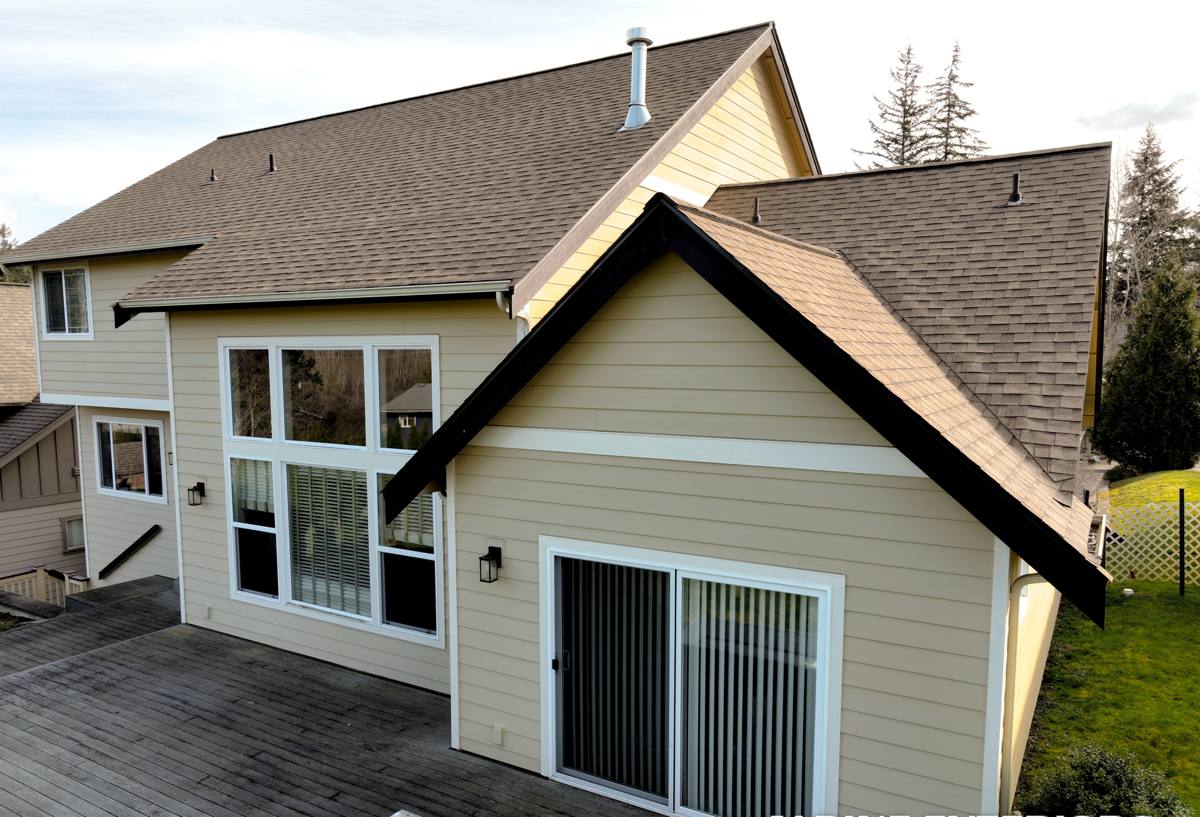
What Blaine's Climate Does to a Window Installation
Salt Air and Hardware
Homes on or near the bay and harbor take on salt-laden air as a constant condition, and that accelerates corrosion on window hardware, fasteners, and lower-grade frame components faster than it would in a drier, more sheltered town. Locks, hinges, and cranks that would last decades inland can start sticking or pitting years earlier this close to the water if the hardware grade wasn't chosen with that in mind.
Wind-Driven Rain
Rain in Blaine doesn't always fall straight down. Storms coming off the water push it sideways into wall assemblies and window openings, reaching gaps and seams that would stay dry somewhere calmer. A window can be a well-made unit and still leak if the flashing around it wasn't built to handle rain arriving at an angle instead of gravity doing the work.
A Moss Season That Runs Most of the Year
Mild temperatures and near-constant moisture give moss and mildew a long growing season here, and window sills and trim are common places it takes hold first — they hold water longer than a vertical wall and stay damp between rain events. Shaded and north-facing windows usually show it earliest, and any sill that doesn't slope correctly to shed water gives moss a head start.
Signs a Blaine Home Needs Window Installation, Not Just Repair
- Fogging or trapped moisture between the panes of a double-pane window, which usually means a failed seal
- Noticeable drafts or cold spots near the frame even with the window fully closed and locked
- Sills or trim that feel soft, look discolored, or show visible rot
- Windows that stick, won't stay open, or are hard to lock the way they used to
- Visible daylight or gaps where the frame meets the siding
- Frequent condensation on the interior glass during cold, wet stretches
- Paint or finish peeling faster on window trim than on the rest of the exterior
Some of these point to a reasonable repair — a failed seal on an otherwise sound frame, for instance. Others, especially rotted framing or hardware that's been failing for years, usually mean the labor spent patching it keeps adding up until a proper installation would have cost less overall. We'll give a straight answer on which category your windows fall into rather than defaulting to a full replacement recommendation.
What a Correct Window Installation Actually Involves
Measuring and Opening Prep
Every installation starts with field measurement of the actual opening, not a catalog assumption. On older Blaine homes especially, openings are often slightly out of square or level after decades of settling, and that gets accounted for before a new unit is ordered. Once the old window is out, the opening gets checked for hidden rot or framing damage — a common find on homes that have taken on years of wind-driven rain — and addressed before anything new goes in.
Flashing Sequence
This is the step that matters most given the exposure here. Flashing has to lap correctly with the weather-resistive barrier and siding around it, in the right order — sill pan first, then jambs, then head flashing lapped over the jambs — so water is directed out and away from the rough opening instead of trapped behind it. Caulk plays a supporting role in that system; it isn't a substitute for it. We treat this sequence as standard practice on every installation, not an upgrade to request.
Setting, Shimming, and Fastening
A window has to sit level, square, and properly shimmed before it's fastened, or it won't operate correctly and won't seal evenly around its perimeter. Fastener choice matters here too — corrosion-resistant hardware holds up to sustained salt air in a way standard-grade fasteners don't, and it's a detail that's invisible on install day but shows up as rust staining and loosening within a few years if it's skipped.
Sill Detailing
The sill has to slope outward so water sheds away from the house instead of pooling against the frame or wall. On a wider or lower sill, that detail takes more attention, and it's one of the more common places we find shortcuts on prior installations we're asked to fix.
Trim and Finish Integration
Once the window is set and flashed, the exterior trim gets integrated back into the surrounding siding so the finished look reads as intentional and the water-resistive barrier stays continuous across the whole wall, not just around the window itself.
Practical Checklist Before Your Installation Starts
- Confirm the opening will be field-measured, not estimated from old plans or a rough guess
- Ask what the flashing sequence looks like at the sill, jambs, and head — not just "we flash it"
- Ask what happens if hidden rot or framing damage is found once the old window comes out
- Get a realistic lead time in writing, since windows built to a specific size often take weeks to arrive
- Confirm what's covered under warranty, and that the window unit and installation labor are addressed separately
- Ask how trim and finish will be matched to the surrounding siding
Choosing Frame Materials for This Climate
Frame material affects how much upkeep a window needs and how it holds up to sustained coastal moisture over its lifespan. We'll walk through the honest trade-offs for your specific project rather than defaulting to whichever product is fastest to install.
| Frame Material | Handling Salt Air & Moisture | Upkeep | Typical Lifespan |
|---|---|---|---|
| Vinyl | Won't rot; performs well when the installation is correct | Low — occasional track and weep-hole cleaning | 20-30 years |
| Fiberglass | Dimensionally stable, resists moisture and corrosion well | Low | 30-40+ years |
| Wood, uncladded | Vulnerable to sustained moisture without diligent upkeep | High — regular sealing or painting | Varies widely with maintenance |
| Wood-clad | Exterior cladding protects the frame if detailed correctly | Moderate | 30+ years with proper install |
Vinyl and fiberglass frames resist rot in a way an uncladded wood frame doesn't, which is why we lead with them on weather-facing installs in Blaine. Wood-clad windows can still make sense when the interior look matters and the exterior cladding is properly protected — it's a trade-off worth discussing against your specific project, not a one-size answer.
Our Installation Process, Start to Finish
- On-site assessment — we look at each opening, check frame and sill condition on existing windows, and note anything out-of-square or out-of-level that will affect the new install
- Honest recommendation — repair, or installation of a new unit, explained with the reasoning behind it rather than a default answer
- Measuring and ordering — field measurements taken and a realistic lead time set before anything is ordered
- Removal and opening prep — the old unit comes out carefully, and any hidden rot or framing damage gets addressed before the new window goes in
- Installation and flashing — the new unit is set, shimmed, and flashed in the correct sequence for its specific opening
- Trim and finish — exterior trim is integrated to match the surrounding siding
Cost Factors on a Blaine Window Installation
| Factor | What Drives Cost Up | What Keeps Cost Down |
|---|---|---|
| Opening condition | Hidden rot or framing damage found during removal | Sound framing behind the existing window |
| Window size and count | Larger units, more windows installed at once | Standard sizes, ordered in a batch |
| Frame material | Fiberglass or wood-clad options | Vinyl for most standard applications |
| Glazing package | Triple-pane or specialty low-E coatings | Standard double-pane glazing |
| Access and site conditions | Upper stories, tight access, or extensive trim rework | Ground-floor, straightforward access |
We won't quote a number without seeing the openings in person, but we'll walk through which of these factors apply to your project before you commit to anything.
Why It Matters That We Already Work Blaine
Manufacturer installation guidance is written for average conditions in a moderate climate, and Blaine's exposure doesn't match that description. A crew that has actually flashed windows against wind-driven rain off Semiahmoo Bay and Drayton Harbor, and that has pulled out enough corroded hardware and rotted sills to know which shortcuts fail first here, isn't guessing at what this town's homes need. That familiarity shows up in decisions that don't come up in a sales conversation — how much lap a flashing course needs on a given wall's exposure, when a sill needs a sloped detail instead of relying on caulk, which fastener grade is worth the extra cost on a water-facing elevation.
Those are the details that decide whether a window installation is still performing cleanly in fifteen years or showing drafts and soft trim in five. Working this area regularly means we've already made those calls on homes like yours, not for the first time on your project.
What to Ask Before Hiring for Window Installation in Blaine
- Ask how they sequence flashing at the sill, jambs, and head for your specific opening
- Confirm current Washington contractor licensing and active liability insurance
- Ask what fastener grade they use given the salt air exposure here
- Get a written scope of work and a realistic lead time before signing anything
- Ask how the window unit and installation labor are each covered under warranty
If you're dealing with drafty, foggy, or failing windows on a Blaine property, or planning new openings as part of a larger project, it's worth having someone look at the actual conditions before you start pricing units. We offer free, no-pressure estimates for window installation in Blaine and the surrounding area — use the form below to get a time on the schedule.