 Bellingham
 Why Ferndale Windows Wear Out Differently Than Windows Inland
Ferndale sits close enough to open water that salt-laden air reaches homes even a few miles from the shoreline, and it takes that toll year-round, not just during storms. Salt air is corrosive to metal window hardware — hinges, balances, locking cams, and screen frames — long before most homeowners notice anything wrong with the glass itself. Combine that with Whatcom County's driving rain, which comes in sideways during winter systems rather than falling straight down, and you get moisture pushed into places a window built for a drier climate was never designed to handle.
Then there's moss. Ferndale's damp, shaded conditions support moss and algae growth for a good stretch of the year, and it doesn't stay on the roof. It creeps into window tracks, sill pans, and exterior trim, holding moisture against wood and painted surfaces long after the rain has stopped. A window that would last two or three decades in a dry inland climate can start failing at the seals, sills, or frame corners in half that time here if it wasn't installed — or isn't maintained — with this climate in mind.
None of this means Ferndale homes need exotic materials or premium-only products. It means the installation details matter more here than they would somewhere drier, and the window itself needs to be matched to a marine, high-rainfall environment rather than a generic national spec sheet.
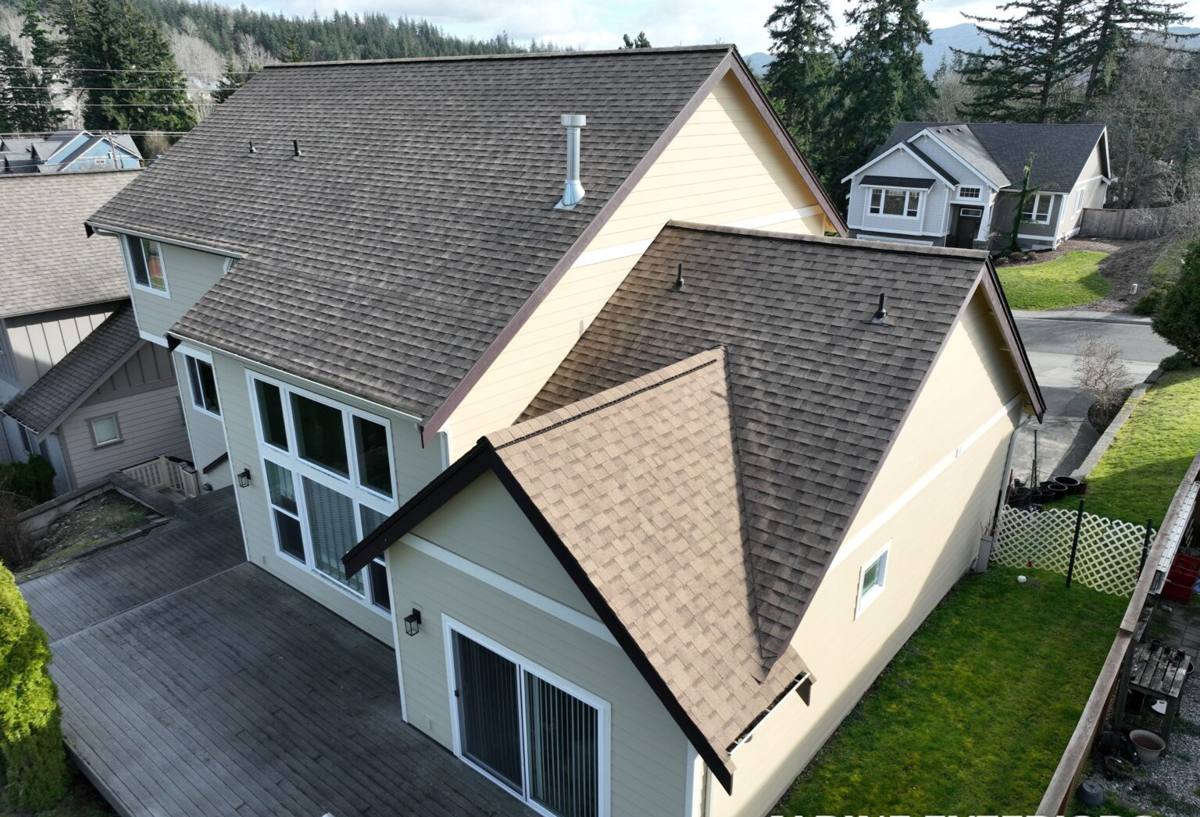
Signs a Ferndale Home Needs Window Replacement, Not Just Repair
Not every window problem calls for full replacement. But in this climate, certain symptoms usually mean the window has moved past the point where caulk, weatherstripping, or a new balance kit will fix it.
- Fogging or a visible film between the panes of a double-pane window — the seal has failed and the gas fill or dead-air space is gone for good
- Soft, spongy, or darkened wood at the sill or lower frame corners, especially on walls that face prevailing wind and rain
- Windows that are difficult to open, won't stay up, or no longer lock tightly — often a sign the frame has racked out of square
- Visible rust or corrosion on hardware, tracks, or screen frames
- Persistent moss or black staining in the corners of the frame that keeps coming back after cleaning
- A noticeable draft or cold spot at the window even when it's fully closed and latched
- Condensation forming on the interior glass regularly, which points to poor insulating performance, not just humidity in the house
If you're only seeing one of these on one window, a repair may still make sense. If you're seeing several of these across multiple windows, especially ones facing the same direction, that's usually a sign the whole batch is reaching the end of its service life at roughly the same time — which is common, since they were installed together and have weathered the same conditions since.
What a Correct Window Replacement Job Actually Involves
The window unit itself gets most of the attention when homeowners are shopping, but in a wet coastal climate, the installation is what determines whether that window performs for twenty years or fails at the flashing in five. A correct job includes several steps that are easy to skip and impossible to see once the trim goes back on.
Removing the Old Window Without Hiding Problems
Once the old sash and frame come out, we can see the condition of the rough opening — the framing lumber, the sheathing, and any water damage that's been building behind the old unit. In older Ferndale homes, this is often the first real look anyone has had at that framing in decades. If there's rot or moisture damage, it gets addressed before a new window ever goes in. Installing a new window into a compromised opening just repeats the same failure on a faster timeline.
Flashing and Water Management
This is the step that matters most in a region with driving rain. Proper flashing directs any water that gets behind the siding or trim back out and away from the framing, using a sequence — sill pan first, then side flashing, then head flashing — that overlaps correctly so gravity always has a path outward. Skipping or shortcutting this sequence is one of the most common causes of hidden rot behind newly replaced windows, and it's also the hardest mistake to catch after the fact, since the trim covers it up.
Sealing and Insulating the Gap
The gap between the new window frame and the rough opening needs to be insulated and air-sealed without being packed so tight that it distorts the frame. Low-expansion foam or backer rod and sealant, used correctly, closes off air leaks and moisture paths while still letting the window operate the way it was engineered to.
Finish Work That Sheds Water
Exterior trim and caulking get finished so that water runs off the window rather than pooling on horizontal surfaces or wicking into end grain. In a climate with a long moss season, we also pay attention to how easy the finished trim profile will be to keep clean — flat horizontal ledges collect debris and hold moisture longer than trim shaped to drain.
Choosing a Window Type for Ferndale's Climate
There's no single "best" window material — the right choice depends on budget, the age and style of the house, and how much upkeep you want to take on. Here's how the common options hold up specifically against salt air, rain, and moss exposure.
| Material | Performance in Salt Air / Rain | Maintenance Load | Typical Fit |
|---|---|---|---|
| Vinyl | Good — won't rust or rot; UV exposure over many years can affect appearance | Low | Most homes, budget-conscious replacements |
| Fiberglass | Very good — dimensionally stable, resists moisture and corrosion well | Low | Homes wanting durability without wood upkeep |
| Wood | Attractive but vulnerable — needs consistent exterior maintenance to resist rot and moss in this climate | High | Historic or period-style homes where appearance matters most |
| Wood-clad (wood interior, aluminum or vinyl exterior) | Good — exterior cladding protects wood from the weather side | Moderate | Homes wanting a wood interior look with less exterior upkeep |
| Aluminum | Fair — durable but a poor insulator and prone to condensation in a wet, cool climate | Low to moderate | Less common for residential use here |
For most Ferndale homes, vinyl or fiberglass windows offer the best combination of weather resistance and manageable upkeep. We don't push all-wood exterior windows for this climate as a default — not because wood windows are a bad product, but because keeping painted or stained wood ahead of moss and driving rain here is a real, ongoing commitment, and we'd rather set that expectation honestly upfront than sell a product that turns into a maintenance burden nobody signed up for.
Glass Packages: What's Worth Paying For Here
Beyond the frame material, the glass package affects comfort and moisture control as much as anything else. Double-pane, low-E glass is the practical baseline for this climate — it cuts heat loss and reduces the interior condensation that shows up on older single-pane or poorly sealed windows during cold, wet stretches. Argon or krypton gas fill between the panes adds a modest efficiency boost. Triple-pane glass offers the best insulating performance and the quietest interior, which can matter more if the home faces a busier road, but it also adds weight and cost, and for most single-family Ferndale homes, a quality double-pane low-E unit is enough to solve the drafts, condensation, and energy loss that usually drive the replacement decision in the first place.
Our Window Replacement Process
- On-site assessment — we look at each window from both sides, check for signs of hidden moisture, and note which units are candidates for repair versus full replacement
- Straightforward proposal — window-by-window pricing and material options, explained in plain terms, no pressure to upgrade beyond what the house actually needs
- Scheduling around the weather — we plan install days to minimize how long any opening sits exposed, which matters more here than in a drier climate
- Removal and opening inspection — old units come out, framing gets checked, and any hidden damage is flagged and discussed before we move forward
- Flashing, insulation, and installation — done in sequence, not shortcut, with attention to how water will move around the new unit for the next twenty-plus years
- Finish work and cleanup — trim, caulking, and a final check that every window opens, closes, and locks the way it should
- Walkthrough — we go over care and operation with you before we consider the job done
What Affects the Cost of Window Replacement
Every home is different, but the same handful of factors drive most of the price variation we see on Ferndale jobs.
| Factor | Why It Matters |
|---|---|
| Number of windows | Per-window cost typically drops as the total count on a job goes up |
| Window size and configuration | Large picture windows, bays, and custom shapes cost more than standard single or double-hung units |
| Frame material | Vinyl is generally the most budget-friendly; fiberglass and wood-clad options cost more upfront |
| Condition of the rough opening | Hidden rot or framing damage found during removal adds repair work before the new window can go in |
| Full-frame vs. insert replacement | Insert (pocket) replacement reuses the existing frame and is faster and cheaper; full-frame replacement is more involved but necessary when the old frame is damaged |
| Trim and siding tie-in | Matching new trim to existing siding, especially on older homes, can add labor |
We'd rather walk a homeowner through these factors honestly during the estimate than quote a number that doesn't hold up once we're actually into the job. Broad ranges are easy to find online; an accurate number for your specific house comes from seeing the windows in person.
Maintaining New Windows in a Marine Climate
A good installation buys you decades of performance, but a little seasonal attention keeps it that way in a climate that's actively working against painted surfaces, hardware, and drainage paths.
- Clear weep holes and sill tracks of debris, moss, and dirt at least twice a year so water has somewhere to go
- Rinse salt residue off exterior frames and hardware periodically, especially after windy weather off the water
- Check and refresh exterior caulking where it's cracked or pulled away from trim, before the wet season sets in
- Keep gutters and downspouts clear so overflow isn't running down the wall past window trim
- Operate every window through its full range a few times a year — hardware that sits unused is more prone to seizing in a damp climate
- Watch for early moss growth in corners and shaded trim, and remove it before it establishes and holds moisture
Why It Matters to Hire a Crew That Already Works in Ferndale
Window replacement looks similar on paper anywhere in the country, but the details that actually determine whether it holds up — flashing sequence, sill pan design, how tight to seal versus how much to let a wall assembly breathe — change based on the climate the house sits in. A crew that installs windows mostly in dry regions and occasionally works a wet coastal job doesn't have the same instinct for where water actually wants to go on a Whatcom County house during a January storm.
Working regularly in Bellingham, Ferndale, and the surrounding county also means we're familiar with the mix of housing stock in this area — older farmhouses near the river bottoms, newer developments, and everything in between — and we're not guessing at what "normal" looks like for a home here. That local pattern recognition is part of what you're paying for when you hire a local crew instead of a traveling install team.
Ready for an Honest Look at Your Windows
If your windows are fogging, sticking, drafting, or showing rot at the sill, it's worth getting a second set of eyes on them before another wet season passes. We'll give you a straightforward, no-pressure estimate on what your home actually needs — use the form below to get started.