 Bellingham
 Decks in York Take a Different Kind of Beating
Homes in the York neighborhood sit close enough to the water and the marine weather patterns that move through Bellingham that outdoor structures age differently here than they would inland. A deck in a dry climate mostly has to survive sun. A deck in York has to survive months of standing moisture, salt-laden air drifting off Bellingham Bay, and long stretches of shade and drizzle where nothing ever fully dries out. That combination is what causes most of the repair calls we get in this part of town.
The damage rarely shows up where you'd expect it first. Homeowners usually notice a soft board or a wobbly rail, but by the time that's visible, the moisture has often already been working on the framing underneath for a year or two. Whatcom County's wet season isn't a two-week event — it's a slow, grinding stretch of fall through spring where a deck is rarely bone dry, and that's exactly the condition untreated wood and failing fasteners can't tolerate indefinitely.
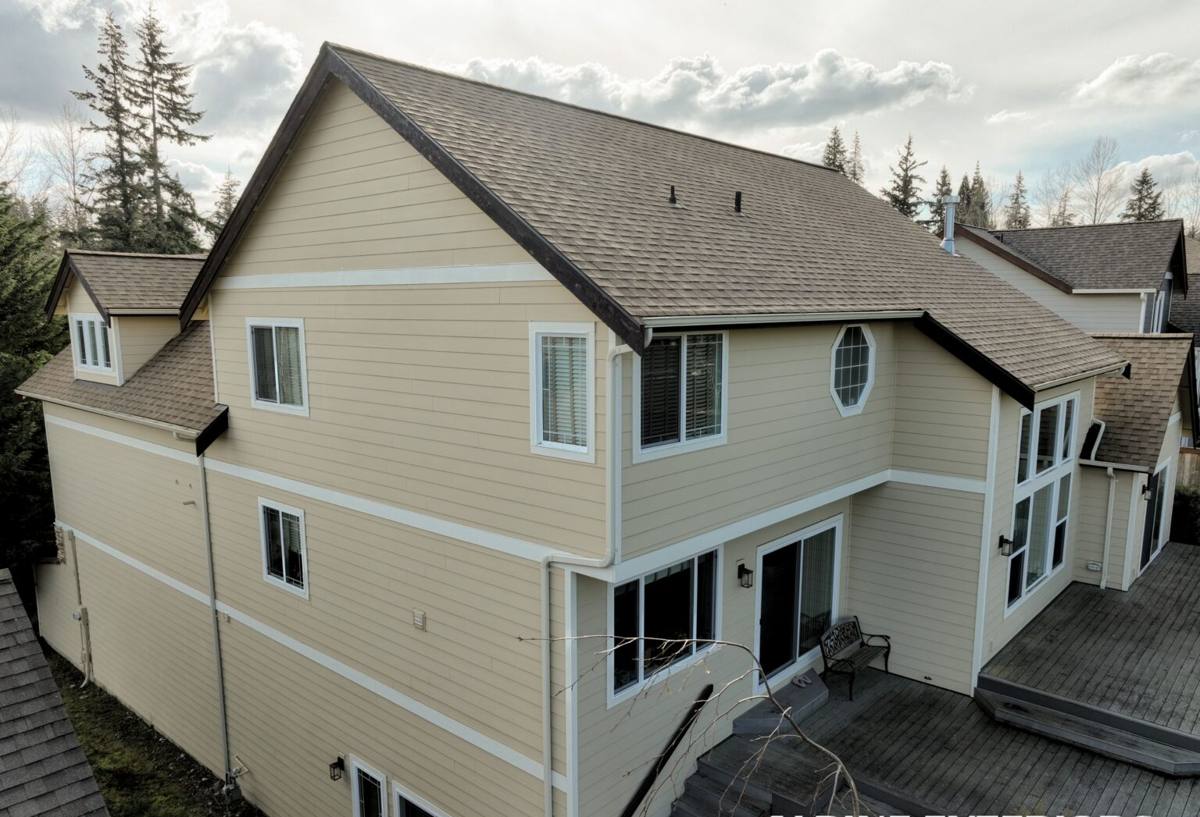
What Driving Rain, Salt Air, and Moss Actually Do to a Deck
Driving Rain
Wind-driven rain doesn't just fall on a deck, it gets pushed sideways into joints, under flashing, and into the gap between decking boards and the ledger board where the deck attaches to the house. That ledger connection is one of the most important structural points on the entire deck, and it's also the point most exposed to repeated wetting if the original flashing wasn't installed correctly or has started to fail.
Salt Air
Proximity to Bellingham Bay means metal hardware — nails, screws, joist hangers, bolts — corrodes faster here than it would further inland. Corroding fasteners lose holding strength gradually and quietly. A deck can look structurally fine while the metal actually holding it together is thinning out year by year.
Moss and Prolonged Shade
Whatcom County's moss season isn't just a cosmetic issue. Moss and algae hold moisture directly against wood fibers and decking surfaces, which slows drying time even further and creates a slick, slippery walking surface. On horizontal surfaces like deck boards and stair treads, that trapped moisture accelerates rot from the top down, not just from underneath.
Signs Your York Deck Needs Repair — Not Just a Wash
A pressure wash and a coat of sealer can make a deck look better without addressing what's actually wrong underneath. Before you spend money on cosmetic fixes, check for these:
- Boards that feel spongy, bounce, or flex noticeably when you walk across them
- Screw or nail heads that have backed out, are rust-stained, or spin freely without biting
- Visible gaps, cracking, or dark staining where the deck meets the house (ledger board area)
- Railings or posts that wiggle at the base or feel less rigid than they used to
- Persistent green or black growth that returns within weeks of cleaning
- Stair stringers or the underside of the deck showing soft, discolored, or crumbling wood
- Standing water that doesn't drain within a few hours after rain stops
Any one of these on its own might be a minor fix. Two or three together usually means the moisture problem has moved past the surface and into the structure.
What a Correct Deck Repair Actually Involves
A repair that only replaces what's visibly broken tends to fail again within a season or two, because it doesn't address why the damage happened. A repair that's done correctly looks at the whole system:
Structural Framing
Joists, beams, and posts get checked for soft spots with a probe, not just a visual look. Sistering a joist (bolting a new piece of lumber alongside a weakened one) is often more cost-effective than replacing an entire framing run, but only when the surrounding wood is still sound.
Ledger Board and Flashing
Because the ledger connection carries so much of the deck's load, we check the flashing behind it whenever there's any sign of moisture intrusion at that seam. Flashing that's cracked, missing, or was never installed with the right overlap is one of the most common root causes of deck rot we find in this climate.
Decking Surface and Fasteners
Individual boards get replaced where damaged, and we match spacing and fastening to allow for proper drainage and airflow underneath — a detail that matters more here than in drier regions, since airflow is what lets a deck actually dry between rain events.
Railings and Stairs
These take direct hand contact and foot traffic, so we treat any looseness as a safety issue, not a cosmetic one. Post connections in particular get hardware upgrades when the original fasteners show corrosion.
Repair Materials: What We Use and Why
| Component | What We Use | Why It Matters Here |
|---|---|---|
| Structural framing | Pressure-treated lumber rated for ground contact where applicable | Standard framing lumber degrades faster under Whatcom County's near-constant seasonal moisture |
| Fasteners and hardware | Stainless steel or hot-dip galvanized, matched to the lumber treatment | Reduces corrosion from salt-influenced coastal air; mismatched metals accelerate rust |
| Flashing | Self-adhering membrane flashing at ledger and post connections | Blocks driving rain from reaching the most structurally critical joints |
| Decking surface | Wood or composite, matched to the existing deck or homeowner preference | Composite resists moss growth better; wood costs less upfront but needs more upkeep |
We don't push composite decking as a blanket upgrade on every repair. If the framing is sound and the homeowner is happy with a wood deck's appearance and maintenance routine, a like-for-like wood repair is often the more honest and cost-effective call. Composite makes more sense when moss and moisture have been a repeat problem on the same boards year after year.
Repair vs. Rebuild — How We Make the Call
Not every deck problem needs a full rebuild, and not every deck should be patched. We base the recommendation on what the framing looks like once we're actually able to inspect it, not on the deck's age alone.
| Situation | Usual Recommendation |
|---|---|
| Isolated soft boards, sound framing underneath | Targeted board and fastener replacement |
| One or two weakened joists, rest of frame solid | Sistering affected joists, no full teardown needed |
| Ledger board or flashing failure with contained damage | Ledger repair and reflashing, decking reused where sound |
| Widespread rot across multiple framing members | Full or partial rebuild — patching would be a short-term fix |
| Original deck built without proper flashing or drainage | Rebuild recommended so the underlying design flaw is corrected, not repeated |
We'd rather tell a homeowner honestly that a repair won't hold than sell a patch job that fails again in two winters. That's a longer conversation than a quick estimate, but it's the only way the number we give actually means something.
Our Deck Repair Process
- On-site inspection. We probe suspect areas, check the ledger connection, and look underneath the deck where most early damage actually starts.
- Written scope and estimate. You get a clear breakdown of what needs repair, what's optional, and what we're recommending you not spend money on.
- Repair work. Framing and structural fixes happen first, then decking, railings, and stairs.
- Fastener and flashing check. Every repair includes a check of hardware and flashing in the surrounding area, not just the specific spot that failed.
- Walkthrough. We show you what was done and what to watch for going forward, including moss and drainage habits specific to this climate.
Living With a Deck in a Wet, Mossy Climate
Even a correctly repaired deck needs some seasonal attention in Whatcom County. A few habits go a long way toward avoiding a repeat repair call:
- Sweep debris and standing leaves off the deck surface regularly through fall
- Keep gutters and downspouts clear so runoff isn't landing directly on or near the deck
- Address moss as soon as it appears rather than letting it establish over a season
- Check railings and stair connections for looseness at least once a year
- Reseal or refinish wood decking on the manufacturer's recommended schedule, not just when it looks faded
None of this prevents every issue, but it does slow the clock down considerably on the kind of moisture-driven damage that's common in this part of Bellingham.
Why It Matters to Hire a Crew That Already Works in York
A contractor who mostly works drier inland areas may not think twice about flashing details or fastener choice, because in their usual conditions, those shortcuts don't fail as fast. In York, they do. Working regularly in this neighborhood means we already know which failure patterns show up here — ledger rot from missing flashing, corroded hardware from salt air, moss-driven surface decay — and we build every repair to account for them, not just to pass a quick look.
If you're noticing soft spots, loose railings, or a deck that never quite dries out, it's worth getting an honest look before the damage spreads further into the framing. We're happy to come out, inspect the deck, and give you a straightforward, no-pressure estimate on what it actually needs — use the form below to get started.