 Bellingham
 Why Siding in York Wears Differently Than Siding Inland
York sits close enough to Bellingham Bay and the broader Salish Sea shoreline that homes here take on a different kind of weather load than houses ten or fifteen miles inland. Salt-laden air corrodes fasteners and finishes faster, wind-driven rain off the water finds every gap in a wall assembly, and Whatcom County's long, low-sun winters keep north- and shade-facing walls damp for weeks at a stretch. That combination is exactly what turns "the siding just needs a fresh coat of paint" into "the siding needs to come off."
None of this means York is a uniquely harsh place to own a home. It means the siding system on a York house has to actually be engineered for coastal Pacific Northwest conditions, not just installed correctly once and left to fend for itself. That distinction — system versus installation — is the core of what a good siding replacement job delivers.
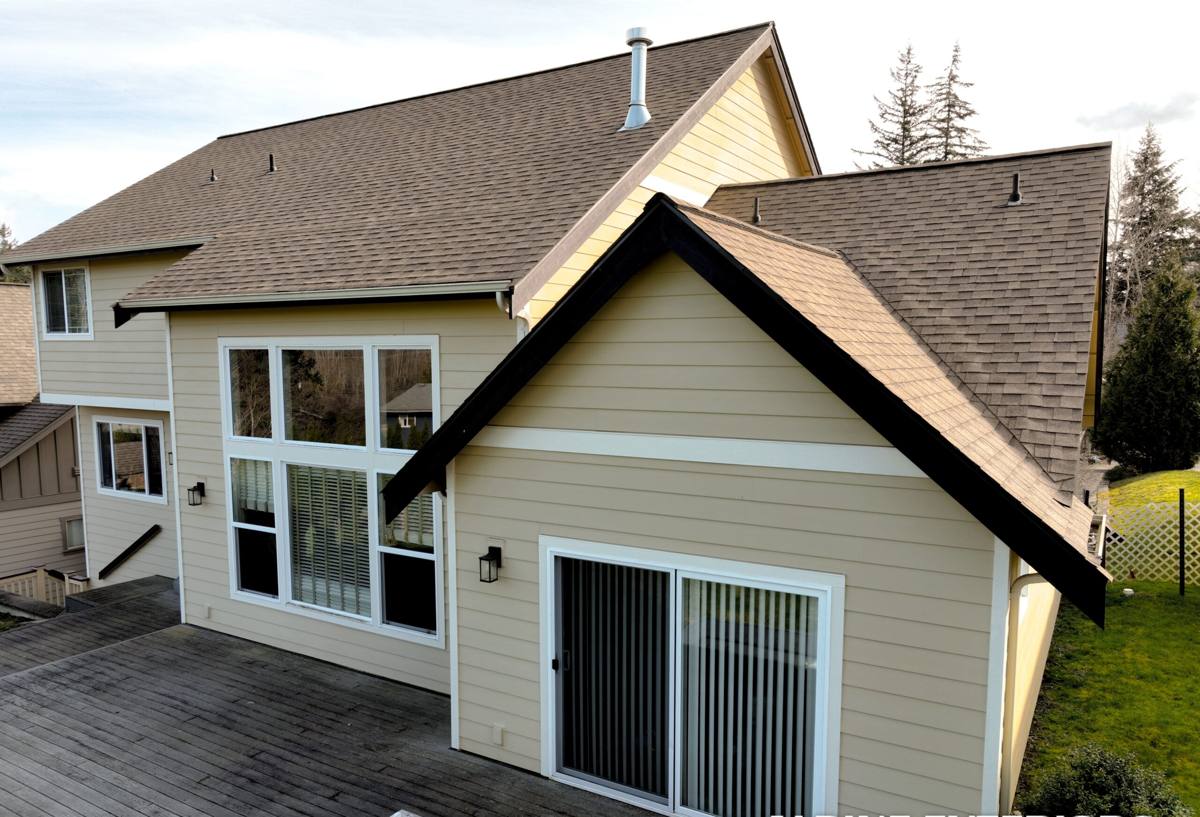
Signs a York Home Is Due for Siding Replacement
Most siding failures in this area don't show up as a single dramatic problem. They show up as a slow accumulation of small ones. Before assuming a repair will solve it, walk the exterior and look for these patterns, especially on walls that face prevailing wind and rain:
- Soft or spongy spots when you press on the siding, especially near the bottom courses and around window and door trim
- Paint that keeps failing within a year or two of repainting, even with a quality product
- Persistent green or black staining that returns within weeks of cleaning — a sign moss and algae have a permanent foothold, not just a surface issue
- Visible cupping, warping, or separated seams, particularly on lap siding
- Rot at butt joints, corner boards, or anywhere two pieces of siding meet
- A musty smell in an exterior wall cavity, or interior drywall that stays damp near an exterior wall
Any one of these can sometimes be spot-repaired. Several of them together, especially on a home more than 20 years old, usually means the underlying moisture management — not just the visible siding — has broken down.
What Correct Siding Replacement Actually Involves
Tear-Off and Wall Inspection
Replacement starts with full removal of the old siding, not an overlay. That's the only way to actually see the sheathing, framing, and existing weather barrier underneath. In a marine climate like Whatcom County's, hidden rot behind old siding is common enough that we treat this inspection step as mandatory, not optional — any soft sheathing or compromised framing gets addressed before a single new panel goes up.
Weather Barrier and Flashing
This is the layer that actually keeps water out of the wall, and it matters more in York's rain-and-salt-air environment than in drier parts of the country. A correctly installed water-resistive barrier, properly lapped and taped seams, and metal flashing at every window, door, and horizontal transition are what stop wind-driven rain from working its way behind the siding. Skipping or rushing this step is the single most common cause of new siding failing after only a few years.
Fastening and Clearances
Fiber cement siding has specific fastening patterns, nail types, and edge-clearance requirements from the manufacturer, and those specs exist because they were tested against real weather, including coastal conditions like ours. Proper ground clearance and gaps at trim also matter — siding installed tight to grade or hard against trim with no room to shed water is a maintenance problem waiting to happen, regardless of the material.
Finish and Detailing
The last step is where a job either looks like a factory-finished product or starts to look tired within a few seasons: clean caulk lines only where caulk belongs, properly primed and sealed cut edges, and trim details that shed water instead of trapping it against the wall.
Why We Install Only James Hardie Fiber Cement
We get asked regularly why we don't offer vinyl, LP SmartSide, or other fiber cement brands. The honest answer is that after years of doing this work in Whatcom County's climate, we standardized on one product system because it holds up here better than the alternatives, not because it's the only siding that exists.
Built for This Climate
James Hardie engineers specific product lines — including HZ5 formulations — for regions with heavy moisture exposure. That engineering targets exactly the conditions York deals with: sustained damp weather, temperature swings, and salt air near the water. Fiber cement itself is non-combustible and doesn't absorb and swell with moisture the way engineered wood products can.
ColorPlus Factory Finish
Most of the color failures we see on older siding — chalking, fading, peeling — trace back to field-applied paint that was never going to hold up as well as a factory-baked finish. Hardie's ColorPlus finish is applied and cured in a controlled facility, which is a meaningfully different process than painting siding on a wall in variable weather, and it comes with its own finish warranty on top of the product warranty.
Warranty That Actually Transfers
Hardie backs its products with a strong, transferable limited warranty. That transferability matters in a market like Bellingham's — it's a real selling point if you list the home later, and it's a sign of how confident the manufacturer is in the product's longevity when installed to spec.
We're not going to pretend other products don't have a place in the market. Vinyl is inexpensive and low-maintenance in some climates. LP SmartSide is engineered wood with real strengths. But for York's specific mix of rain, salt air, and moss pressure, and for the standard we want to put our name behind, James Hardie fiber cement is what we install.
Comparing Siding Options for a Coastal Whatcom County Home
| Factor | James Hardie Fiber Cement | Vinyl | Engineered Wood (LP SmartSide) |
|---|---|---|---|
| Moisture resistance in coastal climate | Engineered for damp regions; does not swell or rot | Doesn't absorb water, but seams and expansion can trap moisture behind panels | Treated to resist moisture, but any breach in the coating exposes the wood-based substrate |
| Salt air / corrosion exposure | Non-metallic panel body handles salt air well when installed with corrosion-resistant fasteners | Generally stable, but can become brittle with UV and temperature cycling over time | Coating can degrade faster near salt air if not maintained |
| Moss and algae resistance | Factory finish resists staining better than field-applied paint | Can stain and is difficult to fully clean without damage | Susceptible once the finish wears thin |
| Fire resistance | Non-combustible | Combustible; can melt or deform near heat sources | Combustible |
| Typical warranty structure | Long-term, transferable limited warranty plus separate finish warranty | Varies widely by manufacturer and panel thickness | Manufacturer warranty, often with maintenance requirements to stay valid |
This table isn't meant to declare every alternative unusable — it's meant to show why the trade-offs tilt toward fiber cement specifically in a wet, salt-influenced climate like York's.
Our Process for York Homeowners
- On-site assessment: We walk the exterior with you, look at current siding condition, note problem areas, and talk through what we're seeing and why.
- Written estimate: A clear scope of work and pricing, with no pressure to sign on the spot.
- Tear-off and inspection: Old siding comes off, sheathing and framing get inspected, and any repairs needed are flagged before proceeding.
- Weather barrier and flashing installation: The moisture-management layer goes in correctly, since this is what determines how the job performs in ten or twenty years, not just at the final walkthrough.
- Hardie installation to manufacturer spec: Fastening patterns, clearances, and joint treatment follow the manufacturer's requirements, not shortcuts.
- Final walkthrough: We review the finished work with you and address anything that doesn't meet the standard we hold ourselves to.
What to Ask Before Hiring a Siding Contractor in the York Area
- Are you licensed and insured to work in Washington, and can you show proof?
- Will you remove and inspect the sheathing, or install over the existing siding?
- What weather-resistive barrier and flashing details will you use, specifically?
- Are you installing to the manufacturer's published fastening and clearance specs?
- What does the warranty actually cover, and is it transferable if the home sells?
- Can you explain, in plain terms, why you're recommending this material for this house?
A contractor who already works regularly in York and similar Bellingham neighborhoods should be able to answer all of these without hesitation, because they've seen how the local climate treats different products and details over time.
Cost Factors for Siding Replacement
Every home is different, so we don't publish blanket per-square-foot numbers that don't hold up once we're actually looking at your walls. What we can tell you is what tends to move the price up or down on a project like this in the York area:
- Total square footage and the number of stories, which affects labor and access needs (scaffolding versus ladders)
- Condition of the sheathing and framing once old siding is removed — hidden rot repair adds cost but isn't optional
- Amount of trim, corner detail, and architectural features that require more cutting and finish work
- Siding profile and Hardie product line selected
- Site access and how much of the property needs protection during tear-off
The only way to get a real number is a written estimate based on your actual house, not a phone quote.
Ready for an Honest Look at Your Siding?
If your York home is showing signs of siding failure, or you're just planning ahead before it becomes a bigger problem, we're glad to come take a look. The estimate is free, there's no pressure to commit on the spot, and you'll get a straight answer about what your siding actually needs — use the form below to get started.